

Antique Music Stools
A seat made for playing at, almost always with a mechanism that changes its height, so a player of any size can sit square to the keyboard.

What Are Antique Music Stools?
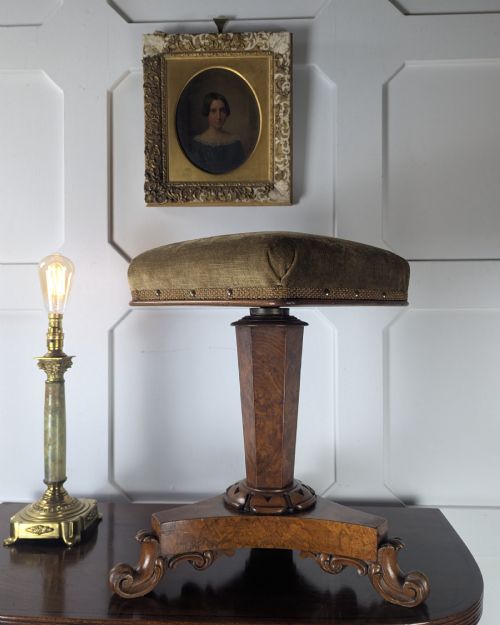
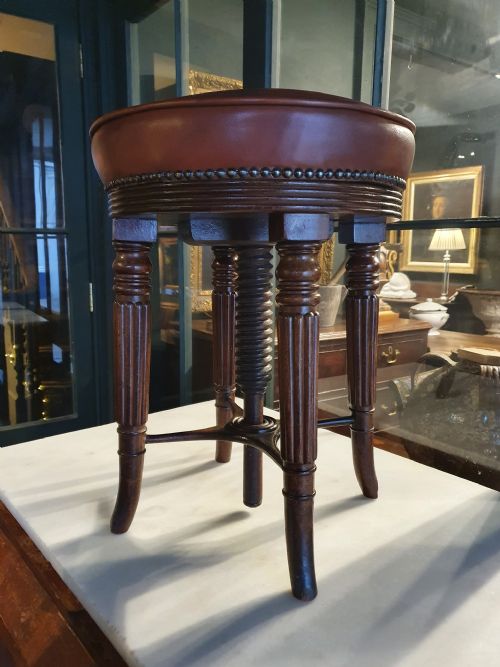
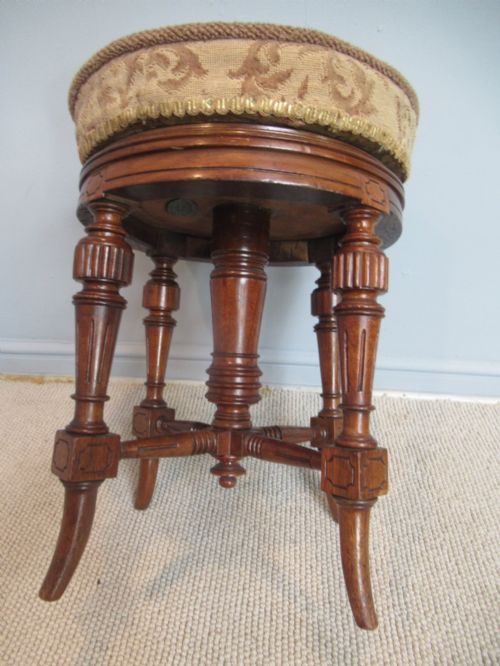
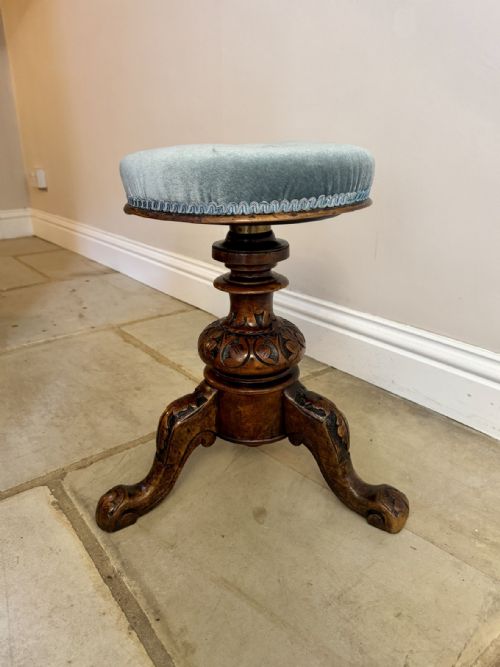
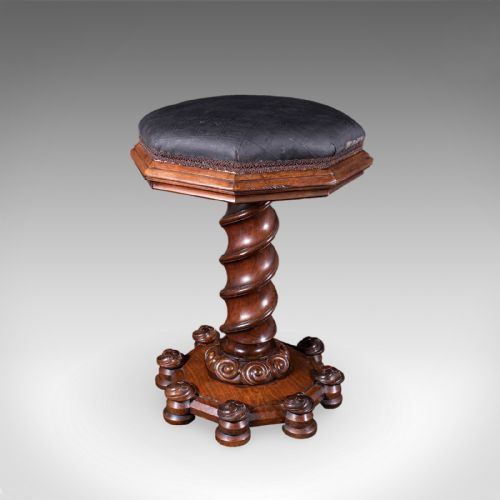
Height-adjustable seats grew up alongside the domestic piano, and as pianos spread through 19th-century middle-class homes the stool became a standard drawing-room fitting. Two forms answered the need: the screw-threaded revolving stool that winds up and down on a central column, and the longer bench wide enough for two.
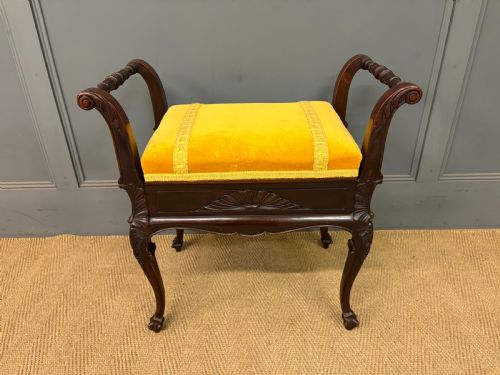
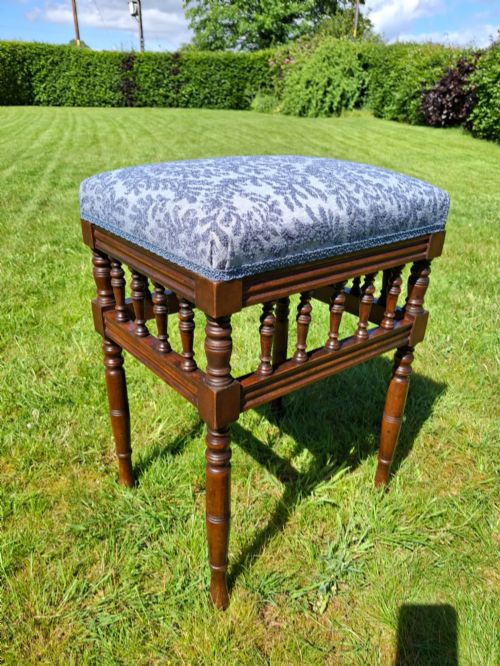
The piece you'll meet by default is an English Victorian single stool in mahogany or walnut with a padded or upholstered top. "Piano" appears in 114 of 190 titles on Sellingantiques, mahogany in 60, walnut in 38 and rosewood in 27, and about a third of titles name the mechanism outright as adjustable or revolving. Around eighteen come to market in a year, listed by seventy-nine different dealers, so this is furniture nearly every dealer handles rather than a specialism.
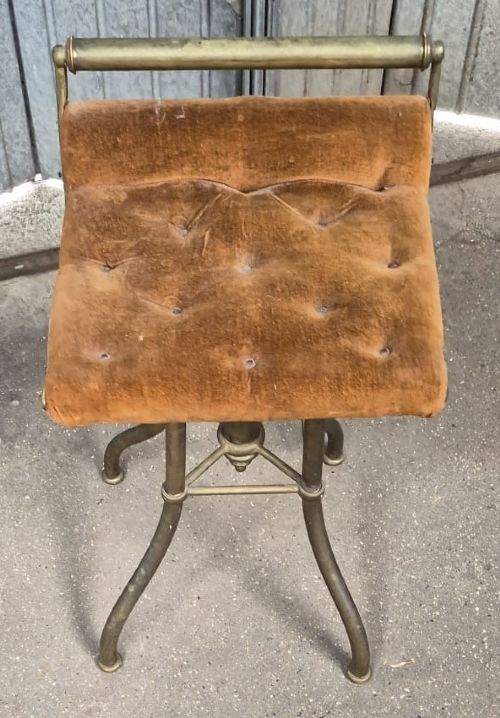
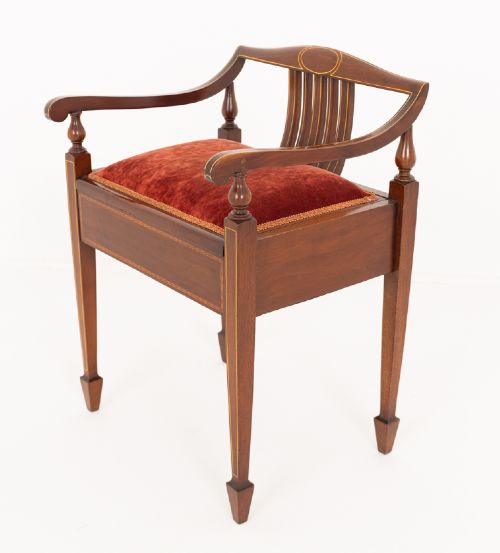
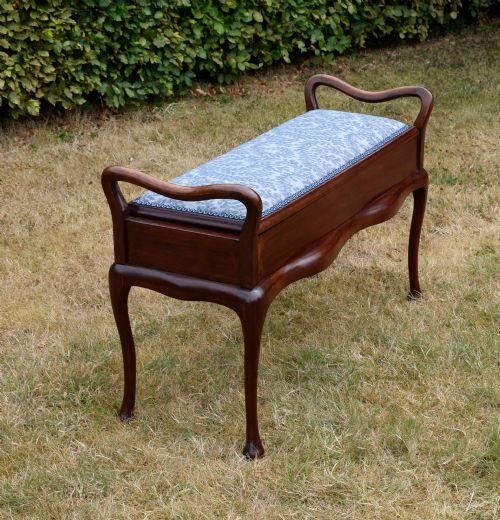
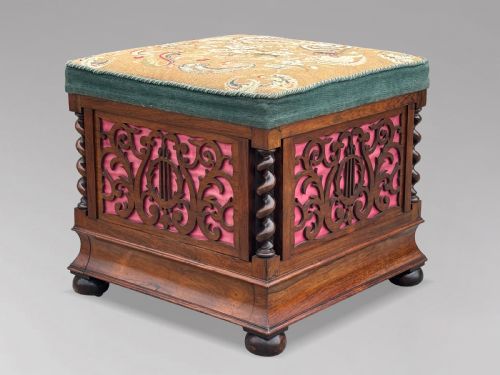
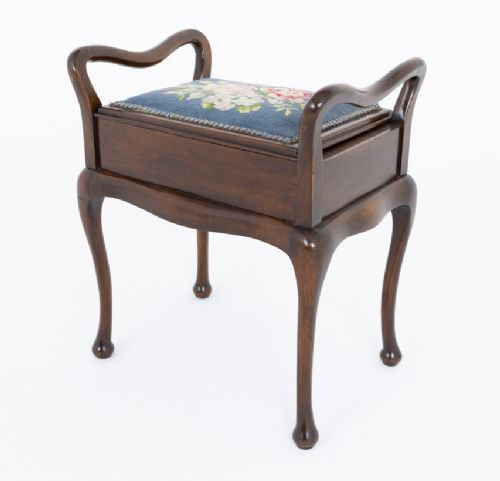
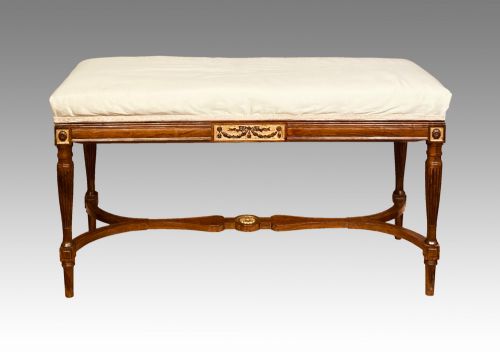
Duet benches account for about one in seven titles, several doubling as window seats. Storage turns up throughout as a hidden feature: hinged lids, lockers, box seats, fall fronts and music cabinet drawers. A smaller group is metal-framed in brass and steel, including brass-framed harpist's seats, and a further handful are sold for dressing table or fireside use as much as for music.
Dates run from 1800 to 1930, with eighty-one listings carrying a clean year. A stated period is often a bracket rather than a date, Victorian and 19th century together outnumbering any decade, and where decades are given they cluster in the 1880s, 1890s and 1900s. Regency and Edwardian labels each appear fifteen times.
What Sets Them Apart
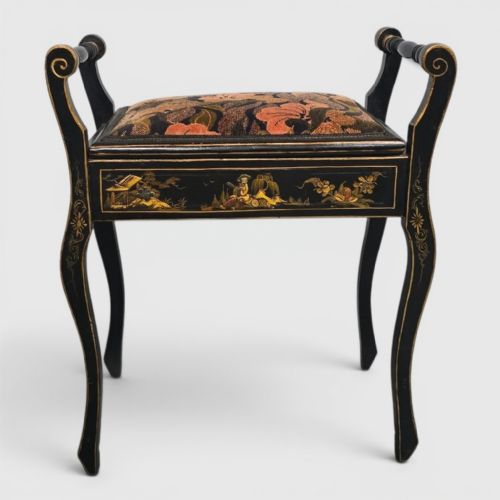
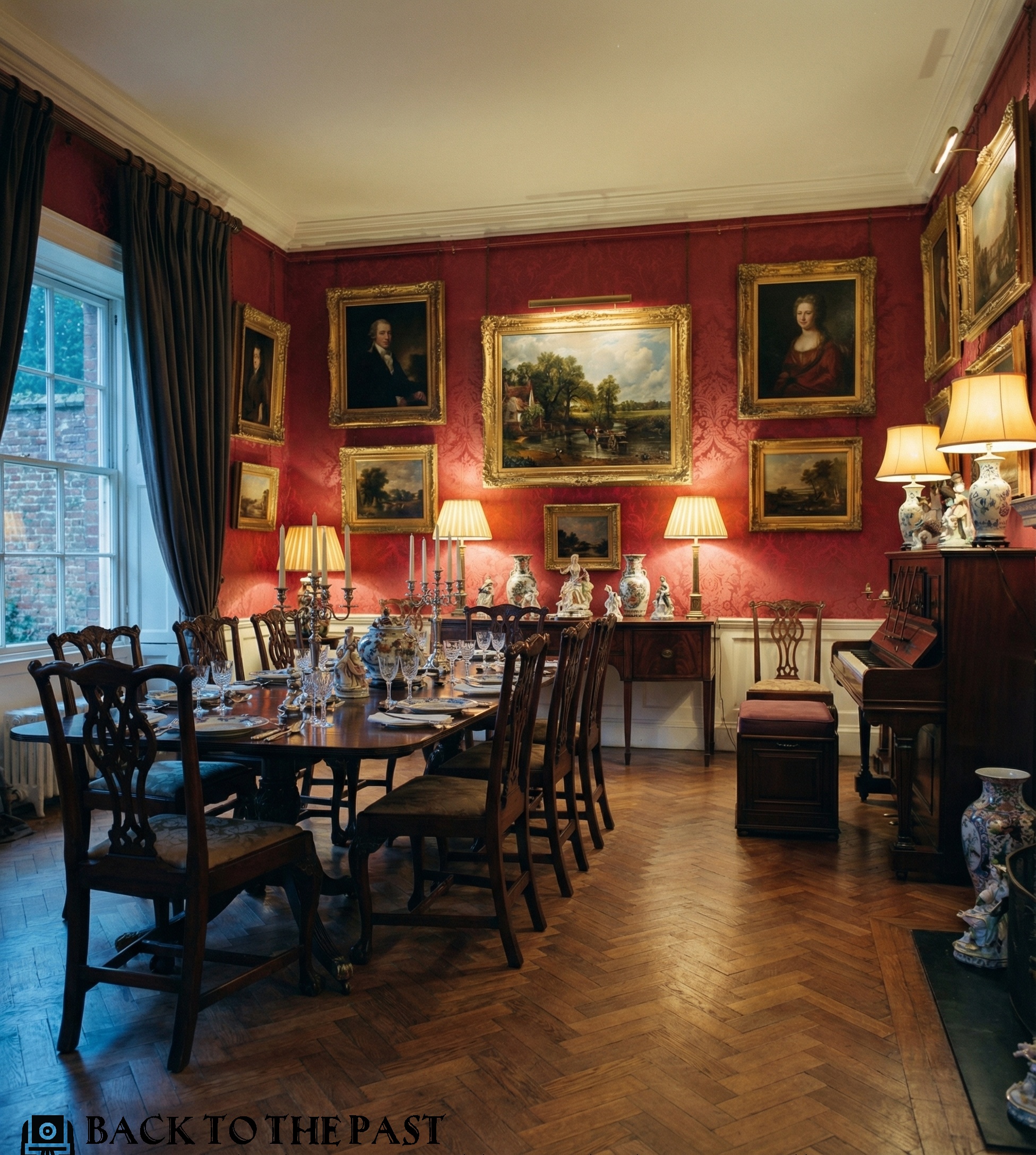
Timber does most of the work. Plain mahogany stools sit at the bottom of the range, and the titles at the top are thick with rosewood, figured walnut, satinwood and birds eye maple. Some of what looks like rosewood isn't: simulated and faux rosewood appear in dealer wording, alongside ebonised and painted frames.
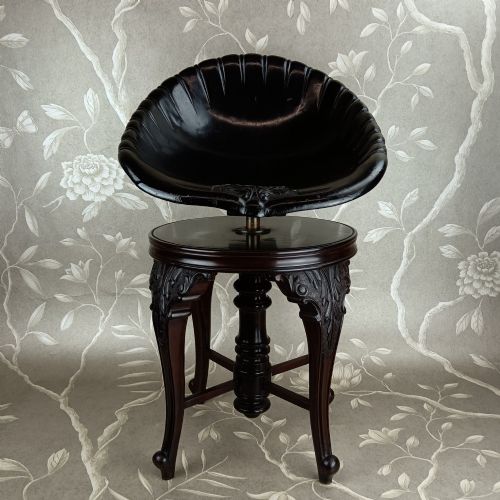
After timber comes decoration. Carving appears in 13 titles, inlay in 12, and the highest-priced listings name marquetry, brass inlay, gilt and ormolu mounts, or Italian grotto carving in walnut. Scale counts too, duet benches clustering in the upper half of the range against single stools.
Attribution rarely carries a piece on its own. Only one maker name reaches three dealers across the whole archive, and stamped or attributed stools do sit at the top when they appear. Seats made for instruments other than the piano are scarcer, and harpist chairs, a cello stool and a chapel organist's stool all turn up at the upper end.
Retail Price Guide 2026
Typical UK retail prices for music stools, calculated from the Sellingantiques database of over a million retail prices indexed since 2003. This retail price guide relies exclusively on Sellingantiques data; no external sources or auction records are used, so the figures do not describe the wider market.
The most expensive music stool ever sold on Sellingantiques was a stamped walnut music canterbury stool, in September 2018.
Gillows
The Antique Music Stools Glossary
- Revolving
- The seat turns on a central screw thread to raise or lower it. Named in 30 titles, and sometimes written as a swivel top instead.
- Adjustable
- Any height-changing mechanism, whether a screw column or a rise-and-fall action. It appears in 33 titles, the most common mechanism word of all.
- Rise and fall
- A seat raised and lowered on a mechanism rather than by turning the top round. Wording used where the seat stays square to the keyboard.
- Duet stool
- A long bench wide enough for two players, named in 27 titles. Several are described as window seats as well, and a number have hinged seats over storage.
- Music locker
- A stool with a hinged lid over a compartment for sheet music. Related wording includes fall front, for a hinged front panel giving access to the box beneath.
- Simulated rosewood
- A cheaper timber grained and finished to imitate rosewood, also given as faux rosewood. Ebonised, meaning stained and polished black in imitation of ebony, works the same way.
Frequently Asked Questions
What wood are music stools usually made from?
Mahogany leads, named in 60 of 190 titles, with walnut in 38 and rosewood in 27. Satinwood and birds eye maple show up towards the top of the range.
Some are not the timber they resemble. Simulated and faux rosewood both appear in listings, as do ebonised and painted frames, and one sampled stool is papier mache with mahogany.
How does the height adjustment work?
Two systems dominate. A revolving top winds up and down on a central screw thread, and a rise-and-fall seat is raised on a mechanism without turning the seat itself.
About a third of titles name the mechanism: adjustable in 33, revolving in 30. Dealers also write swivel top for a turning seat.
Are duet stools common?
One in seven titles says duet, making the two-seat bench the only regular alternative to the single revolving stool.
Several are described as piano benches or window seats, and a number have hinged seats over a compartment. In the sampled range they sit above single stools.
Do music stools have storage inside?
Storage is a recurring hidden feature. Titles record music cabinet drawers, lockers, box seats, fall fronts and lifting lids.
It's named in only a minority of listings, so a plain-looking seat may still lift or open.
Were these only made for pianos?
Piano is the word in 114 of 190 titles, but other instruments turn up. Sampled listings include harpist chairs, a brass cello stool, a chapel organist's stool and one offered for piano, harp or cello.
Stools made for these other instruments are scarcer and sit at the upper end of the range.
What period do most of them date from?
The dated field runs 1800 to 1930, with eighty-one listings carrying a clean year. Victorian appears in 67 titles and English in 39.
Where decades are given they cluster late, in the 1880s, 1890s and 1900s. A couple of Georgian or 18th-century labels and a couple of 1930 Art Deco pieces mark the outer edges.