4,434  PAGES BROWSED TODAY PAGES TODAY • 0 ANTIQUES UPLOADED TODAYNEW ARRIVALS
GIFTS
LATEST STOCK
Sort Order
Items Per Page
Browse Categories
Sort order
Relevant Links
Items per page
ID #SA1236957
RESERVED
Email Phone
Save
17th Century Walnut Joint Stool
For sale by Dickinsons Antiques
reserved SA1236957
RESERVED
Dickinsons Antiques

Dickinsons Antiques

Sellingantiques Verified Since Oct 2020
Browse dealers 73 items
  • About Us
    Dealing in early oak and country furniture since 1958.
Id #SA1236957
PDF SHARE
SAVE

17th Century Walnut Joint Stool

17th century
For Sale by Dickinsons Antiques (Reserved for a buyer)
Description

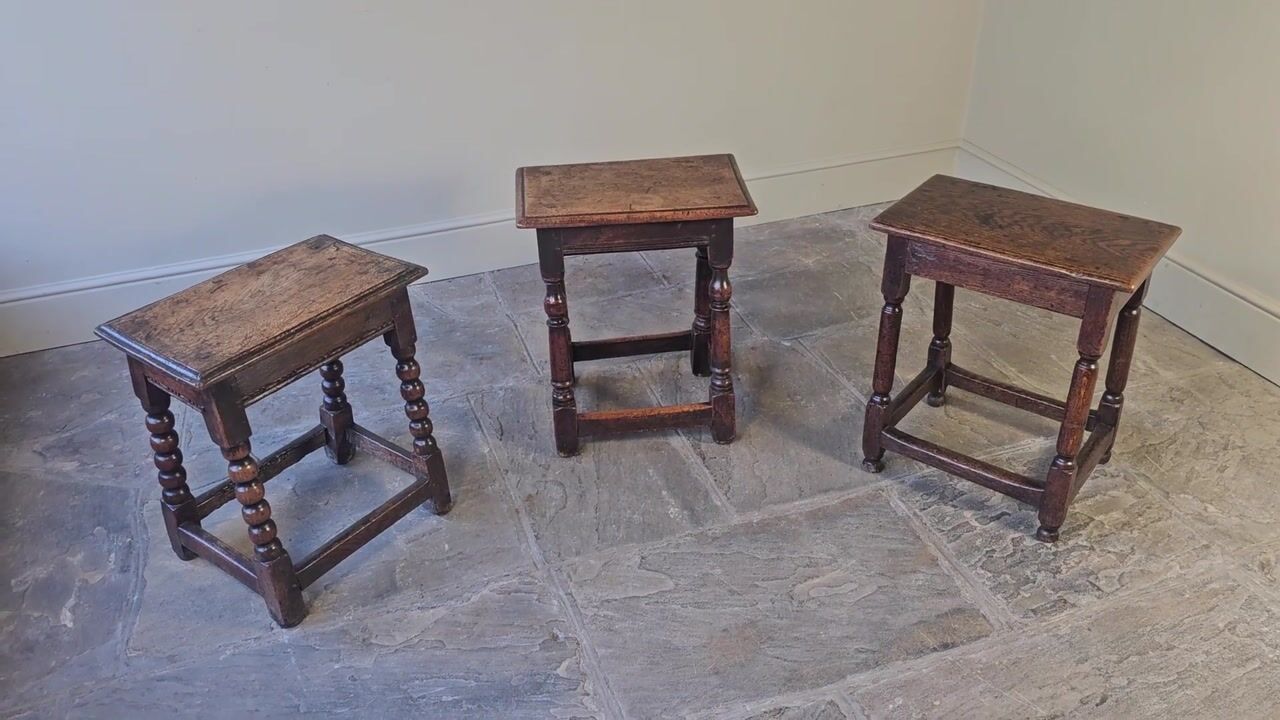
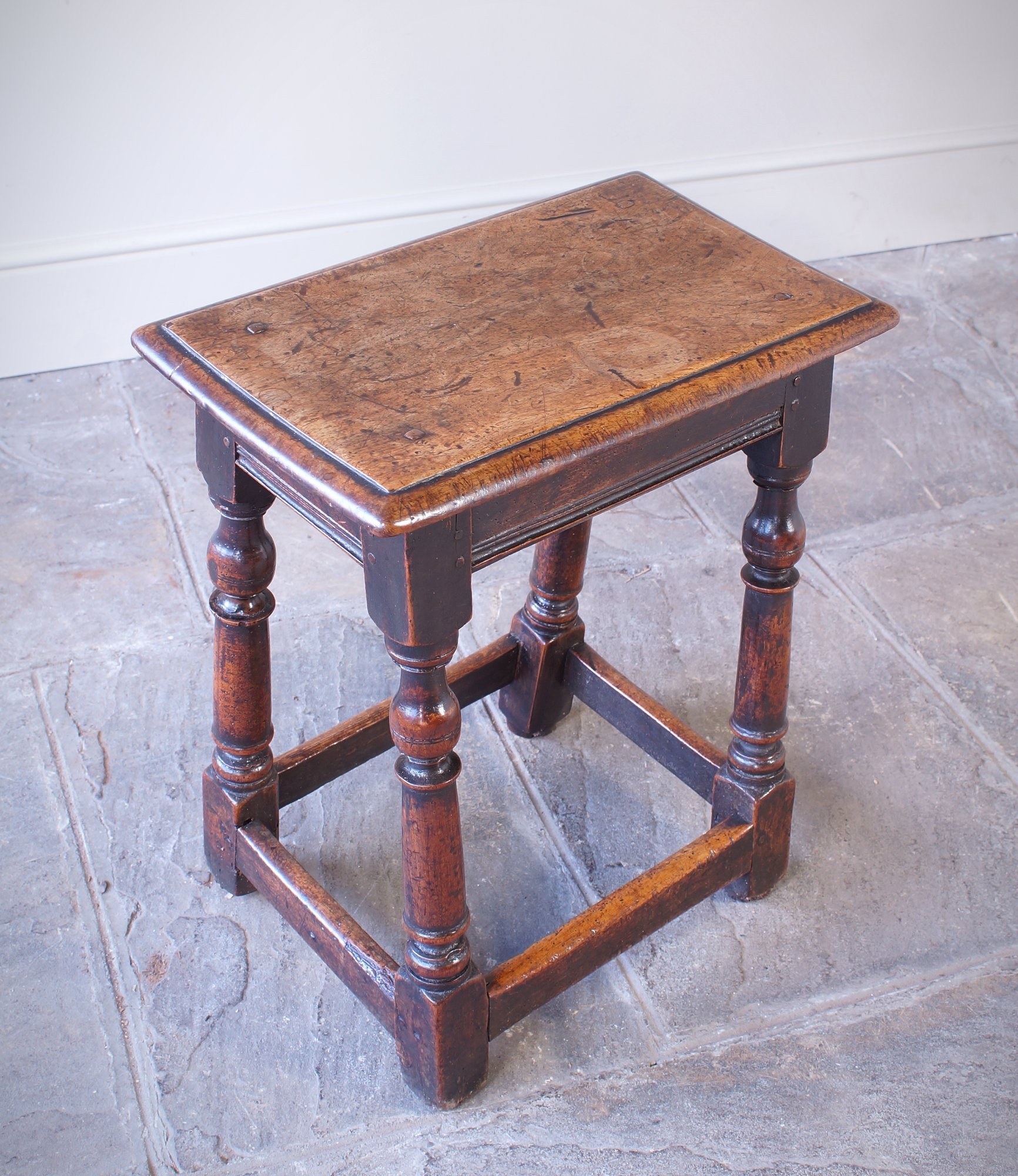
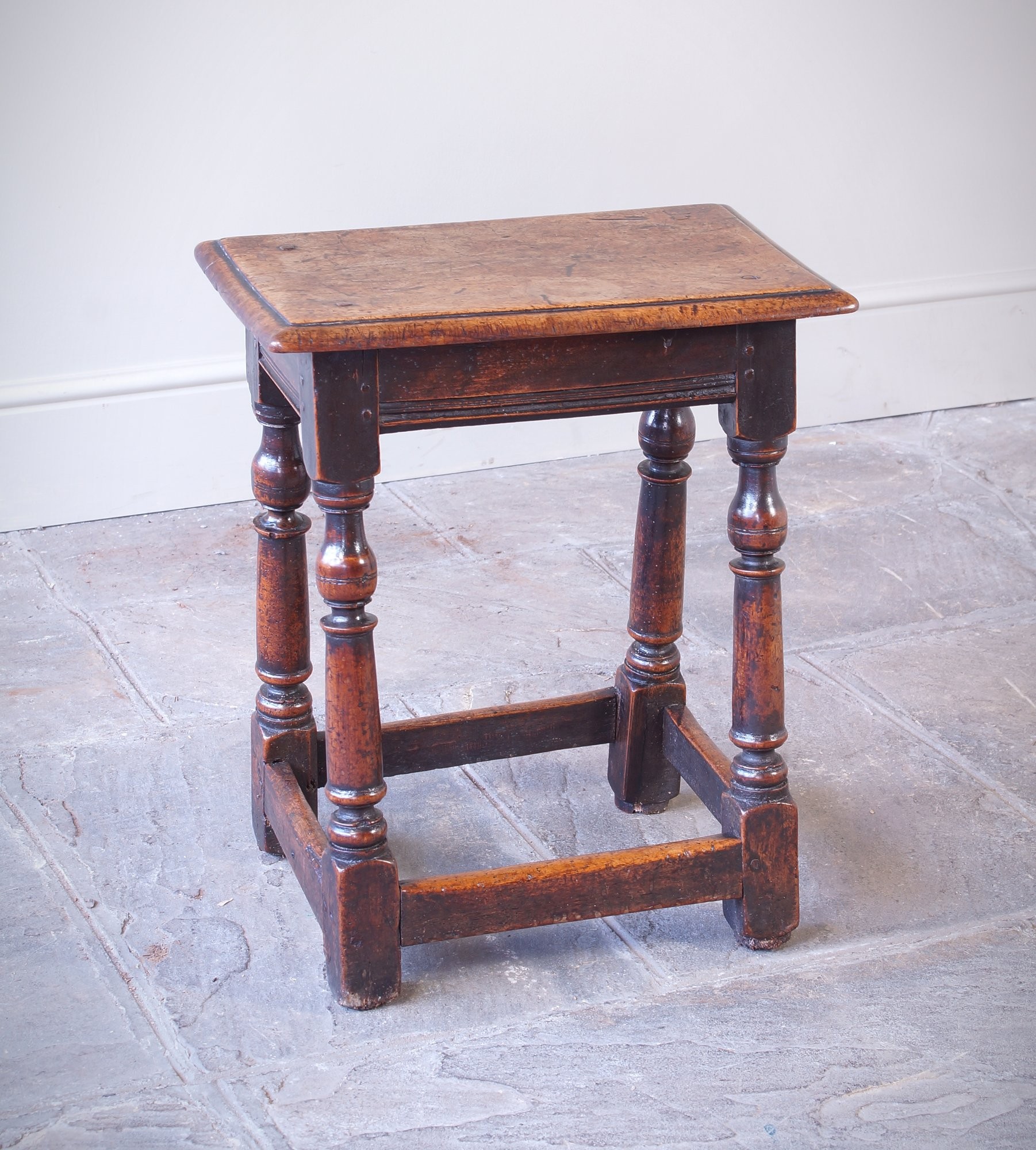
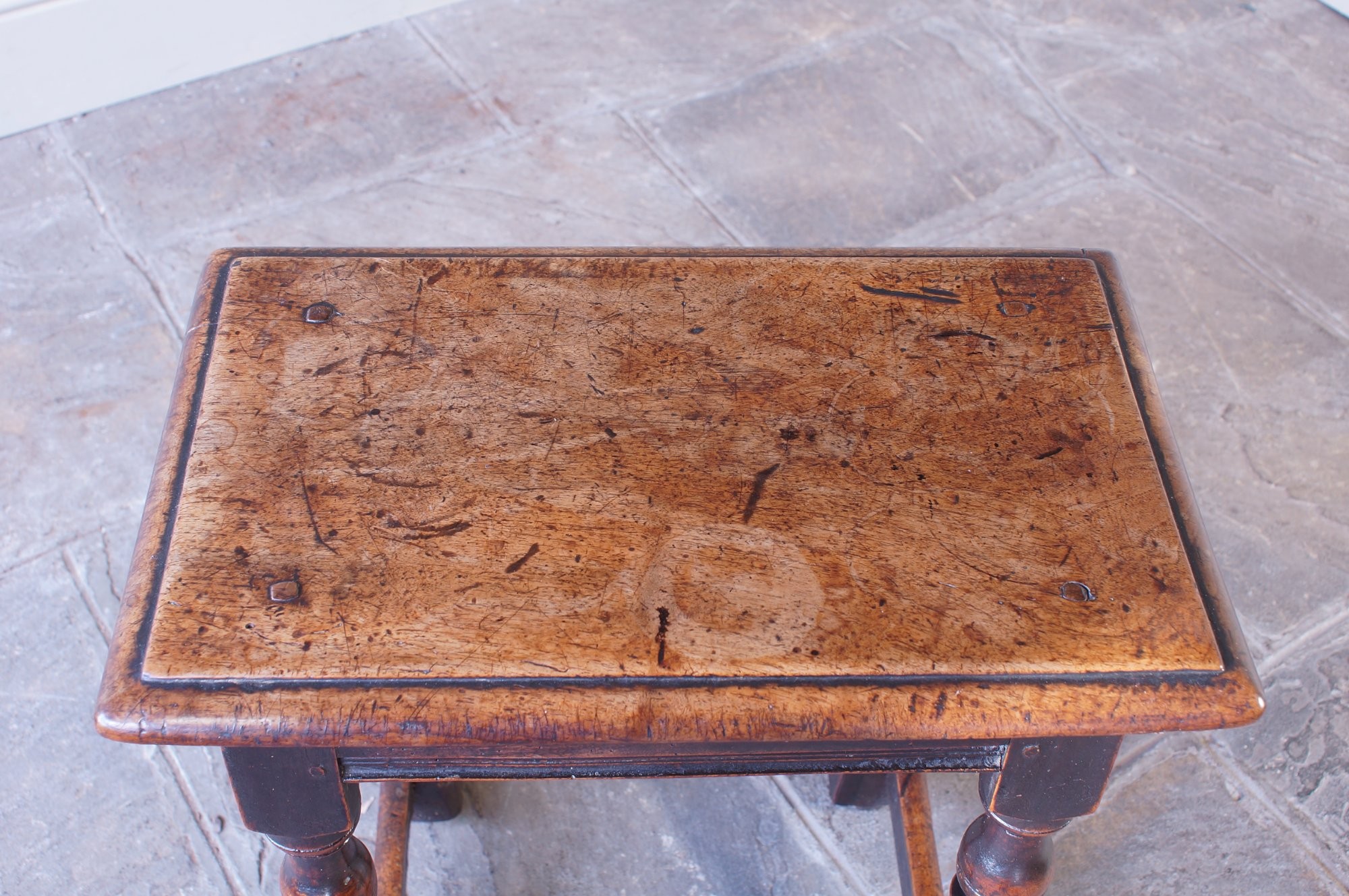
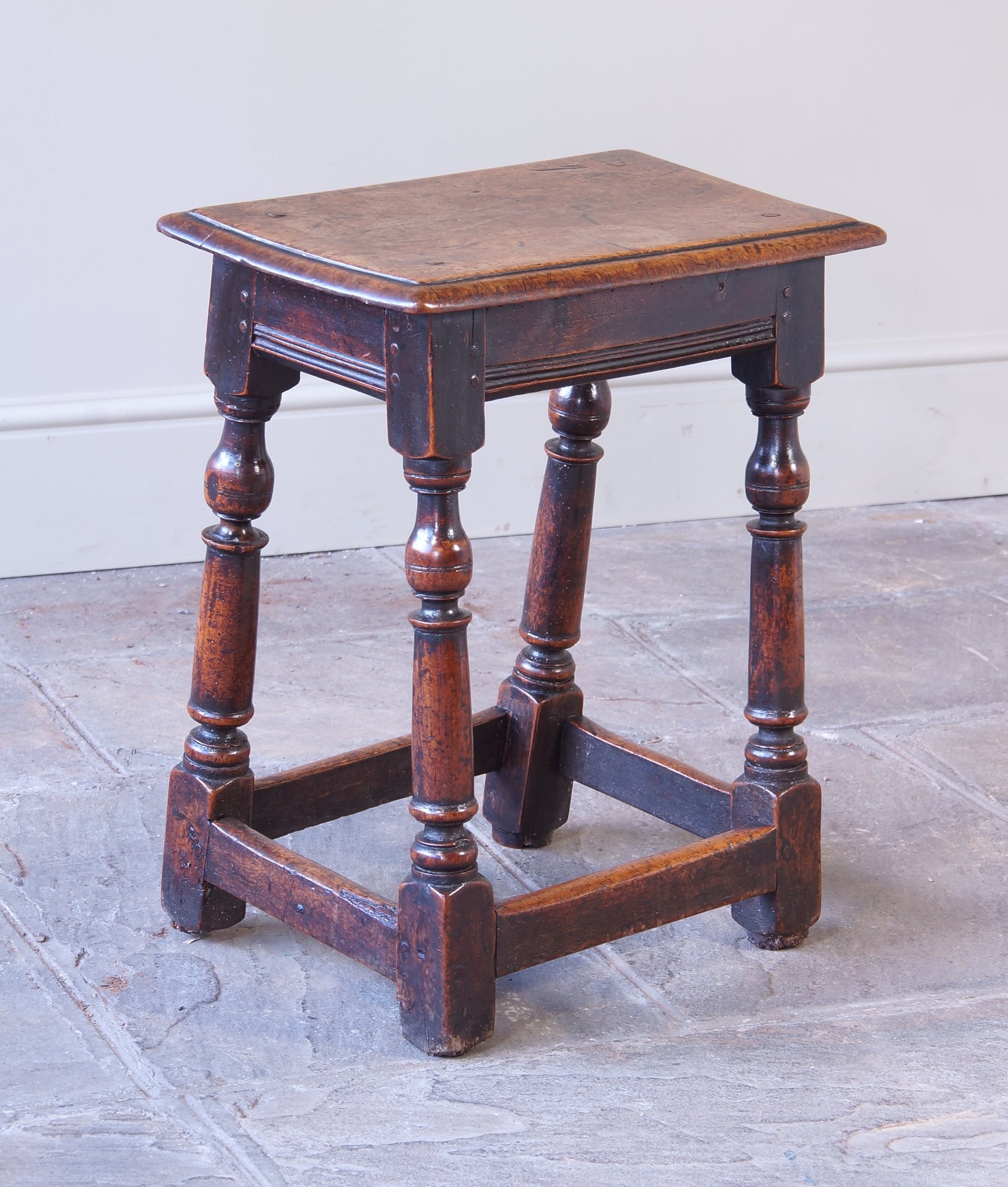
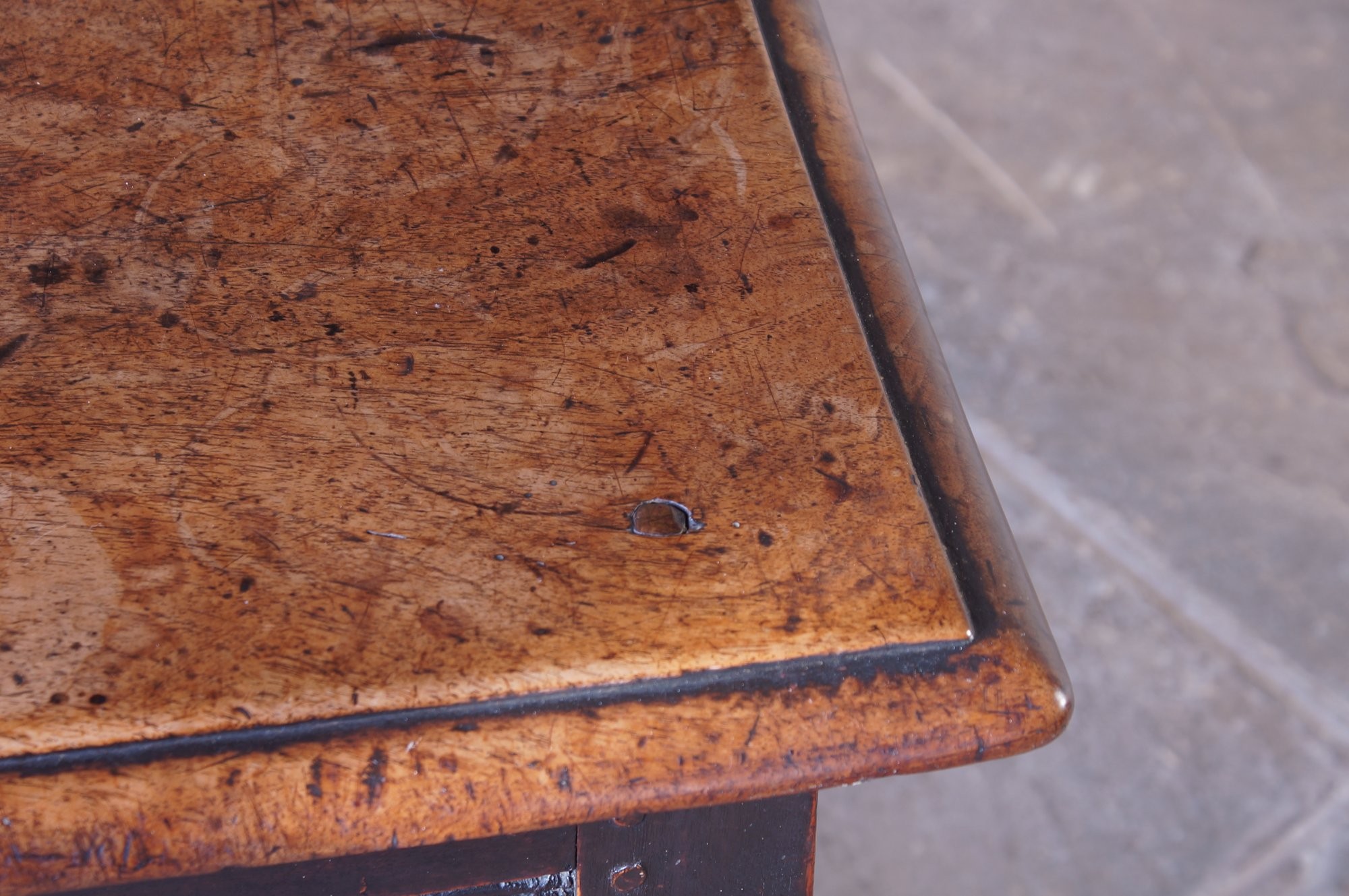
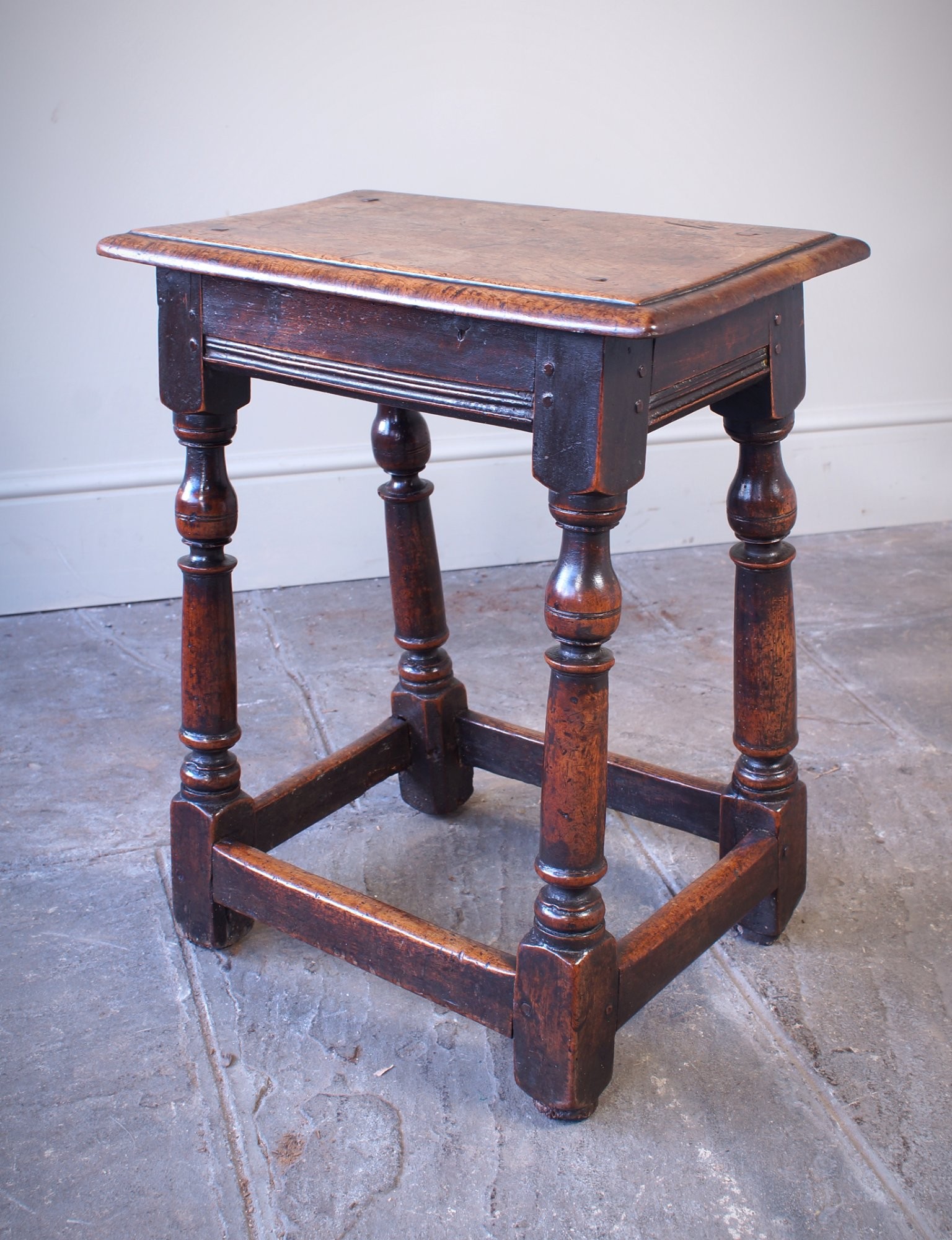
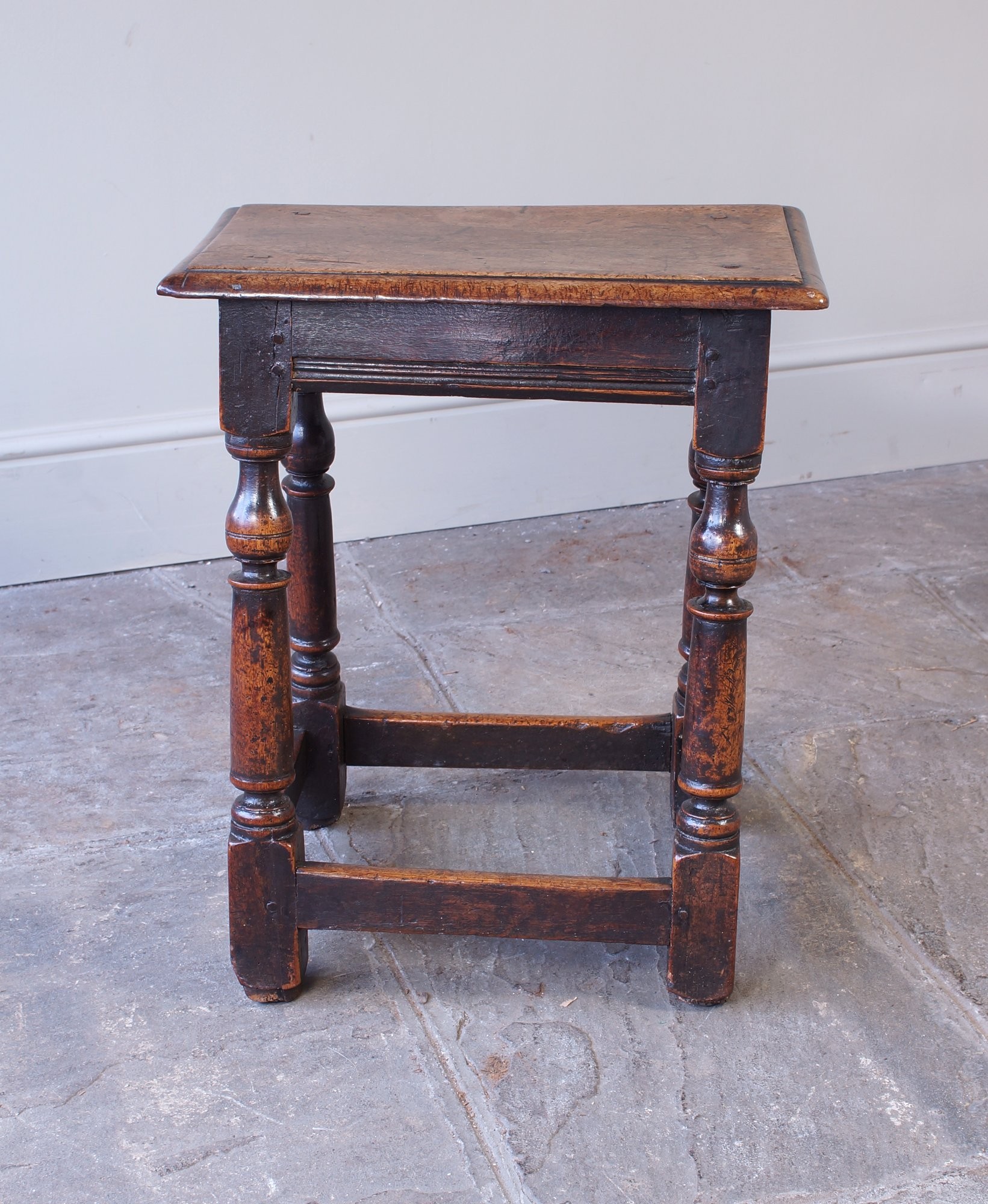
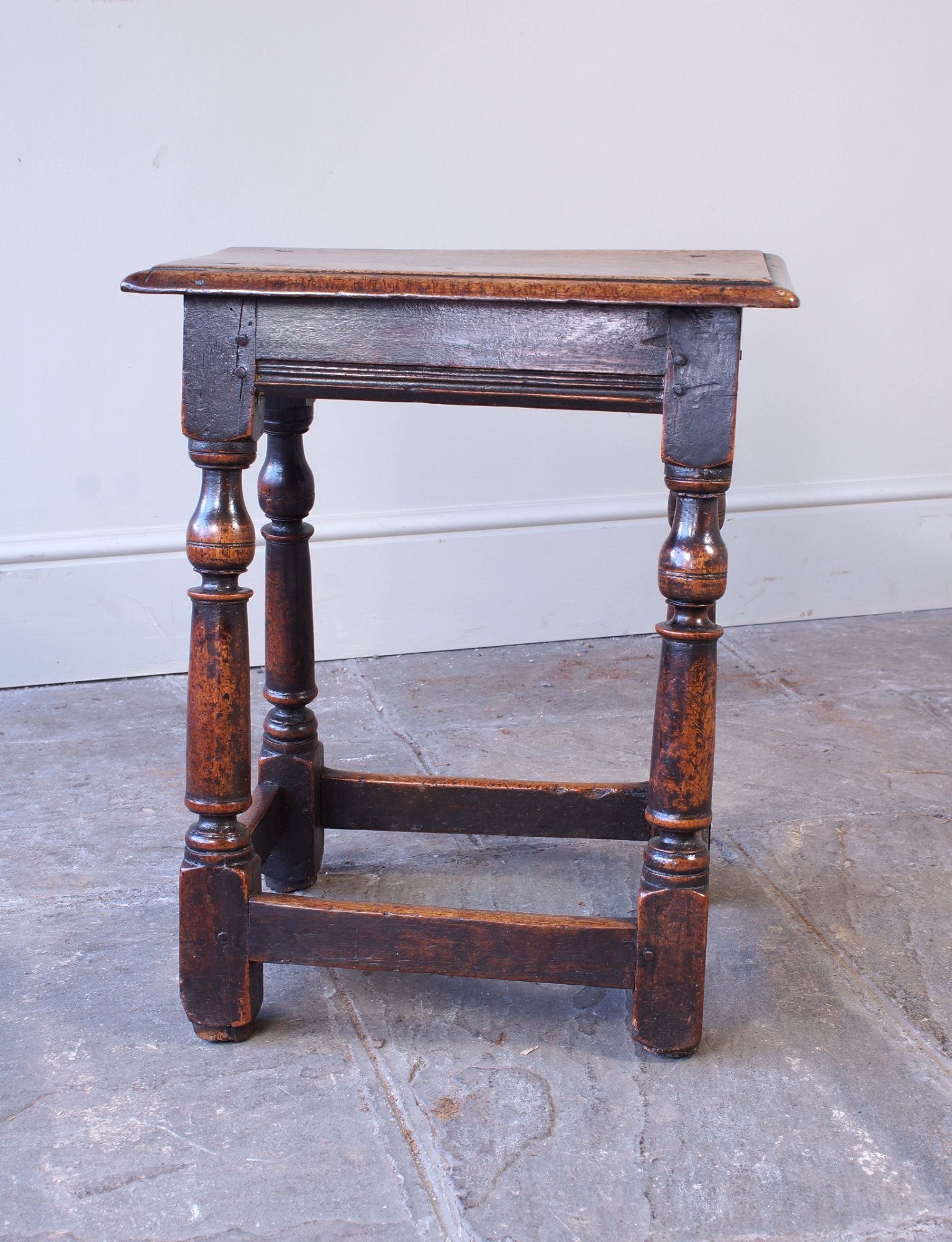
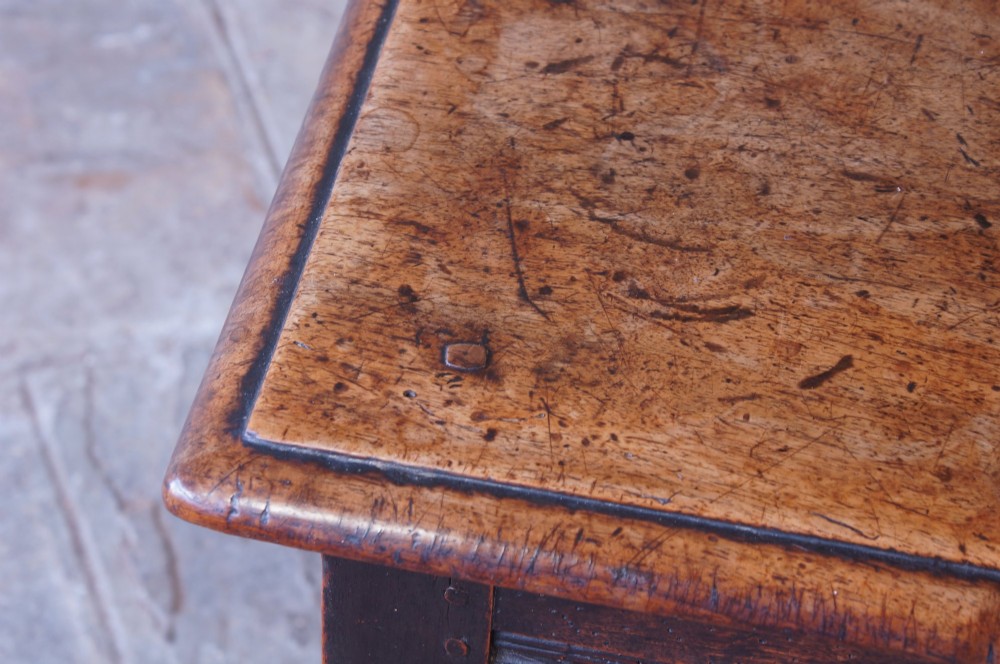
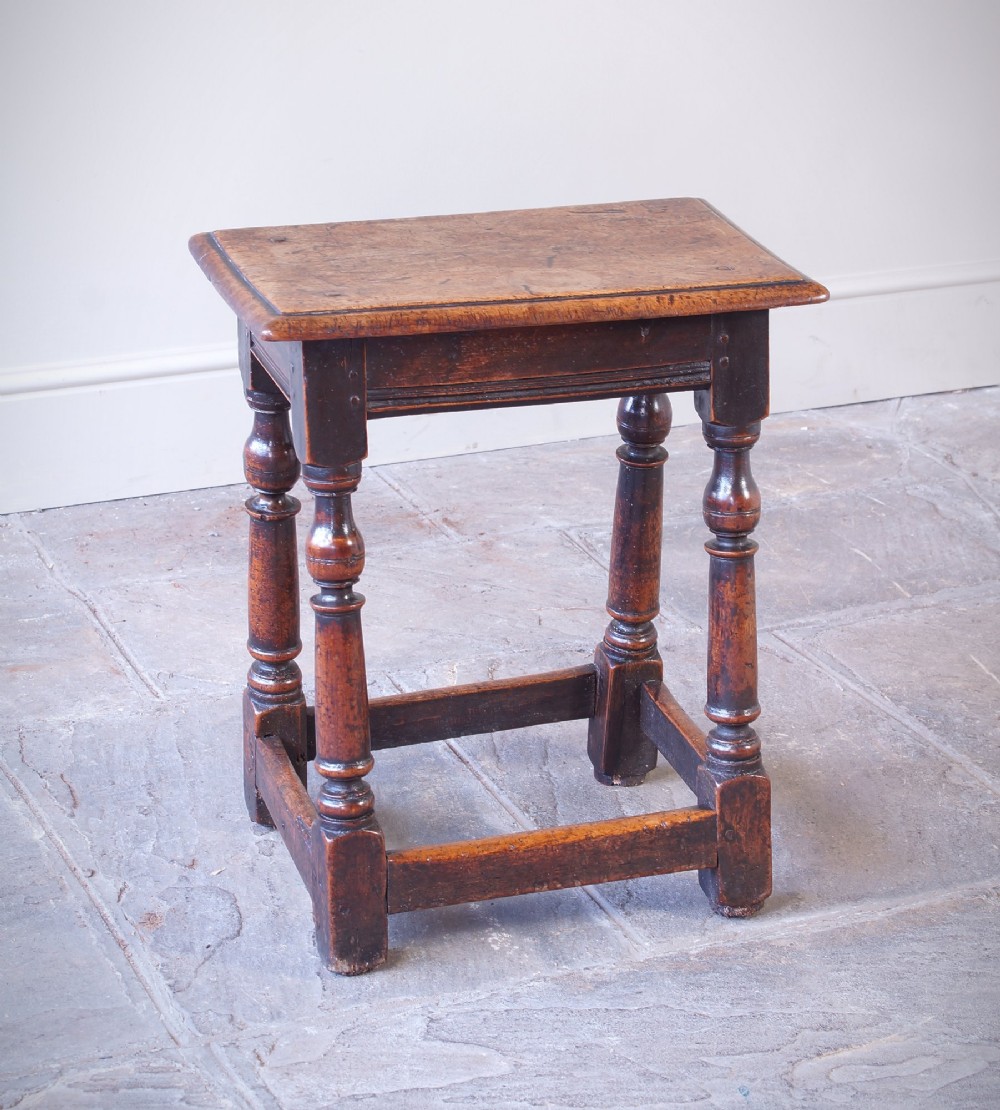
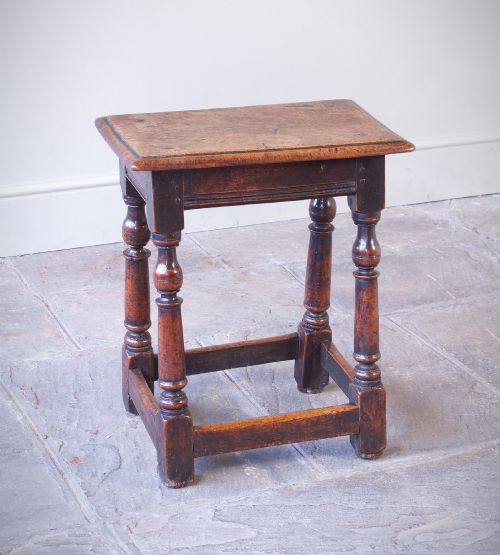
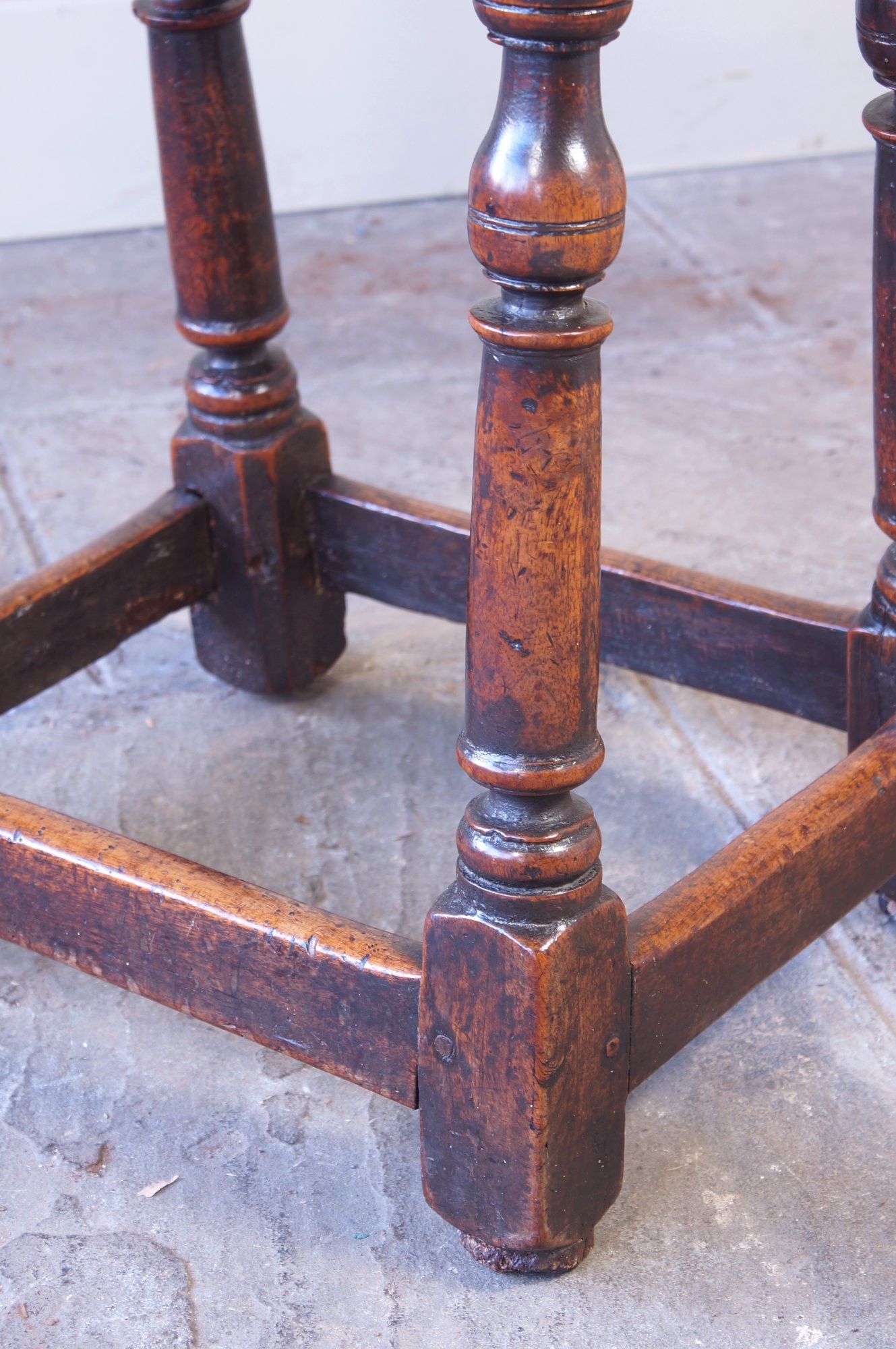
A 17th-century joint stool made from English walnut. This rare survivor has a single-piece top with a thumb-moulded edge, scratch-moulded rails, and column-and-baluster turned legs joined by a peripheral stretcher. It is in excellent original condition, having just a small repair to one bottom square, and features a wonderful colour and patination.
A 17th-century walnut joint stool is an exceptionally rare and highly sought-after piece of early European furniture. While the vast majority of surviving period joint stools were constructed from robust local oak, walnut examples represent luxury, high-status items typically reserved for wealthy households. Genuine 17th-century walnut pieces from the Jacobean, Charles II, or Louis XIV eras are prized for their rich, deep patination and distinct grain.

Date of Manufacture

Dickinsons Antiques has dated this 17th Century Walnut Joint Stool to the 17th Century.

Independent Date Check ID 09658699
Dealer's Item Date17th Century
Sellingantiques Date17th Century
Sellingantiques agingItem 325-390 years old
Test ResultsPassed dating check
Why Sellingantiques dated this piece to THE 17TH CENTURY:
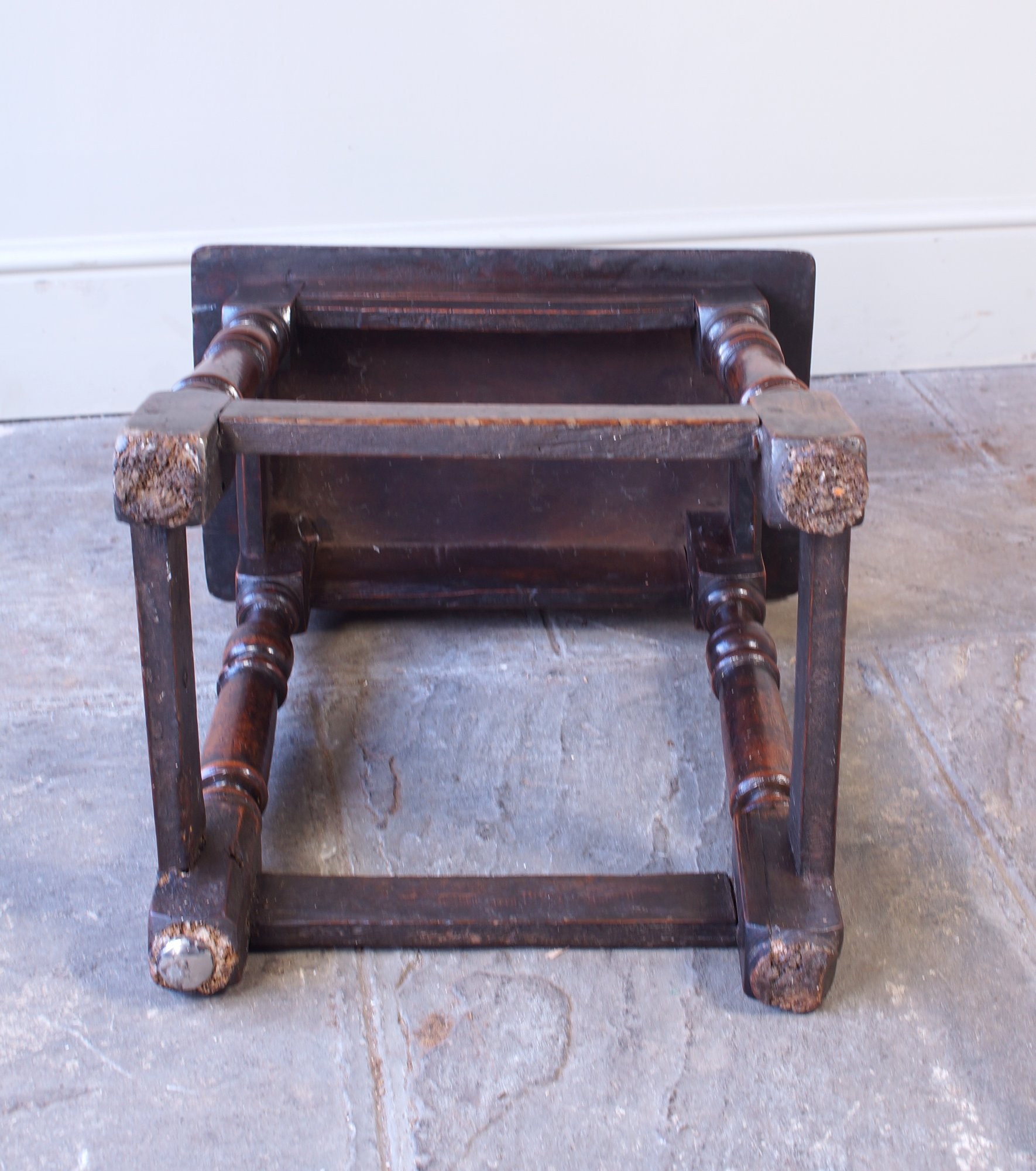
Square-pegged mortise and tenon joints: seventeenth-century framed construction.
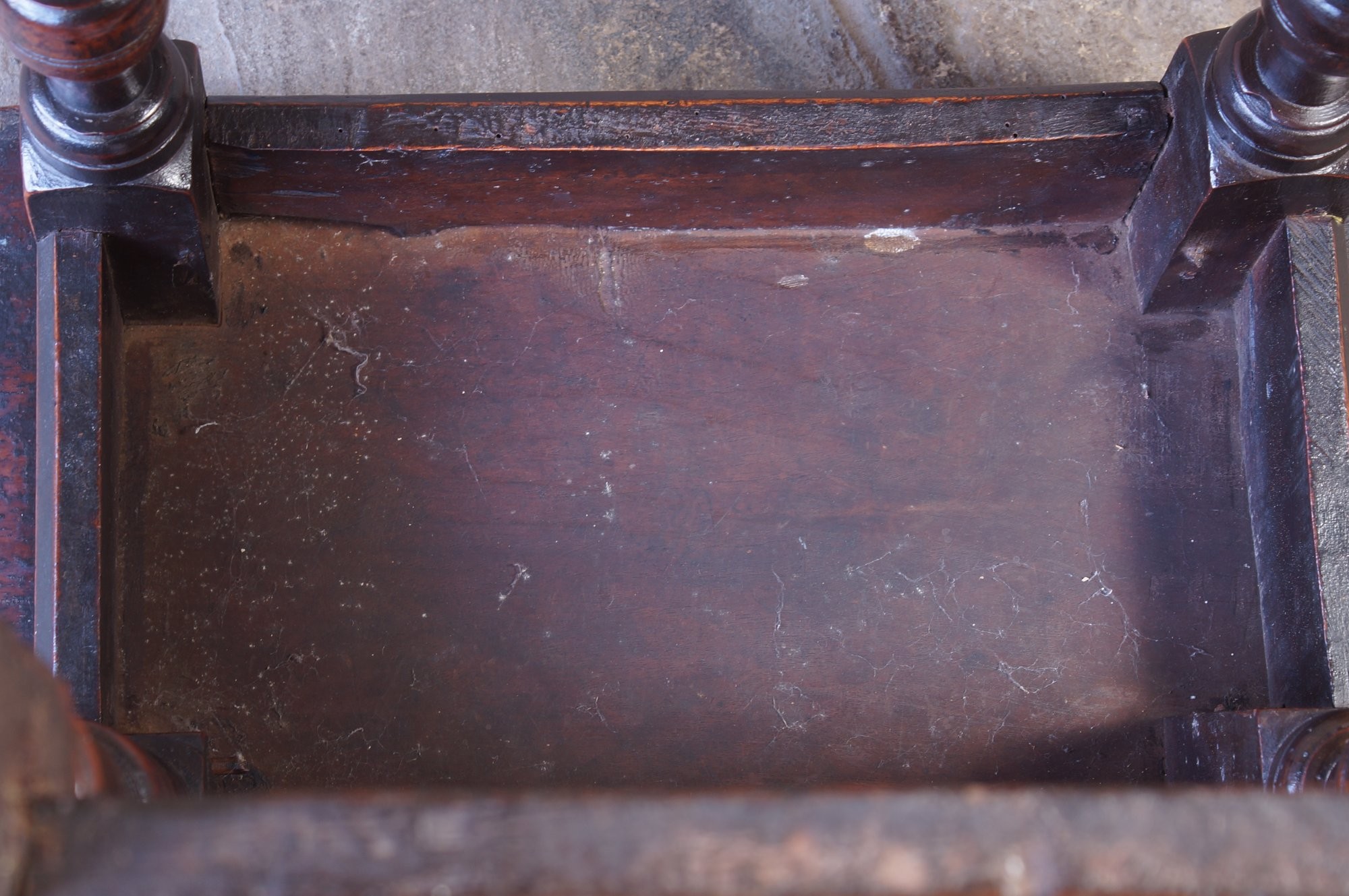
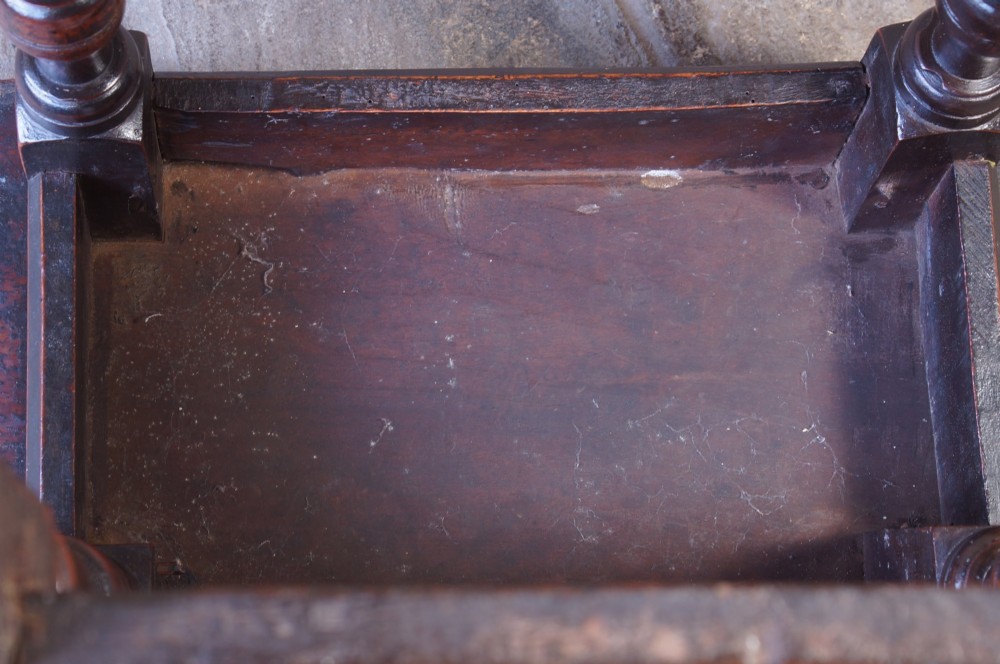
Dark, rough-hewn underside: untouched early timber showing centuries of oxidisation.
Slight hand-turned variation between the balusters: shaping done on a pole lathe.

This is an independent date and photo anotation report compiled by Sellingantiques using its own proprietary system. The process uses the photographs shown on this page. The system is never told the date the dealer has declared. This report shows that the two dates corroborate.

Physical Dimensions
Height
55cm (21.65")
Width
46cm (18.11")
Depth
28cm (11.02")
Reference Numbers
Sellingantiques Reference
SA1236957
Dealers Notes

Please don't hesitate to contact us with any queries or to request additional photos.

All items can be viewed in our showrooms in Gargrave. Normally open from 9am to 5pm Monday to Friday or any other time by appointment. Always best to phone or email just to check we are going to be in.

Most items include free mainland UK delivery.

Worldwide delivery available please contact for price.

Description
A 17th-century joint stool made from English walnut.
“
This rare survivor has a single-piece top with a thumb-moulded edge, scratch-moulded rails, and column-and-baluster turned legs joined by a peripheral stretcher.
Dickinsons Antiques

It is in excellent original condition, having just a small repair to one bottom square, and features a wonderful colour and patination.

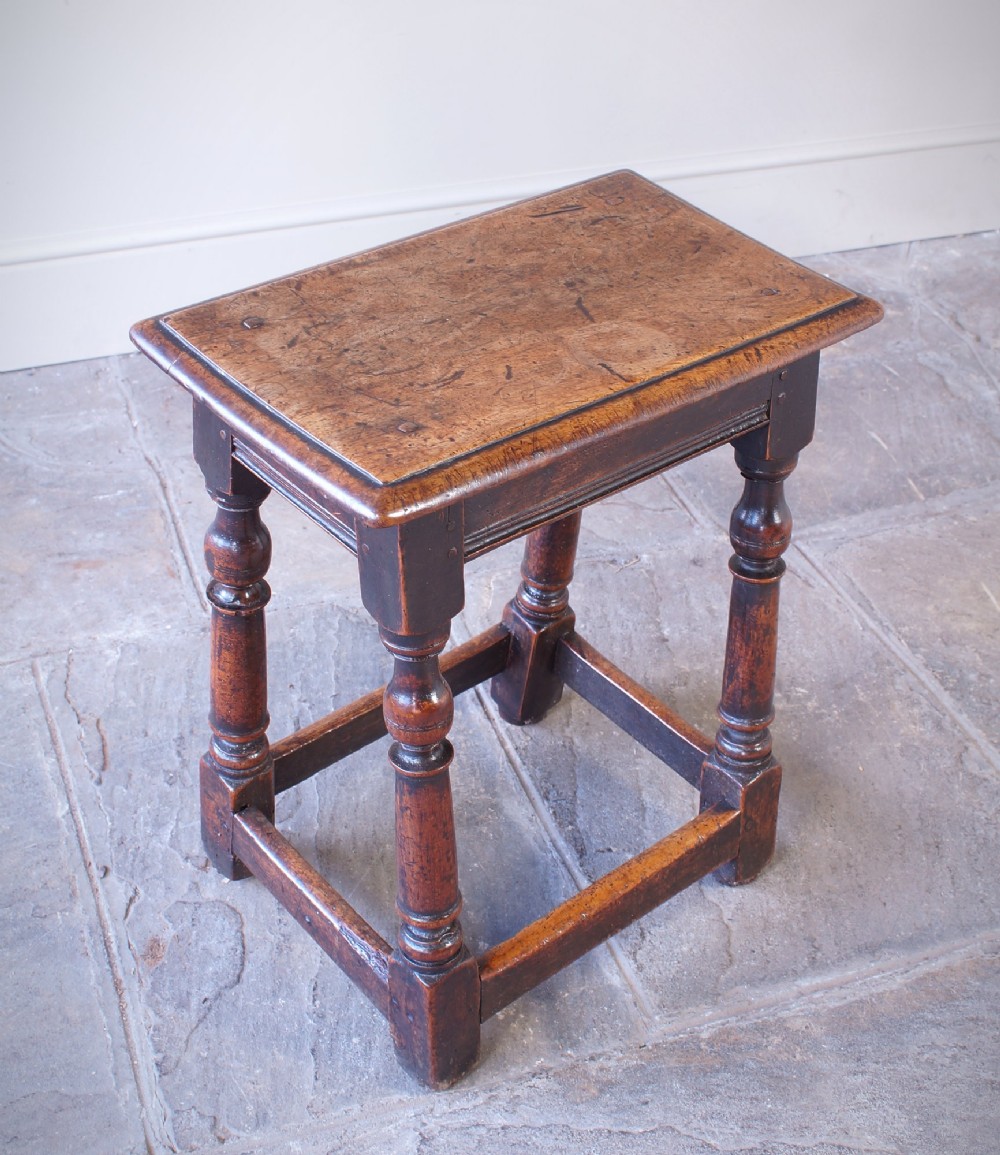
fig 1. A 17th-century walnut joint stool featuring a rectangular moulded top, baluster turned legs, square pegged joinery, and a lower stretcher base with a dark patina.
fig 1. 17th Century Walnut Joint Stool

A 17th-century walnut joint stool is an exceptionally rare and highly sought-after piece of early European furniture. While the vast majority of surviving period joint stools were constructed from robust local oak, walnut examples represent luxury, high-status items typically reserved for wealthy households. Genuine 17th-century walnut pieces from the Jacobean, Charles II, or Louis XIV eras are prized for their rich, deep patination and distinct grain.

Date of Manufacture

Dickinsons Antiques has dated this 17th Century Walnut Joint Stool to the 17th Century.

Independent Date Report ID 09658699
Dealer's Item Date17th Century
Sellingantiques dating17th Century
Sellingantiques agingItem 325-390 years old
Test ResultsPassed dating check
Why Sellingantiques dated this piece to the 17th Century:
Square-pegged mortise and tenon joints: seventeenth-century framed construction.
Dark, rough-hewn underside: untouched early timber showing centuries of oxidisation.
Slight hand-turned variation between the balusters: shaping done on a pole lathe.

This is an independent date report produced by Sellingantiques using its own proprietary system. The process uses the photographs shown on this page. The system is never told the date the dealer has declared. This report shows that the two dates corroborate.

Height
55cm (21.65")
Width
46cm (18.11")
Depth
28cm (11.02")
Reference Numbers
Sellingantiques Ref
SA1236957
Dickinsons Antiques
Dickinsons Antiques
Sellingantiques verified Since Oct 2020

Dealing in early oak and country furniture since 1958.

Dealer Profile

You can view the stock and full dealer information on the Dickinsons Antiques Profile Page
PDF SHARE
SAVE
A 17th-century walnut joint stool featuring a rectangular moulded top, baluster turned legs, square pegged joinery, and a lower stretcher base with a dark patina.
1 / 14
Film
Film of 17th Century Walnut Joint Stool
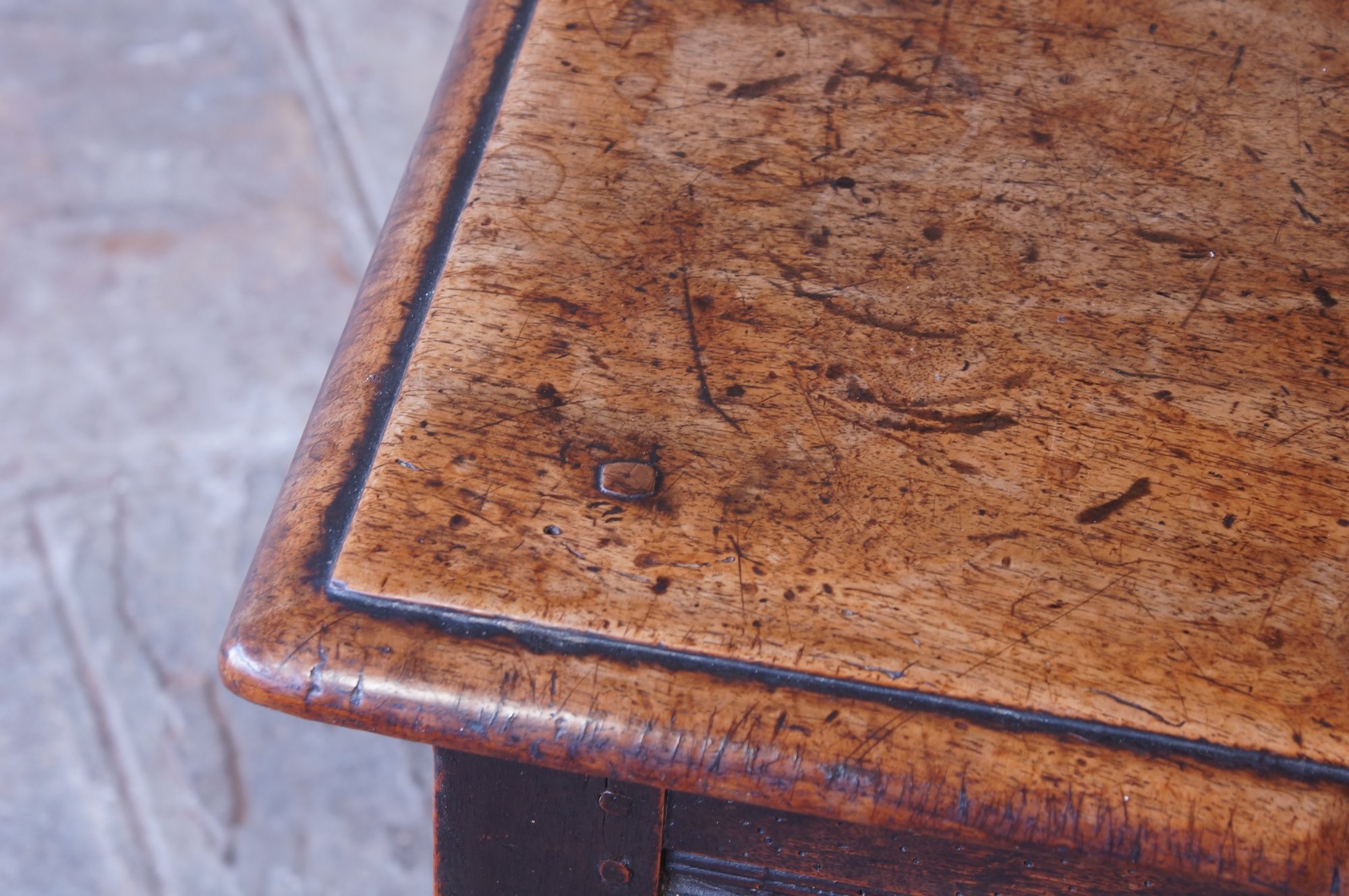
Archive I A 17th-century walnut joint stool featuring a rectangular moulded top, baluster turned legs, square pegged joinery, and a lower stretcher base with a dark patina.

17th Century Walnut Joint Stool
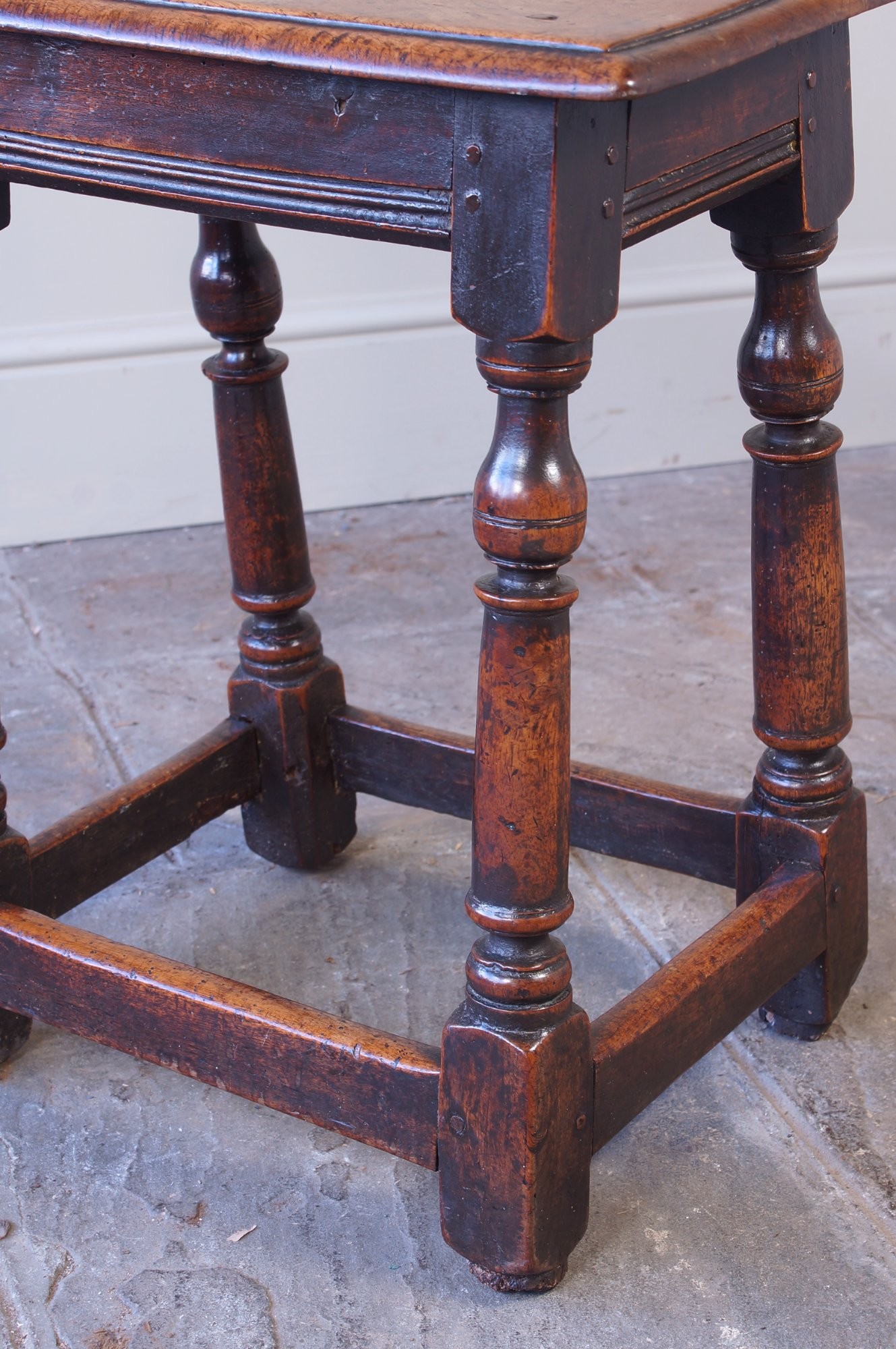
Film
Archive II A 17th-century walnut joint stool featuring a rectangular moulded top, baluster turned legs, square pegged joinery, and a lower stretcher base with a dark patina. View II
Archive III A 17th-century walnut joint stool featuring a rectangular moulded top, baluster turned legs, square pegged joinery, and a lower stretcher base with a dark patina. View III
Archive IV A 17th-century walnut joint stool featuring a rectangular moulded top, baluster turned legs, square pegged joinery, and a lower stretcher base with a dark patina. View IV
Archive V A 17th-century walnut joint stool featuring a rectangular moulded top, baluster turned legs, square pegged joinery, and a lower stretcher base with a dark patina. View V
Archive VI A 17th-century walnut joint stool featuring a rectangular moulded top, baluster turned legs, square pegged joinery, and a lower stretcher base with a dark patina. View VI
Archive VII A 17th-century walnut joint stool featuring a rectangular moulded top, baluster turned legs, square pegged joinery, and a lower stretcher base with a dark patina. View VII
Archive VIII A 17th-century walnut joint stool featuring a rectangular moulded top, baluster turned legs, square pegged joinery, and a lower stretcher base with a dark patina. View VIII
Archive IX A 17th-century walnut joint stool featuring a rectangular moulded top, baluster turned legs, square pegged joinery, and a lower stretcher base with a dark patina. View IX
Archive X A 17th-century walnut joint stool featuring a rectangular moulded top, baluster turned legs, square pegged joinery, and a lower stretcher base with a dark patina. View X
Archive XI A 17th-century walnut joint stool featuring a rectangular moulded top, baluster turned legs, square pegged joinery, and a lower stretcher base with a dark patina. View XI
Archive XII A 17th-century walnut joint stool featuring a rectangular moulded top, baluster turned legs, square pegged joinery, and a lower stretcher base with a dark patina. View XII
Archive XIII A 17th-century walnut joint stool featuring a rectangular moulded top, baluster turned legs, square pegged joinery, and a lower stretcher base with a dark patina. View XIII
Enlarged Archival View
Location
The Estate Yard
West Street
Gargrave
North Yorkshire
BD23 3RD
United Kingdom
Verified Since Oct 2020
Items For Sale 73
Items Sold 252
Dickinsons Antiques
Dickinsons Antiques
Verified Since Oct 2020
View Dealer Info
Location: The Estate Yard, West Street, Gargrave, North Yorkshire, BD23 3RD, United Kingdom
Verified
Oct 2020
For Sale
73
Sold
252
A 17th-century walnut joint stool featuring a rectangular moulded top, baluster turned legs, square pegged joinery, and a lower stretcher base with a dark patina.
17th Century Walnut Joint Stool
Ref: SA1236957
A 17th-century walnut joint stool featuring a rectangular moulded top, baluster turned legs, square pegged joinery, and a lower stretcher base with a dark patina.
Detail View 1
Detail View 2
Detail View 3
Detail View 4
Detail View 5
Detail View 6
Detail View 7
Detail View 8
Detail View 9
Detail View 10
Detail View 11
Detail View 12
Archival Detail
Every single antique dealer on our platform is individually approved by our internal team. We verify their professional trade history, ethical standards, and photographic quality to ensure a secure, high-standard buying environment. Upon joining, every dealer agrees to a strict 9-point code of conduct. While issues can occasionally arise, our dealers typically resolve them swiftly and directly with the buyer. In fact, since our founding in 2002, Sellingantiques has only had to step in to help resolve an issue on roughly five occasions—a true testament to the quality of our dealers and their dedication to your happiness.
Our dealers are highly experienced in packing and shipping fragile, high-value antiques. Because you are in direct contact with the dealer, you will be able to easily go through all available shipping and insurance options together to ensure your item arrives safely.
Antiques are the ultimate green purchase. By choosing historical pieces over newly manufactured goods, you completely eliminate the carbon footprint of modern mass production while preserving exceptional, timeless craftsmanship.
Written by Sellingantiques from the dealer’s photographs and listing
  • ObjectStools
  • Period17th century
  • Style17th Century Jacobean
  • MaterialWalnut
  • ColourWarm Brown
  • MotifsBaluster turned legs, Pegged mortise and tenon joinery, Rectangular moulded top, Box stretchers
  • SizeH 55 cm (22 in) x W 46 cm (18 in) x D 28 cm (11 in)

This seventeenth-century joint stool is made from English walnut with a warm brown colour and a dark patina across its surfaces. The piece takes a rectangular form measuring 55 cm high, 46 cm wide, and 28 cm deep, standing on four baluster-turned legs joined by low box stretchers. Visible details include a moulded top secured with pegged mortise and tenon joinery, along with signs of age such as surface wear and minor structural repairs on the base. Walnut examples of this period represent high-status items originally produced for wealthy households. In a modern interior, this stool functions effectively at the end of a sofa, beside an armchair, or as a small side table in a hallway or living space. The compact footprint allows the furniture to fit neatly into smaller areas while providing a sturdy surface for lamps, books, or decorative objects. The traditional design complements period properties and country house aesthetics, adding historical character and functional surface area to daily living spaces.

A joint stool, historically spelt joyned stool, was the primary form of seating in 16th and 17th-century English households prior to the widespread adoption of chairs. Crafted by joiners using mortise and tenon joinery, these sturdy pieces served as seating at dining tables and doubled as auxiliary surfaces.

Traditional joint stools were constructed from dense regional hardwoods, predominantly oak and walnut. The frames were assembled using mortise and tenon joints held firm with wooden dowel pegs, featuring baluster-turned legs connected by low perimeter stretchers for added structural integrity.

Authentic period examples exhibit hand-driven wooden pegs that sit proud of the surface due to centuries of natural timber shrinkage. Wear pattern analysis reveals uneven rounding on the stretchers where feet rested, alongside original tool marks and an undisturbed aged patina.

A period joint stool works effectively as an occasional side table beside a sofa or armchair, a plant stand, or an understated accent piece in a hallway. Its compact dimensions and historic timber tones introduce textural contrast to contemporary interior modern schemes.

Maintain the original finish by dusting regularly with a dry microfibre cloth and applying a high-grade beeswax polish once or twice a year. Keep the item away from direct heat sources and humid environments to prevent the timber from warping or splitting.
items
Add keywords to the filter
Price
£100
£250000
Era
Period
Style
Material
Origin
Stock Location
Recently Added
Online Payments
Categories