
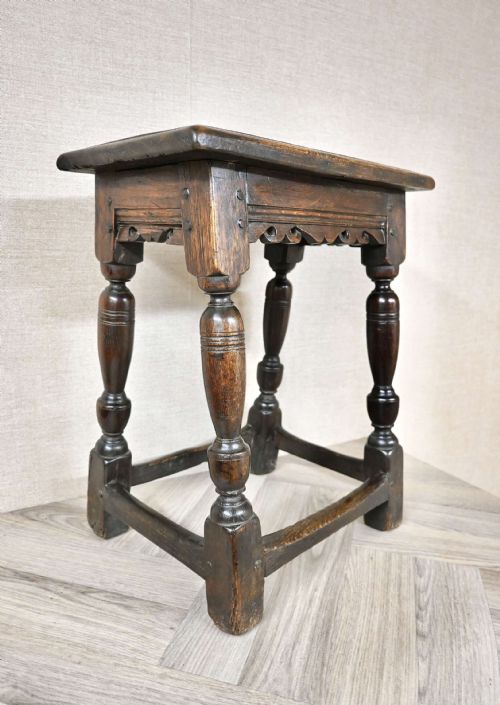
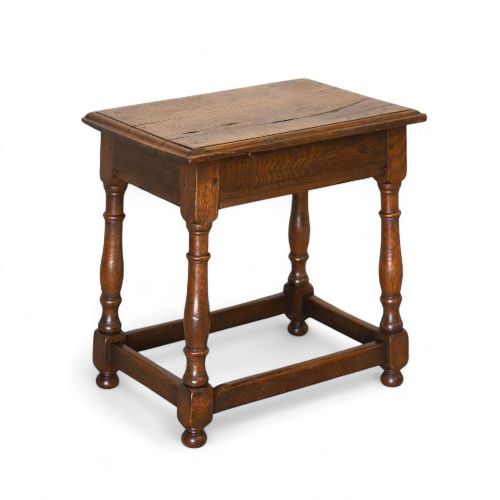
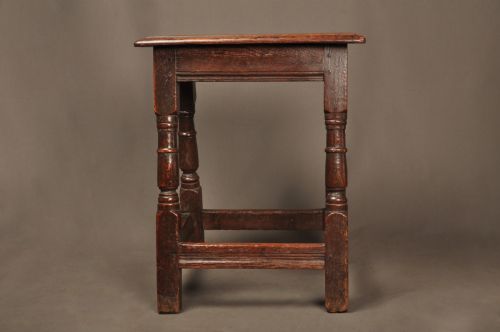


Antique Joyned Stool
An antique joyned stool is a sturdy wooden seat built with pegged mortise and tenon joints, offering authentic seventeenth-century domestic utility.
Antique Joyned Stool
When you search for an antique joyned stool, you encounter solid wooden seating constructed using traditional joinery rather than nails or simple pegs. The pieces span periods from the seventeenth century through the nineteenth century, with Victorian country interpretations and later revivals appearing alongside early originals.
Most examples found here present a rectangular oak top supported by four vertical legs connected by low stretchers. These sturdy forms served versatile household roles for sitting or reaching high shelves in early English homes.
How they were made
Makers built these seats almost exclusively using English oak, selected for its density and strength in early joinery. Occasionally, alternative native timbers such as yew wood appear in seventeenth-century examples.
Construction relied upon mortise and tenon joints secured with wooden dowels, creating a rigid frame that withstood daily household use without metal fastenings.
The listings show pieces spanning the seventeenth century, eighteenth century, nineteenth century, and nineteen-twenty, predominantly fashioned from oak.
What varies in quality
The degree of original timber surface retention separates standard examples from exceptional ones. Untouched surfaces displaying deep natural patination and minimal timber replacement command greater appreciation among collectors.
Proportional harmony and leg turning detail distinguish provincial work from finer regional outputs. Crisp mouldings on the rails and substantial thickness in the top board indicate superior early craftsmanship.
The Antique Joyned Stool Glossary
- Joint stool
- A wooden seat constructed by a joiner using pegged mortise and tenon joinery rather than a carpenter working with simpler nailed or glued joints. This method produced rigid frames capable of heavy domestic service.
- Stretcher
- The horizontal wooden member connecting the lower legs to reinforce the structural frame. On these stools, stretchers also provided a stable footrest above damp floors.
- Mortise and tenon
- A primary woodworking joint where a projecting tongue fits tightly into a corresponding cavity and secures with a wooden pin. This technique defined seventeenth-century furniture construction.
- Patina
- The surface sheen and colour developed by aged timber through decades of handling, light exposure, and polishing. Untouched examples retain rich visual depth across the oak grain.
Antique Joyned Stool: Frequently Asked Questions
What is a joyned stool?
A joyned stool is a rigid wooden seat made by a specialist joiner using pegged frame construction rather than simple household carpentry.
These pieces date primarily from the seventeenth century and served various domestic functions before chairs became common.
How were they used originally?
These low seats provided primary domestic seating around the hearth or dining table in early homes.
Their sturdy rectangular tops also functioned as small side tables or platforms for reaching elevated household provisions.
Are all these stools from the seventeenth century?
While many core examples date to the seventeenth century, the inventory includes later nineteenth-century interpretations and early twentieth-century revival pieces.
Construction details and timber characteristics help distinguish seventeenth-century originals from later provincial copies.
What timber was used?
Oak is the predominant material across these listings, valued for its structural strength and domestic availability in early England.
Archive records also show occasional examples fashioned from yew wood with distinctive grain patterns.
How should I live with an antique stool?
These robust wooden seats adapt easily to modern interiors as side tables, bathroom stands, or occasional seating.
Keeping them away from direct heat sources protects the historic oak timbers from excessive drying and splitting.