

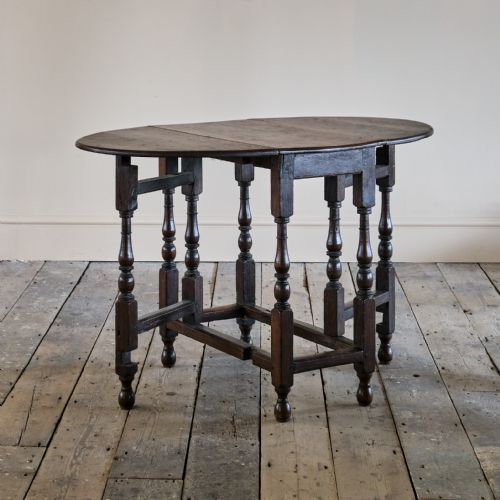


17th Century Joint Stool
A 17th century joint stool is a sturdy wooden seat pegged together by joiners, prized for its robust construction and early domestic history.
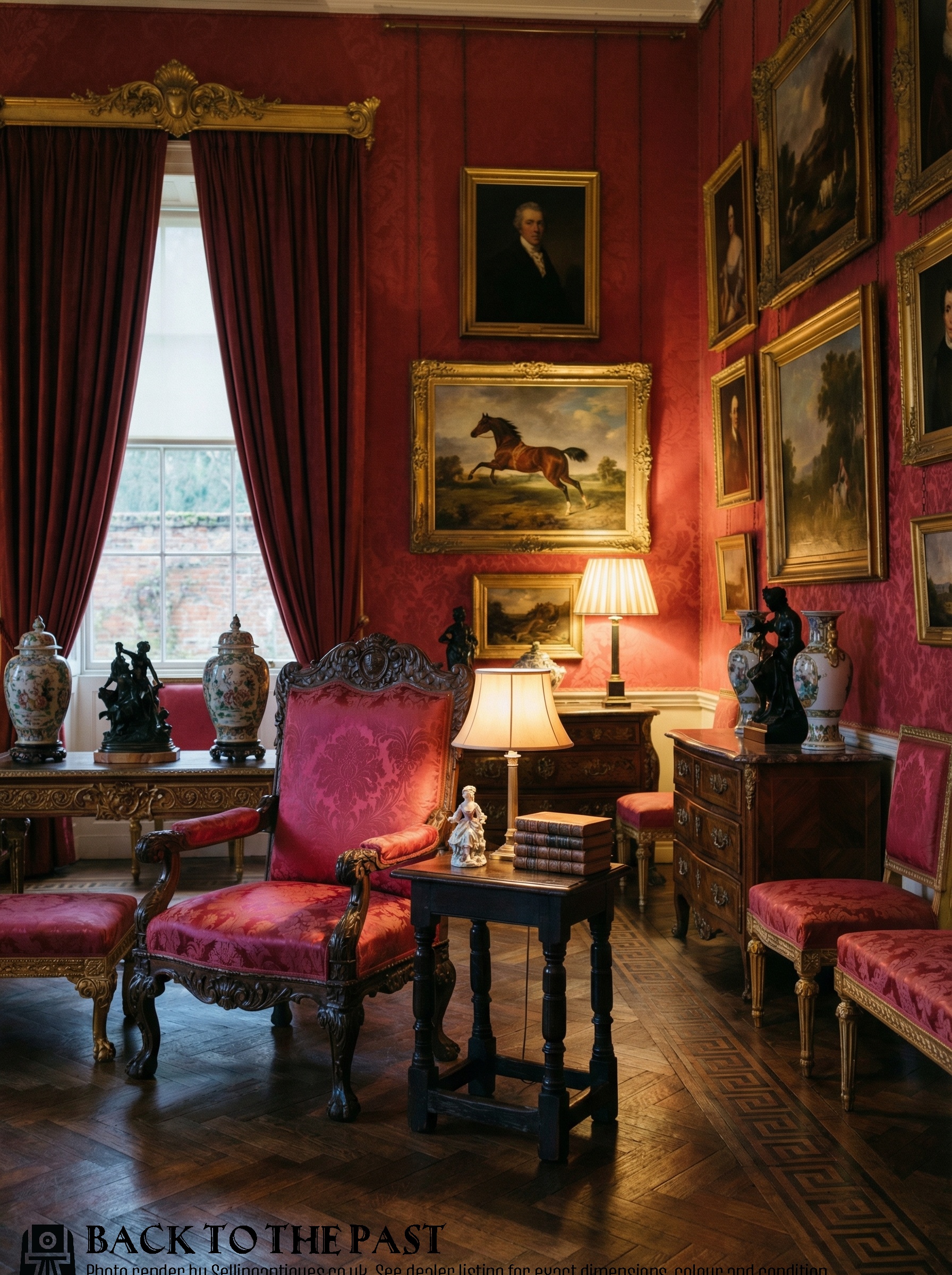
17th Century Joint Stool
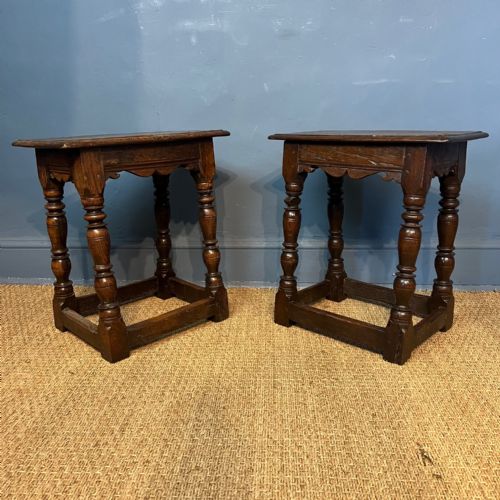
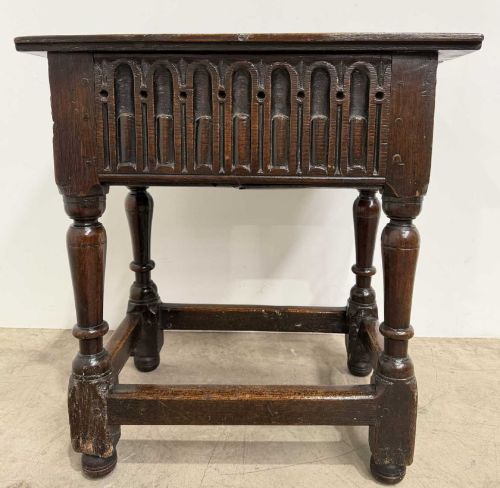
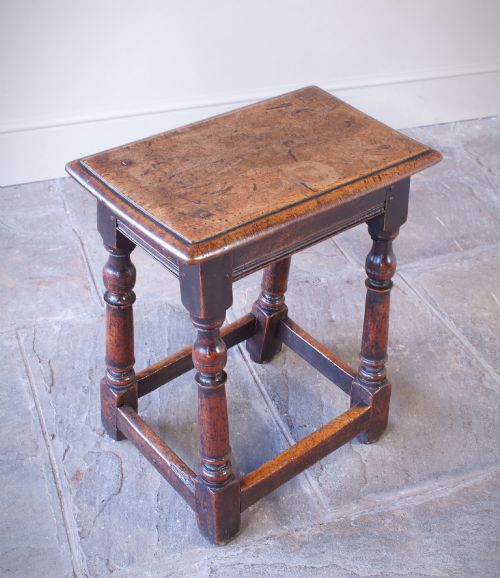
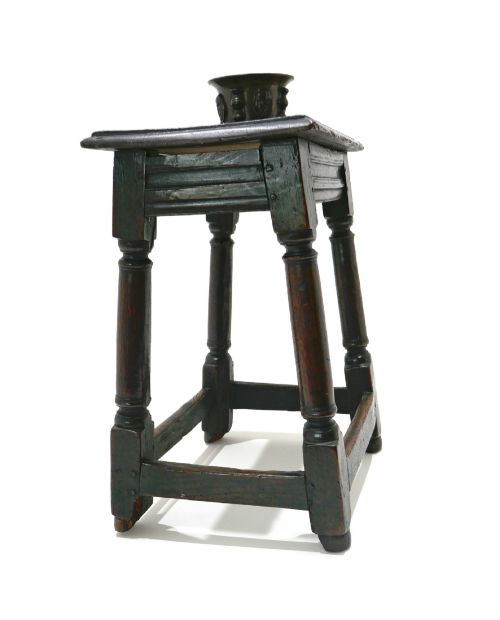
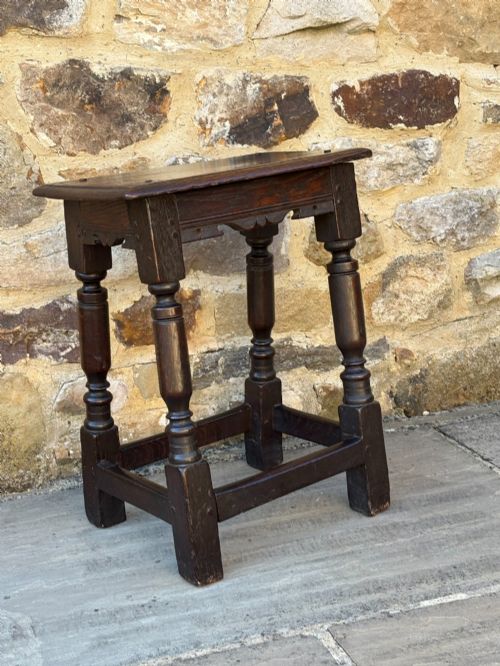
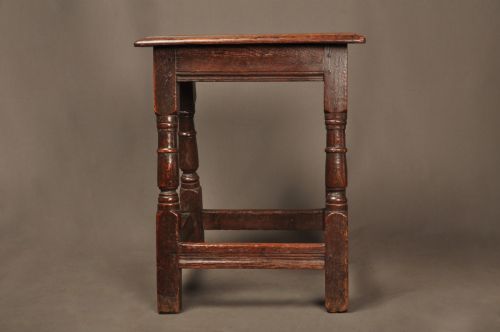
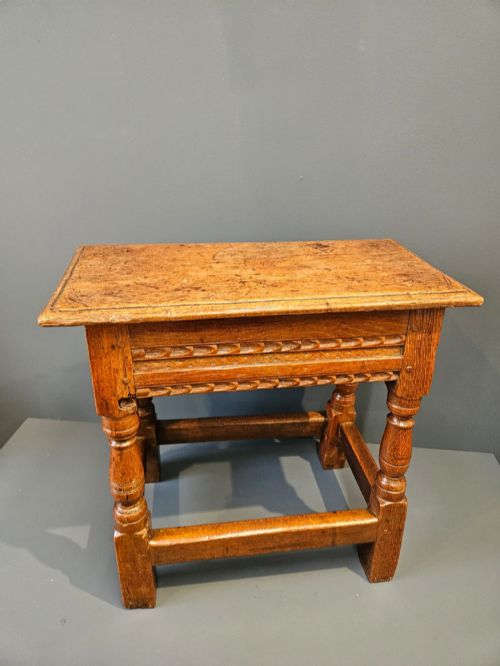
A 17th century joint stool represents a solid wooden seating form constructed using mortise and tenon joints, often associated with early vernacular English households. These pieces appear in forms such as standard joint stools, box stools, and occasionally close stools, reflecting utilitarian domestic routines of the period.
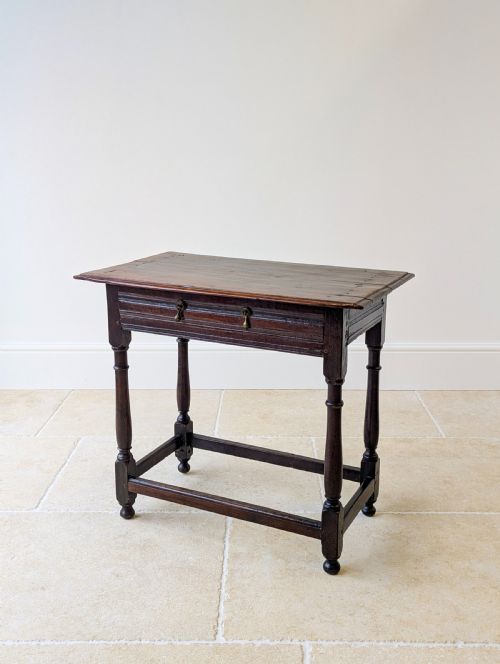
Beyond authentic pieces from the 1600s, buyers frequently encounter later interpretations on this page dating from the Georgian, Victorian, and early twentieth-century revival eras. These later stools mirror the rectangular frames and pegged construction of the originals while carrying the distinct patination of subsequent centuries.
The material palette of these listings centres primarily on oak, sometimes combined with elm or fruitwood, and occasionally featuring simple fabric or hessian upholstery. These timbers give the pieces their characteristic heavy weight and dense grain structure.
Materials and Construction
Makers built these stools using heavily seasoned timbers like oak and elm, shaping the uprights and rails with hand tools. The components lock together through pegged mortise and tenon joints rather than metal nails, yielding a rigid skeleton designed to bear heavy daily loads.
Surface finishing relied on simple scraping and polishing, allowing the natural grain of the hardwood to show beneath centuries of handling. Where upholstery appears, fabrics are secured to wooden frames using traditional tacking methods.
17th Century Joint Stool Retail Price Guide 2026
Typical asking prices for 17th century joint stool among the pieces listed under this phrase on Sellingantiques today, from the lower quarter to the upper quarter. They describe what is for sale here now, not the wider market.
Miniature teddy bear and doll stools appear among the full-sized furniture, proving that seventeenth-century craftsmanship was occasionally scaled down for children's playthings.
Evaluating Quality and Period Integrity
Quality in these pieces rests on the integrity of the original framing, the tightness of the pegged joints, and the degree of survival in the timber. Examples retaining their untouched original surfaces and early pegging sit firmly at the upper end of the range.
The presence of later alterations, replaced stretchers, or extensive timber repair separates utilitarian survivor pieces from structurally complete examples. Revival pieces from later centuries display different joinery standards and timber ageing compared to their seventeenth-century predecessors.
The 17th Century Joint Stool Glossary
- Joint stool
- A sturdy wooden seat constructed with joined and pegged framing rather than traditional turned legs. The term derives from the word joined.
- Box stool
- A variant form featuring a compartment beneath the seat lid, historically used for storage or as a close stool. These pieces combine seating with concealed utility.
- Jacobean
- A stylistic period spanning the early seventeenth century, characterised by solid proportions and straight-lined architectural furniture design. It frequently influences later revival pieces.
- Elm
- A tough, interlocking hardwood utilised by early makers for seats and structural components due to its resistance to splitting. It often accompanies oak in these builds.
- Trestle form
- A structural arrangement where the top is supported by end assemblies rather than four independent corner legs. This layout appears in early boarded seating variants.
17th Century Joint Stool: Frequently Asked Questions
What is a joint stool?
A joint stool is a heavy wooden seat built with joined framing and pegged mortise joints, common in early households.
Unlike modern chairs, they were made by joiners rather than turners and served multiple domestic purposes beyond simple seating.
How were joint stools used?
These stools served primarily as seating around the dining table, but their flat tops also suited side tables or stands.
Some variants included box compartments beneath the seat for storing small household items or linens.
How do I spot a reproduction?
Revival pieces from the nineteenth and twentieth centuries often feature machine-cut marks, standardised timber widths, and modern adhesives.
Original seventeenth-century examples display hand-tool signatures, uneven shrinkage, and authentic period patination across the oak.
Are all these stools from the 1600s?
The listings include both genuine seventeenth-century pieces and later revival interpretations from the Victorian and Edwardian periods.
Makers in the nineteenth and twentieth centuries frequently copied these robust forms to satisfy demand for vernacular styles.