



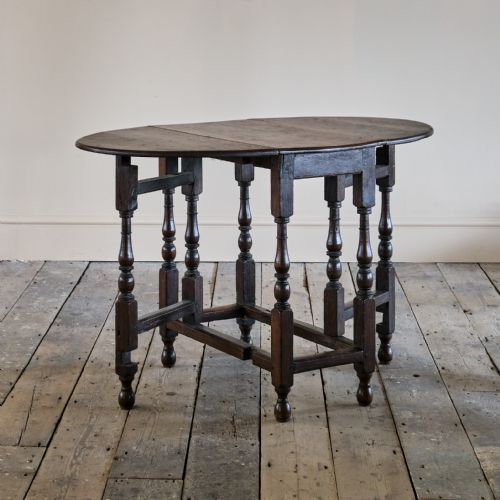


Carved Oak Joint Stool
A carved oak joint stool brings sturdy seventeenth-century craft and simple utility straight into a modern room.
Carved Oak Joint Stool
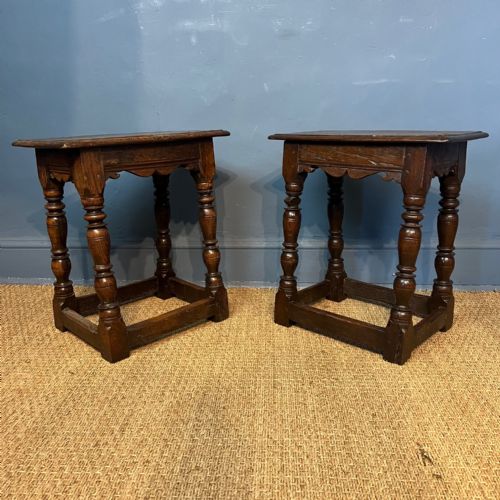
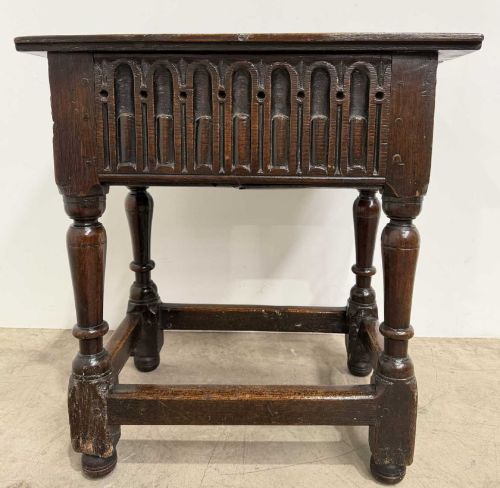
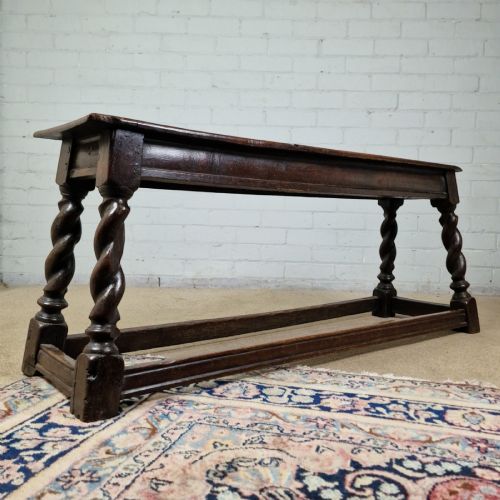
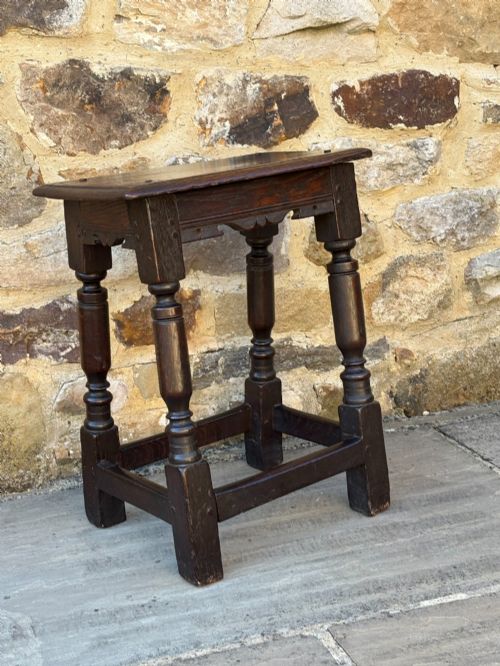
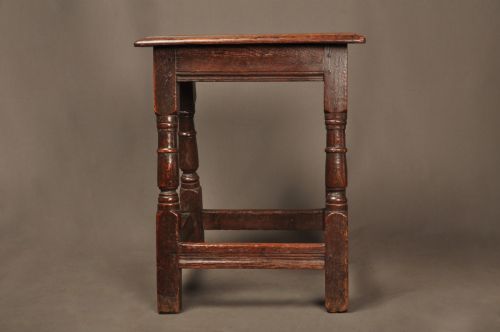
A carved oak joint stool is a rigid, peg-constructed seat built with mortise and tenon joints, designed originally for domestic use in the seventeenth century. The pieces seen here span from the original period through eighteenth-century iterations to nineteenth-century revivals and later twentieth-century interpretations.
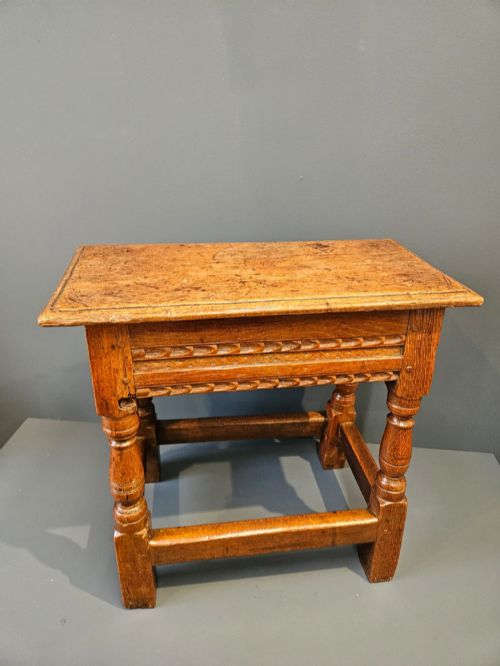
The form most frequently met on this page is the rectangular four-legged stool, though variants such as box stools, close stools, and longer forms also appear. These objects often double as small side tables or occasional stands in contemporary interiors.
What varies in quality
The distinction between a standard example and a finer piece lies in the crispness of the hand-carved detailing and the integrity of the original pegged frame. Untouched surfaces with deep patination and minimal timber replacement command greater appreciation.
Later revival pieces from the nineteenth and twentieth centuries vary according to the fidelity of their construction and the quality of the selected hardwood, contrasting with the heavier tool work found on mid-seventeenth-century originals.
Carved Oak Joint Stool Retail Price Guide 2026
Typical asking prices for carved oak joint stool among the pieces listed under this phrase on Sellingantiques today, from the lower quarter to the upper quarter. They describe what is for sale here now, not the wider market.
Materials recorded across the inventory include solid English oak, brass, iron, hessian, and various hardware fittings.
The Carved Oak Joint Stool Glossary
- Joint stool
- A wooden stool constructed from joined timber using pegged mortise and tenon joints rather than turned legs inserted into a seat. This method provided superior strength for heavy domestic tasks.
- Pegged construction
- A technique where wooden pins lock mortise and tenon joints securely in place. It defines genuine early framework before mass-produced metal fasteners became common.
- Box stool
- A variant featuring a lidded seat compartment used for storage. These pieces frequently double as close stools from the seventeenth century onwards.
- Strapwork
- A carved decorative motif resembling interlaced bands of leather or parchment. It is commonly found on the friezes of Jacobean and seventeenth-century woodwork.
- Lowboy
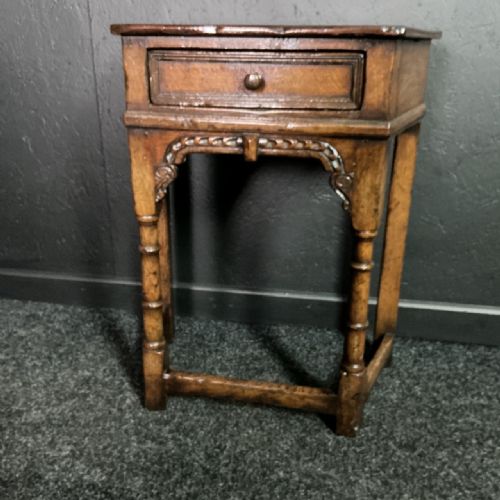
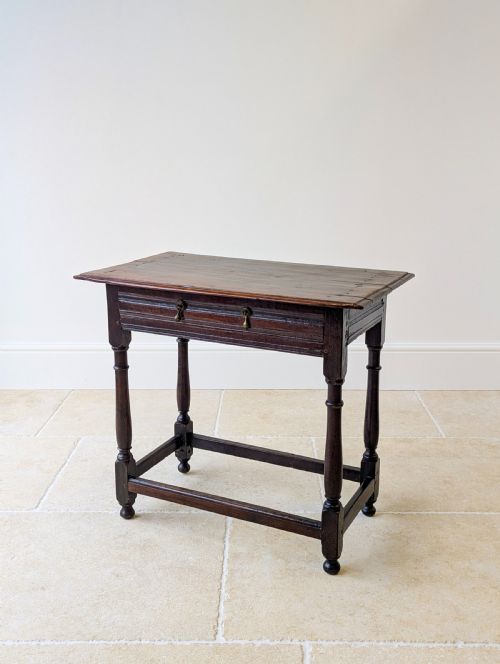
- A small oak table with drawers, appearing occasionally among low seating and side table forms from the same period. It shares similar turned leg and stretcher characteristics.
Carved Oak Joint Stool: Frequently Asked Questions
What is a joint stool?
A joint stool is an early wooden seat built by joiners using precise mortise and tenon framing held together by wooden pegs. The name derives from the joined construction rather than any folding mechanism.
These pieces were sturdy enough to stand on, serve as small tables, or provide extra seating around a seventeenth-century dining board.
How do I date an oak stool?
Dating relies on examining the timber grain, tool marks, construction methods, and the style of any carved ornament. Seventeenth-century examples show hand- cleft oak and worn peg ends.
Later nineteenth-century revivals often feature machine-sawn timber and softer carving details, even when mimicking earlier Jacobean or Gothic forms.
Can I use these stools daily?
Yes, their rigid peg-constructed frames make them exceptionally durable for everyday sitting or as occasional lamp tables. Solid oak withstands normal household use well.
Placing them away from direct heat sources helps preserve the old timber and original surface patination over time.
What is the difference between a joint stool and a box stool?
A standard joint stool has an open underframe with four legs connected by stretchers. A box stool incorporates enclosed sides and a lidded top for storage.
Both share the same heavy oak construction and pegged joinery traditions from the seventeenth century.