

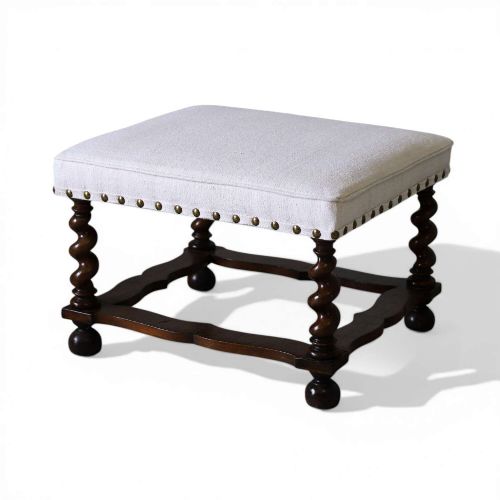
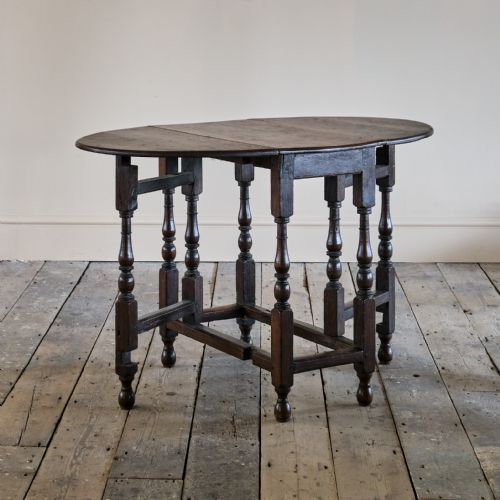


17th Century Style Stool
These 17th century style stool examples deliver the sturdy presence of early British seating, built to bring historic character into any room.

17th Century Style Stool
A 17th century style stool captures the robust architectural lines of early English seating, drawing on traditions of domestic and formal use. Buyers looking at this selection encounter forms ranging from simple joint stools to low footstools and longer boarded designs.
The versions most frequently met on this page are revival pieces created across the nineteenth and twentieth centuries, alongside genuine older examples. Makers through later decades frequently turned to Jacobean revival and William and Mary aesthetics to recreate the heavy timbers of the past.
Materials and Construction
Solid oak and walnut form the structural backbone of these pieces, providing the dense grain required for traditional pegged joinery. Workshops utilised hardwood frames to ensure structural integrity, often incorporating carved details directly into the timber.
Textiles and secondary elements such as linen, hessian, cane, and brass accents appear across various designs to provide upholstery and hardware detailing. Oyster veneers and barley-sugar turnings further demonstrate the varied woodworking techniques employed by makers.
17th Century Style Stool Retail Price Guide 2026
Typical asking prices for 17th century style stool among the pieces listed under this phrase on Sellingantiques today, from the lower quarter to the upper quarter. They describe what is for sale here now, not the wider market.
Oak and walnut dominate the structural materials, supplemented by cane, brass, and woven hessian.
Distinctions in Quality
The division between standard production and superior work rests upon the weight of the timber and the precision of the joinery. Heavier solid oak frameworks with crisp hand-carving command greater attention than lighter, less detailed later interpretations.
The treatment of secondary materials, such as tight cane work or neatly fitted upholstery using traditional fabrics like linen and hessian, marks out the more accomplished execution within the range.
The 17th Century Style Stool Glossary
- Joint stool
- A sturdy wooden stool constructed with pegged mortise and tenon joints rather than turned legs alone. These pieces originally served multiple domestic purposes around the home.
- Oyster veneer
- Cross-sections of small branches or roots sliced to create circular or oval patterns resembling oyster shells. This decorative technique appears on surfaces of walnut furniture.
- Barley-sugar twist
- A turning technique shaped like a spiral resembling traditional confectionery. This ornamental detail frequently decorates the legs and stretchers of revival seating.
- Boarded stool
- A simple form constructed from planks of timber arranged in a trestle format. This method represents an early approach to utilitarian furniture making.
17th Century Style Stool: Frequently Asked Questions
What is a joint stool?
A joint stool is a solid wooden seat built with pegged frame construction rather than glued dowels. These pieces served versatile household roles in early homes.
They functioned as seating, small side tables, or steady platforms for reaching high places. Their heavy frames made them durable enough for daily domestic tasks.
How do I date an oak stool?
Dating requires examining the tool marks, timber shrinkage, and assembly methods used in the frame. Revival pieces from later centuries often show mechanical saw marks.
Older examples display hand-cut pegs and uneven wear patterns along the footings. Comparing the wood density and style provides further clues to the period of origin.
Were these stools used as tables?
Historical evidence indicates that joint stools frequently doubled as temporary side tables or serving surfaces. Their flat wooden tops accommodated various household items.
In smaller dwellings, multi-purpose furniture allowed families to maximise their living space. This adaptability explains their common presence in historical inventories.
Where do I place a stool?
These low wooden pieces fit easily beside armchairs, near bedsides, or beneath narrow console tables. Their compact footprints suit entrance halls and tight corners.
Using them as small display surfaces for plants or books brings historical texture into modern rooms. Their neutral wooden tones complement both contemporary and traditional interiors.
What distinguishes Jacobean revival work?
Jacobean revival furniture imitates the heavy proportions and geometric carvings typical of the early seventeenth century. Makers in later eras adopted these motifs to satisfy a renewed interest in historical design.
These later interpretations utilise period construction techniques while reflecting the tastes of their actual production era. Examining the interior surfaces helps clarify the true age of the timber.