


English Country Bench
An English country bench brings honest vernacular character and sturdy utility into a modern room, offering centuries of craftsmanship in solid oak, pine, ash, and leather.
What these pieces are
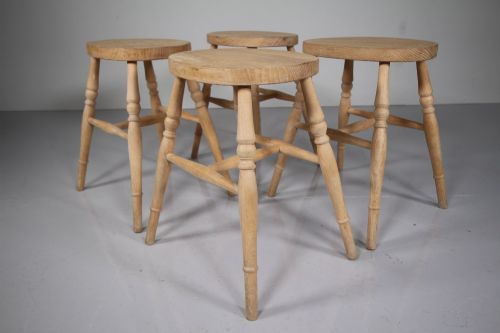
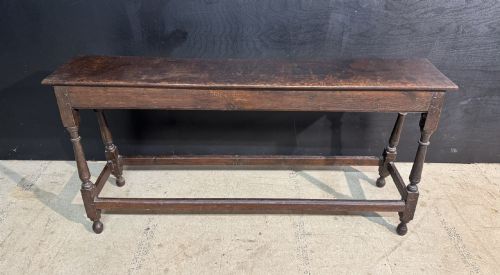
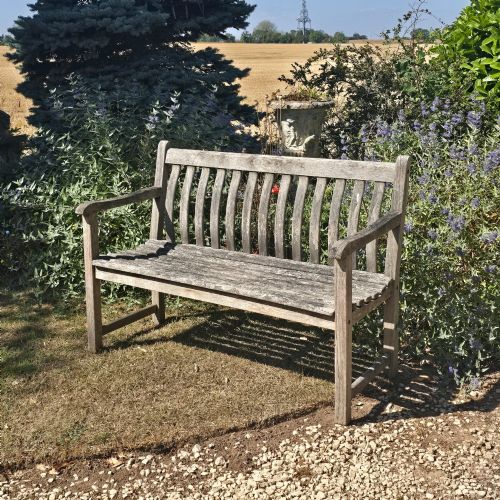
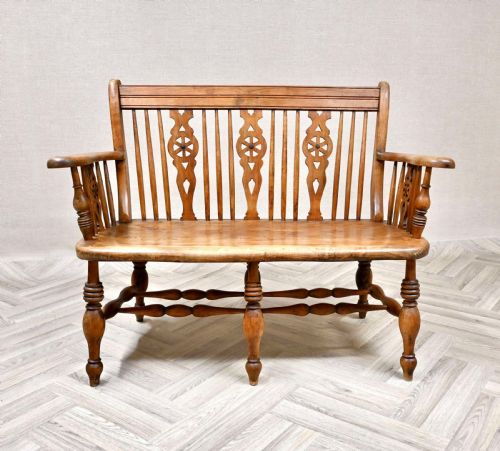
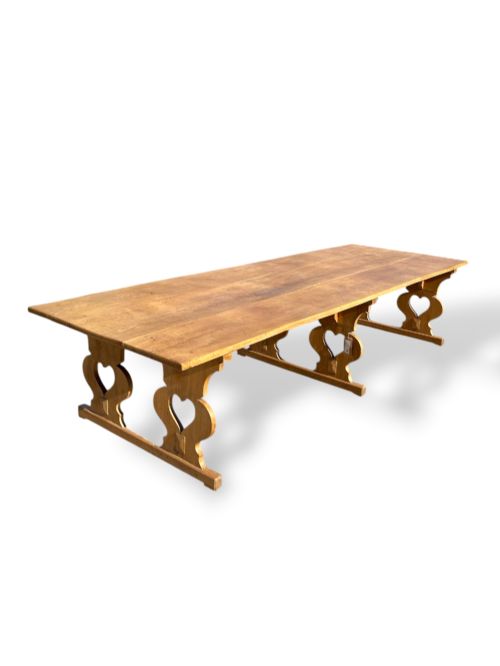
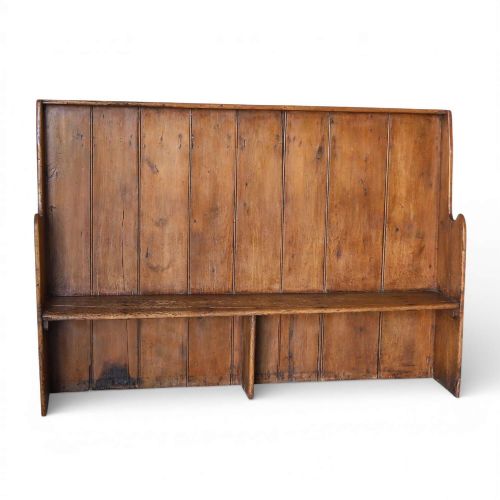
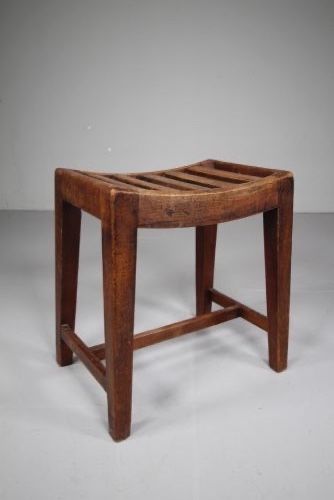
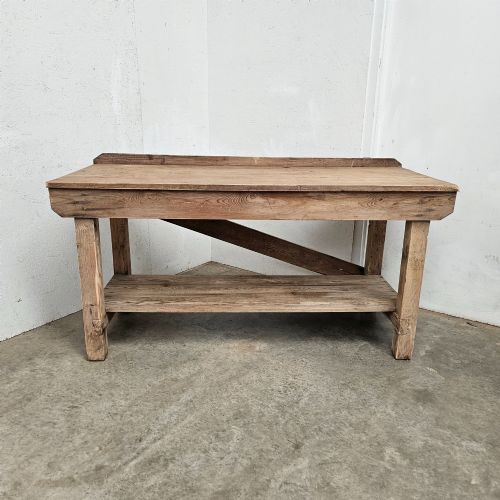
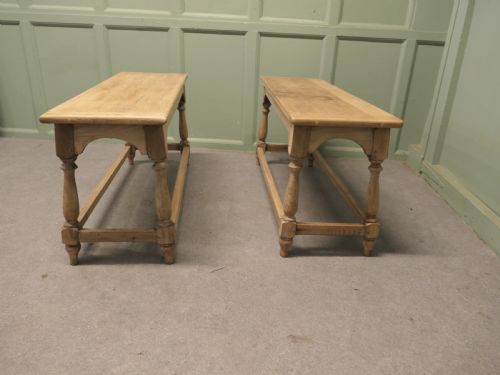
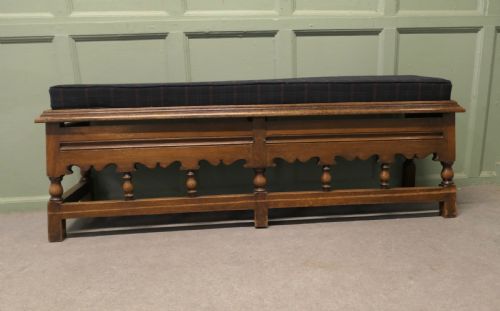
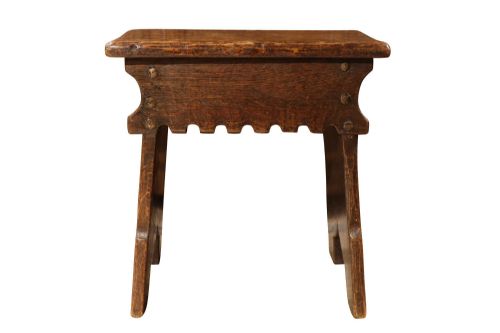
An English country bench encompasses sturdy seating forms shaped for domestic, rural, and garden use across several centuries. The selection ranges from robust settles and pig benches to long chapel pews and low footstools.
The eighteenth century provides substantial oak settles and pig benches, while later periods contribute pine pews, ash seating, and cane or leather footstools. These works reflect the practical needs of English households, workshops, and gardens.
Buyers frequently encounter Georgian and Jacobean Revival influences alongside vernacular English country designs. Each form demonstrates the enduring appeal of heavy timber framing and straightforward construction.
How they were made
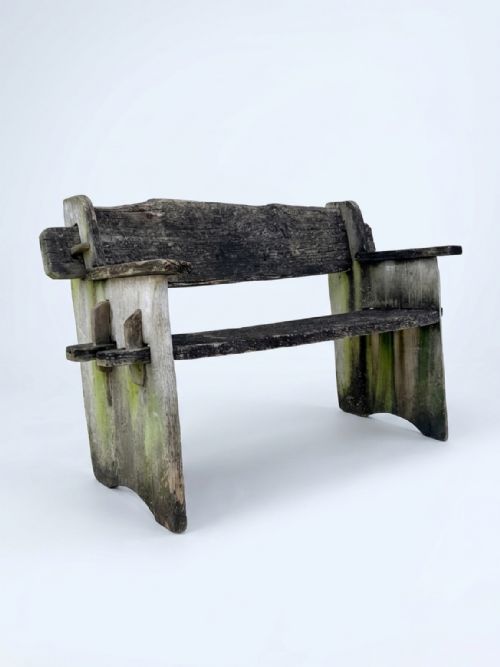
Makers relied on durable native hardwoods, primarily oak, ash, and pine, joined with traditional framing methods. Surfaces often show the natural grain of bleached or untreated timber, while occasional pieces incorporate woven cane and leather.
Construction techniques prioritise structural integrity and daily utility, using thick planks and sturdy stretchers to support heavy loads. Artisans shaped each bench by hand, leaving authentic tool marks and signs of age across the timber.
Listings feature periods spanning from the eighteenth century through to nineteen twenty, utilising oak, pine, ash, leather, and cane.
What varies in quality
Quality rests in the integrity of the original timber and the presence of honest patination built through generations of use. Pieces retaining their structural frame without heavy modern intervention sit at the top of the range.
The distinction between ordinary utility items and finer vernacular pieces lies in the balance of proportions and the choice of materials. Solid oak framing and untouched historical surfaces command greater appreciation than heavily restored examples.
The English Country Bench Glossary
- Settle
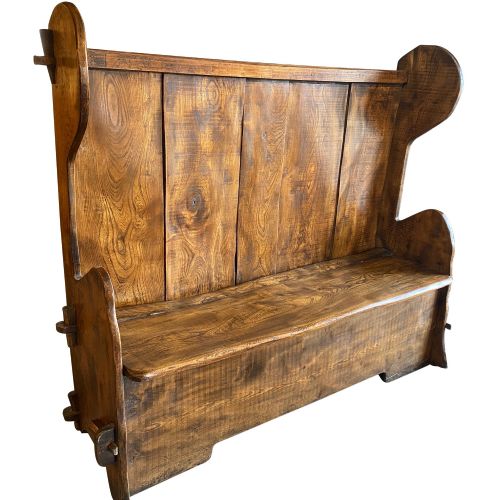
- A wooden bench with a high back, solid arms, and often a storage box beneath the seat. This form protected inhabitants from cold drafts in older English homes.
- Pig bench
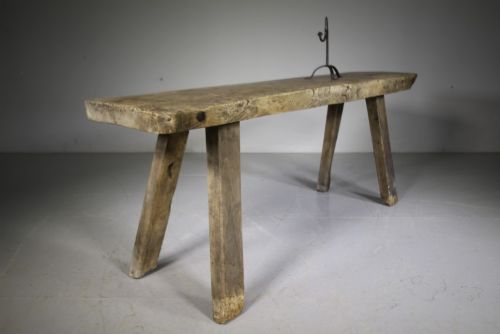
- A low, heavy wooden bench traditionally utilised in rural butchery and domestic preparation. Today these sturdy items frequently serve as low coffee tables in country interiors.
- Cane
- Woven plant material used to form supportive seats and panels on lighter footstools and chairs. It adds texture and flexibility to wooden frames.
- Jacobean Revival
- A nineteenth-century style imitating the heavy, carved oak furniture of the early seventeenth century. It appears on revival benches from the Edwardian era.
Frequently Asked Questions
Where should I place an English country bench?
These benches suit hallways, boot rooms, and living spaces where their sturdy proportions provide practical seating. Lower forms also function well as coffee tables in front of a sofa.
Their robust timber construction handles everyday domestic life with ease, adding historic character to both traditional and contemporary interiors.
How do I care for antique oak and pine furniture?
Maintain the timber by dusting with a dry cloth and avoiding placement near direct heat sources or strong sunlight. This prevents the wood from drying out or splitting over time.
Occasional application of natural wax helps nourish dry surfaces and preserves the historic patination developed over centuries of use.
Are these benches comfortable for daily use?
Vernacular country seating was built for utility rather than upholstered luxury, offering firm wooden support. Adding loose cushions or sheepskins easily softens the seat for extended lounging.
The deep proportions and solid backs of settles and pews provide a secure and supportive sit.
How do I distinguish eighteenth-century pieces from later revivals?
Eighteenth-century examples display hand-cut joinery, pegged tenons, and deep patination earned through long generations of domestic service. Later revival pieces often feature machine-tooled elements and cleaner, more uniform surfaces.
Examining the underside and joint construction reveals the subtle tool marks characteristic of earlier hand-working methods.