








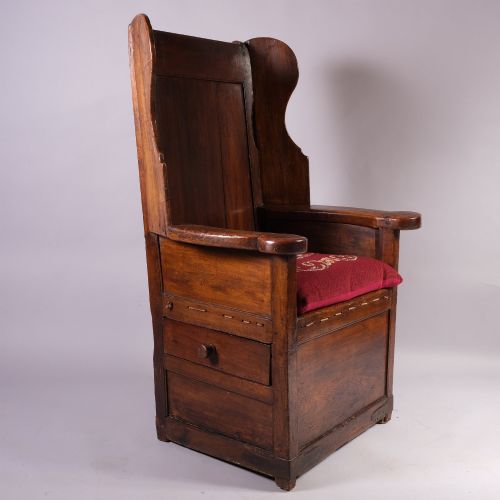
Traditional Oak Settle
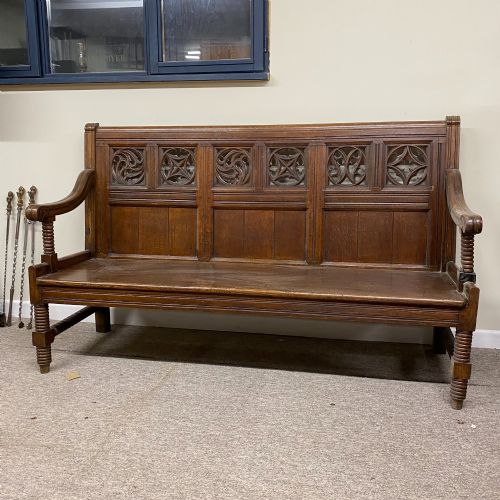
A traditional oak settle offers high panelled backs and deep storage, providing a commanding seat rooted in centuries of vernacular domestic life.
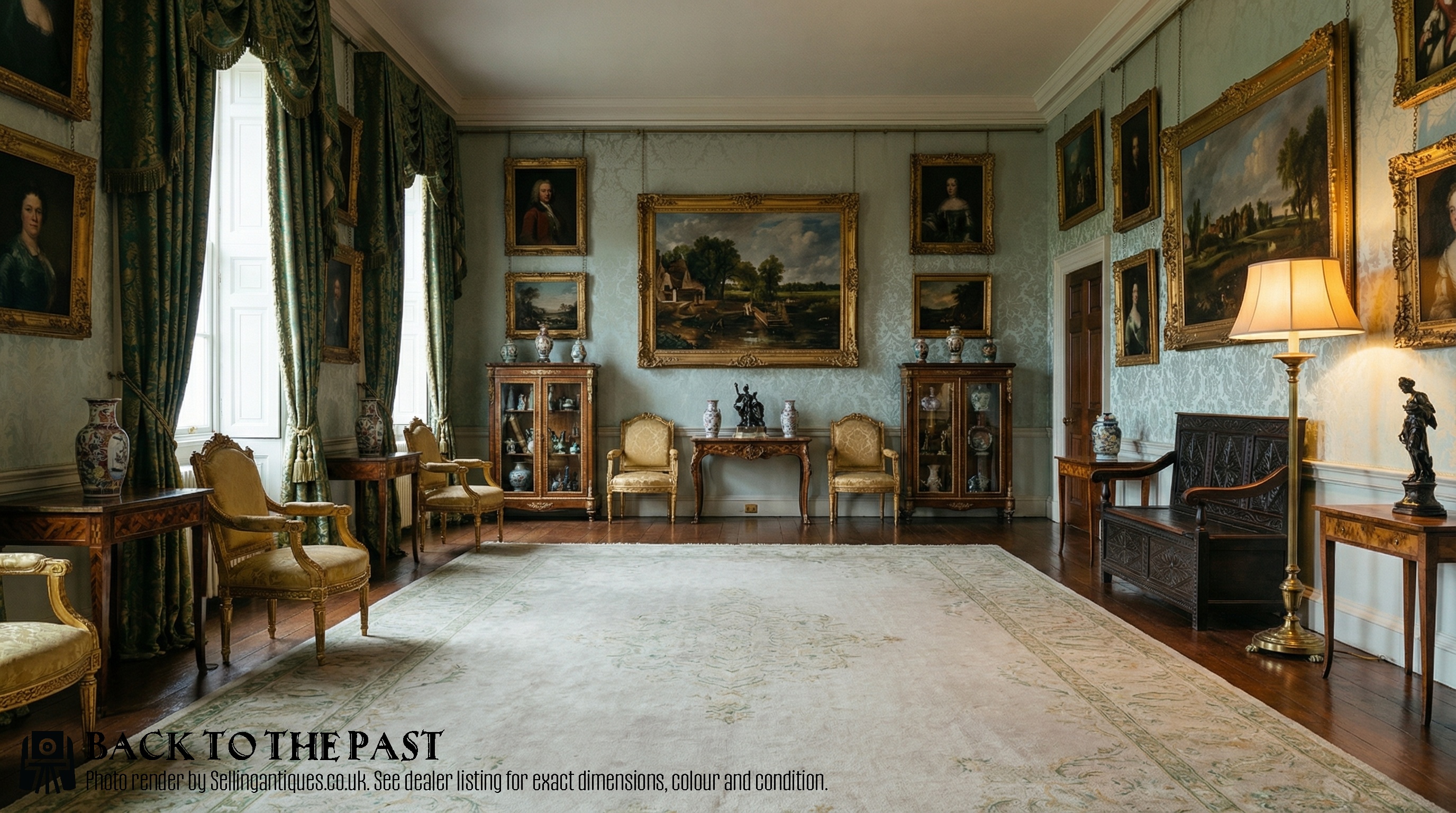
Traditional Oak Settle
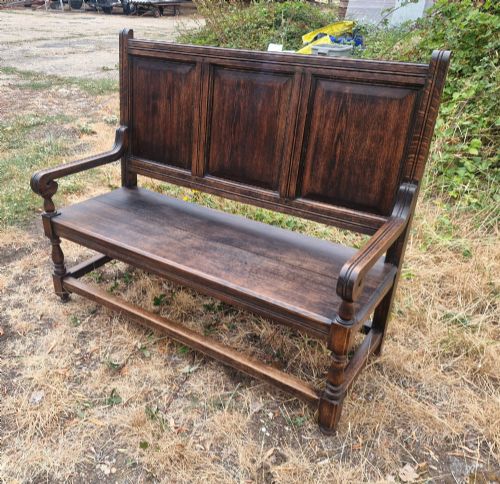
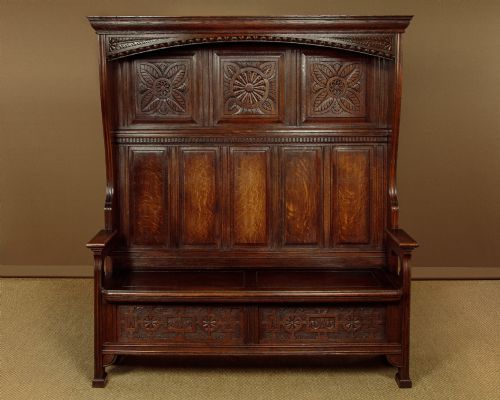
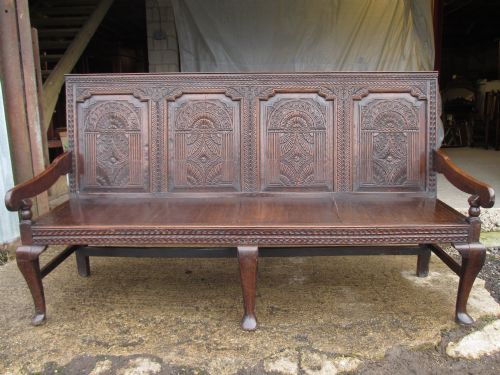
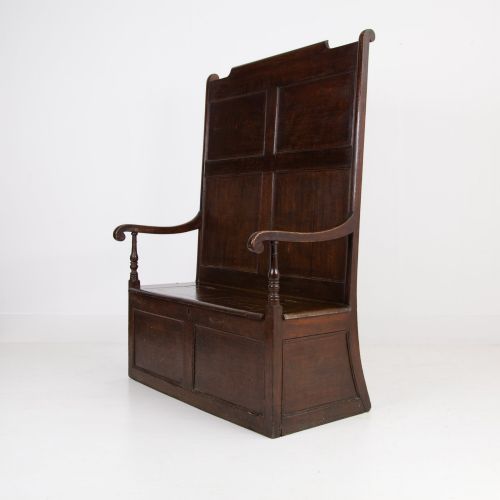
When searching for a traditional oak settle, you encounter sturdy wooden seats designed to shield inhabitants from draughts in large farmhouse kitchens and hallways. The forms span robust eighteenth-century country examples with high panelled backs to later revival iterations from the nineteenth and early twentieth centuries.
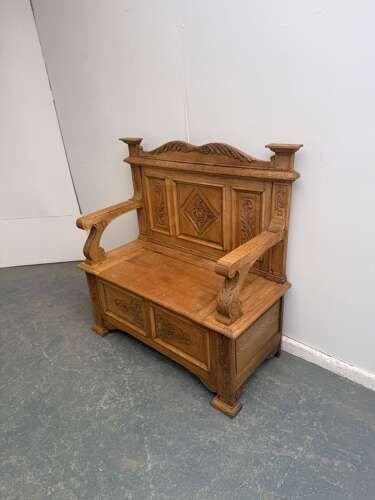
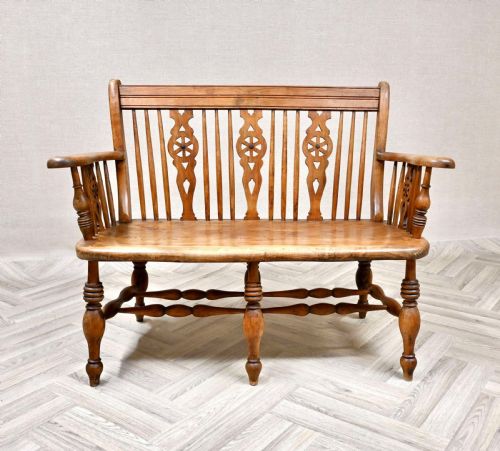
Many variants on this page include box settles with lift-up lids for storage, ingenious convertible monk's benches with fold-over table tops, and specialised regional pieces like Lakeland lambing chairs or bacon settles. Oak predominates, though you also encounter companion timbers such as elm, pine, and cherrywood within the selection.
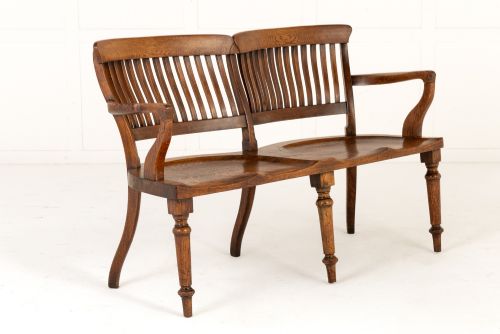
The styles range widely across the periods represented, moving from plain vernacular country framing to heavily carved Jacobean revival, Gothic revival, and Georgian proportions. Buyers typically select these benches to anchor a hallway or kitchen with authentic period presence and practical utility.
How they were made
Constructed primarily from solid oak, these pieces rely on traditional joinery techniques including mortise and tenon joints secured with wooden pegs. Backrests are typically formed of tight vertical or horizontal panels held within grooved framing to accommodate natural wood movement over decades of use.
Secondary structural elements incorporate sturdy framing in elm, pine, or cherrywood, often combined with iron fixings for hinges on box seats and storage compartments. Surfaces are finished through historical waxing or plain scraping, preserving the natural grain and tool marks left by early carpenters.
Traditional Oak Settle Retail Price Guide 2026
Typical asking prices for traditional oak settle among the pieces listed under this phrase on Sellingantiques today, from the lower quarter to the upper quarter. They describe what is for sale here now, not the wider market.
The listings on this site combine sturdy eighteenth-century oak box settles with nineteenth-century country elm benches and twentieth-century revival monk's tables.
What varies in quality
The distinction between ordinary and superior pieces rests in the integrity of the timber selection and the restraint of the carving. Early eighteenth-century examples display honest joinery and thick planking that has aged with a deep, undisturbed patina, whereas later revival pieces often rely on mechanical ornamentation.
Proportion and structural survival dictate the standing of a settle, particularly where storage lids, box bases, and high panelled wings remain intact without extensive timber replacement. Pieces that retain their original dry surfaces or mellow wax finish command greater interest than those stripped down and aggressively refinished.
The Traditional Oak Settle Glossary
- Box settle
- A wooden bench featuring an enclosed compartment beneath the seat, accessed via a lift-up lid for storing household goods.
- Lambing chair
- A specialised high-backed seating form, often hooded or winged to block cold draughts, traditionally used by shepherds during cold winter lambing seasons.
- Monk's bench
- A versatile dual-purpose furniture item featuring a hinged back that folds down flat over the arms to form a table top.
- Vernacular furniture
- Practical domestic items made by local country cabinetmakers using regional timbers and traditional methods rather than following strict metropolitan court styles.
- Panelled back
- A construction method utilising wooden boards fitted into grooved framing uprights to prevent warping and provide solid insulation against cold walls.
Traditional Oak Settle: Frequently Asked Questions
Where should I place a settle?
These long benches suit large entrance halls, boot rooms, or farmhouse kitchens where their high panelled backs can block draughts and provide a striking focal point.
Ensure you measure the depth and clearance carefully, as the high backs and box bases require more physical room than a standard modern bench.
How do I use the storage safely?
Box settles and monk's benches feature heavy wooden lids that lift up on traditional strap hinges or pivot mechanisms. Take care when opening older lids so you do not strain the original timber pins or iron fixings.
Keep the interior dry and avoid overloading the compartments with excessively heavy items that could stress the baseboards.
How do I clean and wax oak?
Maintain the surface by dusting with a dry, soft cloth and occasionally applying a traditional beeswax to nourish the dry wood. Avoid modern silicone polishes that build up a greasy film over the historic grain.
Keep the timber away from direct heat sources and radiators to prevent the dry oak boards from splitting or warping.
How can I tell the age of a settle?
Examine the construction marks, timber shrinkage, and joinery methods to determine the period. Eighteenth-century examples display hand-cut peg fixings and uneven board widths, while twentieth-century revival pieces show uniform machine tooling.
The overall patina and wear patterns around the armrests and foot rails also offer reliable clues to genuine age.