


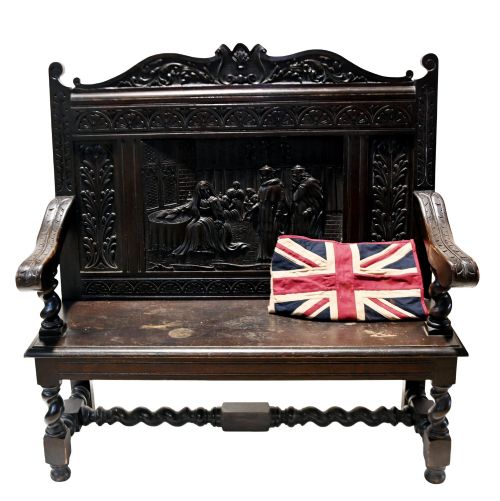
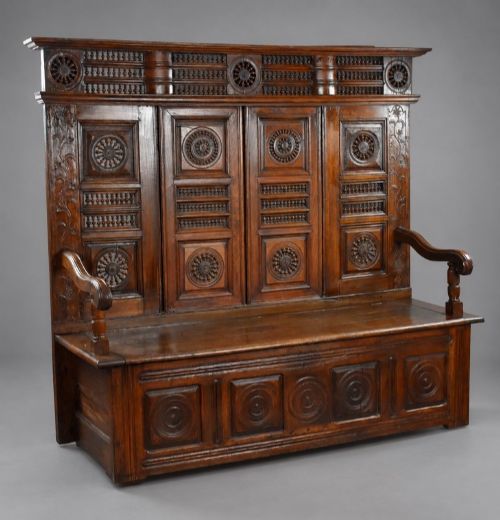
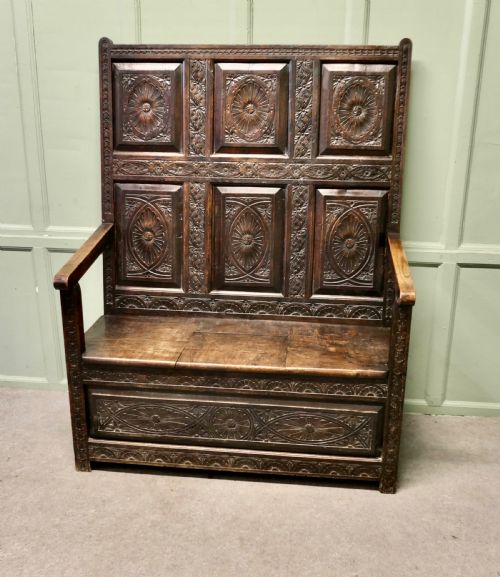
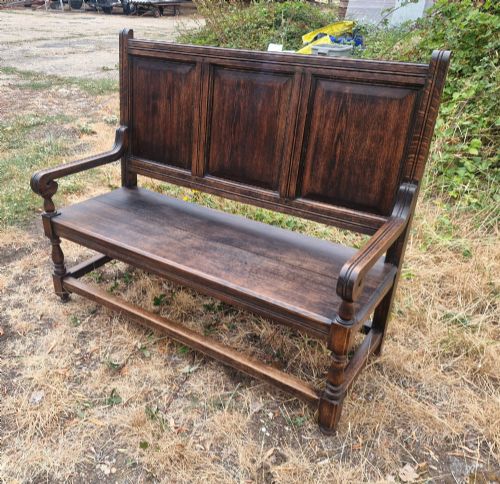
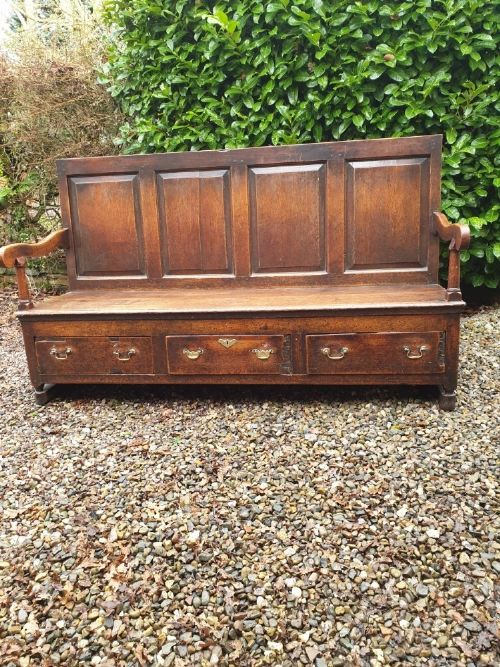
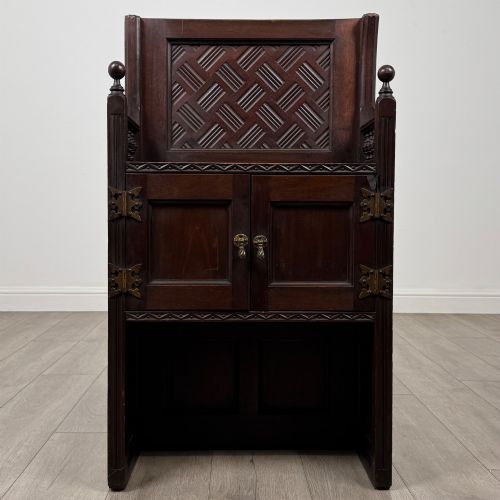
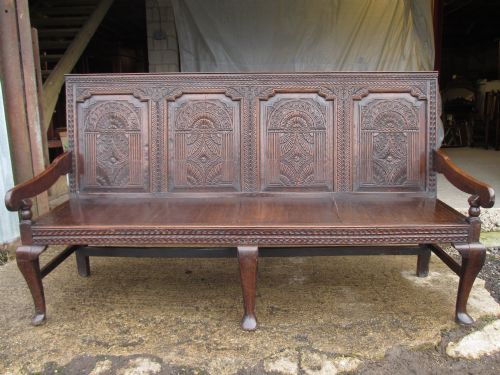
Panelled Back Bench
A panelled back bench offers solid timber construction and traditional seating, bringing historic character and practical storage to hallways and living spaces alike.
Panelled Back Bench
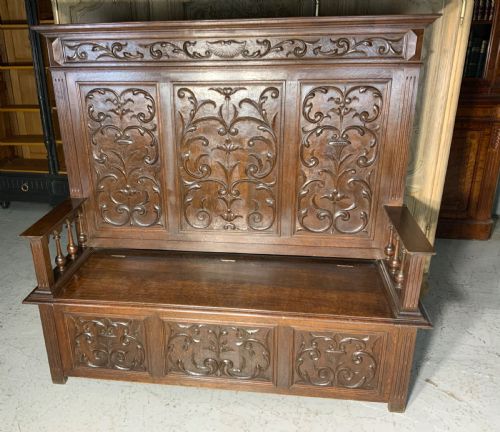
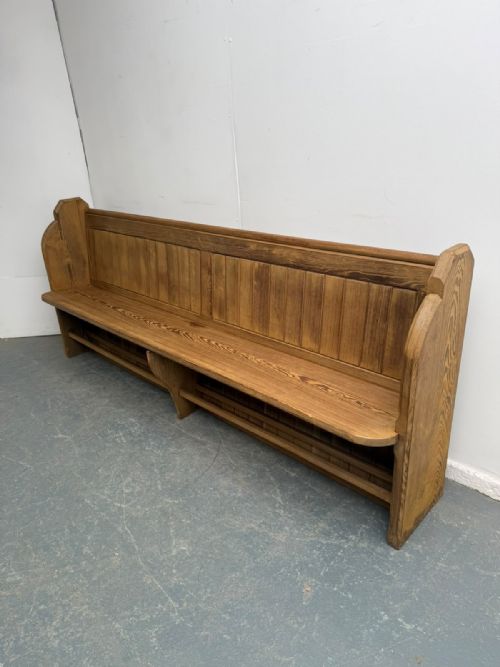
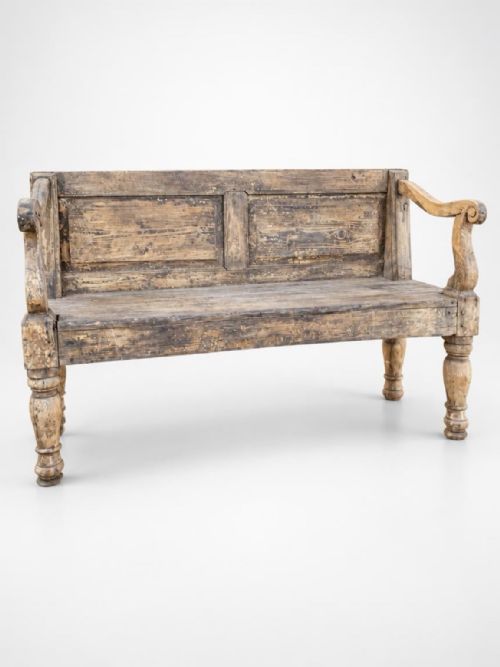
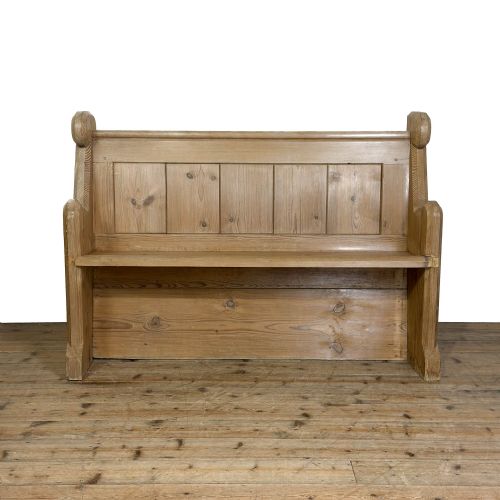
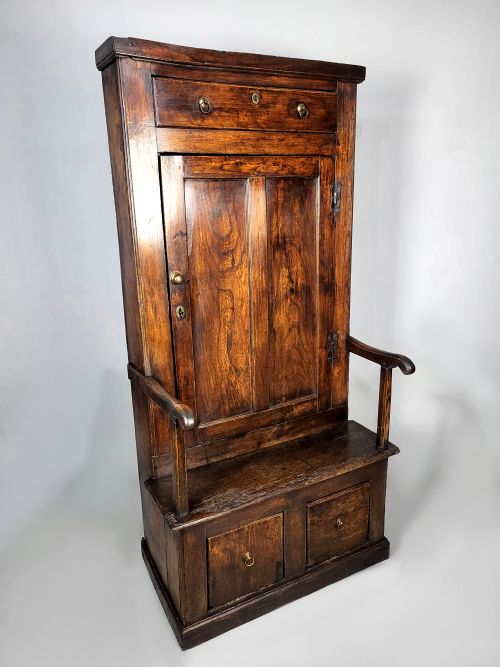
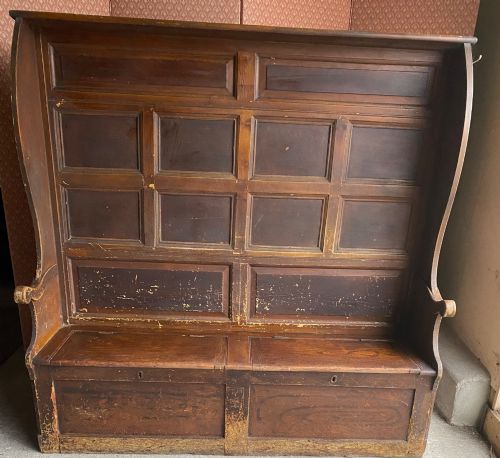
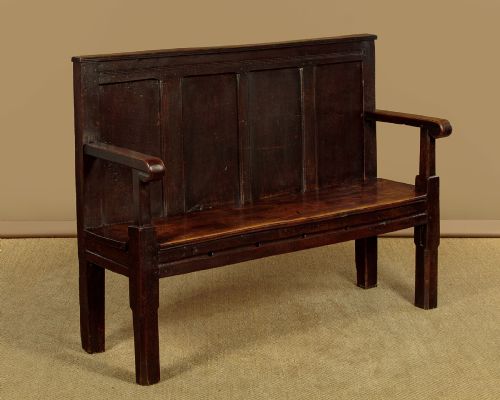
A panelled back bench serves as a substantial seat with a high wooden back composed of fitted panels, frequently incorporating a enclosed box base for storage beneath the hinged seat. These pieces appear across several centuries, including the 17th Century, 18th Century, Georgian, Victorian, and Edwardian periods.
The version most commonly met on this page is the oak box settle or hall bench, often reflecting English Country, Welsh Vernacular, or Georgian Country styles. Makers constructed these items to block draughts in farmhouse kitchens and entrance halls by combining a high protective back with an enclosed lower compartment.
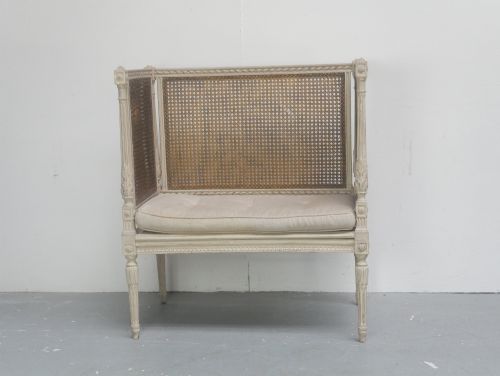
Alternative forms include tall wingback barrel settles, straight-backed hall seats, and painted pine or ash variants originating from regional British workshops and continental sources. Each variation retains the defining characteristic of a rigid timber panelled back designed to provide both structural support and shelter.
Materials and construction methods
Cabinet makers relied primarily on solid oak, supplemented by pine, ash, and walnut, joining the timber using traditional mortice and tenon joints secured with wooden pegs. Frame and panel construction allowed the timber to expand and contract naturally with seasonal humidity changes without splitting the main structure.
Surface decoration frequently involved hand-carving geometric patterns, floral motifs, or linenfold designs directly into the wooden panels. Selected pieces also retain traces of original paint finishes, limed surfaces, or developed patinas formed through decades of daily use and waxing.
Panelled Back Bench Retail Price Guide 2026
Typical asking prices for panelled back bench among the pieces listed under this phrase on Sellingantiques today, from the lower quarter to the upper quarter. They describe what is for sale here now, not the wider market.
Some early settles incorporate secret compartments inside the storage box to hide valuables from wandering farmhands.
Evaluating quality and proportion
Quality rests upon the integrity of the original timber framing, the retention of period hinges and authentic floor boards within the box base, and the depth of the natural patina. Pieces maintaining their original unblemished panel work and untrimmed feet demonstrate superior preservation.
Proportion and scale distinguish finer regional examples from utilitarian workshop output, with well-balanced armrests and crisply executed panel mouldings elevating the status of the furniture. The presence of contemporary hand-carving versus later alterations determines the historical weight of the piece.
The Panelled Back Bench Glossary
- Box settle
- A wooden bench featuring a high panelled back and a built-in storage compartment beneath the lift-up seat. This design sheltered occupants from cold draughts in older dwellings.
- Panelling
- Framework composed of vertical stiles and horizontal rails enclosing thin wooden boards. This technique provides rigid structural strength while preventing warping.
- Patina
- The surface sheen and colour developed by aged timber over centuries of handling, cleaning, and exposure to light. It serves as a visual indicator of genuine age.
- Vernacular furniture
- Domestic objects made by local regional craftsmen using native timbers to serve everyday practical needs. These pieces reflect distinct local traditions rather than court styles.
- Wingback
- A seating design featuring lateral extensions projecting forward from the upper back. These projections were originally intended to shield the sitter from chilly air currents.
Panelled Back Bench: Frequently Asked Questions
What is a panelled back bench used for?
These benches functioned historically as principal seating in communal rooms, offering protection from cold draughts while concealing household goods within the under-seat storage box.
Modern buyers utilise them in entrance halls, kitchens, and dining areas to provide sturdy seating alongside concealed storage space.
How do I date a panelled back bench?
Dating relies upon examining the tool marks, joint construction methods, timber species, and stylistic carving motifs relative to known historical periods.
Early pieces from the 17th Century typically display pegged mortice and tenon joinery and hand- cleft oak, whereas later Victorian and Edwardian examples often employ machine-sawn components.
Are these benches comfortable to sit on?
Historic wooden benches were built primarily for upright posture and draught exclusion rather than deep lounging, featuring rigid timber backrests.
Many owners add loose squab cushions or fabric pads to the seat base to increase comfort during extended periods of sitting.
Can I use a settle in a hallway?
Hallways represent the traditional placement for these pieces, where their narrow depth allows them to fit against walls without blocking passageways.
The enclosed box base provides a convenient receptacle for shoes, boots, and everyday items.