



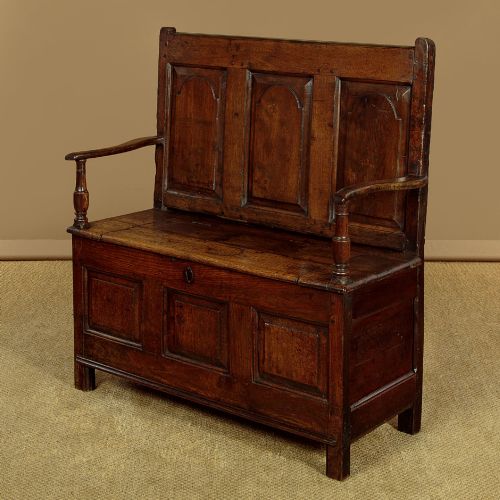

Georgian Oak Settle
A georgian oak settle provides solid wooden seating with high backs designed to block cold draughts in old rural homes.
Georgian Oak Settle
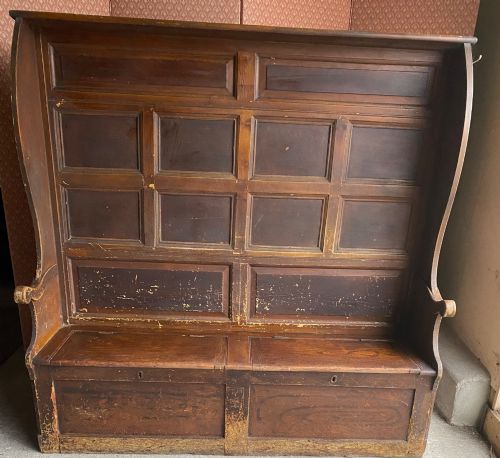
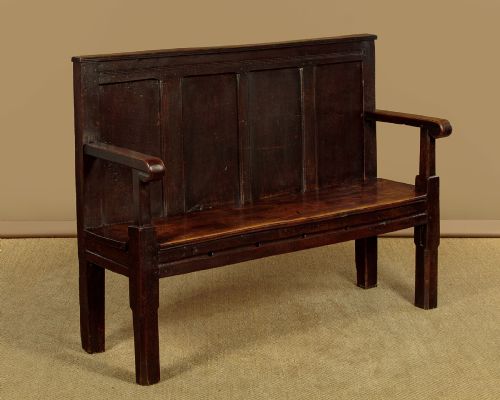
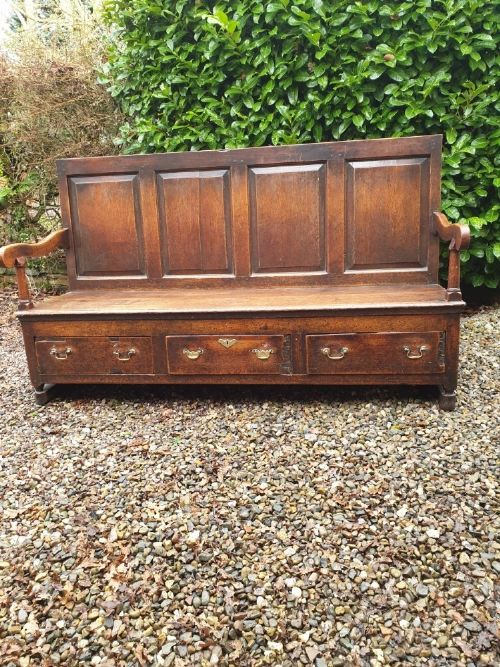
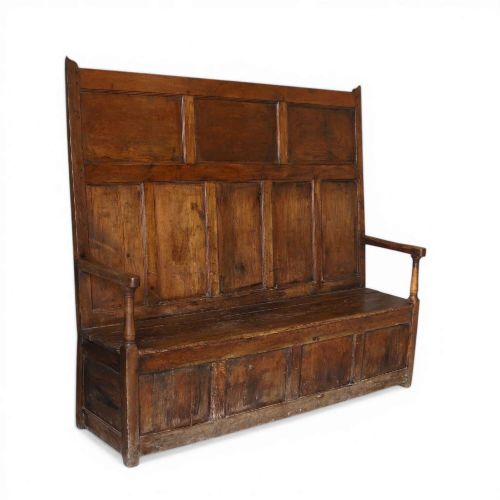
A georgian oak settle is a heavy wooden bench featuring a high panelled back designed to keep household draughts away from the hearth. These pieces date principally across the eighteenth century and into the early nineteenth century, hailing from English, Welsh and West Country vernacular workshops.
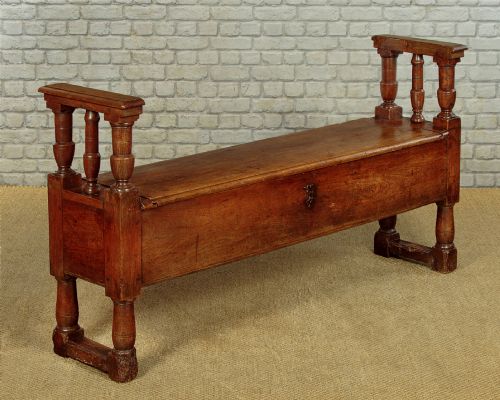
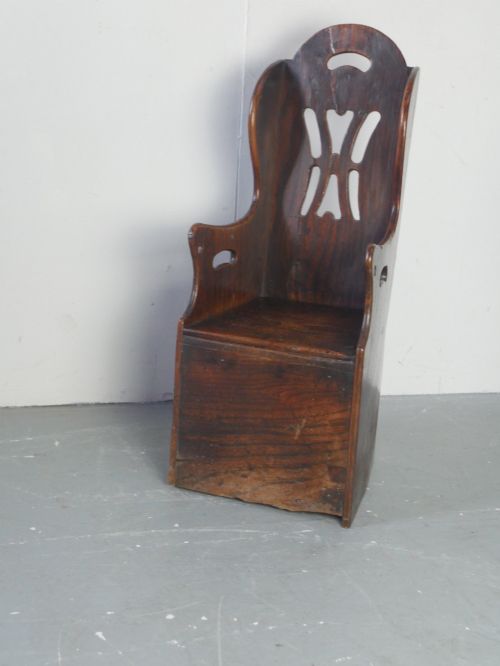
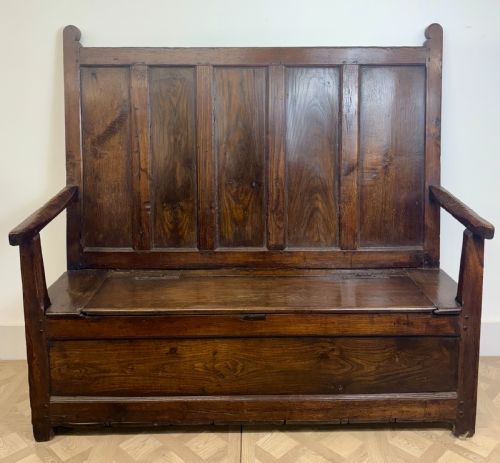
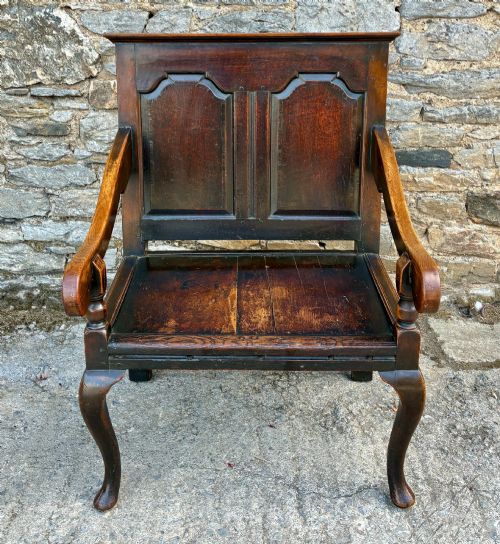
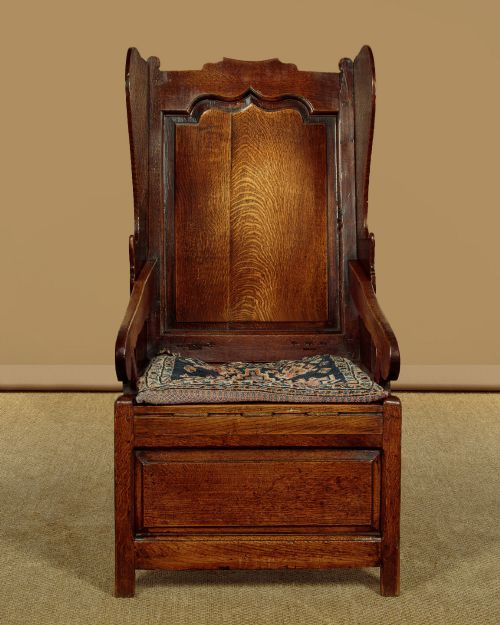
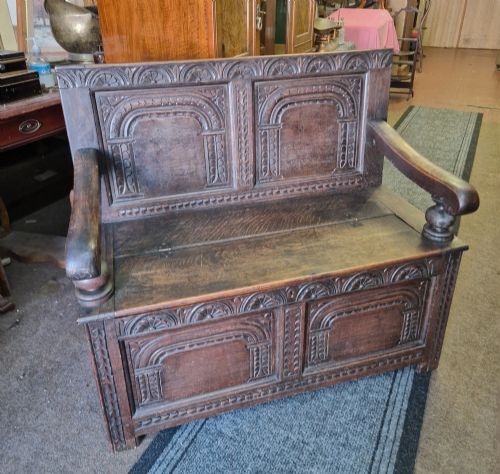
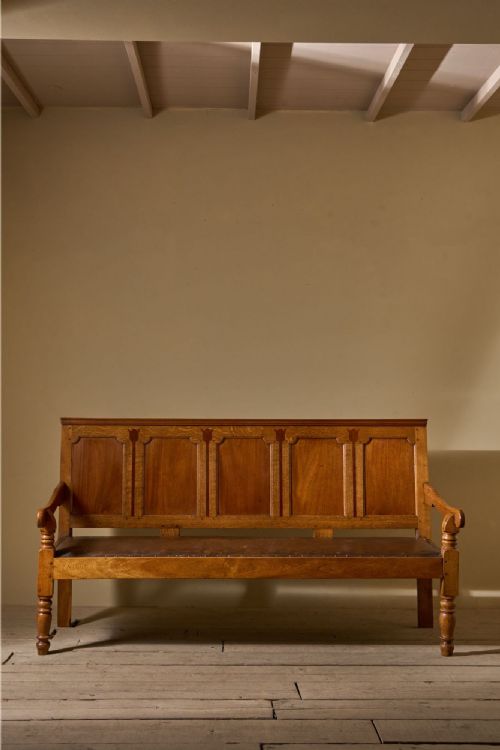
The standard form encountered here is the high-back panelled bench, sometimes constructed with a lidded box base for storage or incorporating winged sides known as lambing chairs. Variations include shorter two-seater versions, curved barrel backs and examples fitted with arms or drop-in cushions.
Makers ranged from country carpenters to regional joiners who utilised local timber resources to build sturdy seating for farmhouses, taverns and cottages. The resulting objects display regional idiosyncrasies in panel carving, arm shapes and structural proportions.
Materials and construction
Construction relies primarily on sturdy timber boards joined by pegging and framing, utilising native oak supplemented occasionally by secondary woods such as elm, ash and apple. Panels are typically set into grooved framework to accommodate natural wood movement over decades of fluctuating temperatures.
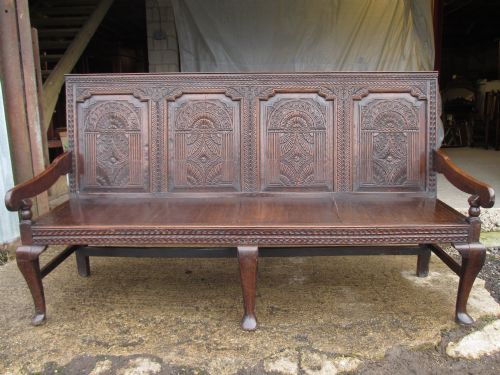
Joinery methods reflect traditional vernacular carpentry, employing pegged tenons and solid floor-standing stretchers rather than metal fasteners. Surfaces receive hand-planing and occasional carved or crossbanded ornamentation around the back panels.
Georgian Oak Settle Retail Price Guide 2026
Typical asking prices for georgian oak settle among the pieces listed under this phrase on Sellingantiques today, from the lower quarter to the upper quarter. They describe what is for sale here now, not the wider market.
Listings demonstrate construction in native timbers including oak, ash, elm and apple across eighteenth and nineteenth-century periods.
Assessing the examples
Quality rests upon the integrity of the timber panels, the depth of the regional design, and the proportion of original woodwork remaining intact through centuries of domestic use. Pieces featuring sophisticated multi-panel backs, crisper carved motifs or integrated storage boxes command particular attention from collectors.
Subtleties in the grain figure of the oak and the balance of the architectural wing or barrel shape distinguish finer country workshop production from simpler utilitarian benches.
The Georgian Oak Settle Glossary
- Settle
- A wooden wooden bench with a high solid back and wooden arms. It typically accommodates multiple sitters and functions as a draught barrier in large rooms.
- Box settle
- A variation featuring a lidded storage compartment built beneath the seat. This box provides enclosed space for household blankets or provisions.
- Lambing chair
- An armchair or small settle featuring high winged sides designed to shield the occupant from cold air. They frequently appear in eighteenth-century country contexts.
- Bacon settle
- A specialised high-backed form associated with rural kitchens. It includes internal space or hooks traditionally utilised for hanging cured meats.
- Panel-back
- A construction method utilising fitted wooden panels set within a heavier structural frame. This technique prevents the large back from warping.
Georgian Oak Settle: Frequently Asked Questions
What is a georgian oak settle used for?
These benches were originally positioned near open hearths in farmhouses and taverns to block cold draughts from chilling the occupants.
Today, they serve as substantial hallway seating or architectural statement pieces in traditional and contemporary interiors alike.
How do I date a wooden settle?
Dating relies on examining the construction methods, such as hand-cut peg joints, timber shrinkage patterns, and the style of the back panels.
Examples from the eighteenth century typically display vernacular hand-planed surfaces and pegged joinery distinct from later nineteenth-century manufacturing.
Are these benches comfortable to sit on?
Original wooden seats were built for utility and warmth rather than deep cushioning, meaning they feature firm timber boards.
Many owners today place loose fabric cushions or wool textiles across the seat base for added comfort during daily use.