

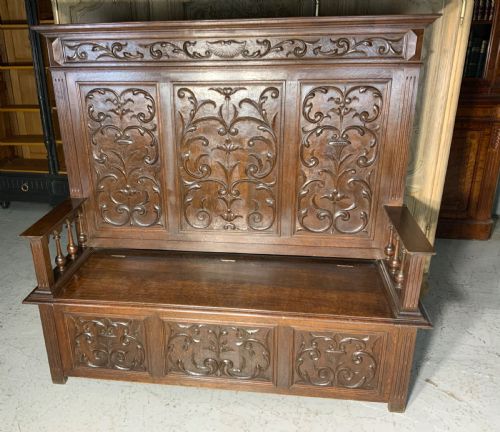
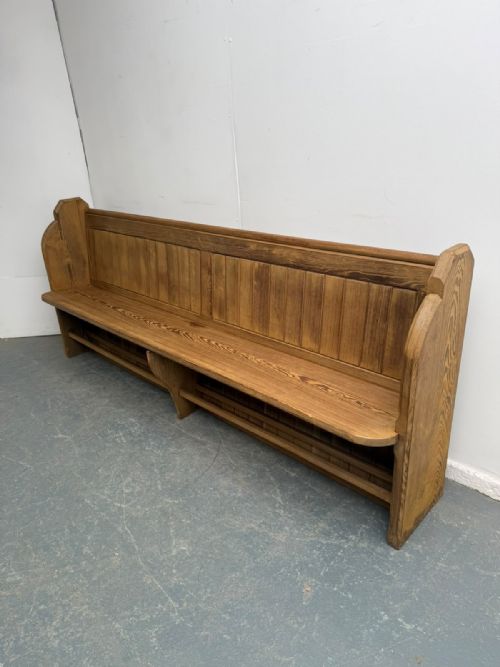

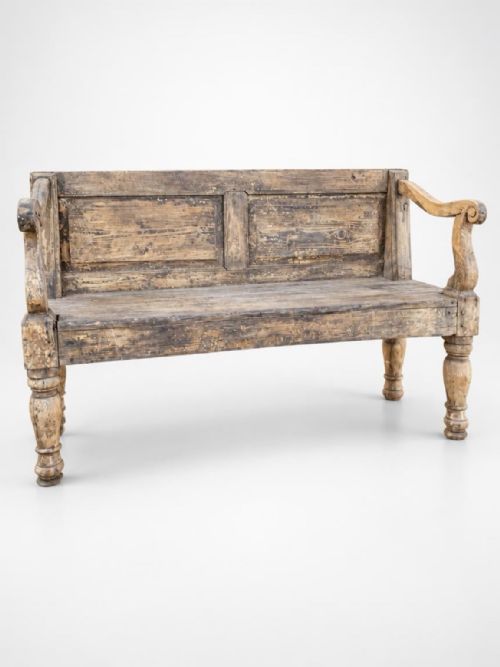
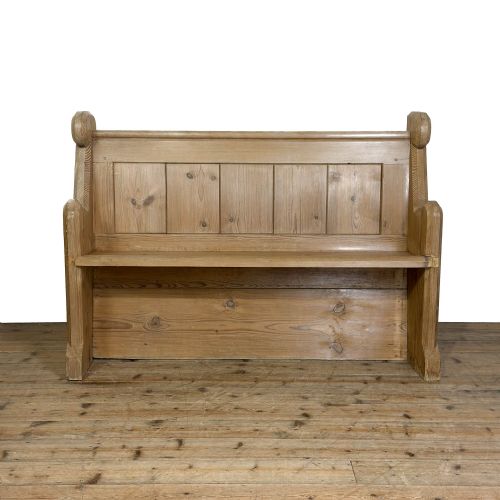
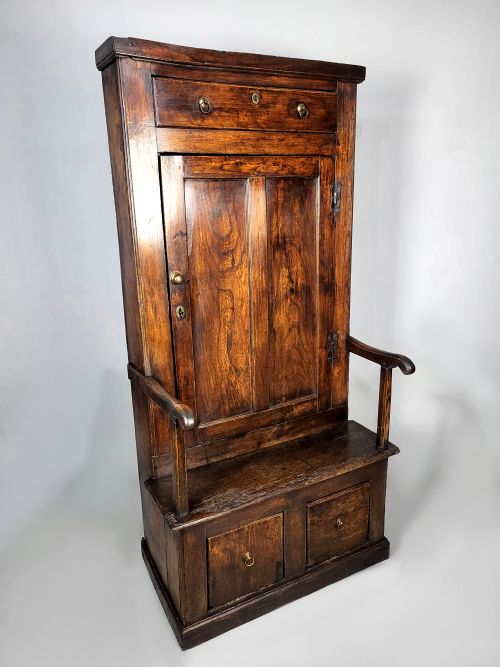
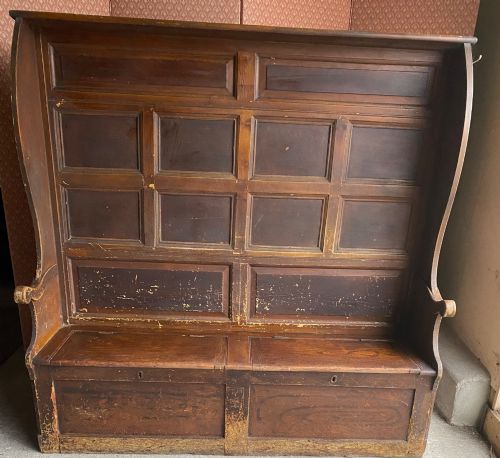
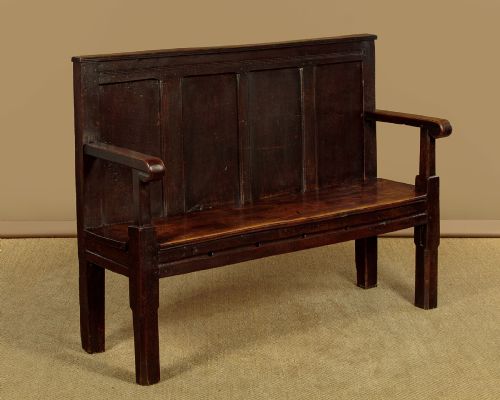
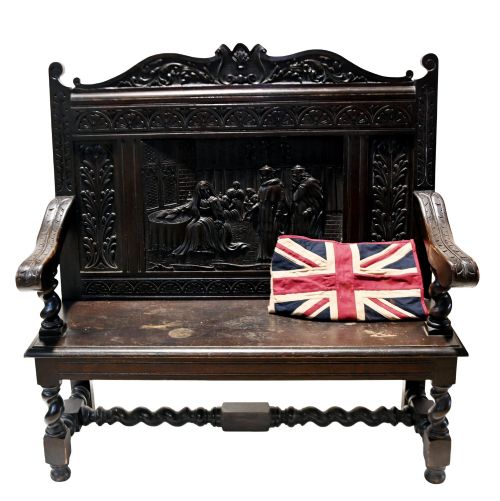
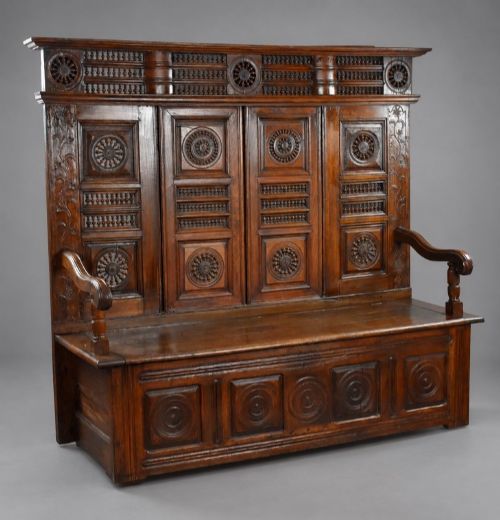
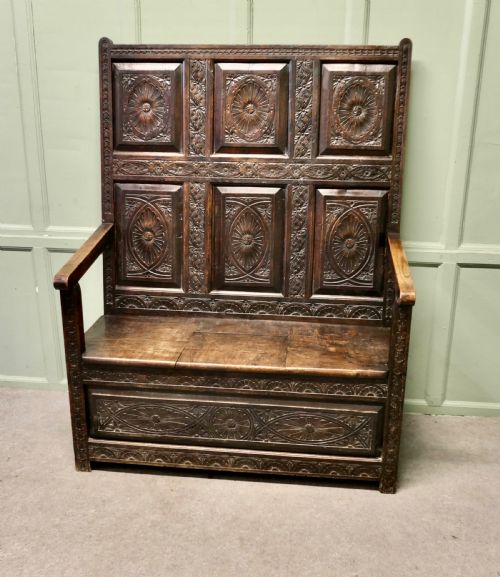
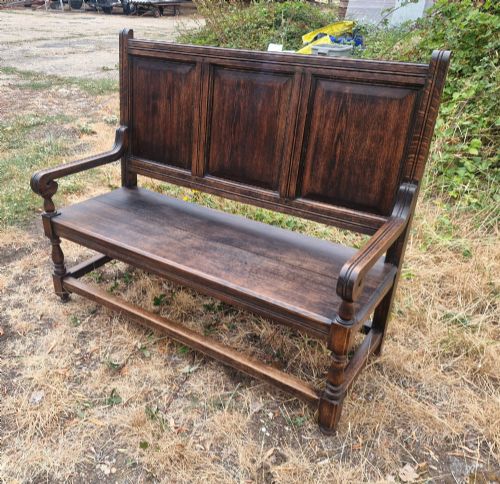
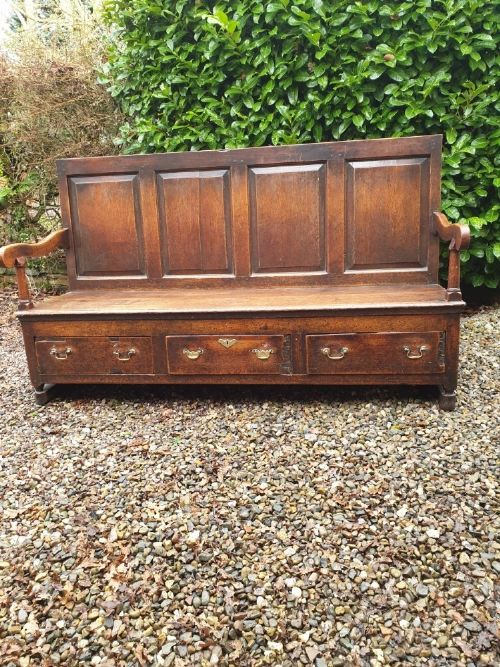
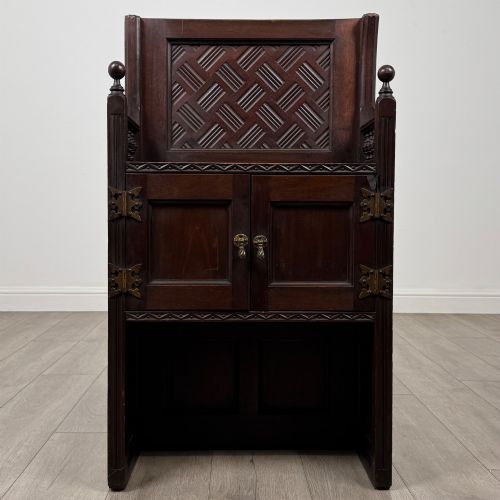
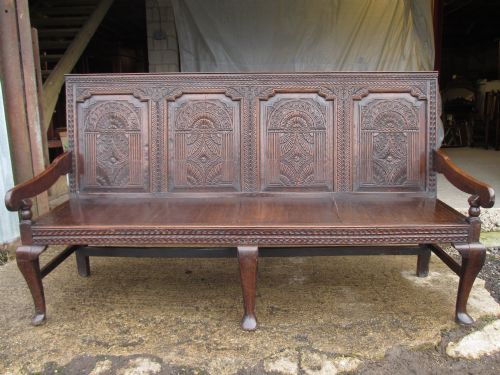
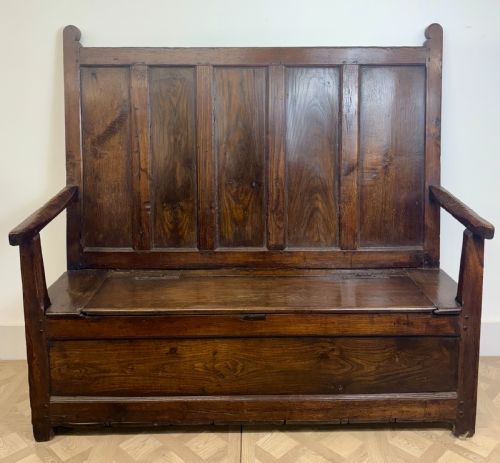
Panelled Back Settle
When you search for a panelled back settle, you are looking at substantial wooden seating designed to block draughts and seat multiple people.
How they were made
Carpenters constructed these settles predominantly using solid timber, with oak forming the primary structural material alongside regional alternatives such as pine, ash, and mahogany. Construction methods relied heavily on frame and panel joinery, which allowed the timber to expand and contract naturally without splitting the high backboards. Peg joints secured the structural framework together firmly.
Surface treatments recorded across the pieces include natural waxed finishes, honey brown patina, bleached oak, and original paint in grey or other colours. Decoration occasionally involves carved details, tulip motifs, or fielded panels, while some variants incorporate leather or fabric elements.
What varies in quality
The standard of a panelled back settle depends significantly on the integrity of its timber and the depth of its patina developed through centuries of use. Superior examples retain their original structural elements, such as unaltered box bases, intact panel assemblies, and authentic surface finishes without extensive replacement wood.
Refinement in carving and joinery distinguishes finer pieces from plain utilitarian items, with well-proportioned mouldings and crisp detailing setting higher-grade furniture apart. The presence of original paint or untouched regional characteristics further elevates the standing of an individual settle within the broader range.
Panelled Back Settle Retail Price Guide 2026
Typical asking prices for panelled back settle among the pieces listed under this phrase on Sellingantiques today, from the lower quarter to the upper quarter. They describe what is for sale here now, not the wider market.
Listings demonstrate that oak remains the dominant material for these settles, complemented by examples in pine, ash, and mahogany across various centuries.
The Panelled Back Settle Glossary
- Box settle
- A wooden bench featuring an enclosed storage compartment beneath the seat, accessed via a hinged lid. This form kept items stored away from cold and damp floor conditions.
- Lambing chair
- A specialised high-backed wooden seat featuring enclosed sides or wings designed to deflect draughts around the head near a fireplace. These typically date to the eighteenth century.
- Fielded panel
- A wooden panel with bevelled edges that fit into a surrounding groove within a frame. This technique reduces weight while allowing the wood to move with environmental changes.
- Peg joint
- A traditional fastening method using wooden pins driven through mortise and tenon joints to secure structural members. This avoids metal fixings that could rust or damage the timber.
- Barrel settle
- A bench featuring a high, curved wooden back that wraps partially around the sitter. This design provided maximum protection against cold air currents in large rooms.
Panelled Back Settle: Frequently Asked Questions
What is a panelled back settle?
A panelled back settle is a sturdy wooden bench featuring a tall, segmented back designed to provide seating while blocking cold draughts in historical interiors.
These pieces typically date from the seventeenth, eighteenth, and nineteenth centuries, constructed predominantly in oak or pine for use in farmhouses, halls, and taverns.
How were settles used originally?
Historically, settles served as principal seating near the hearth, where their high backs sheltered occupants from chilly air currents circulating through large rooms.
Many versions included built-in box storage beneath the seat for household goods, serving a dual purpose as both a bench and a storage chest.
Where should I place a settle?
A settle fits well in a spacious hallway, acting as a functional entrance bench that provides a place to sit while removing shoes or storing items.
Alternatively, placing one in a living area or kitchen creates a distinct focal point that utilises its high back to partition open spaces.
How do I care for antique oak furniture?
Maintain antique oak by keeping it away from direct heat sources and sudden temperature fluctuations that can cause the timber to dry out and split.
Apply traditional beeswax periodically to nourish the wood surface and preserve the natural patina built up over centuries.