
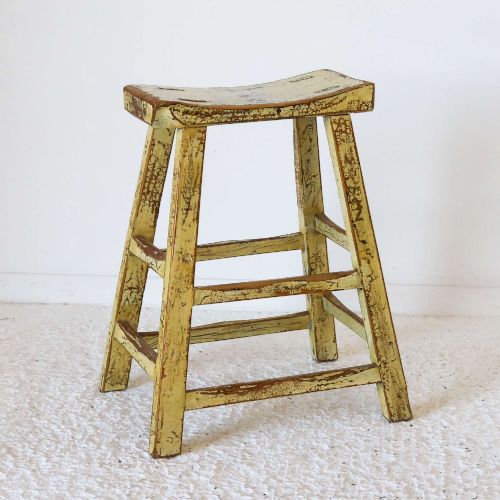
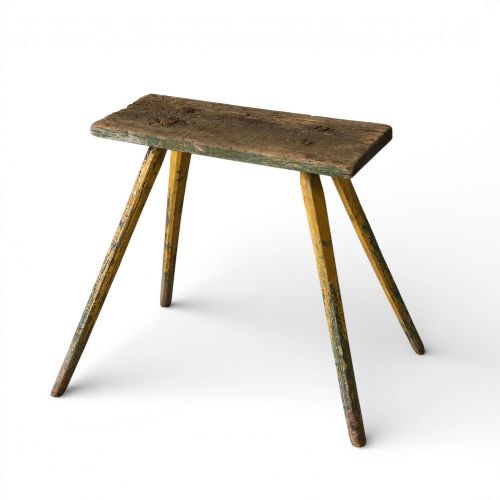
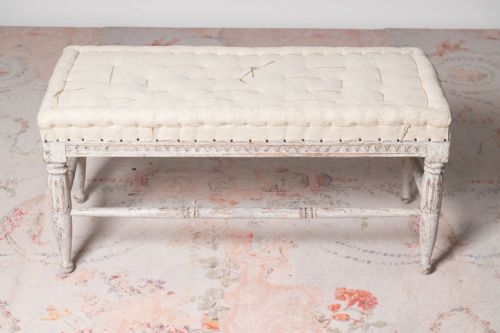


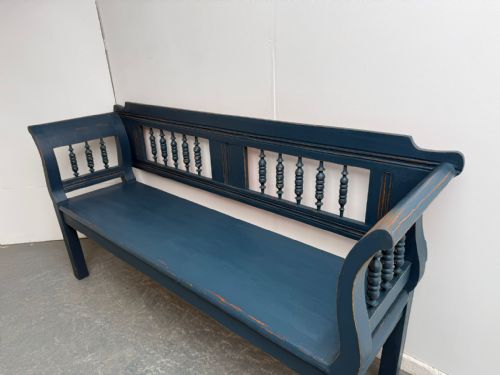
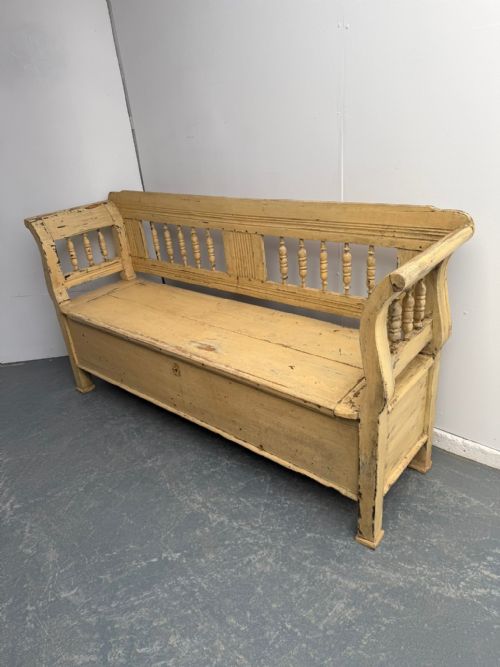


Distressed Painted Bench
A distressed painted bench brings weathered character to a room through centuries of layered pigment and sturdy timber.
Distressed Painted Bench
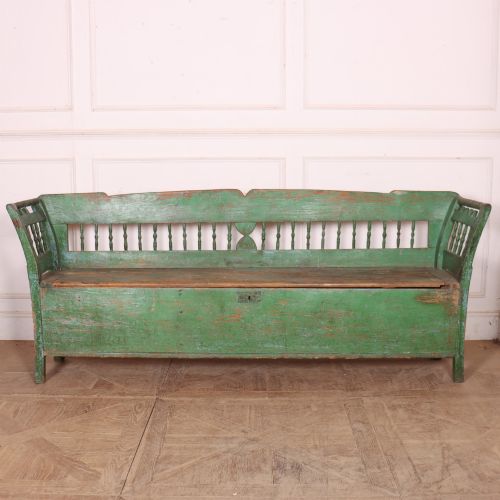
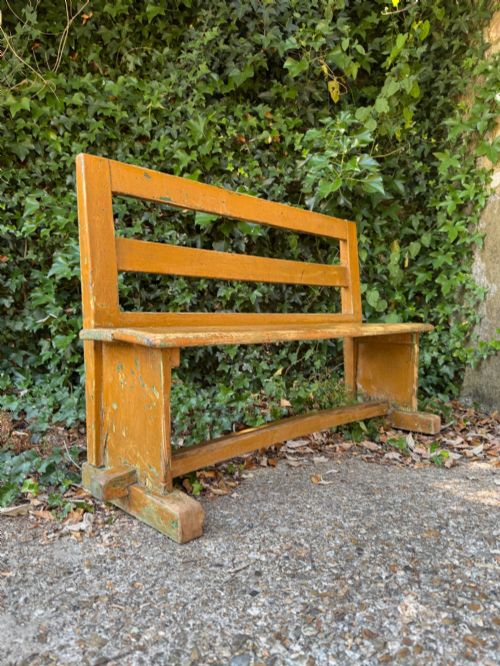
A distressed painted bench offers practical seating through forms like the box settle, tavern bench, and long dining bench, often originating from 18th-century, 19th-century, and early 20th-century traditions.
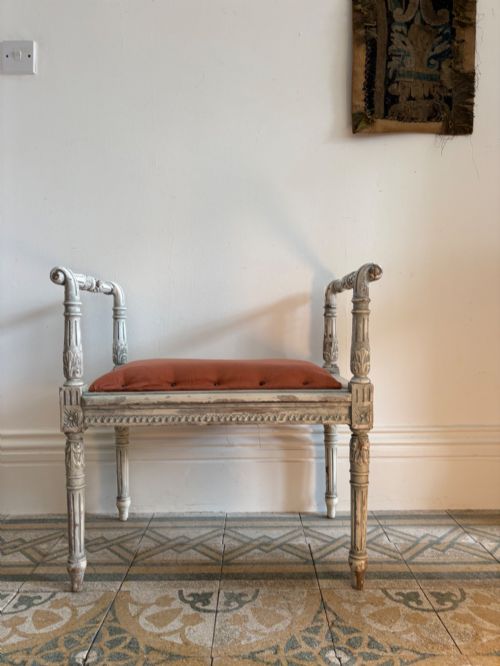
The most common examples on this page are sturdy pine and painted wood pieces drawn from Swedish, Austrian, and French country aesthetics, ranging from simple stools to large multi-seater settles with storage compartments.
These items serve equally well in hallways, kitchens, and living spaces, providing robust seating alongside visible history through worn surfaces and patinated finishes.
How they were made
Makers primarily utilised pine and mixed woods for the main structures, shaping planks with hand tools and joining them using traditional pegging or simple carpentry.
Surfaces received layers of paint, often in cream, grey, blue, or green, which wore down naturally over decades of daily use to reveal the timber beneath.
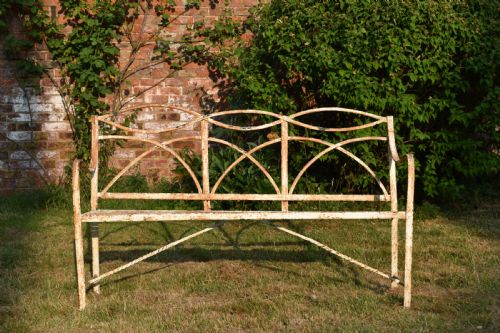
Materials recorded across the selection include pine, wrought iron, fabric, linen, and original painted wood.
What varies in quality
Construction integrity separates solid regional carpentry from loose joinery, depending on how well the original frame and timber have survived centuries of use.
Surface preservation distinguishes pieces with genuine, untouched historic pigment from those with altered or later coats, dictating the depth of character each bench holds.
The Distressed Painted Bench Glossary
- Settle
- A wooden bench with a high back, solid arms, and often a storage box beneath the seat. It was traditionally placed near hearths to block draughts.
- Gustavian
- The Swedish interpretation of Neoclassical style, marked by restrained ornamentation, pale painted finishes, and graceful proportions.
- Box settle
- A bench featuring an enclosed compartment under the hinged seat for storing household goods. This form was common in European farmhouses.
- Distressed
- A term describing a worn surface finish where age and usage have chipped or softened the paint. It reveals the underlying layers and timber.
Distressed Painted Bench: Frequently Asked Questions
Where should I place a painted settle?
These pieces suit entrance halls, kitchens, or dining areas where their high backs and storage compartments provide both function and presence.
Their elongated forms also fit along long dining tables or against plain walls in living spaces.
How do I identify a Swedish Gustavian bench?
Gustavian pieces typically display pale painted finishes, such as grey or cream, combined with restrained neoclassical carving.
They reflect 18th and 19th-century Scandinavian interpretations of French court styles translated into simpler pine furniture.
What is the difference between a bench and a settle?
A standard bench provides simple open seating on legs or trestles without structural backrests unless added later.
A settle incorporates a solid high back and enclosed sides designed to keep out cold draughts in older homes.
Are these benches from the nineteenth century?
Many examples date from the nineteenth century, alongside pieces originating in the eighteenth century and the early twentieth century.
Origins span French, Austrian, Swedish, and English rural traditions.