


Floral Tapestry Stool
A floral tapestry stool brings rich texture and period character into a room, combining practical seating with decorative needlework.
Identifying the floral tapestry stool
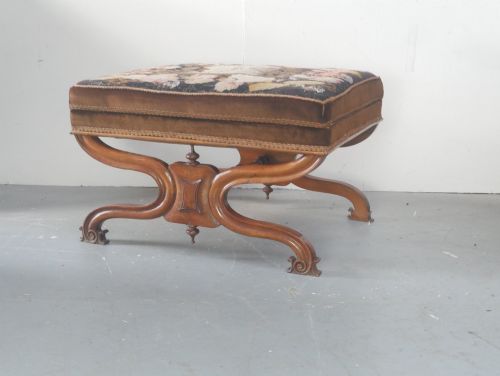
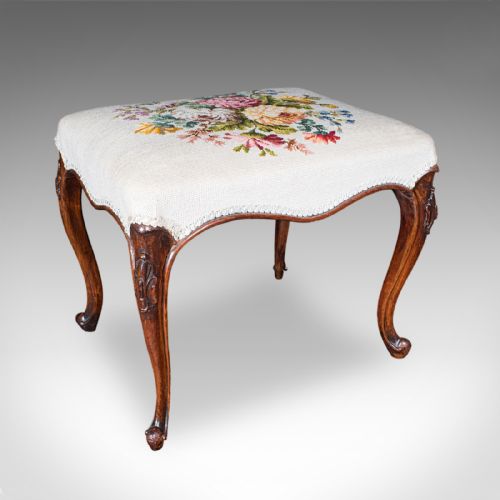
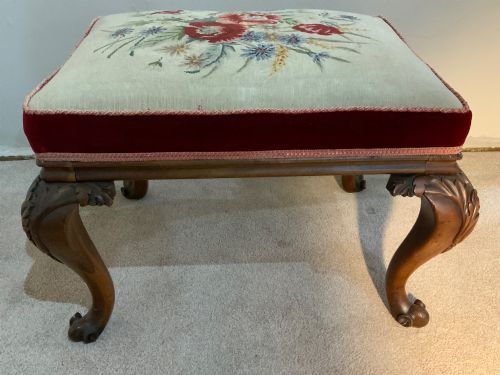
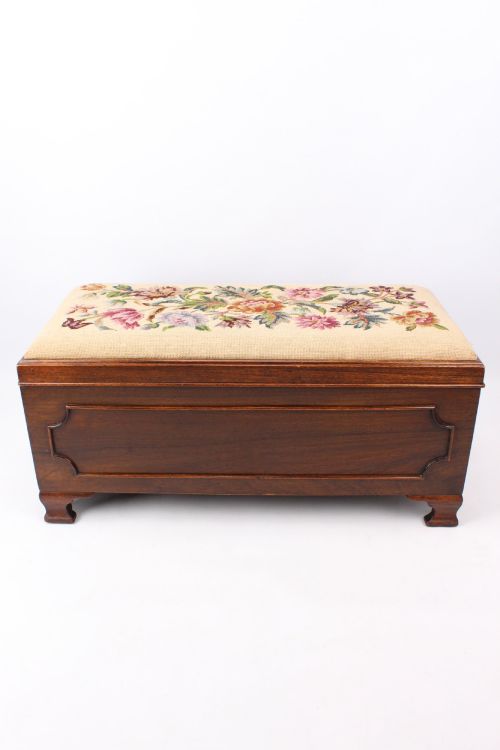
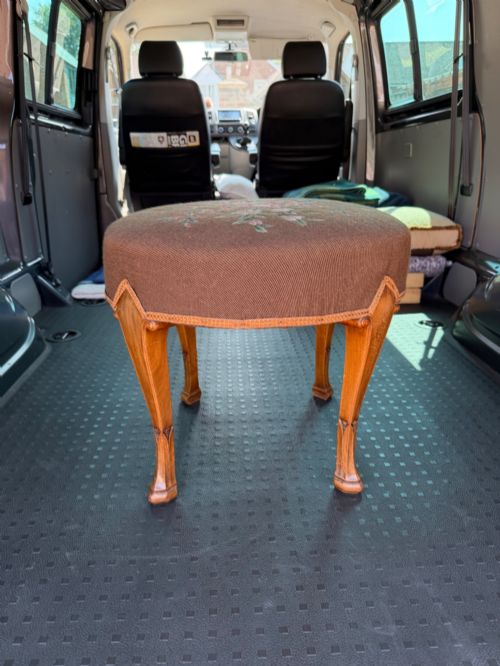
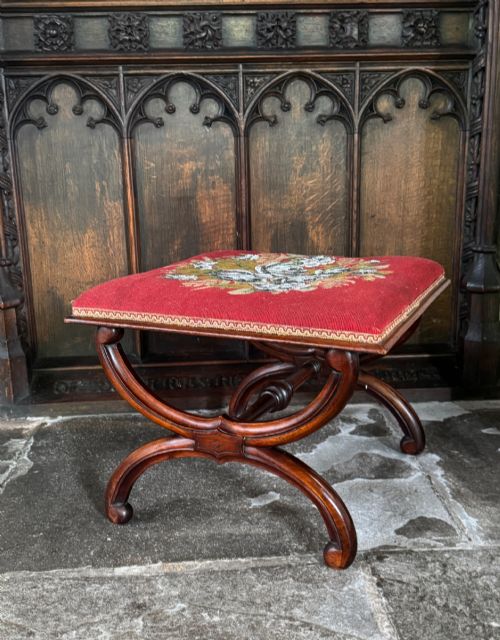
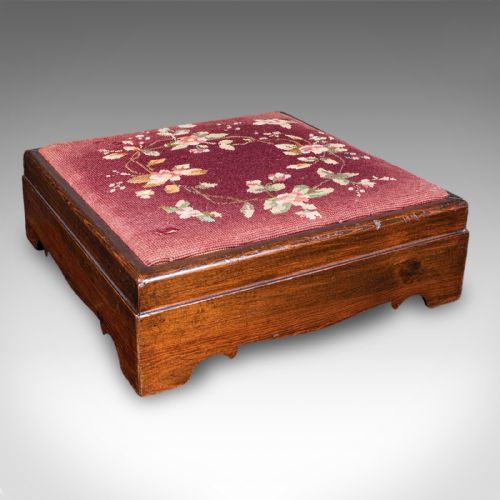
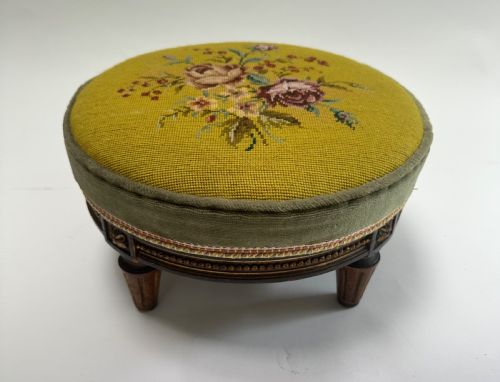
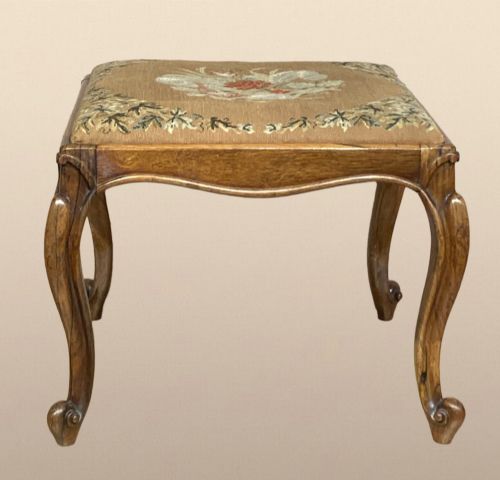
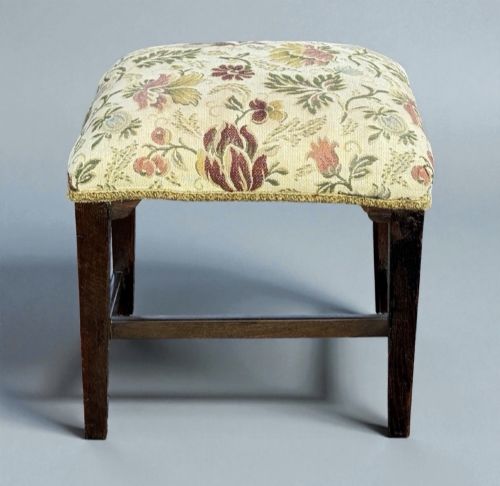
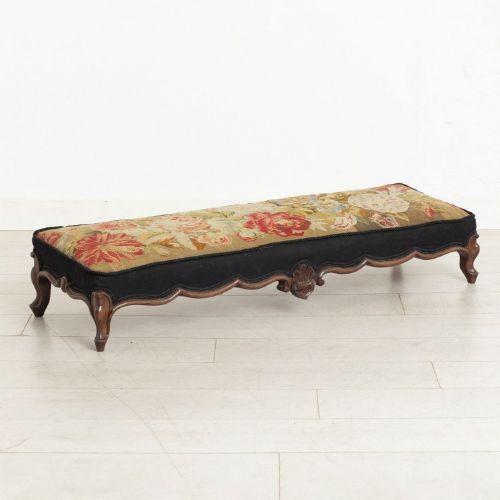
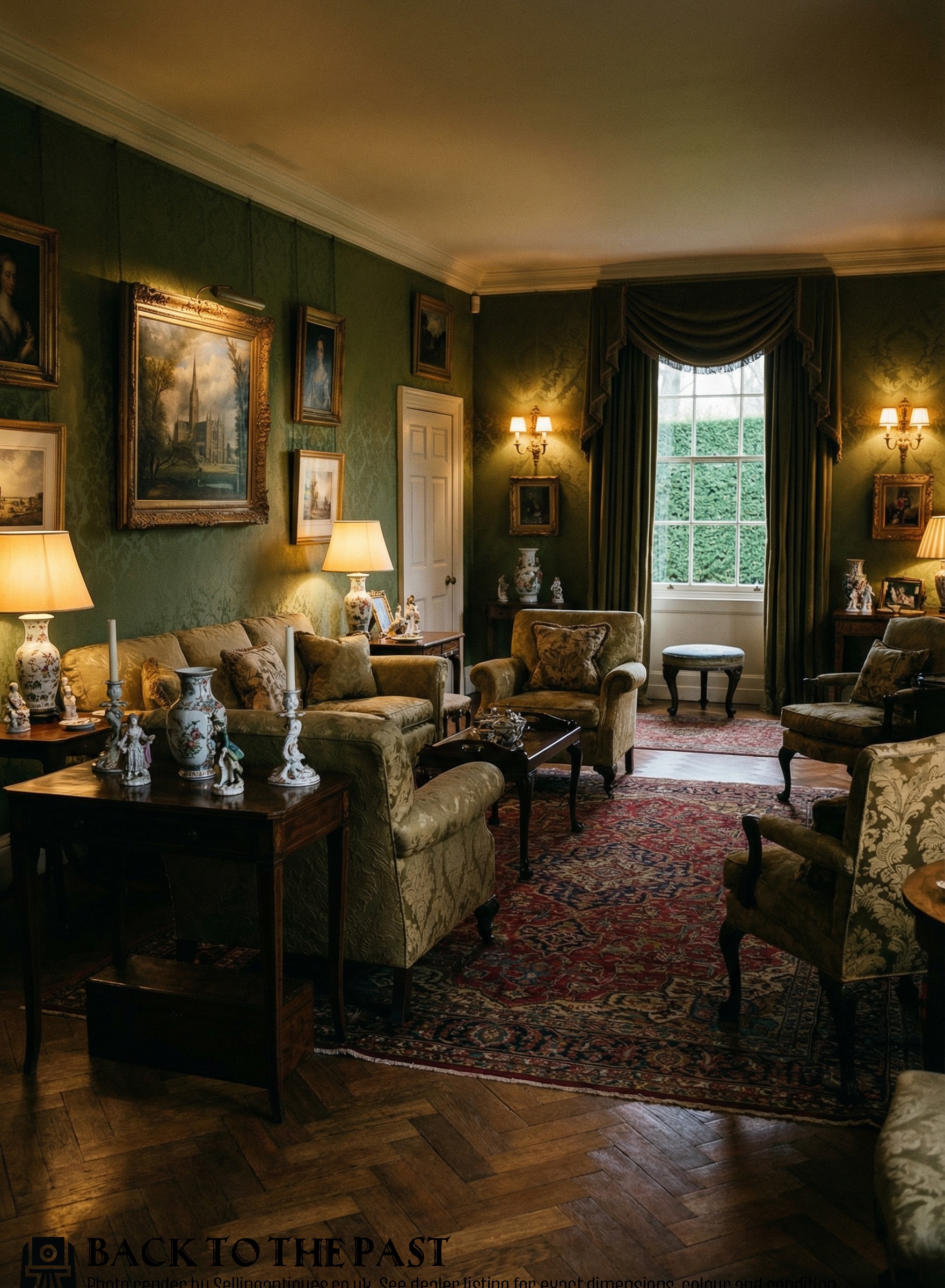
A floral tapestry stool is a low seating piece featuring a textile top worked in botanical patterns, appearing across the Victorian era into the early twentieth century. These furnishings take several forms, including footstools, revolving piano dressing table stools, and low benches designed for daily domestic use.
The aesthetic vocabulary spans multiple traditions and periods, stretching from mid-nineteenth-century British cabinet-making to continental design influences. Pieces range from straightforward mahogany and walnut frames to more elaborate painted Italian needlework models and Chinoiserie examples.
Victorian examples dominate the selection, alongside turn-of-the-century continental pieces and later British workshop productions. Makers sometimes integrated turning, carving, or revolving mechanisms to suit the specific function of the seat within the parlour or music room.
Materials and construction methods
Makers built the structural frames using dense hardwoods such as mahogany, rosewood, and walnut, often applying hand-carved details or painted finishes. Some frames incorporate brass elements, while others utilise simpler turned wooden supports.
The upholstery combines traditional textile work with timber foundations, featuring needlework tapestry or velvet seats stretched over padded frames. The needlework itself employs coloured wool and silk threads to render floral motifs across the textile ground.
Retail Price Guide 2026
Typical UK retail prices for floral tapestry stool, calculated from the Sellingantiques database of over a million retail prices indexed since 2003. This retail price guide relies exclusively on Sellingantiques data; no external sources or auction records are used, so the figures do not describe the wider market.
The selection spans from eighteen-fifty Victorian walnut and mahogany pieces to nineteen-twenty Chinoiserie works by Whytock and Reid.
Judging quality and execution
The distinction between ordinary and superior pieces rests on the crispness of the timber carving and the complexity of the needlework. Better examples display finely detailed floral tapestry work set within substantial rosewood, walnut, or mahogany frames.
Integration of specialised mechanisms, such as smooth revolving actions on piano stools, indicates higher workshop ambition. The integrity of the timber framing and the density of the textile weave separate standard production items from distinguished artistic pieces.
Whytock and Reid
The Floral Tapestry Stool Glossary
- Tapestry
- A heavy textile woven or worked with decorative designs, frequently featuring floral motifs on these seats. It forms the primary decorative surface for the upper portion of the stool.
- Needlework
- Hand-stitched decorative work on canvas or fabric ground, used here to create floral patterns. This technique allows for varied colour palettes and intricate botanical details.
- Mahogany
- A durable reddish-brown tropical hardwood utilised extensively for nineteenth-century furniture frames. Its stability made it a preferred choice for turned and carved stool legs.
- Rosewood
- A heavily grained, dark hardwood prized for fine cabinet-making and decorative seating frames. It offers a rich polished surface that complements textile upholstery.
- Chinoiserie
- European decorative style reflecting Chinese artistic influences, seen in painted or lacquered furniture finishes. It introduces distinctive ornamental motifs to the wooden frame.
Frequently Asked Questions
Where were these stools used?
These pieces served multiple functions in nineteenth and early twentieth-century interiors, acting as footstools near parlour seating or as dedicated seats for dressing tables and pianos. Their compact size allowed them to be moved easily around the room.
They provided both comfort and decorative accent, often placed beside firesides or in music rooms where low seating was practically required.
How do I date a piece?
Dating relies on examining the timber species, framing style, and the character of the needlework upholstery. Mid-nineteenth-century examples frequently feature mahogany or rosewood with heavy Victorian proportions.
Later pieces from around nineteen hundred introduce French or Italian stylistic details, while nineteen-twenties items reflect specific workshop productions like Chinoiserie designs.
Are the tapestry tops original?
Textile longevity varies, meaning some pieces retain their original Victorian or Edwardian needlework while others have undergone later reupholstery. Close inspection of the threads and the underside webbing often reveals the age of the textile.
Original tapestries show authentic period wear and dye fading consistent with age, matching the historical context of the wooden frame.
How do I care for the wood and textile?
Maintenance requires protecting both the hardwood frame and the delicate needlework tapestry from direct sunlight and excessive moisture. Gentle dusting preserves the polished surface of walnut, mahogany, or rosewood without damaging the finish.
Textile components benefit from careful vacuuming through a mesh screen to remove embedded dust without pulling the wool or silk threads of the floral design.