

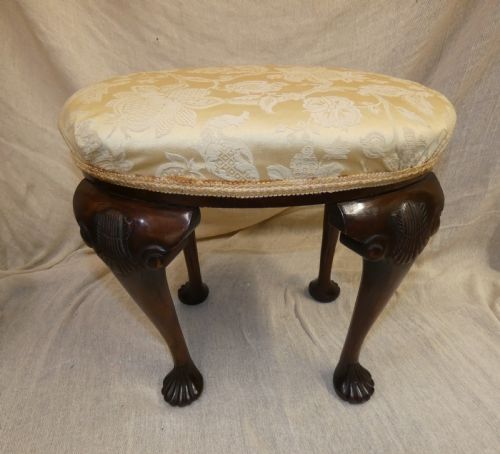

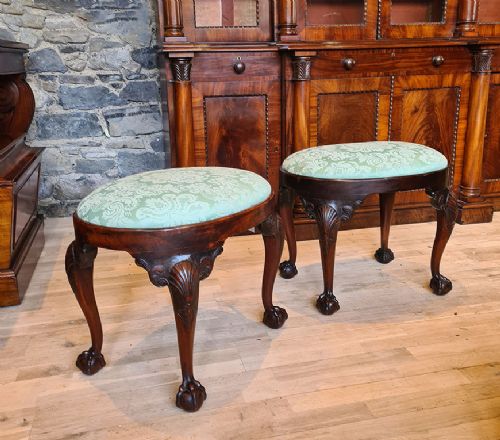


Chippendale Style Stool
A chippendale style stool brings solid mahogany and classical carving to a room, offering both seating and architectural presence.
Chippendale Style Stool
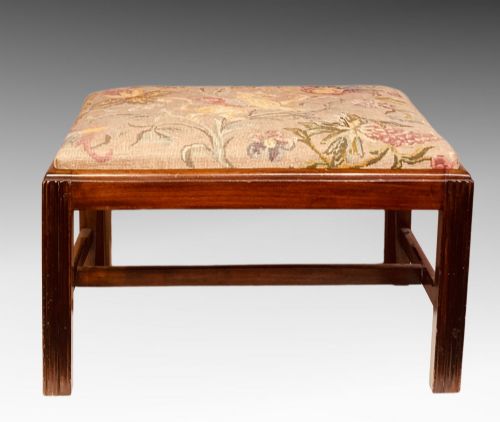
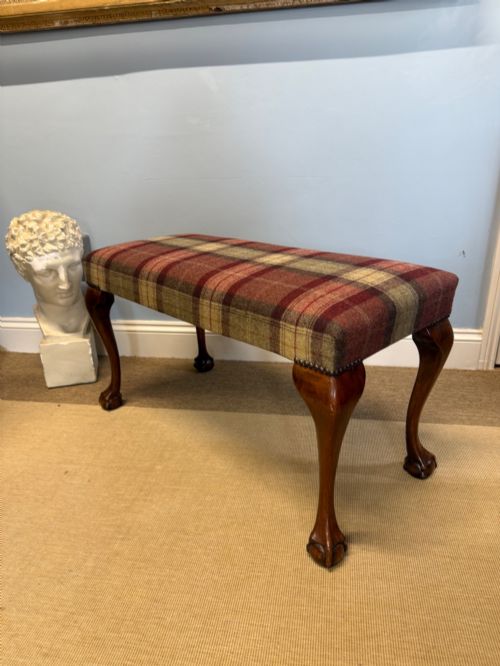
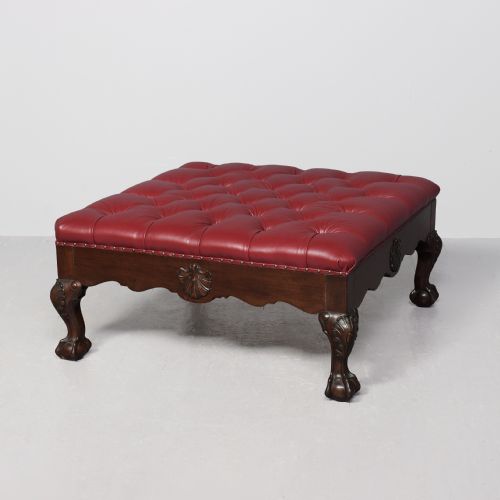
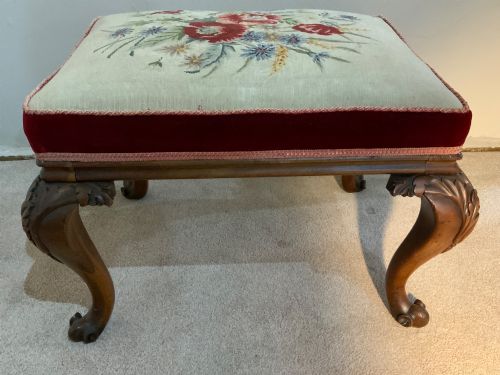
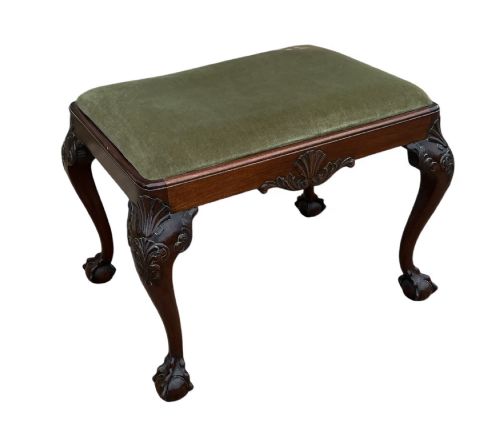
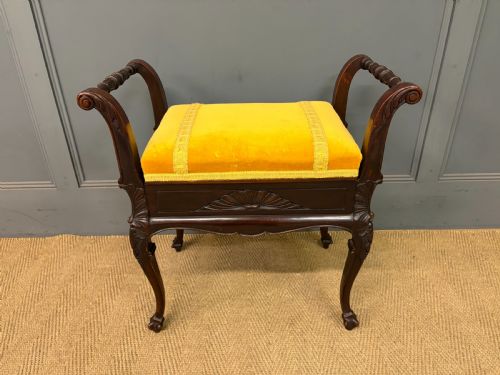
A chippendale style stool encompasses various forms designed for resting feet or sitting, frequently found in mahogany frames dating from the nineteenth and early twentieth centuries. These pieces reflect revival aesthetics alongside eighteenth-century Georgian influences, taking the shape of footstools, dressing stools, and larger centre benches.
The materials span dense timbers paired with textile or hide coverings, drawing on a tradition of domestic seating that prioritized sturdy construction. Buyers encounter numerous examples executed in revival periods, carrying traditional decorative motifs derived from earlier British cabinet-making.
How They Were Made
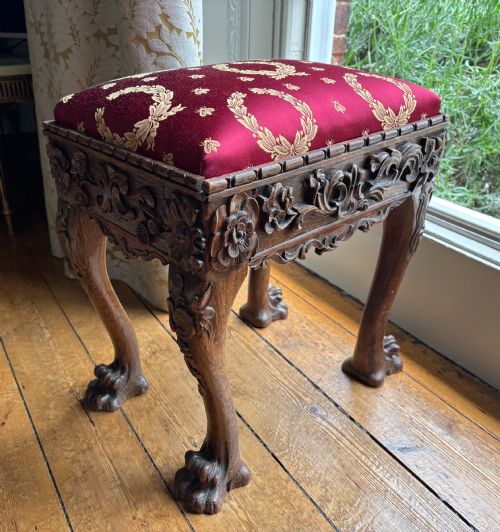
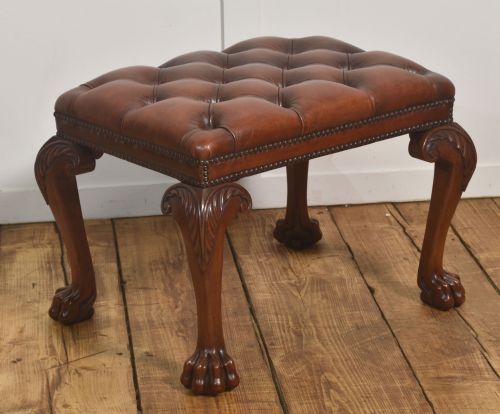
Constructed primarily from solid mahogany or walnut, these frames rely on traditional joinery to support heavy use. Carved details on the legs and frame are worked directly into the timber, often incorporating ball and claw motifs.
Upholstery techniques involve securing textiles such as leather, velvet, damask, or needlework over padded seats. Brass tacks frequently edge the hide or fabric covers, fastening the material securely to the wooden base.
Chippendale Style Stool Retail Price Guide 2026
Typical asking prices for chippendale style stool among the pieces listed under this phrase on Sellingantiques today, from the lower quarter to the upper quarter. They describe what is for sale here now, not the wider market.
Listings feature mahogany predominantly, alongside oak and walnut frames paired with leather, velvet, wool, and fabric upholstery.
What Varies in Quality
Depth and crispness of the wood carving distinguish individual examples, where sharply defined foliage and claw feet indicate skilled handwork rather than mass production. The weight and grain of the mahogany frame also signal superior material selection.
The choice of upholstery materials and the execution of the padding affect the overall finish, ranging from simple fabric tops to deep-buttoned leather hides. Proportion and structural stability complete the distinction between standard utilitarian seating and finely detailed pieces.
The Chippendale Style Stool Glossary
- Chippendale Revival
- A late nineteenth and early twentieth-century movement reproducing or adapting eighteenth-century designs. It draws heavily on Thomas Chippendale's published patterns for furniture.
- Ball and Claw
- A furniture foot motif depicting a bird's talon grasping a ball. This design originated in Chinese art before being adopted by European cabinet-makers.
- Serpentine
- A furniture front or edge shaped with a central convex curve flanked by concave sweeps. It adds fluid movement to wooden framework.
- Duet Stool
- A long seating bench designed for two people playing a piano together. These pieces often feature upholstered tops hinged to reveal sheet music storage inside.
Chippendale Style Stool: Frequently Asked Questions
Where were these stools placed in a home?
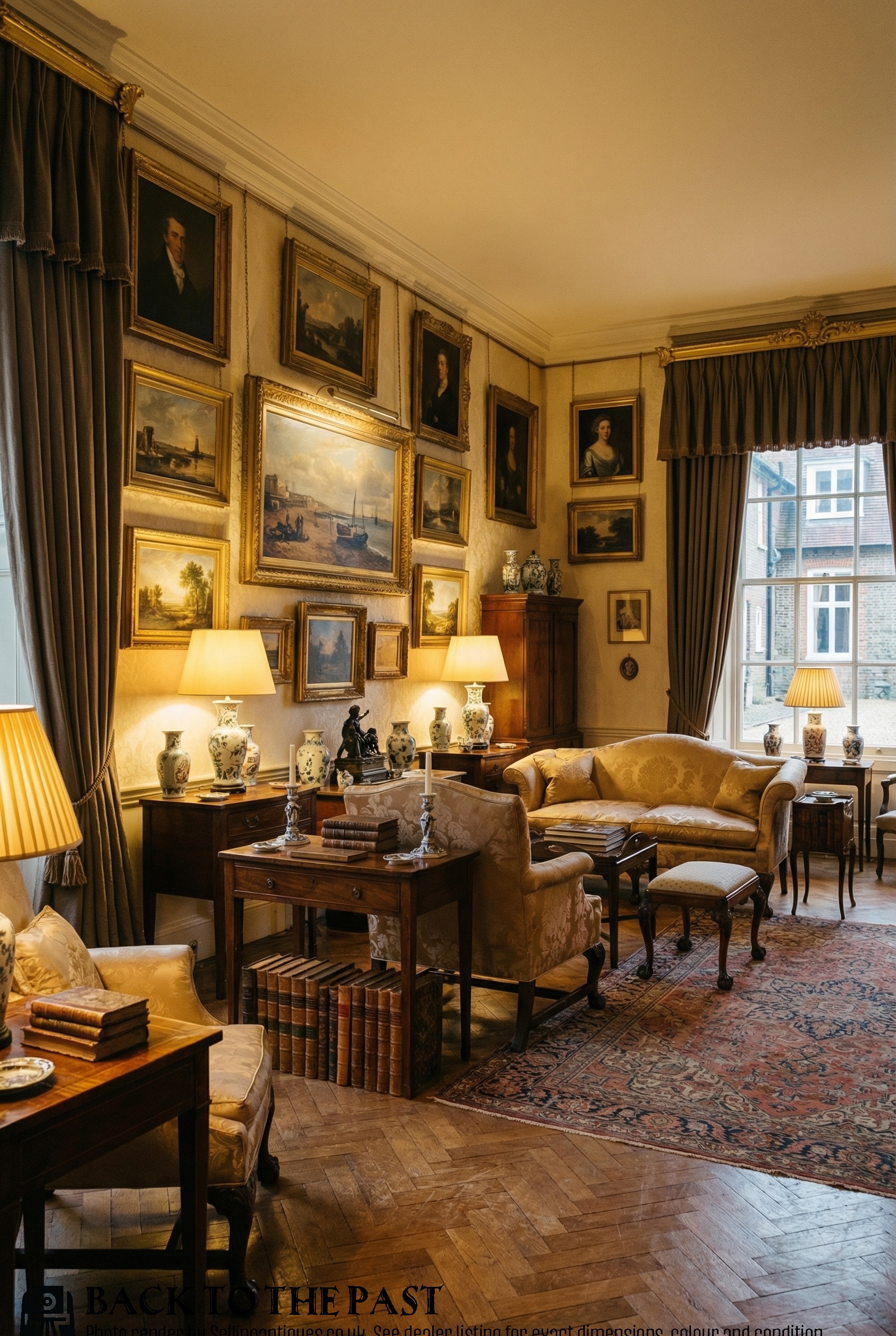
These pieces served multiple functions across domestic interiors, acting as footstools near armchairs or dressing stools in bedrooms. Larger variants were positioned centrally in rooms or beneath windows as window seats.
Their versatile scale allowed them to move easily between sitting rooms and music rooms, functioning as piano benches or auxiliary seating when required.
How do I distinguish revival periods from older pieces?
Distinguishing the age relies on examining the tool marks on the timber, the uniformity of the wood grain, and the method of internal construction. Eighteenth-century originals display specific hand-tooling techniques, whereas nineteenth and twentieth-century revivals often show machine-sawn components.
Hardware elements, such as screws and framing brackets, also provide clues to the manufacturing date and subsequent repairs.
What upholstery materials are authentic?
Leather, horsehair, wool, and woven damask represent materials historically recorded on these frames. Buttoned leather and textured fabrics were common choices for both Georgian originals and later revival pieces.
Many surviving examples have undergone reupholstery over time to maintain their usability within modern interiors.
How should I care for the mahogany frame?
Maintaining the wood involves keeping the timber away from direct heat sources and strong sunlight to prevent the mahogany from drying out. Occasional application of suitable wax polish helps nourish the surface finish.
Leather and fabric top sections require cleaning methods appropriate to their specific textile composition to preserve the upholstery.