




Cream Damask Stool
A cream damask stool brings patterned textile warmth and traditional timber framing into a room.

Cream Damask Stool
When you search for a cream damask stool, you encounter low seating and footrests upholstered in woven patterned fabric. These pieces combine wooden frames in mahogany, walnut, giltwood, or painted timber with cream damask upholstery.
The selections span the nineteenth century, including Victorian and Regency periods, alongside revival styles such as Chippendale, Queen Anne, Louis XV, Louis XVI, and Baroque. Forms range from square footstools and dressing stools to window seats and boudoir stools.
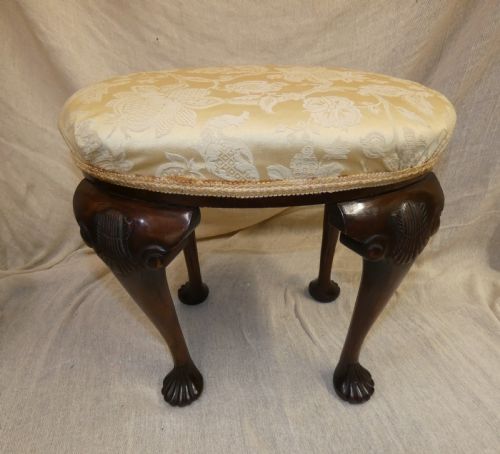
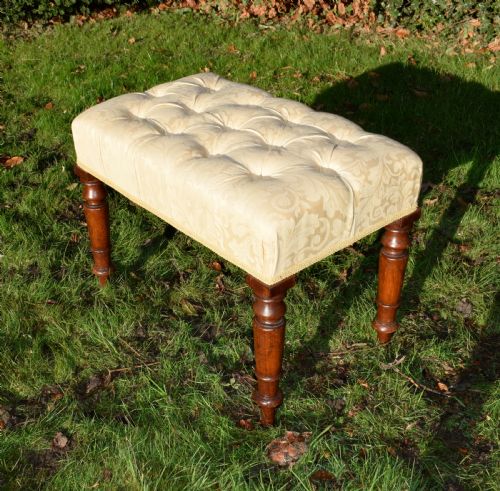
You are most likely to meet nineteenth century examples featuring mahogany or walnut frames paired with fabric upholstery. Some pieces offer simple turned and tapered legs, while others display carved details or cabriole legs.
How they were made
Frames are constructed from timbers such as mahogany, walnut, and timber, sometimes finished with giltwood or paint. Joinery and carving shape the structural supports, incorporating turned and tapered legs or cabriole legs.
Upholstery utilises cream damask fabric, occasionally incorporating buttoned detailing or fine padding over wooden bases. Brass fittings may appear on particular chair or stool hardware.
Cream Damask Stool Retail Price Guide 2026
Typical asking prices for cream damask stool among the pieces listed under this phrase on Sellingantiques today, from the lower quarter to the upper quarter. They describe what is for sale here now, not the wider market.
Some nineteenth century stools come with matching armchairs, proving that furniture likes company too.
What varies in quality
The distinction between standard examples and finer pieces lies in the crispness of the timber carving and the weight of the frame. Robust mahogany or walnut structures with detailed carving sit above simpler timber builds.
The quality of the damask upholstery and the precision of its application influence the finish of the piece. Well executed joinery and balanced proportions distinguish better examples across Victorian and revival styles.
The Cream Damask Stool Glossary
- Damask
- A reversible figured fabric woven on a jacquard loom with patterns formed by contrasting warps and wefts. It provides the characteristic texture seen on these upholstered pieces.
- Cabriole leg
- A furniture leg that curves out and then in, resembling an animal's curving leg. This form appears frequently on revival and period seating.
- Giltwood
- Wood that has been treated with gold leaf or gilt preparation. It is found on decorative nineteenth century revival frames.
- Prie-Dieu
- A devotional chair designed for prayer, featuring a low seat and a tall, narrow top rail. Examples from the Victorian period combine this form with upholstered frames.
Cream Damask Stool: Frequently Asked Questions
What periods do these cream damask stools come from?
The available pieces primarily date from the nineteenth century, including specific years like 1860, 1880, 1890, and 1920, alongside broader Victorian and Regency eras.
Revival styles from these periods draw on earlier Chippendale, Queen Anne, and Louis designs.
How were these stools used originally?
They served as footstools, dressing stools, boudoir seats, and window seats in period domestic interiors. Some accompanied larger armchairs or served at dressing tables.
Their varied forms allowed them to function both as supportive seating and decorative accents.
What woods are used for the frames?
Makers utilised mahogany and walnut for sturdy structural frames, alongside general timber, giltwood, and painted finishes. These materials determine the tone and weight of each piece.
Different woods align with specific design periods and revival styles.
How do I identify a revival style?
Revival pieces borrow decorative motifs and silhouettes from earlier eras, such as Baroque, Louis XV, Louis XVI, Chippendale, and Queen Anne. Nineteenth century makers reinterpreted these historical designs using contemporary techniques.
Examining the carving style and timber helps connect a piece to its revival period.