




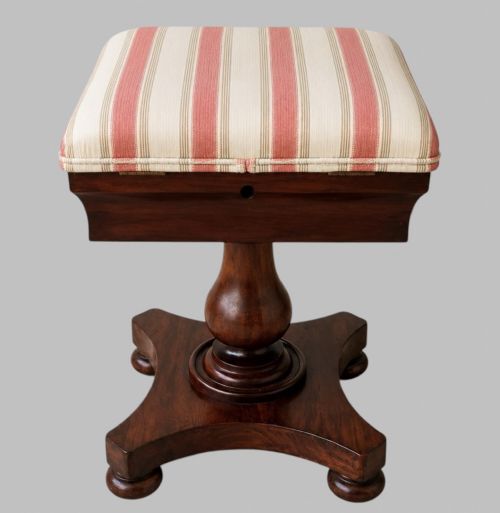
Victorian Vanity Stool
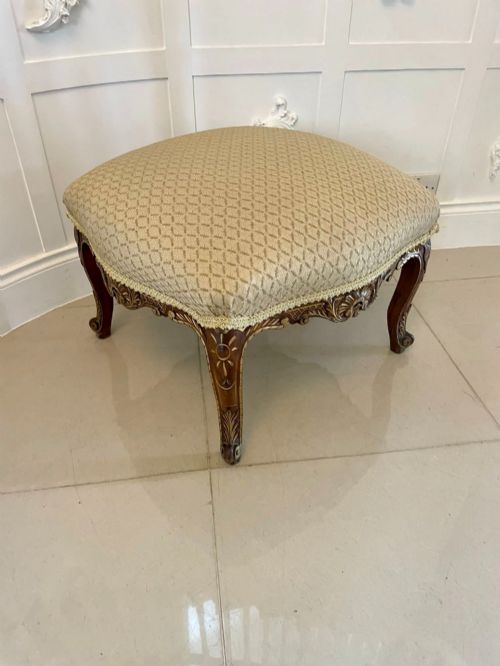
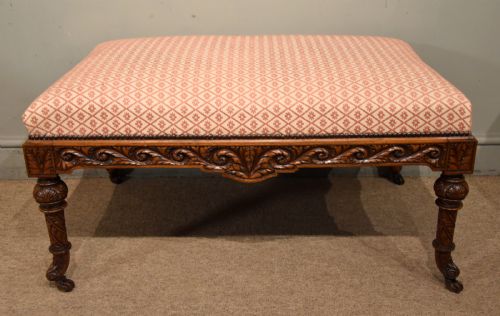
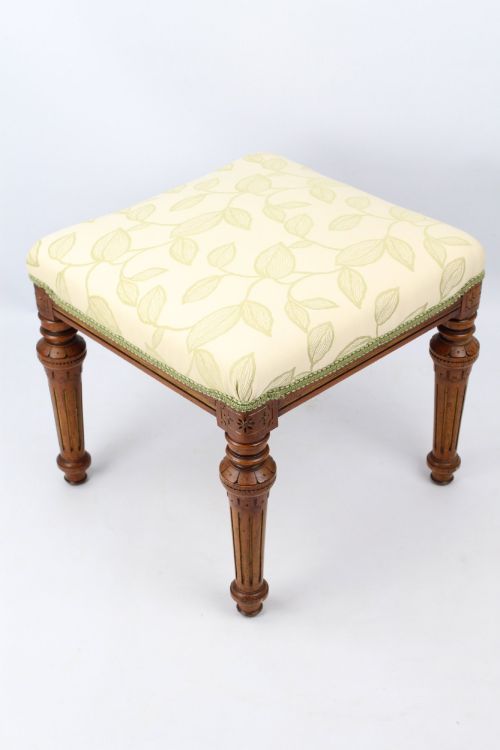
A victorian vanity stool offers a low seat for the dressing room, combining carved timber frames with textile or leather upholstery.
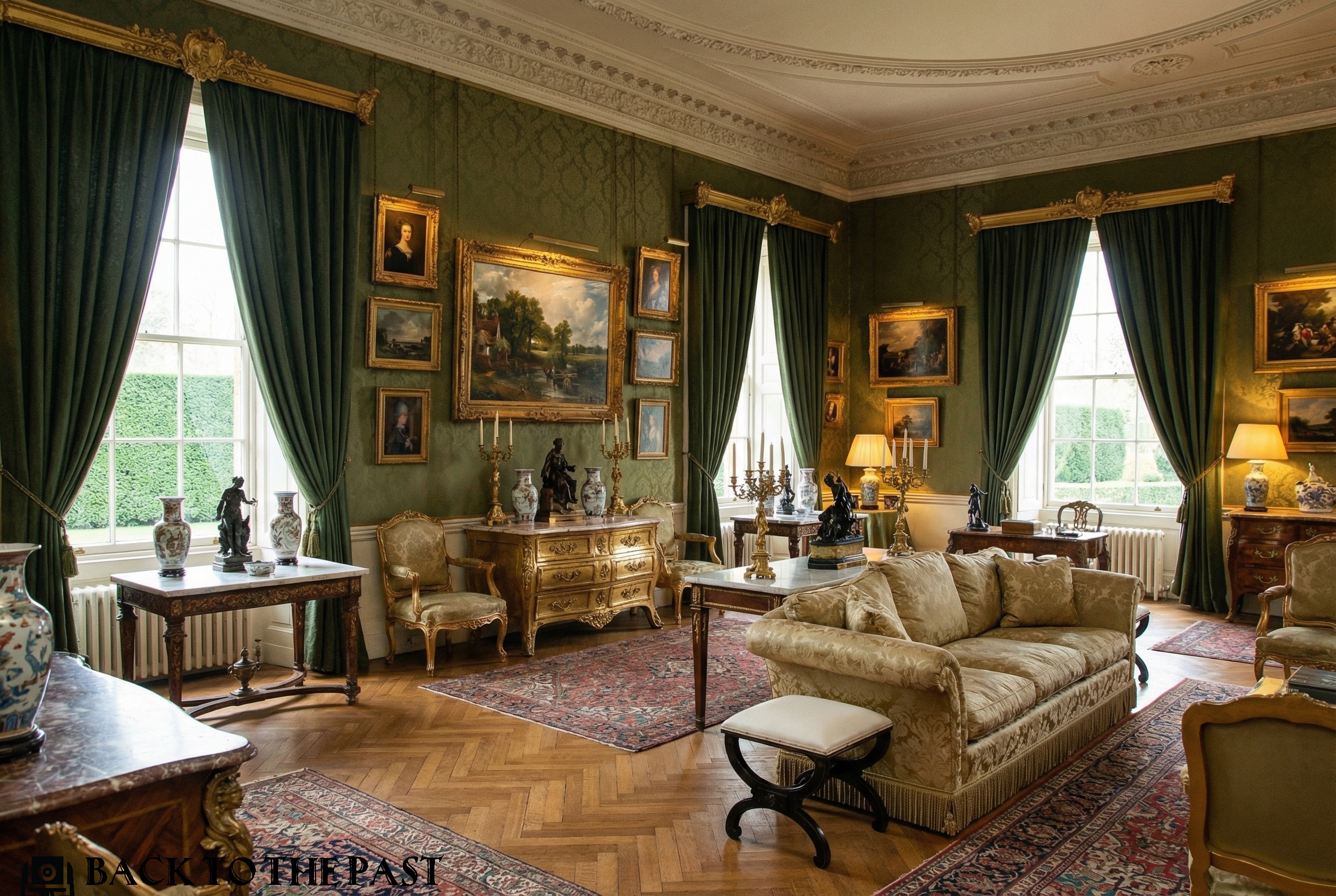
Victorian Vanity Stool
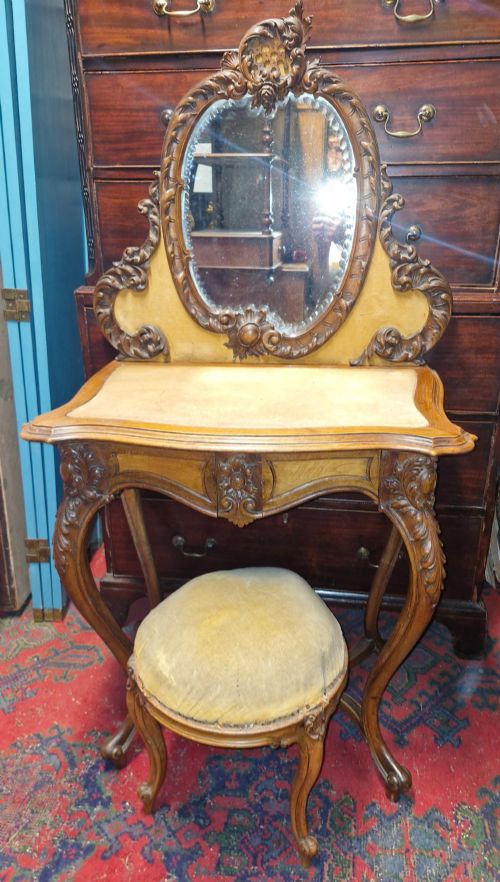
A victorian vanity stool serves as a low seat designed for use at a dressing table or mirror, often appearing alongside matching dressing tables or as a standalone bedroom piece. When buyers search for a victorian vanity stool, they encounter compact seating meant for the bedchamber rather than formal parlour chairs.
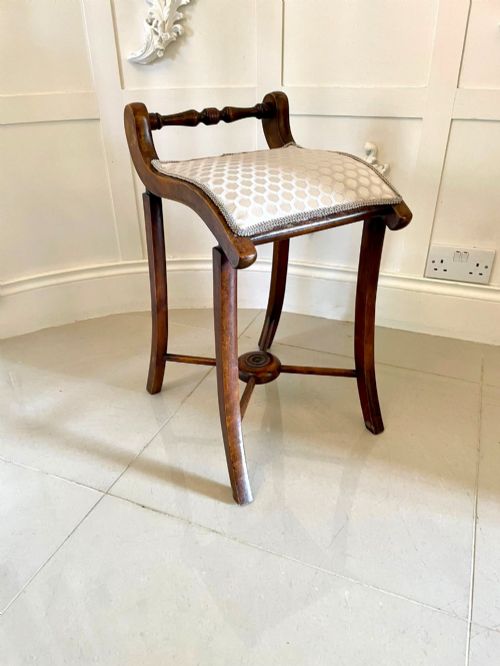
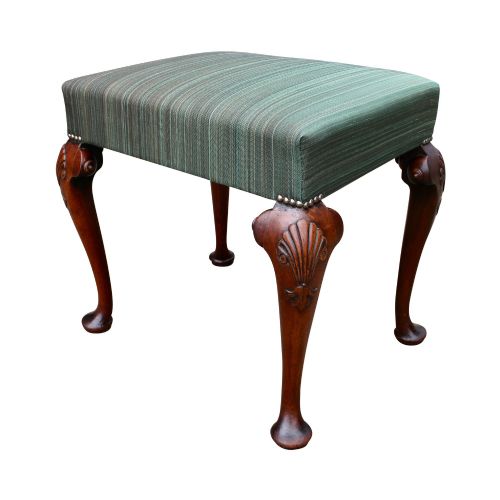
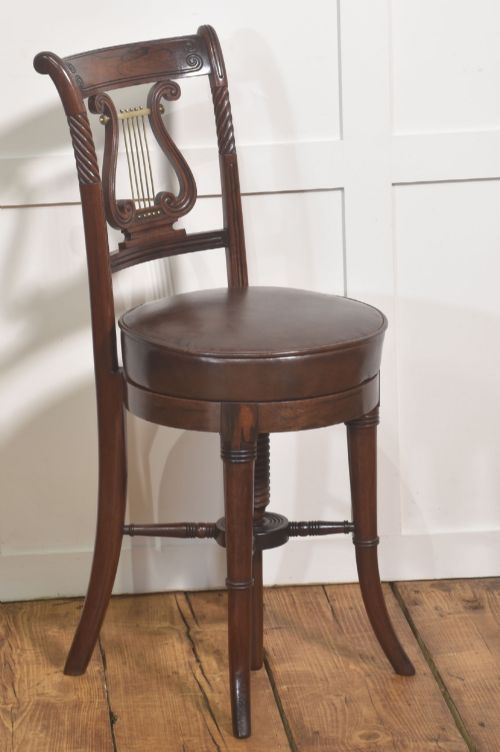
The selections span the nineteenth century, including specific dates from eighteen fifty to nineteen hundred, alongside periods such as Regency, William IV, and Edwardian. Forms range from simple upholstered stools to X-frame designs, revolving music seats, and footstools.
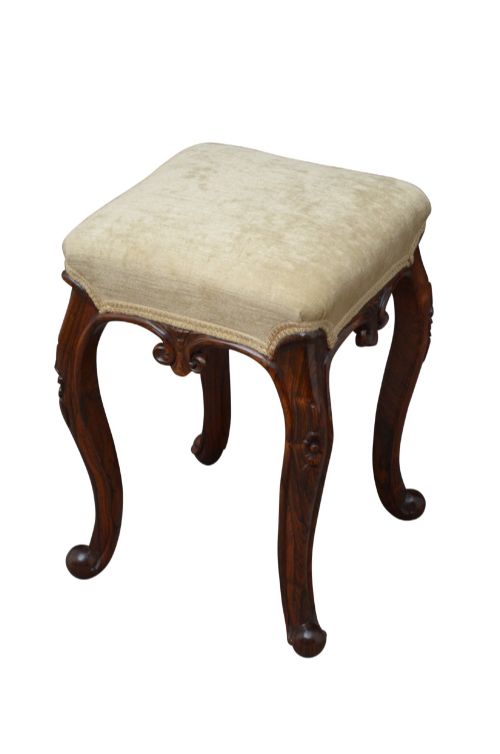
Styles lean heavily towards Victorian and Rococo Revival, with additional examples reflecting Queen Anne, Chippendale, and Anglo-Indian influences. Woods such as mahogany, walnut, rosewood, and satinwood dominate the construction, paired with textile, velvet, leather, and fabric seats.

Materials and construction methods
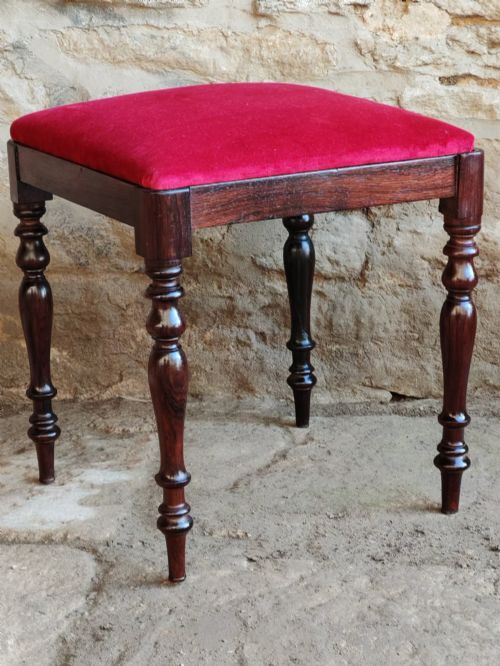
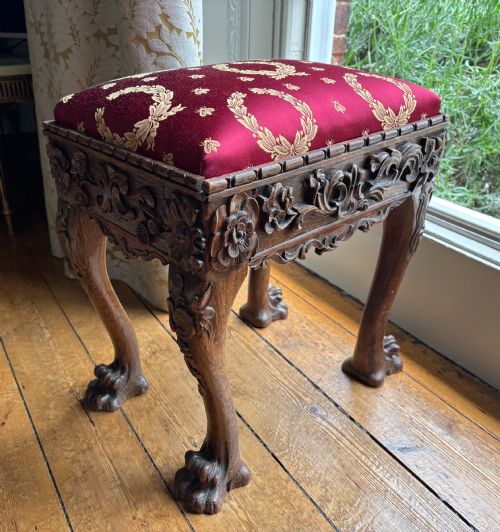
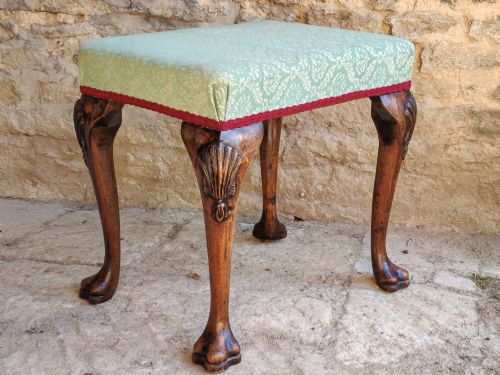
Cabinetmakers utilised dense hardwoods such as mahogany, walnut, and rosewood for the structural frames, often shaping the timber into cabriole legs or spiral turnings. Rosewood and walnut frequently received hand-carved detailing, while other pieces employed oak, satinwood, ebonised wood, or Goncalo Alves.
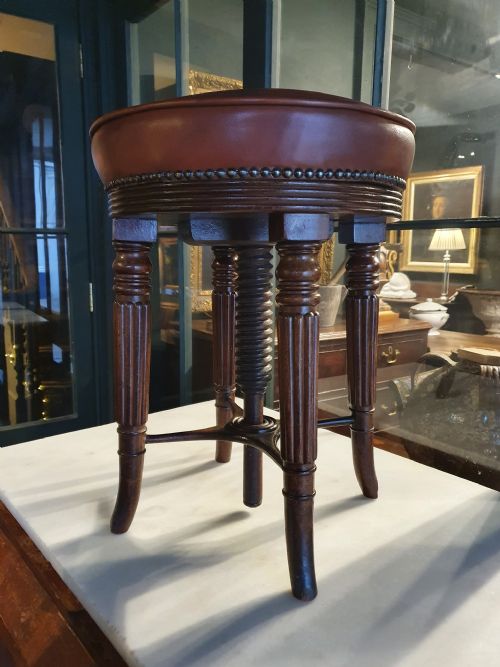
Upholstery techniques involved traditional stuffing secured beneath fabrics, velvet, leather, or beadwork seats. Mechanical elements also appeared in adjustable and revolving examples, incorporating brass and timber screw mechanisms for height variation.
Victorian Vanity Stool Retail Price Guide 2026
Typical asking prices for victorian vanity stool among the pieces listed under this phrase on Sellingantiques today, from the lower quarter to the upper quarter. They describe what is for sale here now, not the wider market.
Listings incorporate multiple wood types including mahogany, walnut, rosewood, satinwood, and brass hardware.
Distinctions in craftsmanship
The refinement of the woodcarving separates standard production from superior pieces, particularly in the crispness of foliage, scrolls, or cabriole contours. Crisp execution on walnut and rosewood frames indicates a higher tier of workshop output.
The integrity of the frame construction and the preservation of original turning, gilding, or timber grain determine the overall merit of the stool. Secondary elements, such as the precision of revolving mechanisms or the fidelity of period upholstery materials, further influence the standing of an individual piece.
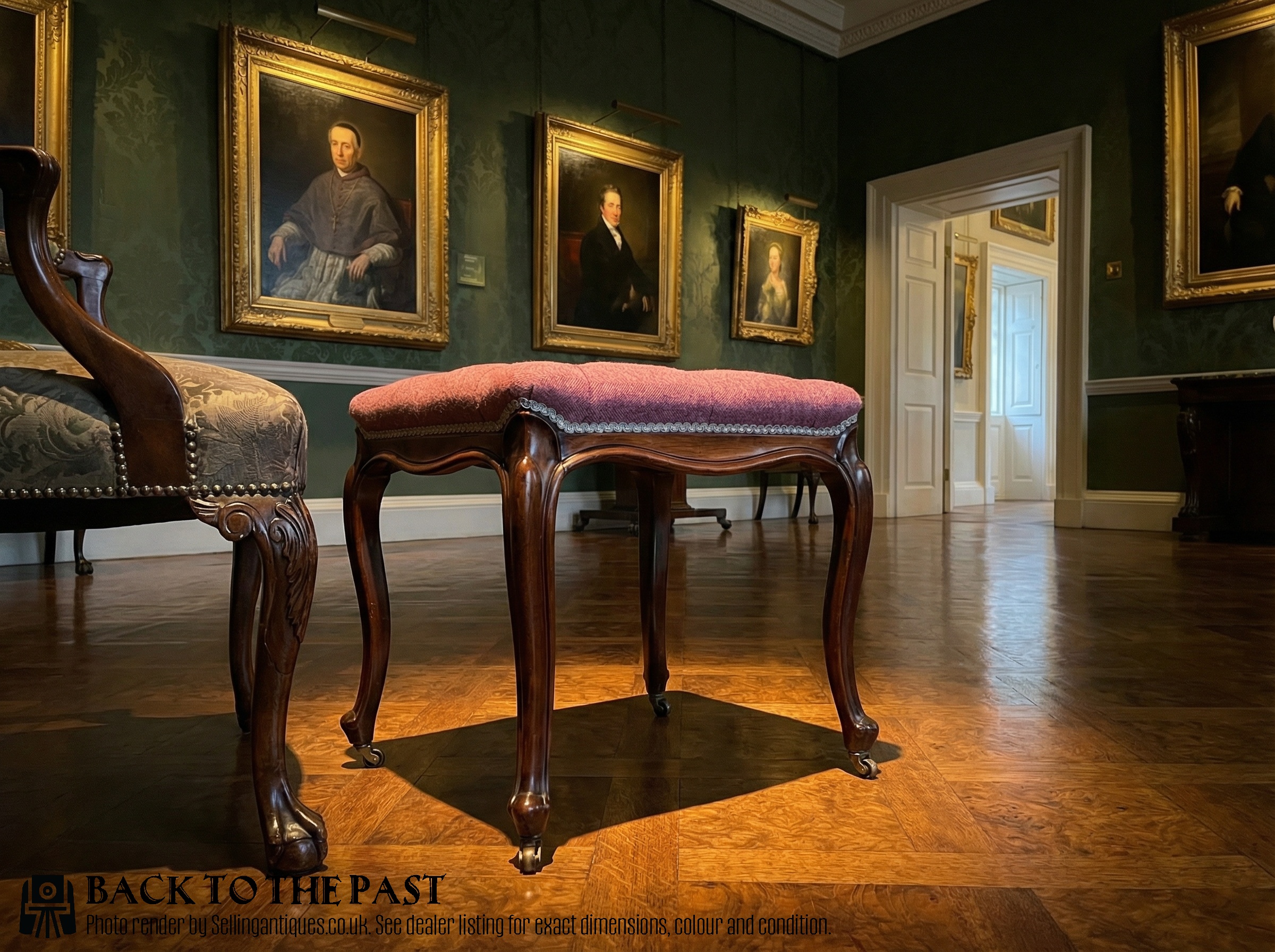
The Victorian Vanity Stool Glossary
- Cabriole leg
- An S-shaped furniture leg curving outwards at the knee and inwards at the ankle, commonly terminating in a pad or scroll foot. This form derives from Chinese design traditions and gained popularity in European furniture during the eighteenth and nineteenth centuries.
- X-frame
- A seating structure supported by intersecting diagonal stretchers forming an X shape when viewed from the side. The design offers structural rigidity while maintaining a light silhouette.
- Revolving stool
- A seat featuring a threaded spindle or pivot mechanism allowing the top to rotate. These examples frequently served at pianos or dressing tables where users required adjustable positioning.
- Giltwood
- Timber coated with a thin layer of gold leaf or gesso and gold paint. The technique highlights carved details by catching ambient light in domestic interiors.
- Bobbin leg
- A turned furniture support shaped into a succession of rounded spheres resembling bobbins of thread. This turning style appears on nineteenth-century revival pieces referencing earlier seventeenth-century domestic furniture.
Victorian Vanity Stool: Frequently Asked Questions
What is a victorian vanity stool used for?
These low seats provided a comfortable place to sit while grooming or dressing at a bedroom vanity table. They were specifically proportioned to tuck beneath dressing furniture when not in use.
In addition to dressing rooms, smaller examples often doubled as piano seats or footstools in nineteenth-century parlours and private chambers.
How do I identify a Victorian piece?
Look for characteristic timber choices like rosewood, walnut, and mahogany, often combined with heavy upholstery or beadwork. Stylistic markers include Rococo Revival curves and cabriole legs.
Construction details such as hand-cut joinery and traditional upholstery stuffing help separate nineteenth-century work from later reproductions.
Are these stools adjustable in height?
Certain variants incorporate revolving tops or mechanical screw mechanisms housed within the wooden column. These allowed the user to raise or lower the seat level.
Fixed-height frames remain the more common find, standing low to the floor for standard dressing table use.
What woods were commonly used?
Mahogany and walnut form the majority of surviving frames, offering a sturdy dark foundation for carved decoration. Rosewood appears frequently in finer mid-century examples.
Alternative materials include satinwood, oak, ebonised timber, and exotic woods like Goncalo Alves.