

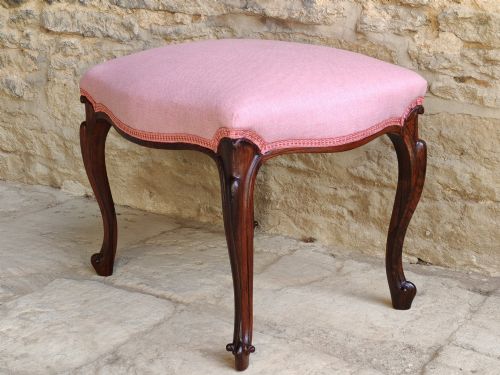

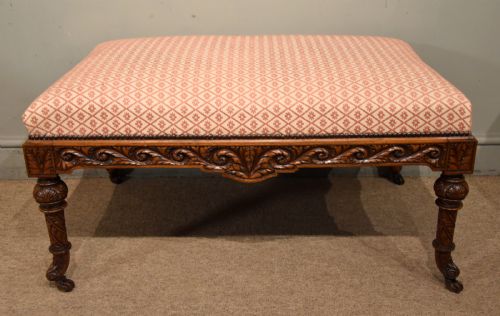
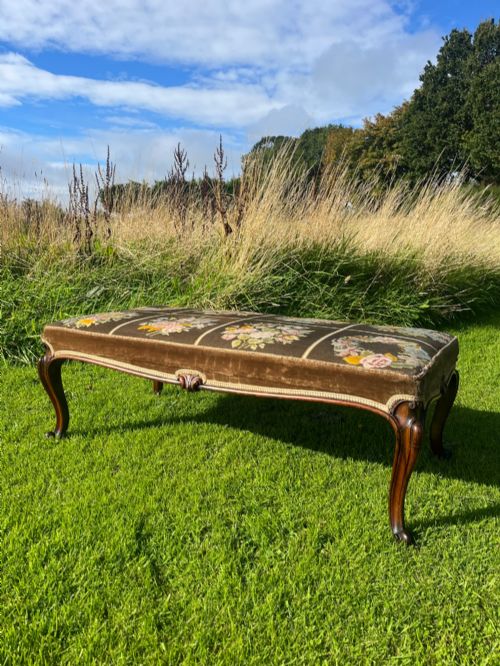
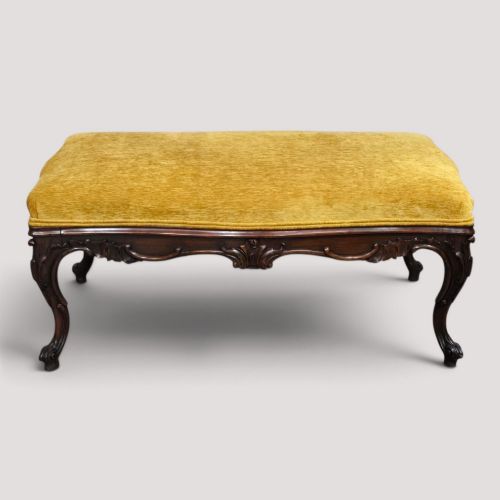


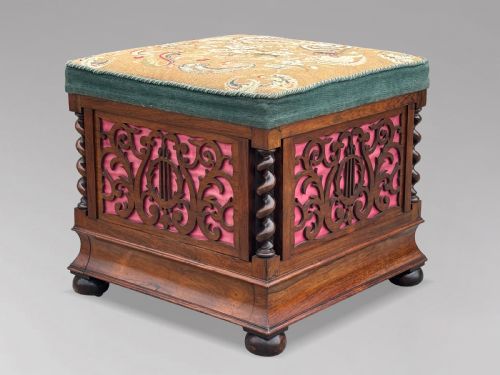
Antique Rosewood Stool
When you search for an antique rosewood stool, you uncover seating that combines dense tropical timber with period upholstery for parlour or drawing room use.
Antique Rosewood Stool
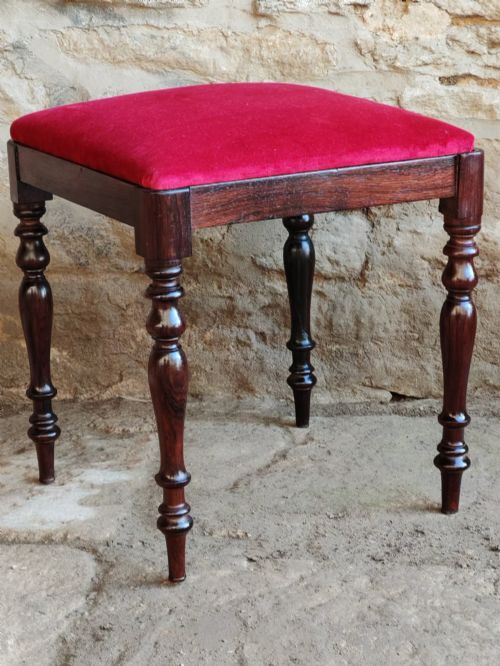
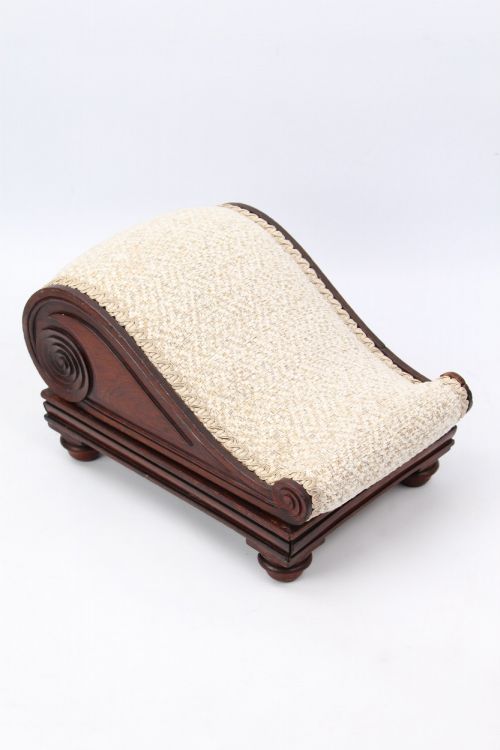
An antique rosewood stool covers a surprisingly broad domestic category, ranging from low footstools to revolving piano seats and adjustable music chairs. The examples found here span the Regency, William IV, and Victorian eras, alongside Anglo-Indian and Chinese Qing Dynasty pieces.
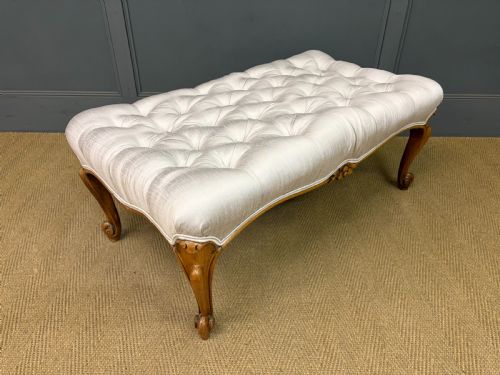
Piano stools and dressing stools dominate the selection, often incorporating rise-and-fall screw mechanisms or revolving tops designed for musicians and gentlefolk. Footstools and ottomans appear frequently, built with low frames to support embroidered needlepoint or fabric upholstery.
Originating from British parlours as well as Asian workshops, these pieces served functional roles beside keyboards and dressing tables while displaying the decorative tastes of the nineteenth century.
How they were made
Makers utilised dense, dark rosewood for its ability to take a sharp carved edge and a deep, polished finish. Turning, scrolling, and bobbin-leg shaping required timber of significant structural stability.
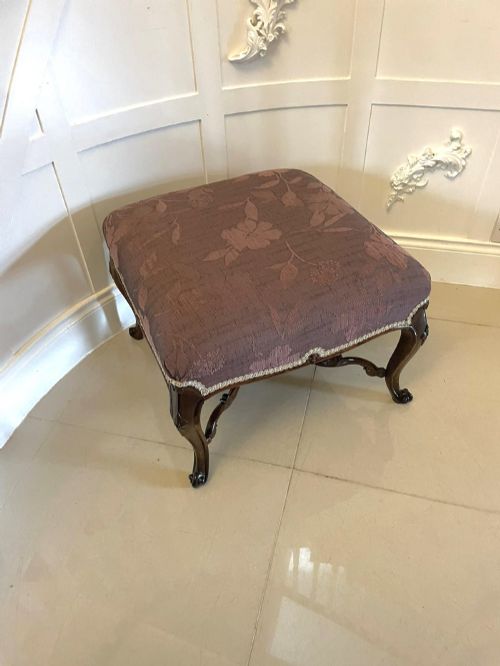
Upholstery was integral, utilising fabric, velvet, wool, and tapestry over webbing and stuffing, often complemented by brass castors and decorative studwork. Inlaid versions incorporated contrasting lighter woods like satinwood into the primary rosewood frame.
Antique Rosewood Stool Retail Price Guide 2026
Typical asking prices for rosewood stool among the pieces listed under this phrase on Sellingantiques today, from the lower quarter to the upper quarter. They describe what is for sale here now, not the wider market.
Materials recorded across the selection include rosewood, hardwood, brass, marble, velvet, tapestry, wool, and fabric.
What varies in quality
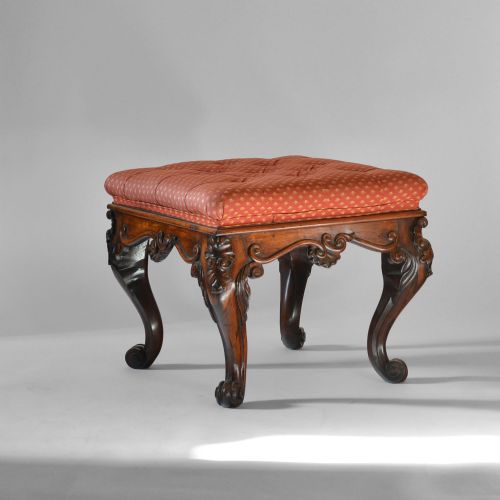
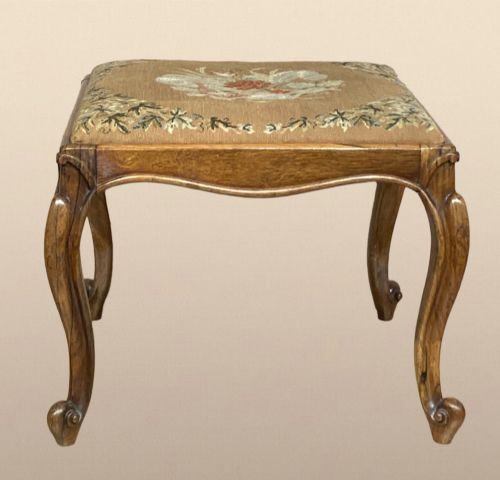
The sophistication of the timber carving and the complexity of the turning dictate the tier of a piece, with deeply carved cabriole legs and crisp floral motifs sitting above plain, utilitarian frames. Joinery execution, such as tight dovetailing and robust framing, separates standard workshop output from finer cabinet work.
The mechanical integrity of adjustable piano stools marks another division, where smooth-operating rise-and-fall screws and original brass hardware indicate superior manufacture. The retention of original upholstery materials, needlepoint tops, and secondary woods further distinguishes preserved examples.
Charles Nosotti·H. Brooks & Co·Marsdens Patent·James Shoolbred
The Antique Rosewood Stool Glossary
- Rosewood
- A dense, heavily grained tropical hardwood prized for its dark colour and polished lustre. It forms the primary structural and decorative medium for these pieces.
- Rise and fall
- A mechanical height-adjustment system operated by rotating the seat top on a central wooden or iron screw. This mechanism allowed musicians to set their exact playing height.
- Bobbin leg
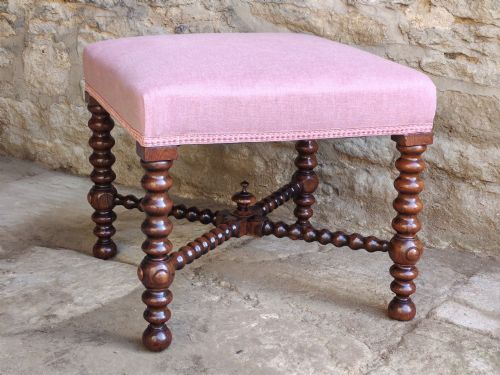
- A turned furniture leg shaped with a series of rounded, spool-like swellings and constricted joints. It became popular during the seventeenth century and saw revivals in nineteenth-century design.
- Needlepoint
- Hand-stitched canvas embroidery utilising wool or silk yarn to create durable geometric or floral upholstery designs. It frequently covers the top surface of nineteenth-century footstools.
- Hongmu
- A Chinese term translating to red wood, used to describe dense, dark imported hardwoods utilised in Qing Dynasty furniture. Pieces in this material share the heavy, durable characteristics of Western rosewood.
Antique Rosewood Stool: Frequently Asked Questions
How do I date a rosewood footstool?
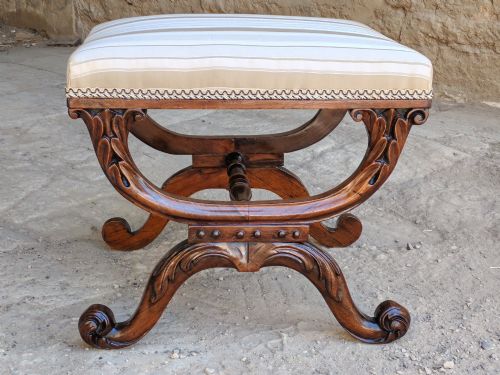
Dating relies on examining the leg style, turning patterns, and upholstery construction methods. Regency and William IV pieces often display bold scrollwork or X-frame geometry.
Later Victorian examples frequently incorporate cabriole legs or bobbin turning. Examining the secondary woods underneath helps confirm the period.
Were rosewood stools made outside Britain?
Yes, workshop traditions in India and China produced notable rosewood and hardwood seating during the nineteenth century. Anglo-Indian pieces often display intricate carved ornamentation reflecting regional craft.
Chinese Qing Dynasty stands and low stools utilised dense indigenous hardwoods like huali and hongmu. These imported forms complement domestic British Victorian seating on the market.
How do I care for antique rosewood?
Maintain antique rosewood by keeping it away from direct sunlight and steady heat sources to prevent timber splitting. Gentle dusting with a dry cloth preserves the polished surface.
Avoid modern liquid polishes containing silicone. Regular waxing helps nourish the dense grain without building up a heavy residue.