


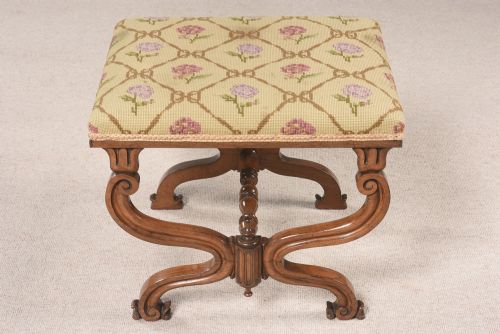
Regency Rosewood Footstool
A regency rosewood footstool brings solid timber framing and fine upholstery together, offering a practical seat that anchors a traditional room.
Regency Rosewood Footstool
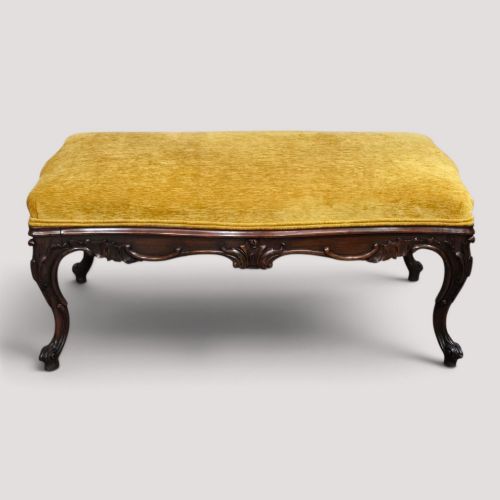
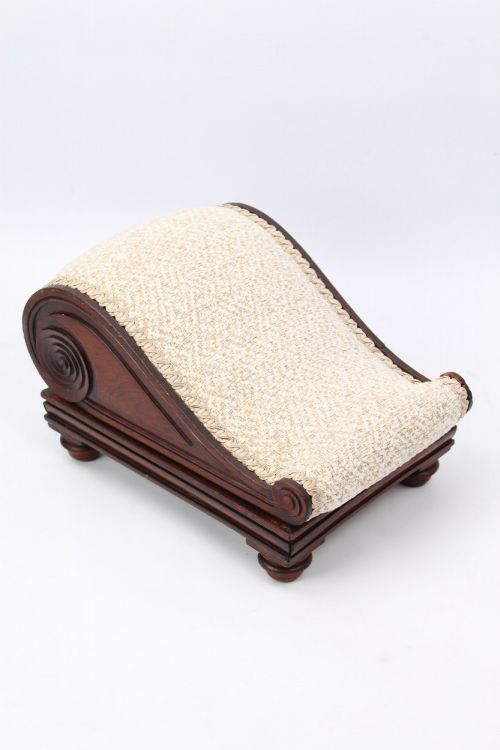
A regency rosewood footstool combines dense tropical timber with upholstered seating, taking the form of low stools, box ottomans, and X-framed designs. These pieces originate primarily from the Regency period, the Georgian era, and the early Victorian years, spanning the nineteenth century.
The most common examples on this page are compact stools featuring rosewood frames and various fabric coverings. Variations include larger ottomans and specialised dressing stools used alongside period furniture.
Origins stretch from standard British cabinet-making workshops to Anglo-Indian studios that utilised native timber and distinct carving traditions. Makers shaped these items for drawing rooms and dressing areas, where comfort met formal interior design.
How they were made
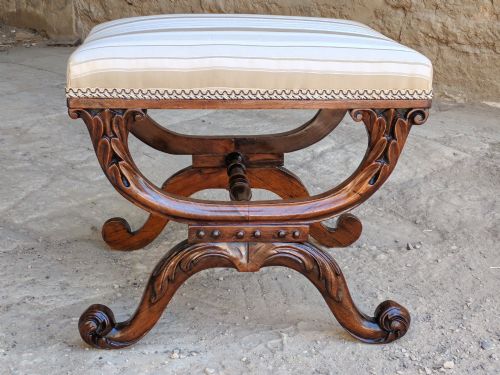
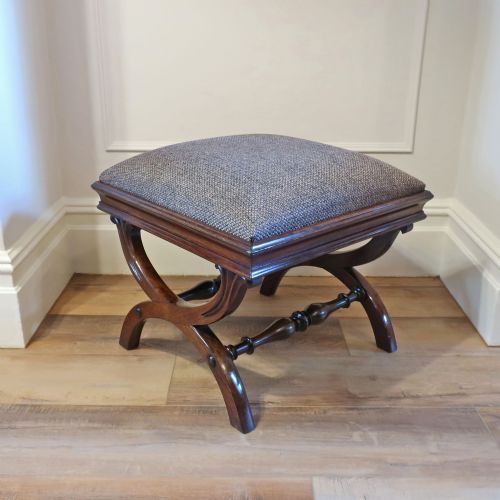
Makers built these pieces using dense rosewood, shaping the timber into turned legs, curved rails, and crossing X-frames. The wood receives a polished finish that highlights the dark grain and natural figure of the material.
Upholstery techniques involve securing fabric over padding, utilising materials such as leather, velvet, damask, tapestry, and woven textiles. Brass details occasionally appear as structural accents or decorative mounts on the frame.
Some nineteenth-century footstools doubled as hidden storage boxes for wool work and clandestine sweets.
What varies in quality
The sophistication of the frame construction dictates the standing of each piece, distinguishing simple turned supports from complex X-framed geometry or intricately carved Anglo-Indian motifs. Heavier timber scantlings and tighter joinery indicate superior cabinet-making.
The choice and execution of the upholstery material influence the overall character, ranging from plain leather hides to detailed floral trellis tapestry work. Original upholstery techniques and period-appropriate replacement textiles maintain the integrity of the design.
The Regency Rosewood Footstool Glossary
- Regency
- A stylistic period spanning the early nineteenth century defined by classical restraint and revived antique forms. It draws heavily on Greek, Roman, and Egyptian precedents.
- Rosewood
- A dense, heavily figured dark timber favoured for high-end furniture during the nineteenth century. Its natural oils take a high polish.
- X-Frame
- A structural form utilising two intersecting diagonal members to support the seat. This profile derives from ancient curule chairs.
- Ottoman
- A low, upholstered seat or footstool typically lacking a backrest or arms. Larger examples often feature internal storage.
- Tapestry
- A heavy hand-woven or needlework textile displaying pictorial or geometric patterns. These fabrics often cover formal footstool seats.
Regency Rosewood Footstool: Frequently Asked Questions
How do I use a footstool today?
These pieces function well as low seats or footrests in a sitting room, matching the scale of period armchairs. They also serve as standalone decorative accents.
Their compact footprint allows them to sit easily beside sofas or beneath dressing tables without crowding a modern floor plan.
Are these stools comfortable?
The seating surface relies on traditional padding and upholstery over a rigid wooden base. Firm support was standard for nineteenth-century seating.
Modern comfort depends on the thickness of the internal padding and the resilience of the supporting webbing beneath the fabric.
How do I spot a Regency piece?
Regency items display classical proportions, dark rosewood timber, and restrained decorative carving. Turned legs and crisp joinery are typical.
Pieces from this era often share stylistic traits with Georgian and early Victorian work, making timber selection and frame geometry key indicators.