


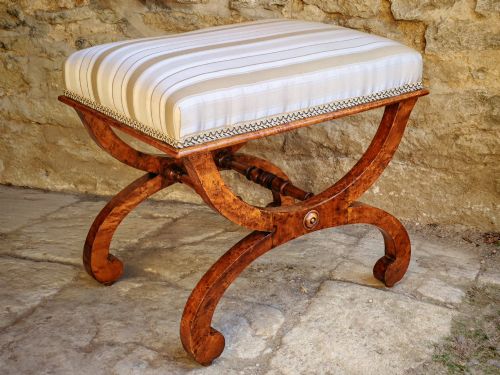
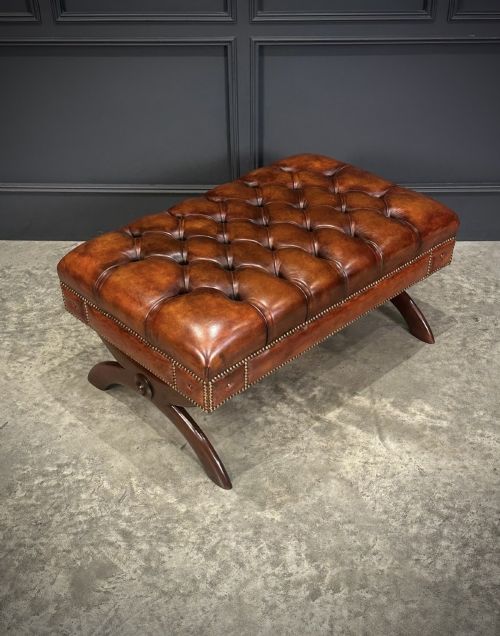
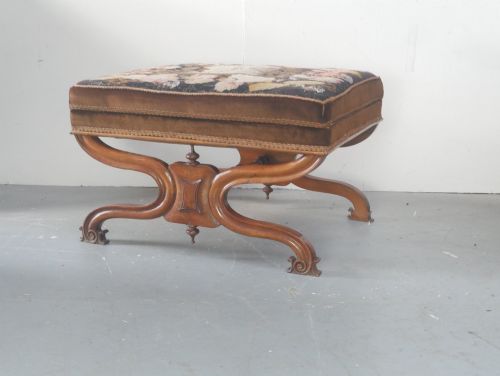
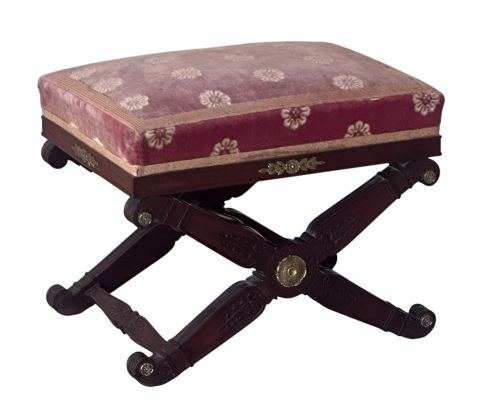

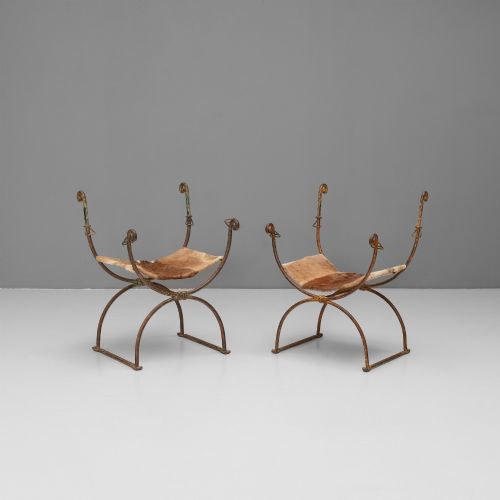
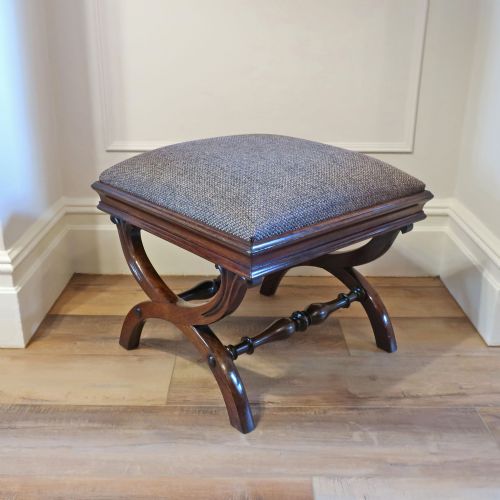


Curule Frame Stool
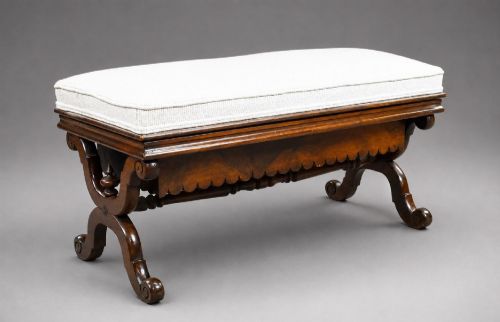
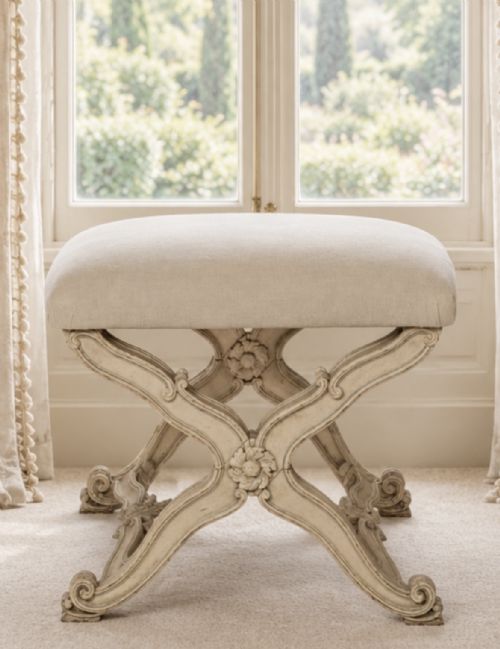
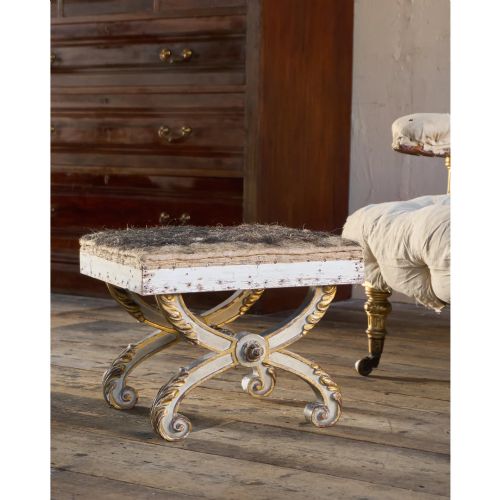
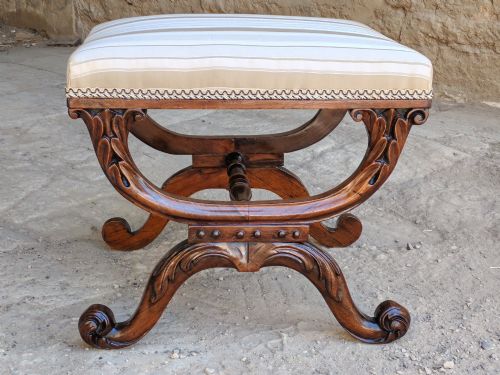
A curule frame stool brings ancient Roman authority into the home through a distinctive crossed-leg X-form.
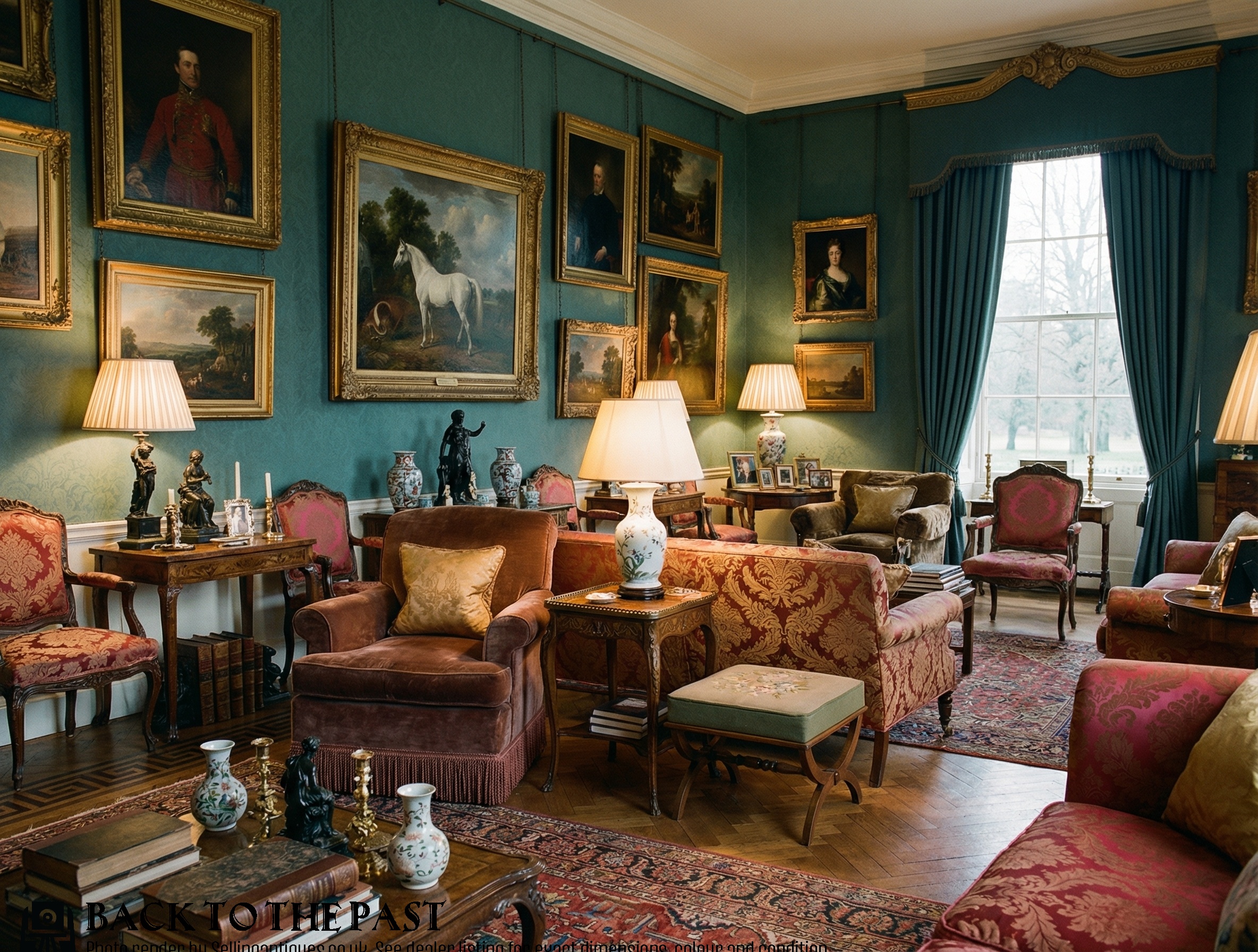
Curule Frame Stool
A curule frame stool takes its principal inspiration from the ancient Roman magistrate seat, translated by cabinet makers into domestic seating across the nineteenth century. Buyers searching for a curule frame stool will encounter examples spanning the Regency, Victorian and Edwardian periods, alongside pieces attributed to the wider nineteenth century and the year nineteen hundred.
The primary forms on this page include dressing stools, footstools, window seats and larger benches with characteristic intersecting supports. Surviving pieces draw upon distinct design movements such as Neoclassical, William IV, Aesthetic Movement and Scottish Baronial styles.
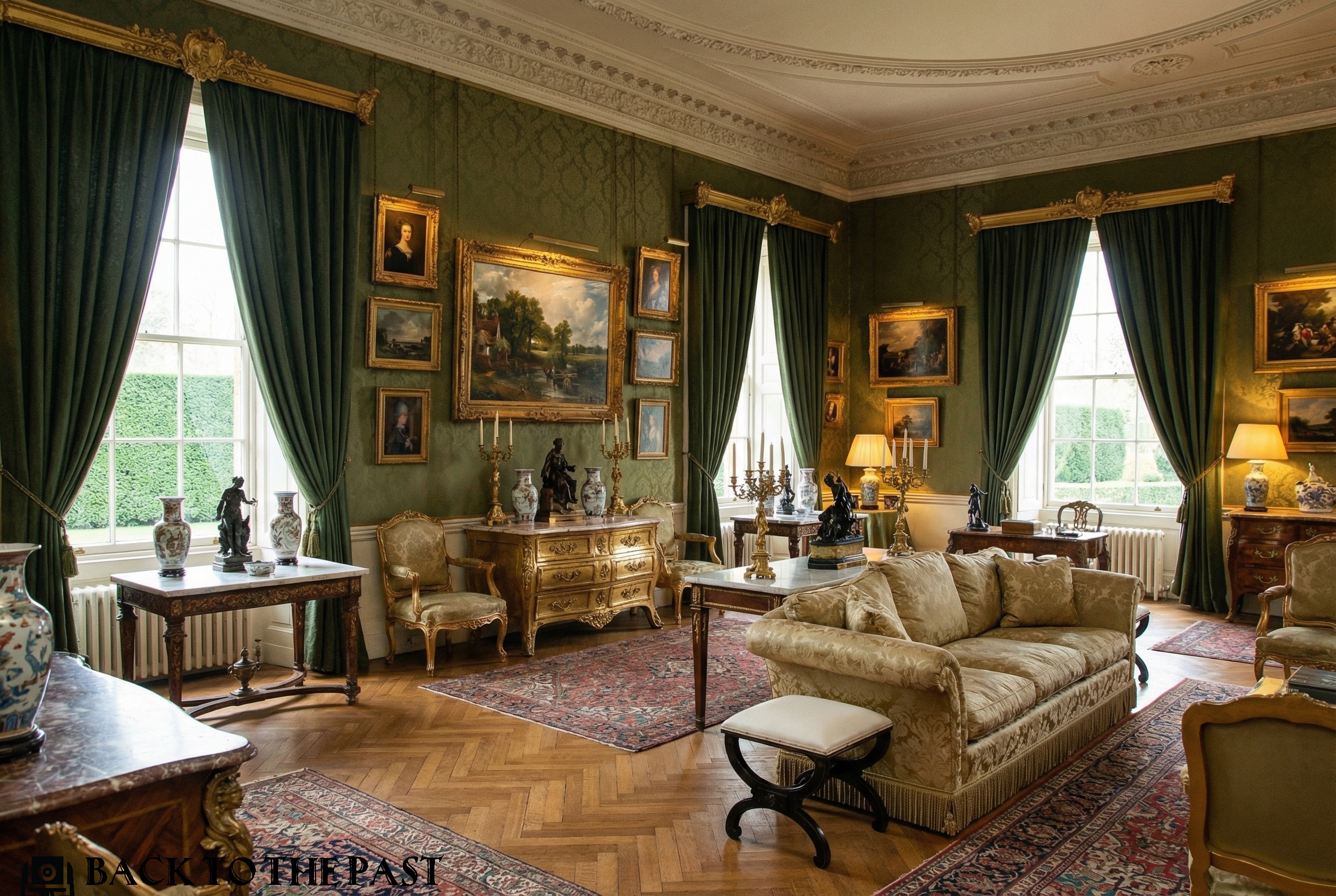
Materials and Techniques
Frames are constructed from dense timbers including mahogany, rosewood, walnut, satinwood, oak and giltwood, frequently shaped into the defining X-frame silhouette. Joinery relies on traditional carpentry methods to stabilise the intersecting supports under weight.
Seats are finished with upholstery materials such as fabric, velvet, leather, beadwork, tapestry and damask, secured directly to the wooden frame or dropped into a shaped rebate.
Curule Frame Stool Retail Price Guide 2026
Typical asking prices for curule frame stool among the pieces listed under this phrase on Sellingantiques today, from the lower quarter to the upper quarter. They describe what is for sale here now, not the wider market.
The Measure of Quality
Quality rests upon the crispness of the timber carving and the architectural balance of the intersecting X-frame legs. Finer examples display carefully selected veneers like burr maple or rich rosewood, matched with period-appropriate upholstery rather than generic modern replacements.
The distinction between standard utility seating and exceptional pieces often lies in decorative enrichment, such as giltwood and gesso application, brass mounts, or figural carvings integrated into the wooden structure.
Miles and Edwards
The Curule Frame Stool Glossary
- Curule
- A magistrate seat shape defined by opposing concave legs that cross to form an X. This classical silhouette originates in ancient Rome.
- X-Frame
- A structural support system utilising two crossed diagonal members to form the sides of a stool or chair. This engineering provides stability while maintaining a light profile.
- Giltwood
- Timber coated with a thin layer of gold leaf over a prepared gesso base. This technique creates a brilliant reflective surface on formal nineteenth century seating.
- Aesthetic Movement
- A late nineteenth century design style prioritising visual beauty over narrative function. Pieces from this period often incorporate ebonised finishes and gilt highlights.
Curule Frame Stool: Frequently Asked Questions
Where did the curule design originate?
The shape derives from the folding seats used by high-ranking magistrates in ancient Rome. Cabinet makers revived this ancient curule frame stool silhouette during the Regency and Victorian eras.
Nineteenth century designers adapted the form for domestic interiors, creating low stools, dressing seats and window benches that echoed classical grandeur.
How do I date a nineteenth century stool?
Dating relies on timber selection, upholstery methods and stylistic details associated with periods like Regency or Victorian. Mahogany and rosewood dominate earlier decades, while walnut and ebonised finishes often point to later years.
Construction marks and the specific character of the X-frame carving help narrow down the decade of production.
Can these stools support daily sitting?
Most antique curule frame stools were built for practical use as dressing seats, footstools or window benches. The crossed leg construction offers robust structural support when the underlying timber remains sound.
Placement in a room should consider the delicate nature of applied giltwood or antique fabric seats.
What is the difference between a window seat and a footstool?
Window seats are generally longer and designed for sitting by a casement, occasionally featuring low arms or backs. Footstools are more compact and intended to support the feet while seated elsewhere.
Both forms frequently utilise the curule X-frame structure to combine decorative presence with utility.