
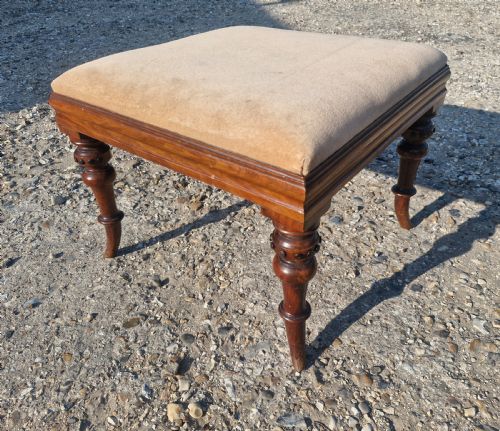
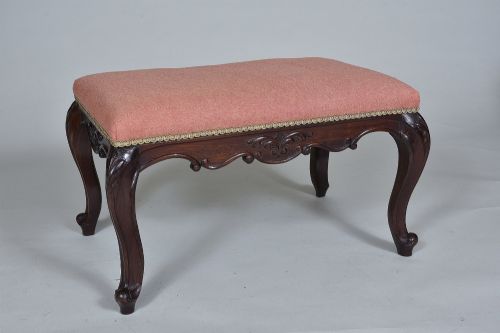
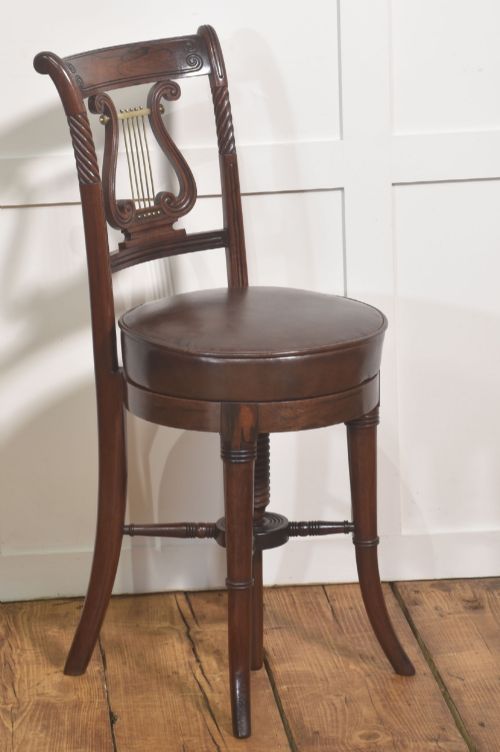
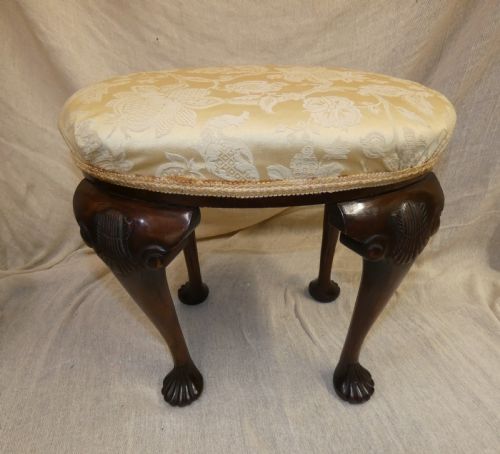
Mahogany Vanity Stool
These mahogany vanity stool examples bring solid timber frames and upholstered seats into dressing rooms and parlours across several distinct historic periods.
What They Are
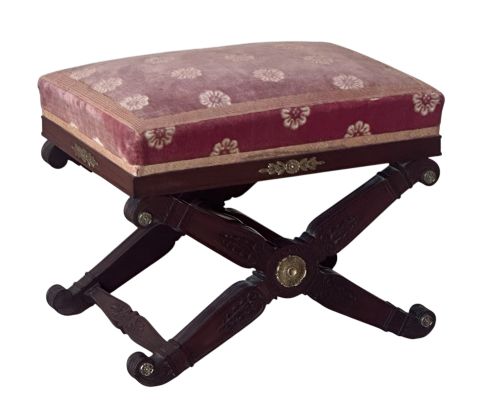
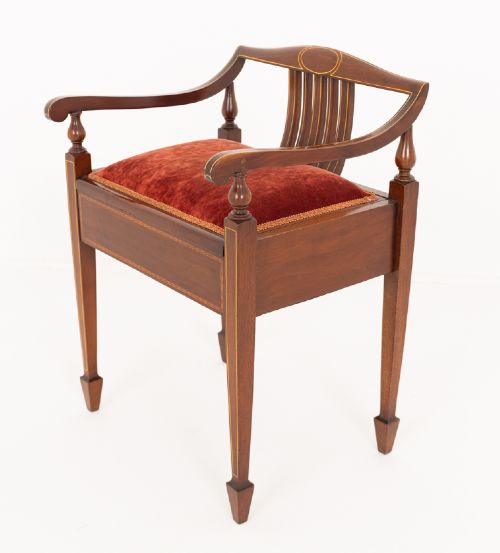
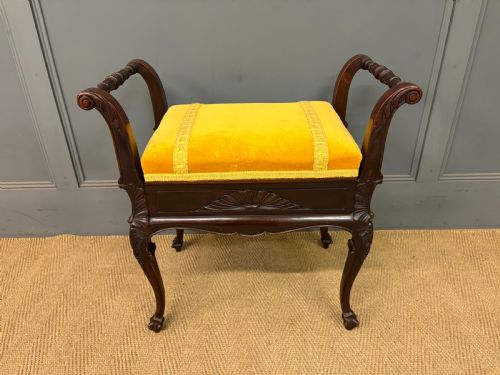
A mahogany vanity stool is a low seating piece designed for the dressing room, bedroom, or parlour. These items appear in various historical forms, ranging from plain timber frames to revival pieces mimicking earlier cabinet-making traditions.
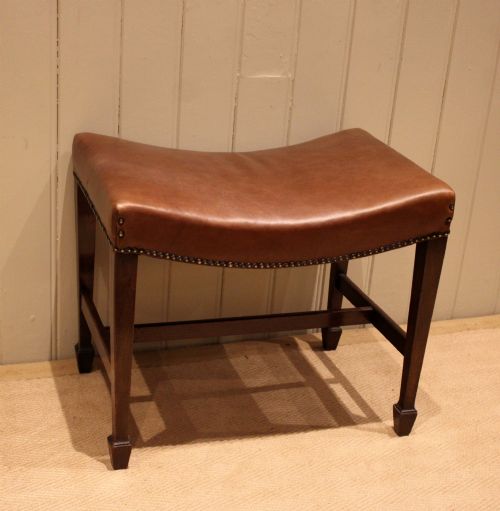
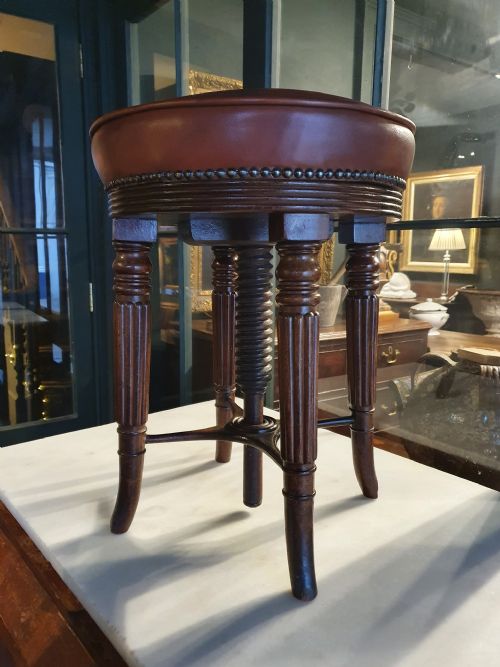
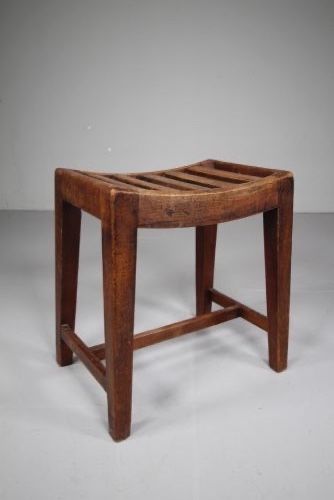
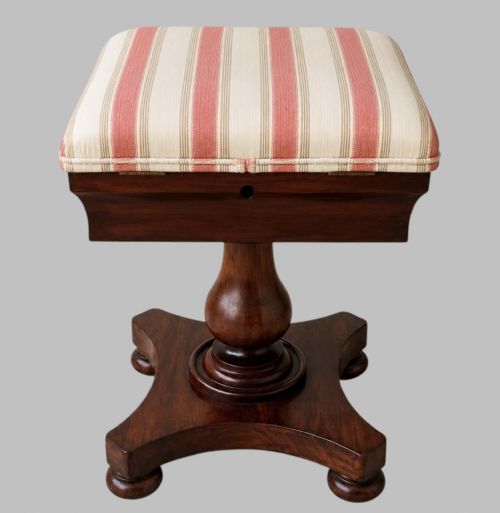
The pieces on this page span the Regency era, the Victorian period, and the early twentieth century. Common physical forms include dressing table stools, piano stools, and general footstools constructed from rich timber.
How They Were Made
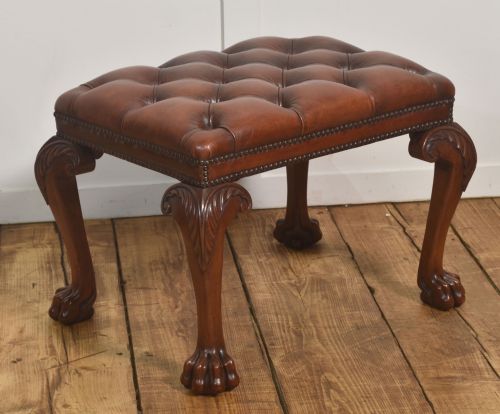
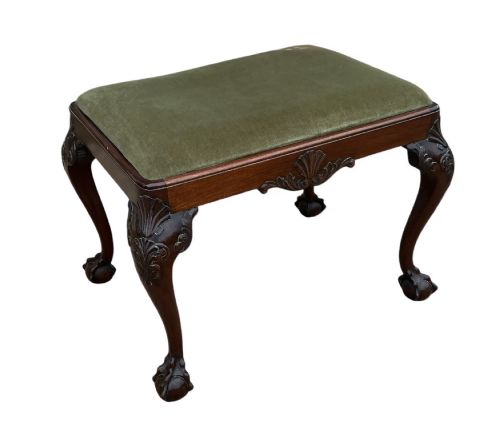
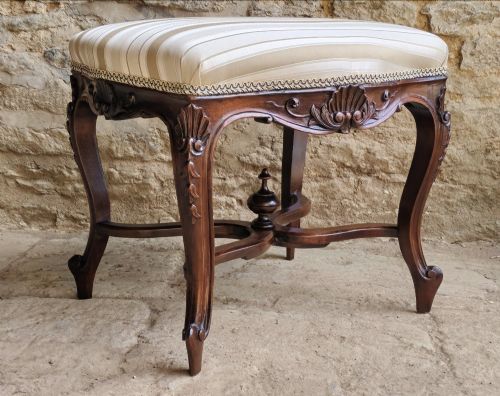
Makers built these frames primarily from mahogany, utilising the dense, durable grain to shape curved legs such as cabriole designs. Structural joins often rely on traditional carpentry methods suitable for load-bearing domestic furniture.
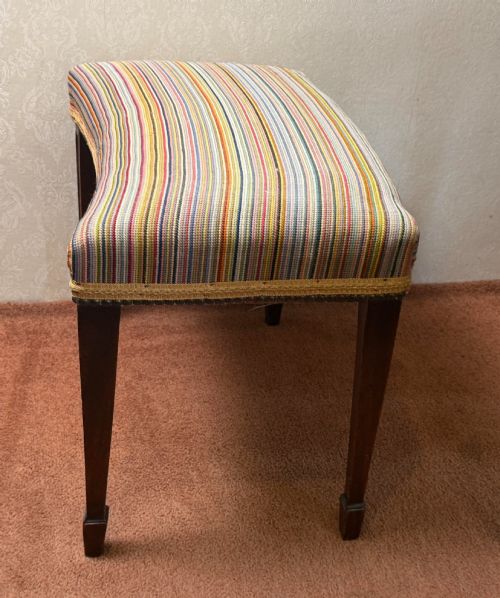
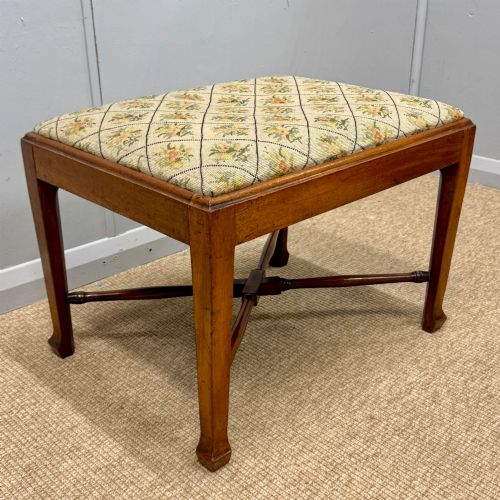
Seats incorporate various textiles for the top surface, including fabric, wool, velvet, and damask. Finishing touches frequently involve brass elements and decorative braid trim secured around the cushion borders.
Retail Price Guide 2026
Typical UK retail prices for mahogany vanity stool, calculated from the Sellingantiques database of over a million retail prices indexed since 2003. This retail price guide relies exclusively on Sellingantiques data; no external sources or auction records are used, so the figures do not describe the wider market.
Several stools arrive wearing their original fabric seats, preserving a patch of nineteenth-century textile history beneath your morning routine.
What Varies in Quality
The refinement of the timber carving sets individual examples apart, particularly in revival pieces that attempt to emulate eighteenth-century Chippendale standards. Smoother lines and more confident cabriole shaping distinguish the finer items.
Upholstery choices also indicate the original grade of the piece, with heavier damask and detailed braid trim pointing to higher-tier commissions compared to simpler fabric coverings.
The Mahogany Vanity Stool Glossary
- Cabriole leg
- A furniture leg that curves out and then in, resembling the legs of an animal. This decorative feature appears frequently on Victorian examples.
- Damask
- A reversible figured fabric woven on a jacquard loom, often used for rich seat upholstery. It provides a textured pattern that catches the light.
- Regency
- A British design period spanning the early nineteenth century. Pieces from this era often display classical restraint and clean lines.
- Chippendale style
- A decorative design inspired by the eighteenth-century cabinet maker Thomas Chippendale. Revival versions of this style emerged later in the nineteenth and twentieth centuries.
- Braid trim
- A narrow woven band used to edge upholstery and conceal fixings. It adds a neat finished border to the seat cushion.
Frequently Asked Questions
What is a mahogany vanity stool?
A low seat constructed from mahogany timber, intended for use at a dressing table or in a bedroom.
These items combine wooden framing with an upholstered top surface to provide comfortable seating.
How do I date a mahogany stool?
Dating relies on examining the timber characteristics, leg shapes, and the style of any revival motifs present.
Periods represented range from Regency through the Victorian era up to the early twentieth century.
Where were these stools used?
They belonged primarily in private bedrooms, dressing rooms, and parlours for personal grooming.
Their compact size allowed them to tuck neatly beneath dressing tables when not occupied.
Are the seat coverings original?
Some pieces retain early fabric, wool, velvet, or damask surfaces secured with braid trim.
Many historic items receive modern upholstery to ensure longevity in everyday use.