


Regency X Frame Stool
These classic pieces known as regency x frame stool combine ancient curule forms with rich timbers for formal seating.
Regency X Frame Stool
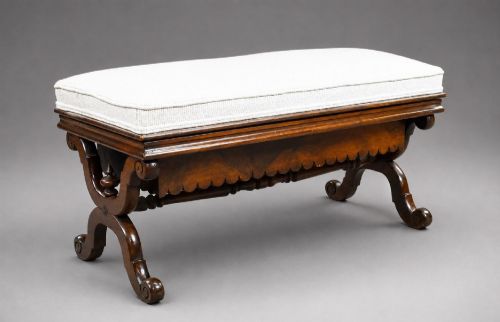
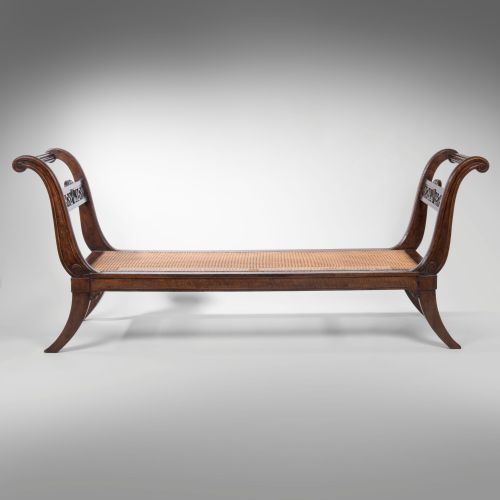
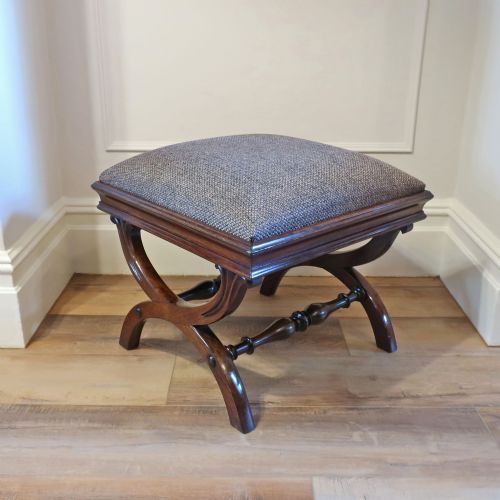
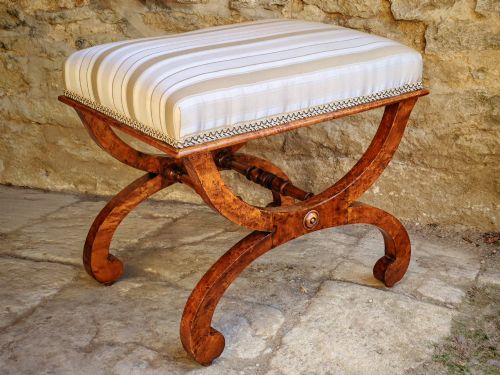
A regency x frame stool is a sturdy seat constructed with intersecting side supports forming a distinct cross shape. These pieces appear primarily as compact footstools, dressing stools, and larger window seats originating from the nineteenth century.
The dominant variations on this page include mahogany and rosewood timber frames paired with upholstered seats in leather, tapestry, or needlework. Makers often drew inspiration from neoclassical styles, producing both simple domestic forms and grand architectural centre stools.
How they were made
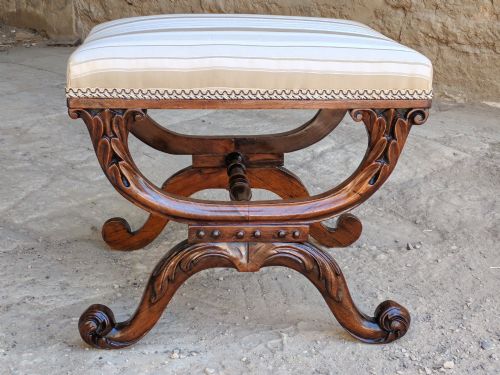
Cabinetmakers utilised dense timbers such as mahogany, rosewood, and walnut to construct the crossing side stretchers that bear the weight of the seat. These wooden frames frequently feature turned central stretchers, brass mounts, or parcel gilt detailing.
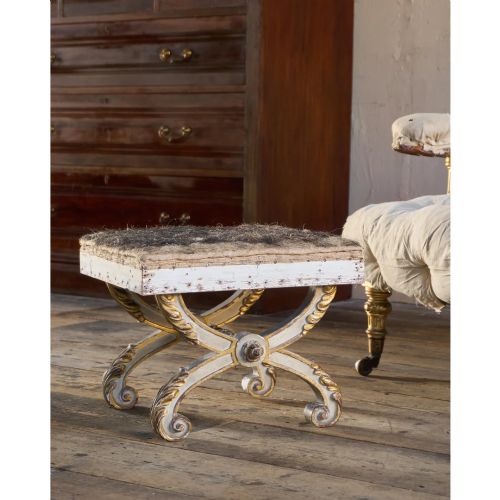
Upholstery techniques involved webbing and stuffing mounted directly onto the wooden frame or dropped into a recess, finished with leather or floral tapestry. Giltwood and gesso examples required meticulous carving and gilding applied over a prepared gesso base.
What varies in quality
The distinction between standard domestic pieces and top-tier examples lies in the choice of timber figure, such as highly figured rosewood or burr maple. Superior framing shows precise joinery at the cross intersections where structural integrity matters most.
Original upholstery methods and period textiles elevate a piece, alongside documented cabinetmaker labels from notable workshops. Finer iterations display refined carving on the legs or paw feet rather than plain turned supports.
Miles & Edwards·R Strahan Dublin
The Regency X Frame Stool Glossary
- Curule
- An ancient form of seat supported by two curved legs crossing to form an X shape. This Roman magistrate design inspired many nineteenth-century seating forms.
- X-frame
- A structural furniture support made from two pieces crossing in the middle like the letter X. It provides both rigidity and visual lightness to stools and benches.
- Centre stool
- A large freestanding stool designed to sit in the middle of a room rather than against a wall. These substantial pieces often feature elaborate rosewood or mahogany frames.
- Giltwood
- Wood that has been covered with a thin layer of gold leaf or powder. It appears on neoclassical and decorative frames from the period.
Regency X Frame Stool: Frequently Asked Questions
What is a regency x frame stool?
A regency x frame stool is a nineteenth-century seat featuring intersecting side supports that form a characteristic cross shape. These versatile furnishings served various domestic purposes including dressing seats and window benches.
They draw heavily on classical Roman forms adapted through neoclassical design movements. The cross construction offers both structural strength and an elegant silhouette.
Where were these stools placed originally?
These stools typically sat at the foot of a bed, beneath a window, or beside dressing tables in wealthy homes. Larger centre stools occupied the middle of grand reception rooms.
Their compact footprint allowed servants to move them easily between rooms as needed. Window seats provided comfortable perches for reading or viewing the grounds.
How do I identify a period frame?
Period frames exhibit traditional joinery methods and dense native or imported timbers such as mahogany and rosewood. Tool marks, timber shrinkage, and historic wear patterns help confirm nineteenth-century manufacture.
Stylistic cues include neoclassical proportions, brass inlay, and carved paw feet. Maker stamps or paper labels occasionally survive on the interior frame.
How should I care for timber and upholstery?
Maintain the timber by keeping it away from direct heat sources and applying appropriate wax polish sparingly. Protect antique fabrics from strong sunlight to prevent fading and textile degradation.
Leather upholstery benefits from periodic conditioning to keep the material supple. Handle the cross frame carefully when moving the stool to avoid stressing the central join.