

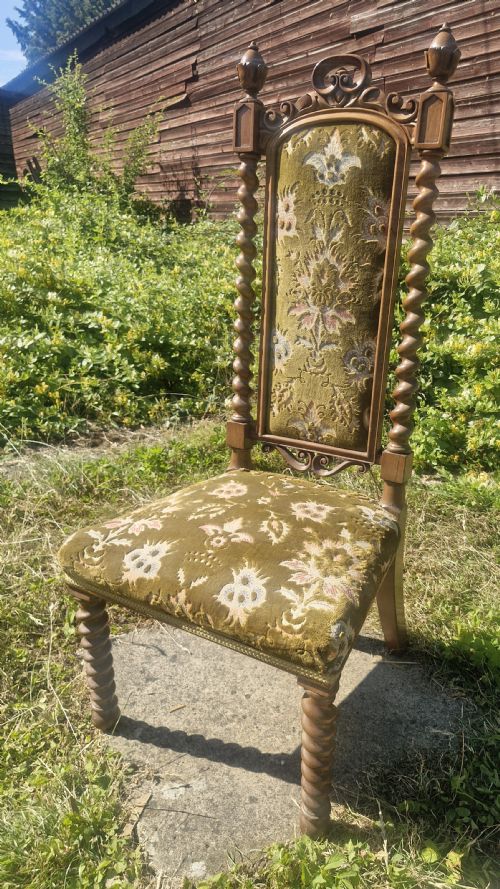
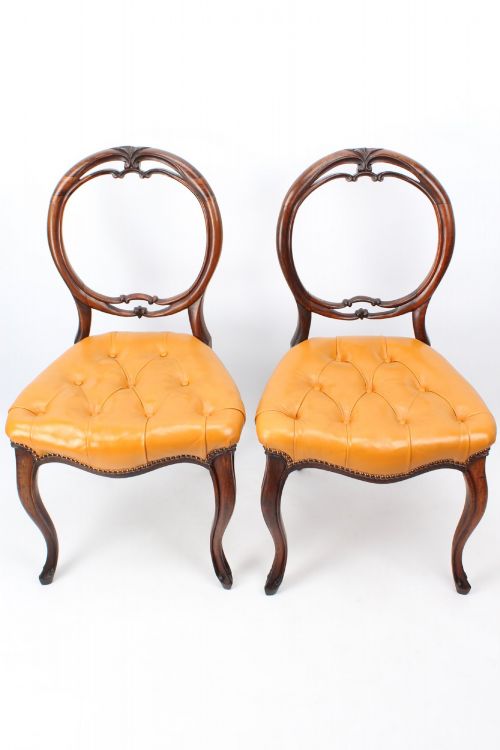
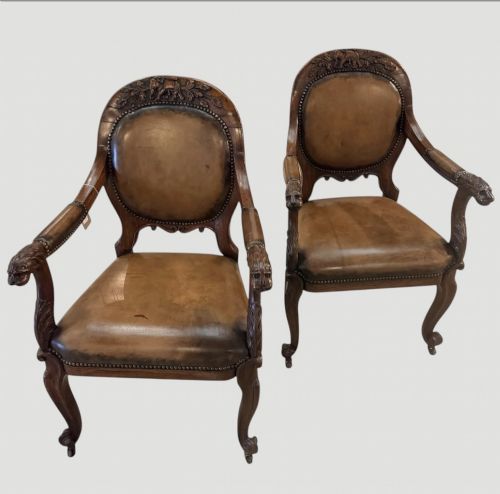
Carved Rosewood Seat
A carved rosewood seat brings dense timber and detailed carving into a room, offering sturdy seating built to endure.
What these pieces are
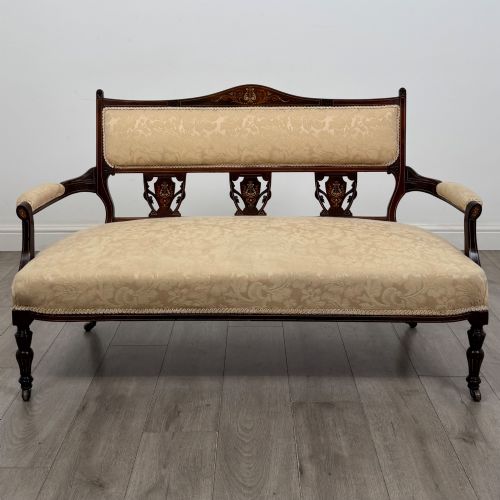
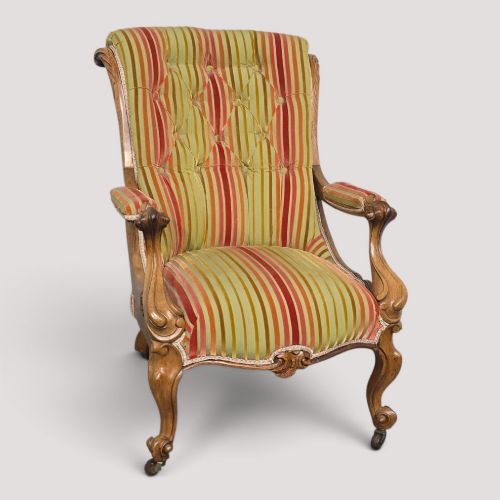
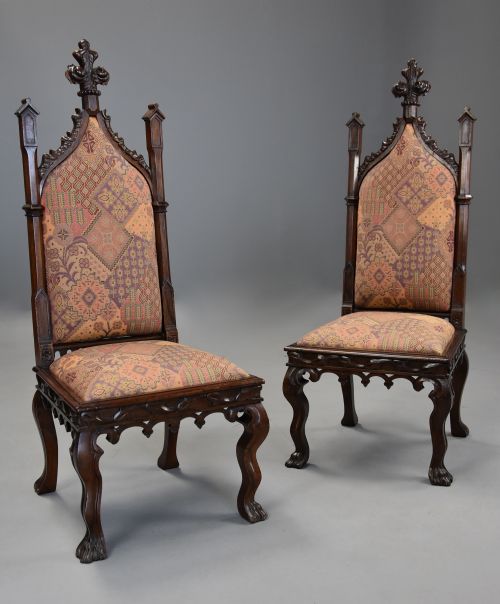
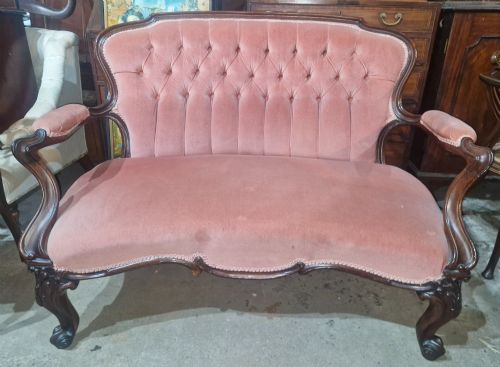
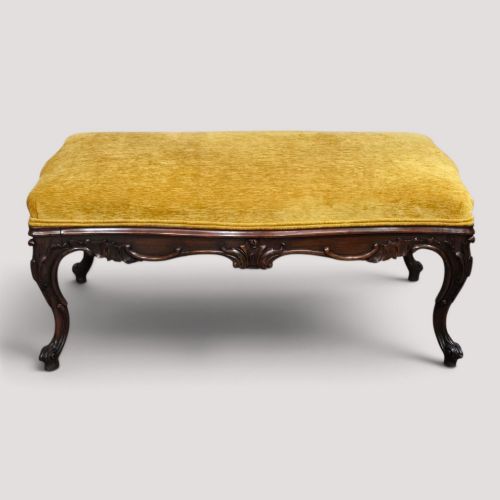
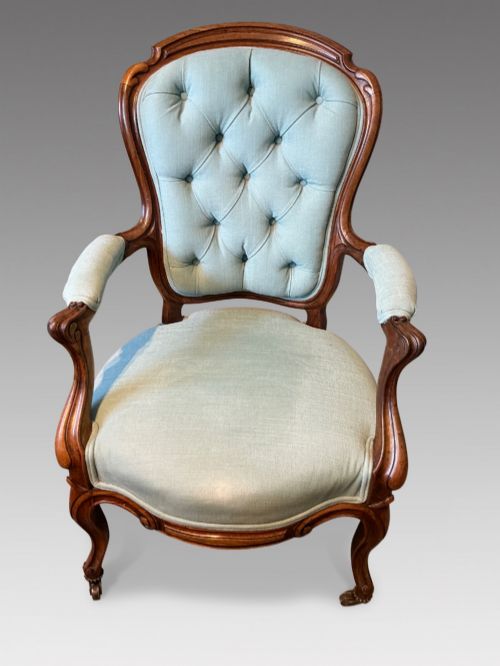
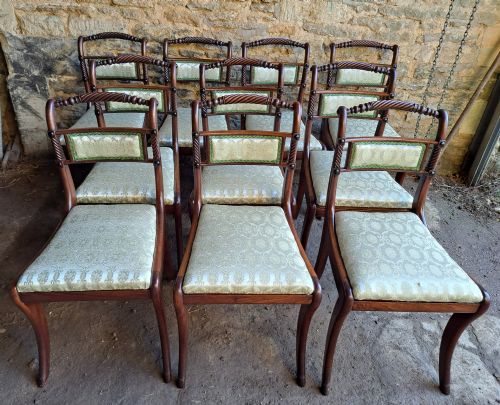
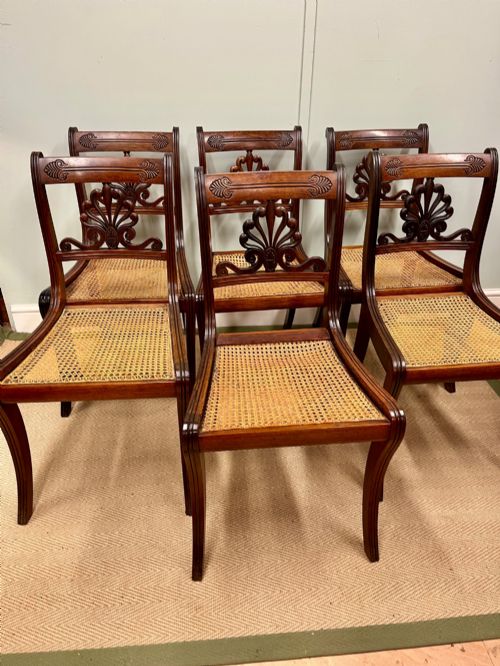
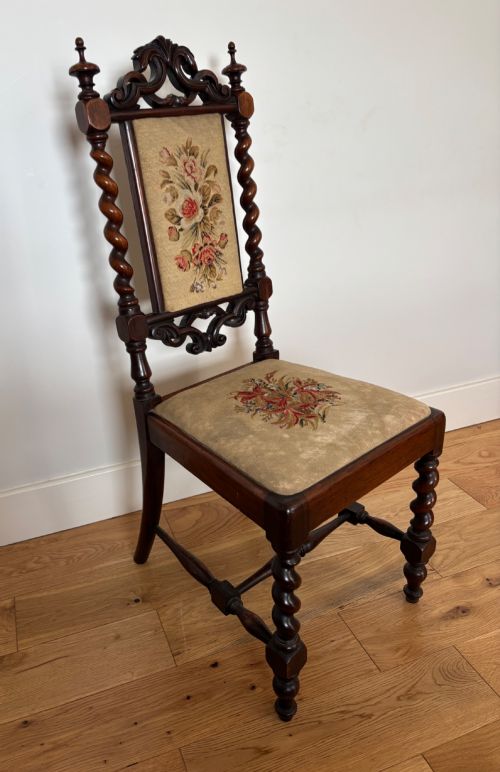
A carved rosewood seat encompasses everything from low stools and footstools to dining chairs, nursing chairs, corner bedroom chairs, and long window seats or benches. These pieces emerge chiefly from the Georgian, Regency, William IV, and Victorian periods, spanning the nineteenth century up to around eighteen-sixty.
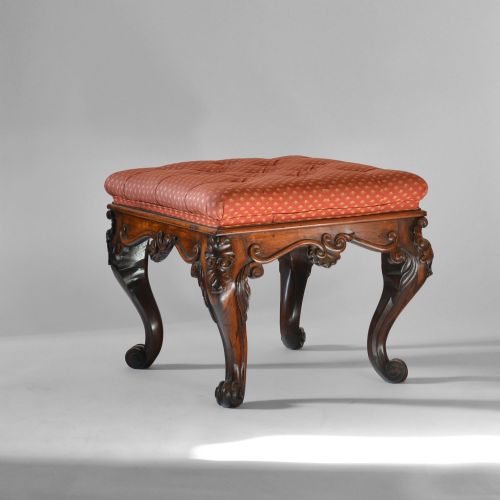
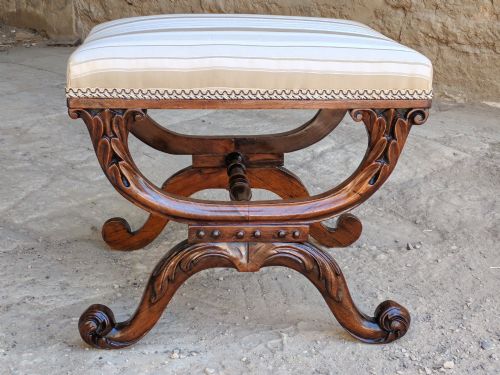
The most common formats on this page are robust stools and upholstered seating such as balloon back and prayer nursing chairs. Stools often stand on cabriole legs or feature scroll and splayed backs, while larger window seats span longer proportions for hallway or living room placement.
Makers and designers of the era drew on classical vocabulary, producing items ranging from single accent pieces to complete sets of six dining chairs. Each object displays the characteristic rich grain and deep colour inherent to rosewood timber.
How they were made
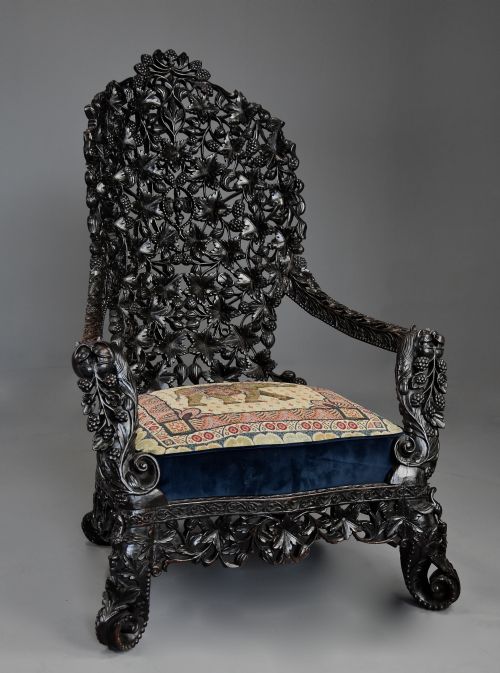
Craftsmen selected dense rosewood for its natural weight and dark, figured grain, shaping the timber into complex curves for chair frames, cabriole legs, and scroll backs. Hand-carved decorative motifs adorned the exposed wooden structures, highlighting the skill of nineteenth-century joiners.
Upholstery formed an integral part of construction, utilising traditional textiles such as damask fabric, needlework, and standard upholstery secured with gimp trim. Brass components occasionally reinforced structural joints or decorated footed elements.
Retail Price Guide 2026
Typical UK retail prices for carved rosewood seat, calculated from the Sellingantiques database of over a million retail prices indexed since 2003. This retail price guide relies exclusively on Sellingantiques data; no external sources or auction records are used, so the figures do not describe the wider market.
Listings feature rosewood, fabric, brass, and damask upholstery across nineteenth-century stool and chair forms.
What varies in quality
Quality rests in the crispness of the hand-carving and the depth of figure within the rosewood itself, where finer timber displays richer grain patterns and greater visual contrast. The structural integrity of the frame, especially around cabriole legs and scroll backs, distinguishes robust workshop production from lighter output.
Upholstery choices also indicate standard, as period-appropriate textiles like heavy damask or detailed needlework sit above basic replacement fabrics. Sets of matching chairs demonstrate higher initial investment than single sporadic items, requiring uniform timber selection across multiple frames.
Rudolph Ackermann
The Carved Rosewood Seat Glossary
- Rosewood
- A heavy, durable tropical timber prized for its dark colour and striking grain patterns. Cabinet makers utilised it extensively for nineteenth-century seating frames.
- Cabriole leg
- A furniture leg that curves outward and then tapers inward, commonly ending in a pad or scroll foot. This shape appears frequently on Victorian stools.
- Damask fabric
- A reversible figured textile woven on a jacquard loom, frequently used for upholstery. It provides a formal, textured surface.
- Gimp trim
- A narrow woven band used to conceal tacks and finish the edges of upholstery. It frames the fabric neatly against the rosewood border.
- Needlework
- Hand-stitched textile work often executed in wool or silk. Period window seats and stools frequently retain original needlework seat covers.
Frequently Asked Questions
What periods do these seats come from?
The listings span the nineteenth century, encompassing Georgian, Regency, William IV, and Victorian eras.
Most items date from approximately eighteen-twenty through to eighteen-sixty, reflecting evolving stylistic preferences in British cabinet making.
How were window seats used historically?
Window seats were placed in deep bays or hallways to provide convenient seating for reading or socialising.
Their elongated proportions allowed them to fit neatly beneath large windows without blocking natural light.
Are these seats suitable for daily use?
Most pieces possess sturdy rosewood frames built for regular sitting, though internal padding may benefit from modern reinforcement.
Careful placement away from direct heat sources helps preserve the condition of both the timber and the antique upholstery.
How do I identify a Victorian stool?
Victorian stools often feature carved rosewood frames, cabriole legs, and traditional upholstery such as needlework or damask fabric.
They frequently appear as oblong or square forms designed to match other parlour furniture.