



Nineteenth Century Footstool
A nineteenth century footstool brings domestic comfort and fine cabinet-making into a room, offering low seating or support.
Nineteenth Century Footstool
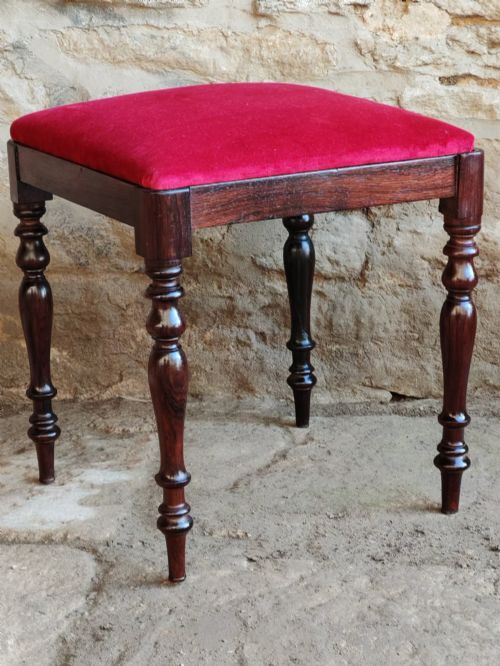
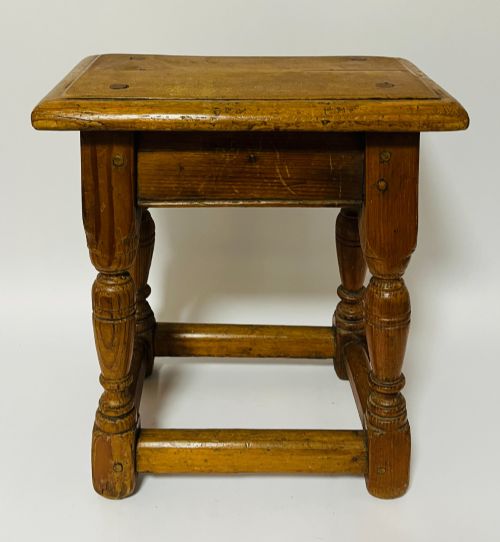
When searching for a nineteenth century footstool, collectors encounter low seating designed to support the feet or serve as dressing stools. The pieces on this page span the 19th Century, Regency, Georgian, and 1880 periods.
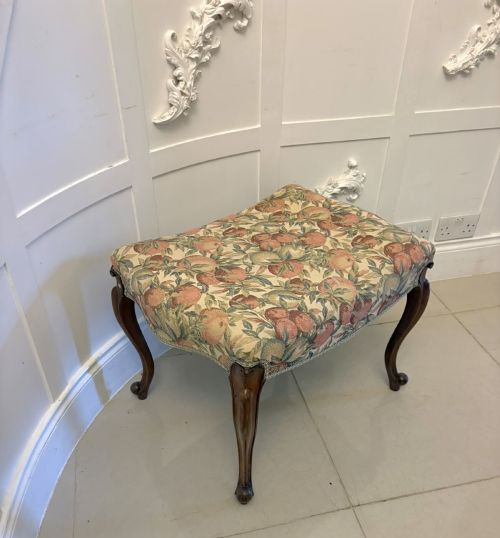
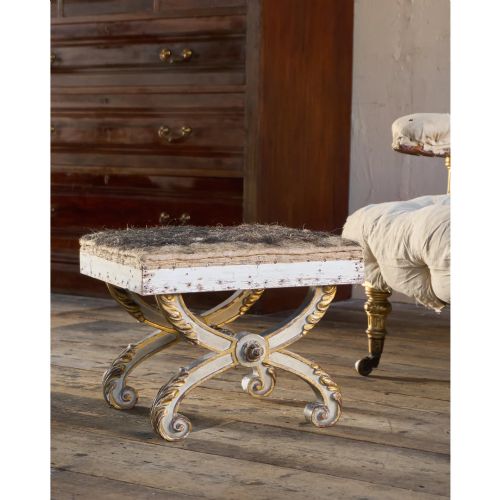
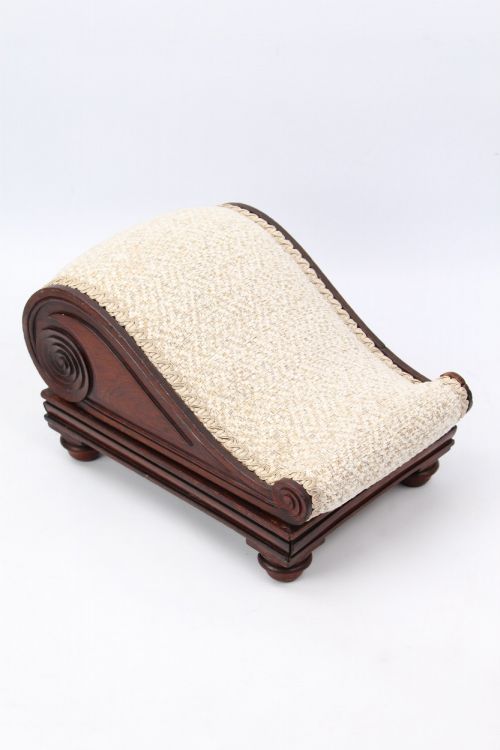
Forms vary from X frame curule designs to dressing stools with chenille upholstery and adjustable gout stools. Makers and workshops utilised rosewood, beechwood, walnut, and hardwood.
Styles represented include Victorian, Regency, Grand Regency, and Anglo-Indian. These low seats bring functional utility and period craftsmanship into living spaces.
How they were made
Cabinet-makers constructed these frames from timbers such as rosewood, beechwood, walnut, and hardwood, often employing carved decoration. Brass fittings and gilt highlights appeared on select pieces to enhance the timber work.
Upholstery techniques involved traditional textiles, fabric, chenille, and hessian to pad the tops. Adjustable mechanisms were engineered into specialised pieces like gout stools to alter the height or angle.
Nineteenth Century Footstool Retail Price Guide 2026
Typical asking prices for nineteenth century footstool among the pieces listed under this phrase on Sellingantiques today, from the lower quarter to the upper quarter. They describe what is for sale here now, not the wider market.
Listings feature four distinct periods: 19th Century, Regency, 1880, and Georgian.
What varies in quality
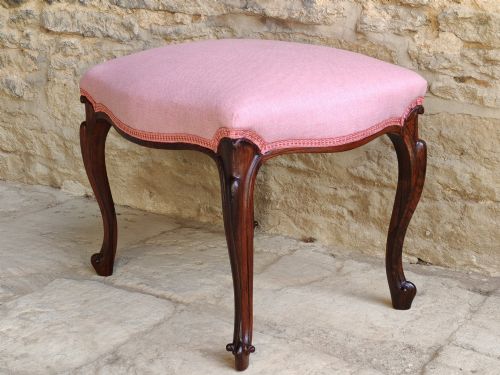
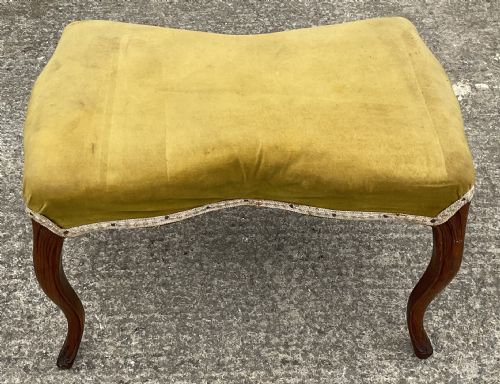
The standard of timber selection and the crispness of the carving distinguish finer examples from standard workshop production. Dense rosewood and walnut frames with intricate cabriole legs or carved details demonstrate superior maker skill.
The integrity of the original upholstery materials, such as period chenille or fabric, alongside functioning mechanical adjustments on pieces like gout stools, separates standard items from exceptional survivals.
Miles & Edwards
The Nineteenth Century Footstool Glossary
- Curule
- An ancient chair shape featuring two curving legs that cross to form an X, adapted here for low footstools. This classic form provides structural strength and visual elegance.
- Chenille
- A fuzzy yarn texture utilised for soft furnishings and upholstery on period dressing stools. The pile gives a tactile surface that catches the light.
- Cabriole
- A furniture leg that curves out and then in, resembling an animal's leg. This decorative woodwork style appears on Victorian walnut frames.
Nineteenth Century Footstool: Frequently Asked Questions
How do I identify a Regency footstool?
Regency footstools typically display classical influences through woods like rosewood, clean lines, and sometimes brass or gilt details. They date from the early part of the century.
Look for architectural forms, X frame curule shapes, or dressing stools with period upholstery that match the aesthetic of the era.
What is an adjustable gout foot stool?
An adjustable gout foot stool is a specialised piece designed to elevate and support the foot at various angles for comfort. They feature mechanical adjustments within the wooden frame.
Beechwood and other timbers were utilised to build these functional medical and domestic aids during the nineteenth century.
Where do Anglo-Indian footstools originate?
Anglo-Indian footstools combine British furniture forms with traditional Indian carving techniques and exotic hardwoods. They date largely to the later nineteenth century.
These pieces showcase dense hardwoods and intricate hand-carved ornamentation distinct from standard domestic British production.