
Victorian Upholstered Footstool
These pieces are a victorian upholstered footstool, designed to elevate tired feet and anchor a fireside arrangement with traditional presence.
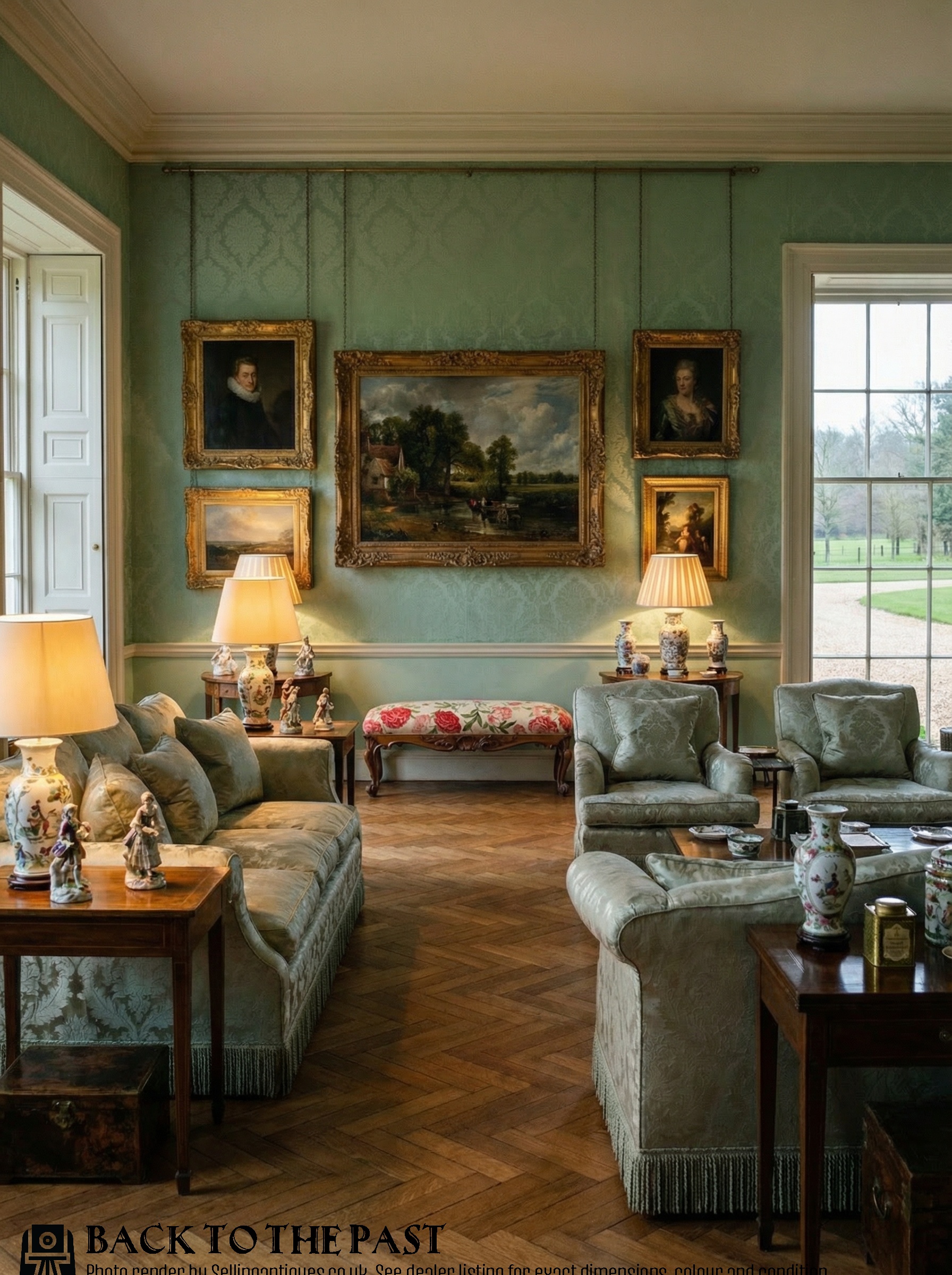
Victorian Upholstered Footstool
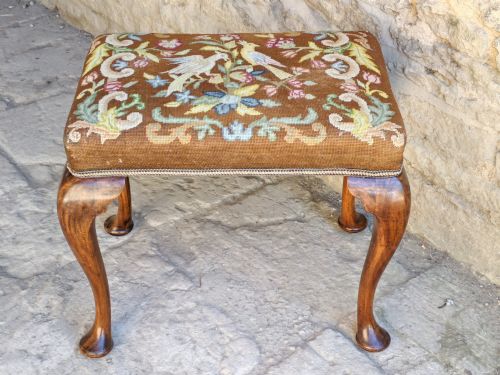
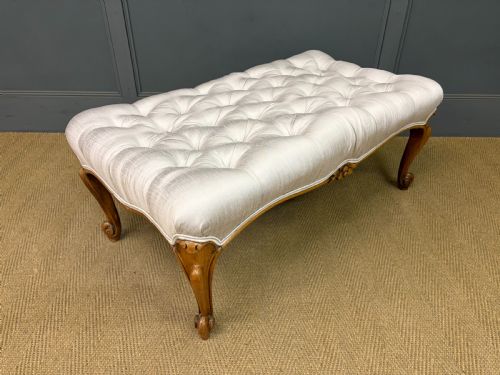
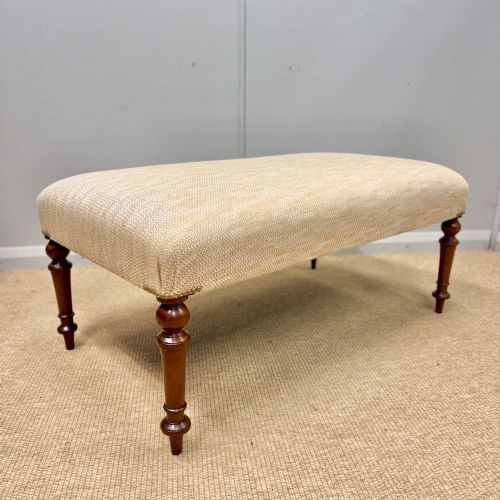
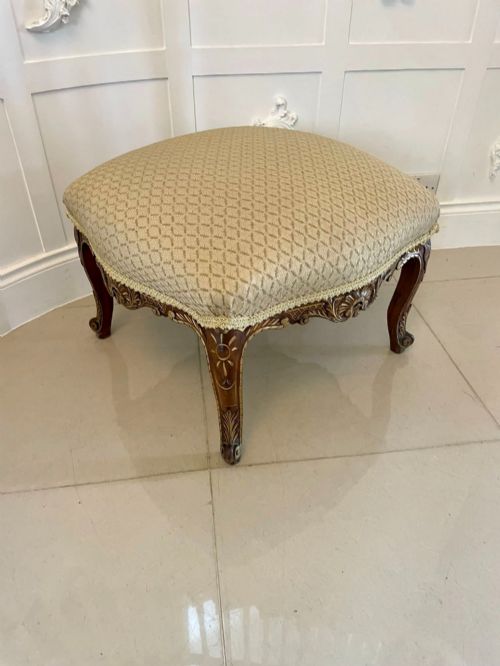
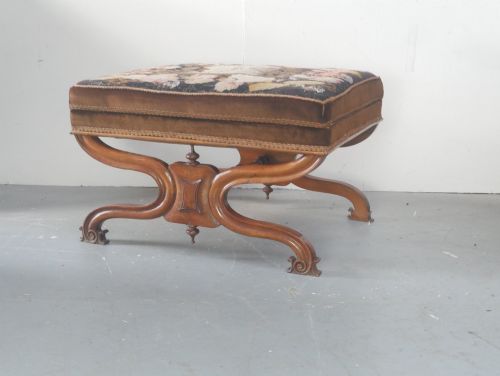
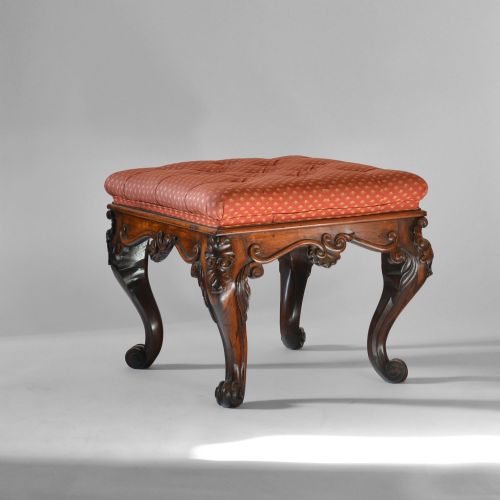
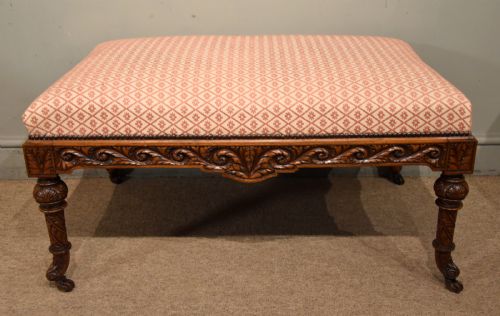
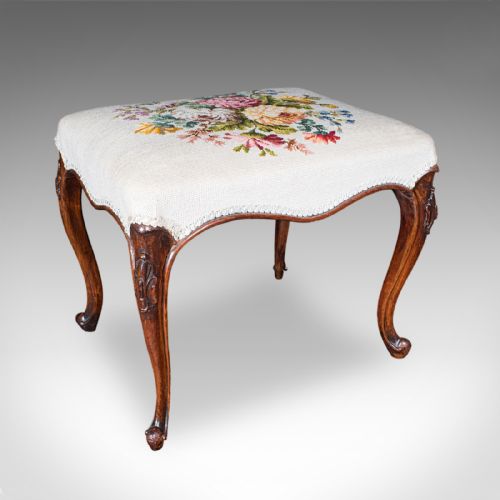
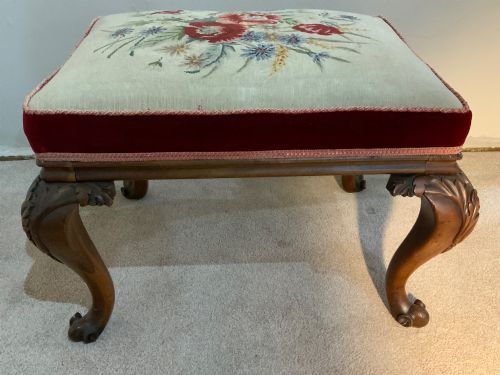
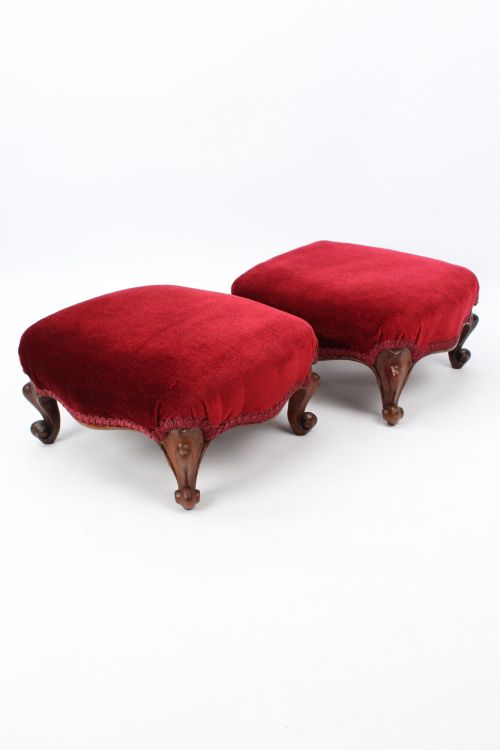
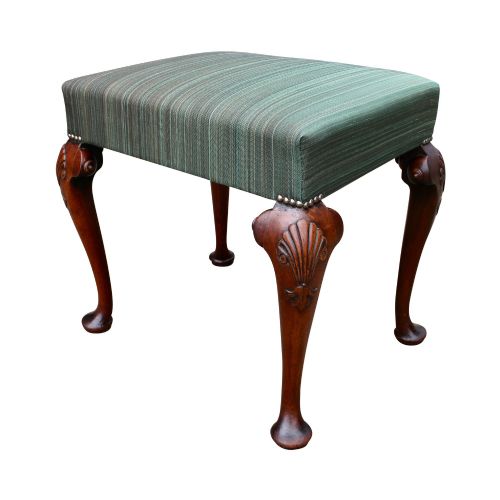
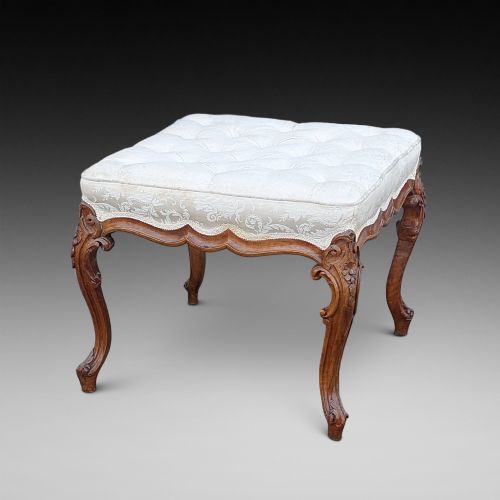
A victorian upholstered footstool encompasses a variety of timber frames paired with textile tops, ranging from long fireside benches to compact dressing table seats and low gout rests. The most common iteration met here is the walnut or mahogany framed stool resting on cabriole legs, often produced during the middle decades of the nineteenth century.
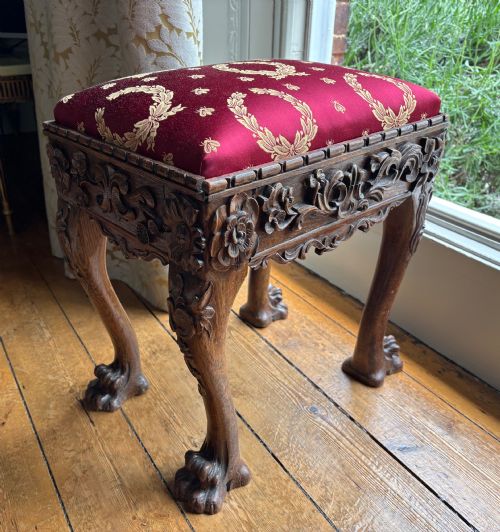
Makers drew on earlier design vocabulary, resulting in revival pieces referencing Queen Anne, Rococo, and William and Mary styles alongside straightforward Victorian forms. Pieces range from small circular footstools intended for parlour use to substantial Scottish Baronial and Anglo-Indian variants reflecting diverse regional tastes.
Materials and Construction
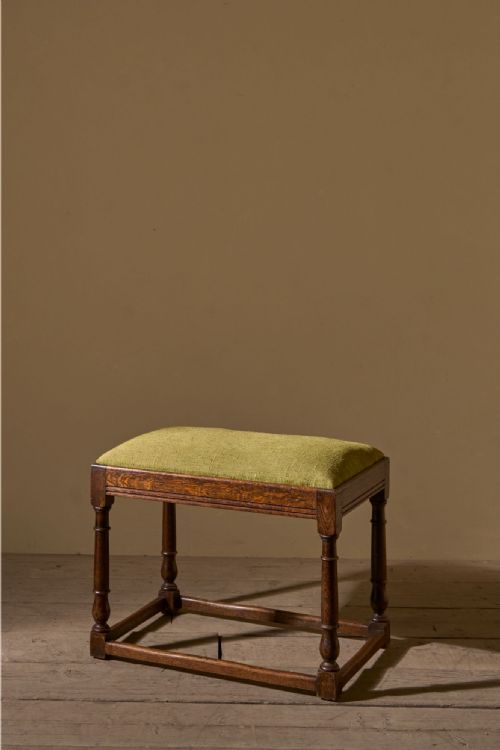
Timbers such as walnut, mahogany, and rosewood form the structural foundation, shaped into cabriole, turned, or bobbin legs through traditional joinery methods. Gilt enrichment, carved detailing, and occasional brass fittings add decorative weight to the hardwood frames.
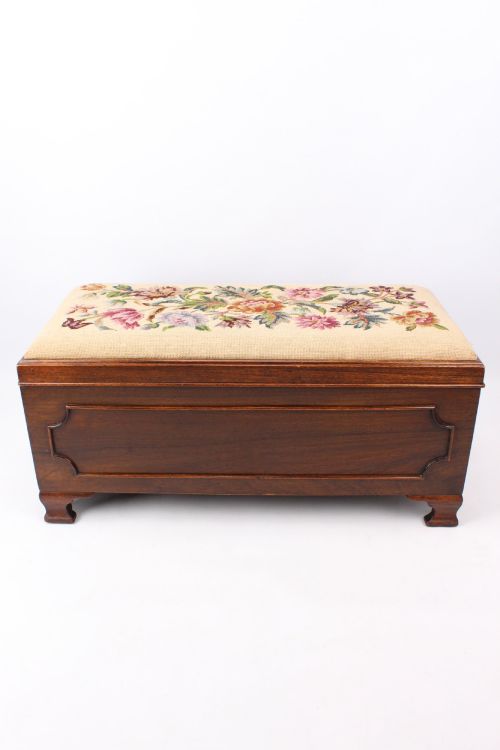
Upper surfaces combine supportive webbing or wooden bases with traditional stuffing materials, enclosed by tactile coverings including velvet, heavy linen, needlepoint, tapestry, and beadwork.
Victorian Upholstered Footstool Retail Price Guide 2026
Typical asking prices for victorian upholstered footstool among the pieces listed under this phrase on Sellingantiques today, from the lower quarter to the upper quarter. They describe what is for sale here now, not the wider market.
Listings feature walnut, mahogany, rosewood, and oak frames paired with needlepoint, velvet, leather, and tapestry textiles.
Judging Quality
Distinctions in quality rest upon the crispness of timber carving, the robustness of the frame's joinery, and the selection of dense hardwoods like rosewood or figured walnut over softer alternatives. Superior examples display balanced proportions, integrated decorative elements such as Tunbridge inlay or elaborate spiral turning, and upholstery schemes that complement the era of the frame.
Howard and Sons
The Victorian Upholstered Footstool Glossary
- Cabriole leg
- A furniture leg featuring a double curve, bulging outward near the top and tapering inward toward a pad or scroll foot. This shape derives from ancient animal forms and became a defining feature of eighteenth-century and revival seating.
- Gout stool
- A specialised low footrest featuring an adjustable inclined top designed to elevate and comfort limbs affected by joint pain. These practical pieces frequently incorporate mechanical hinges and compact frames.
- Needlepoint
- Canvas work embroidery stitched by hand using wool or silk yarn to create dense geometric or floral patterns. It serves as a durable and decorative upholstery medium for period seating.
- Ottoman
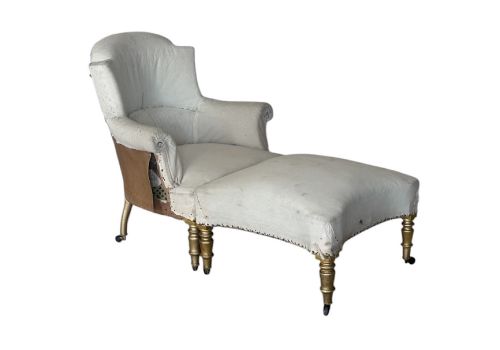
- A low, upholstered seat or footstool lacking arms or a back, sometimes featuring a hinged lid concealing storage space. These versatile items functioned as central parlour furnishings.
- X-frame stool
- A form of seating supported by intersecting diagonal stretchers forming an X shape beneath the seat. This ancient architectural configuration reappeared during revival periods to project formality.
Victorian Upholstered Footstool: Frequently Asked Questions
What is a gout stool?
A gout stool is a low, adjustable footrest designed specifically to elevate an aching limb at a comfortable angle. They often feature an inclined upholstered platform.
These pieces typically date from the mid-nineteenth century and can be adjusted mechanically to suit the user's resting position.
How do I style a victorian upholstered footstool?
These footstools work well placed in front of armchairs, beside firesides, or utilised as low occasional seating in sitting rooms. Their traditional textiles and dark timbers anchor eclectic or classic room schemes alike.
Pairing a long stool with a sofa or using a small circular version by a dressing table adds functional period character to a space.
Were these always upholstered?
Most surviving examples were manufactured with padded seats covered in textiles, leather, needlepoint, or tapestry to provide comfort. The upholstery forms an integral part of the piece's historical design.
Many examples found today feature sympathetic reupholstery using period-appropriate fabrics while retaining the original timber frame.
How can I tell the period?
Dating relies on identifying the underlying timber, the turning or carving style of the legs, and structural assembly methods. Walnut and rosewood were particularly favoured during the mid-Victorian era.
Stylistic revivals during the nineteenth century often borrowed heavily from Queen Anne, Rococo, or William and Mary motifs, which helps narrow down the decade of manufacture.