


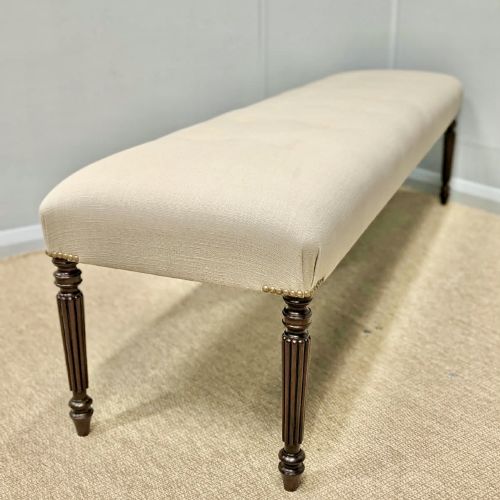
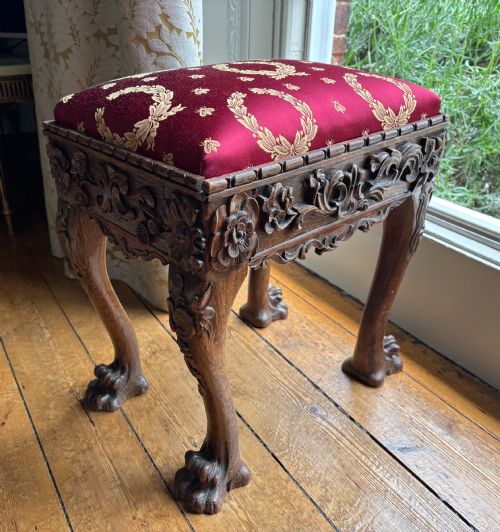
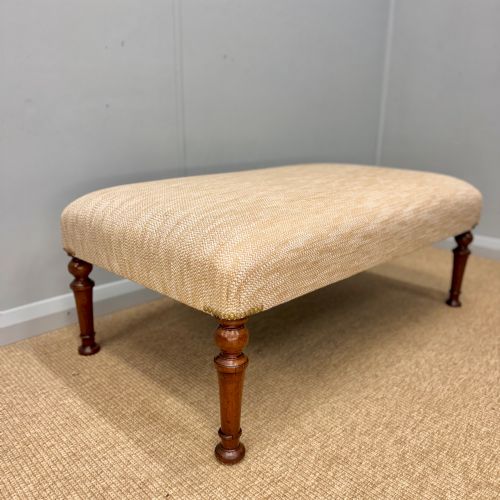
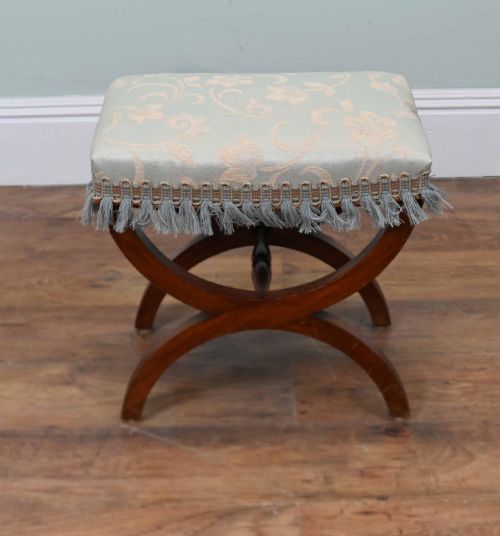
Mahogany Upholstered Footstool
A mahogany upholstered footstool brings solid timber frames and soft seating together in forms that span the Georgian, Regency and Victorian periods.

Mahogany Upholstered Footstool
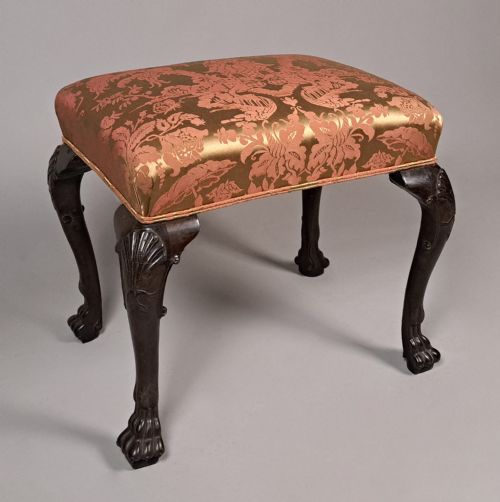
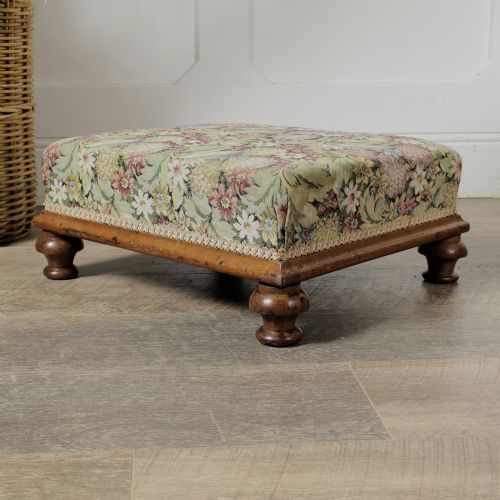
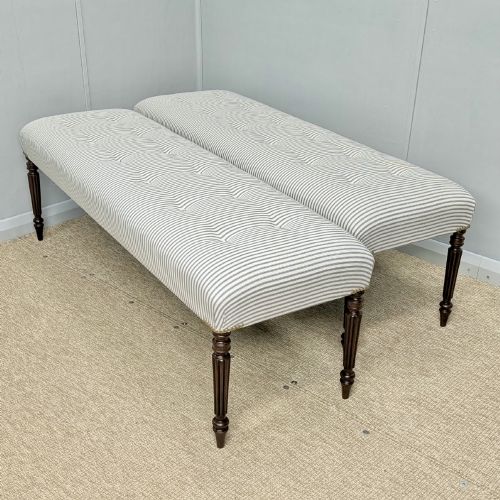
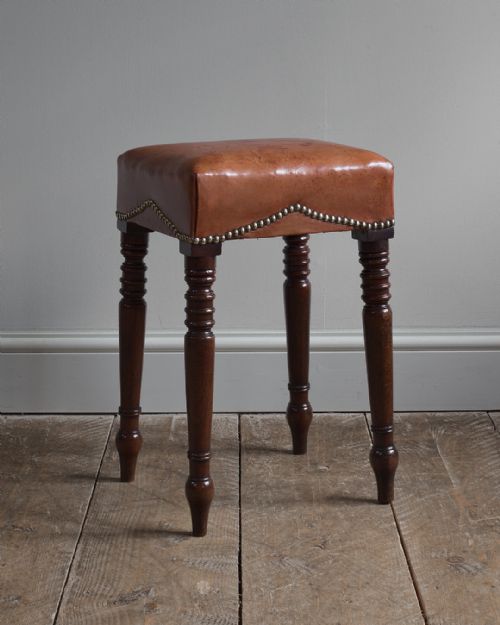
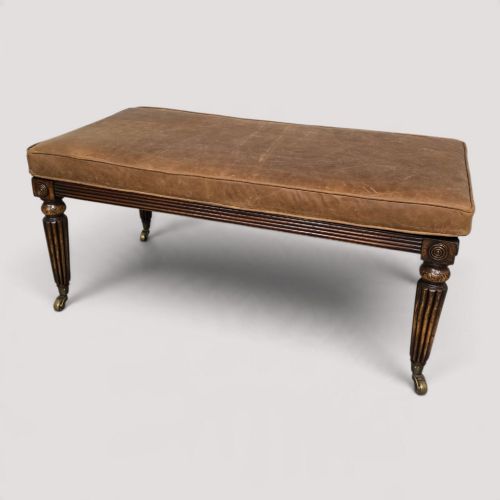
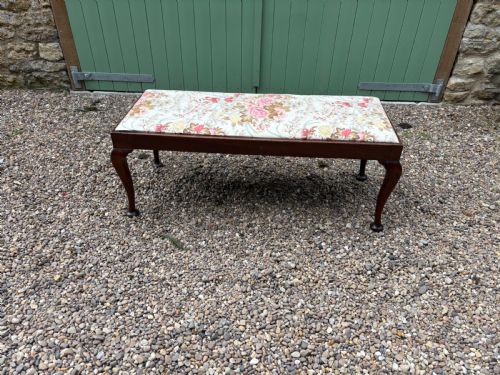
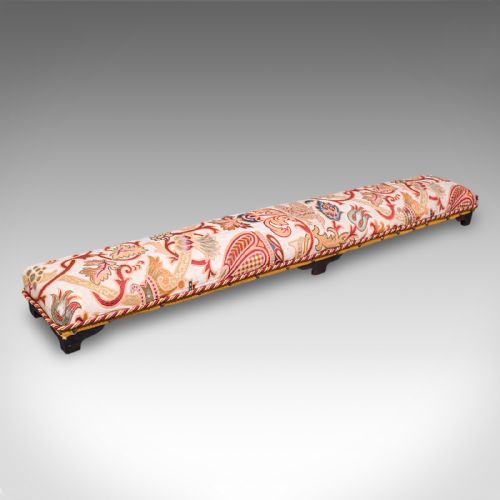
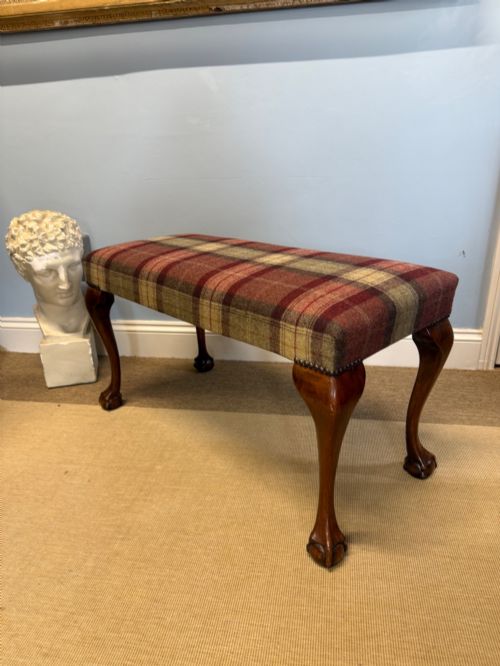
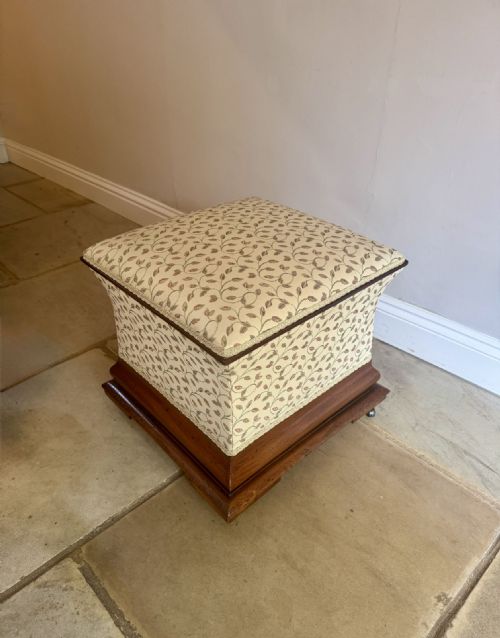
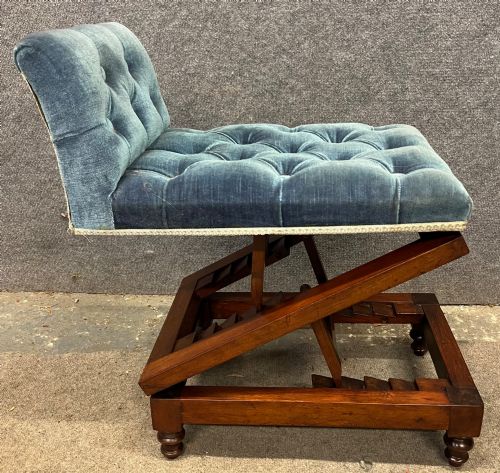
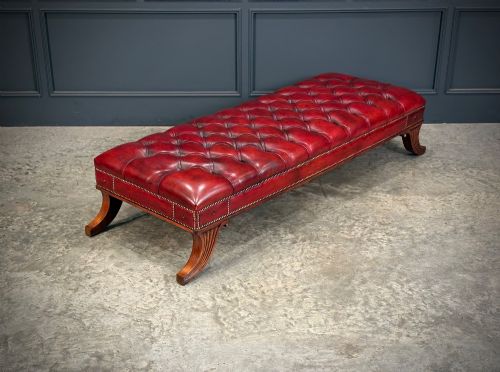
A mahogany upholstered footstool appears in various forms on this page, ranging from compact square pieces to long dressing table stools, ottomans and sewing box stools. The selection draws heavily on 18th century, Regency and Victorian examples, alongside later Edwardian and revival pieces.
Makers and designers produced these low seats for multiple domestic settings, including drawing rooms, bedrooms and dressing rooms. Buyers encounter everything from plain square frames to large buttoned leather ottomans and intricate X-frame supports.
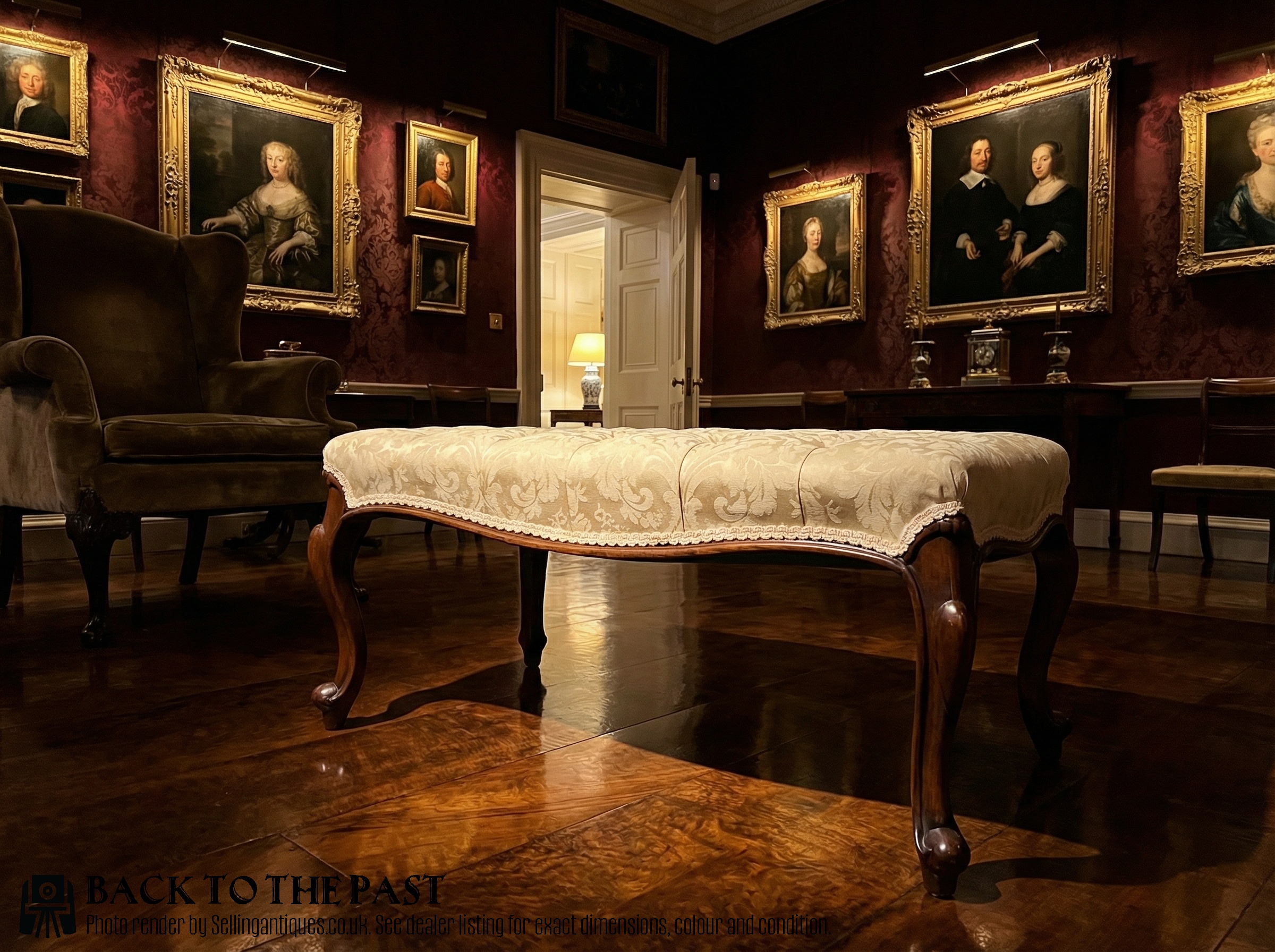
The timber framework provides the structural base while the top surface carries textiles, leather, wool, velvet or needlework tapestry. Many versions rely on traditional forms such as Chippendale style, cabriole legs or square tapering supports.
How they were made
Makers constructed the primary frames using solid mahogany, often incorporating carved details, cross stretchers or brass castors depending on the period and intended use. Timber components were joined using traditional cabinet-making methods to ensure stability under daily weight.
Upper surfaces received padding and a top layer of upholstery secured with tacks or piping. Materials selected for the seats include buttoned hide, wool-work, tapestry, velvet and plain fabric, sometimes finished with elaborate needlework or decorative studs.
Mahogany Upholstered Footstool Retail Price Guide 2026
Typical asking prices for mahogany upholstered footstool among the pieces listed under this phrase on Sellingantiques today, from the lower quarter to the upper quarter. They describe what is for sale here now, not the wider market.
Listings feature mahogany, brass, leather, wool, velvet and tapestry across Georgian, Victorian and Edwardian periods.
What varies in quality
The standard of a mahogany upholstered footstool rests upon the crispness of the timber carving and the structural integrity of the frame. Superior examples display refined proportions, well-executed joinery and substantial timber scantlings rather than superficial ornamentation.
Upholstery execution and the choice of covering material also distinguish finer pieces from simpler utilitarian items. The integration of high quality hides, original needlework or careful period-appropriate re-upholstery elevates the overall merit of the object.
Howard & Sons·Liberty & Co·Mathew Gregson
The Mahogany Upholstered Footstool Glossary
- Cabriole leg
- A furniture leg that curves outward at the knee and tapers inward toward the ankle, frequently ending in a pad or claw foot. This form appears often on 18th century and Victorian mahogany frames.
- Cross stretcher
- Wooden bracing members intersecting diagonally between the legs of a stool to provide extra rigidity. They are common on dressing table stools and formal low seats.
- Ottoman
- A low upholstered seat or bench usually lacking arms or a back, designed for resting feet or sitting. Versions in the listings often feature hinged tops or large buttoned leather surfaces.
- Needlework
- Hand-stitched textile work utilising yarn or thread on a canvas mesh ground. Many period footstools retain or feature this traditional decorative top.
Mahogany Upholstered Footstool: Frequently Asked Questions
What periods do these footstools date from?
The selection covers pieces originating from the mid-18th century through the Georgian and Regency eras, extending into the Victorian period and the early 20th century. Revival styles from the late 19th century also feature prominently.
Buyers will find that each era imparts distinct characteristics to the woodwork and upholstery, allowing collectors to identify the approximate decade of manufacture from the legs, frame construction and covering materials.
How were these stools used originally?
These pieces served multiple domestic purposes, acting as low supports for resting feet by the fireplace, dressing table seats in bedrooms, or accommodating extra sitters in drawing rooms. Some specialised variations included internal compartments for sewing equipment.
Larger versions functioned as ottomans or centre stools for communal spaces. Their low profile and portable nature made them versatile items of furniture in period households.
How do I care for mahogany and leather?
Mahogany frames benefit from gentle dusting and occasional treatment with appropriate wood waxes to maintain the finish and natural grain. Avoid placing timber pieces in direct sunlight or near heat sources to prevent cracking.
Leather upholstery requires specialised balms or conditioners to keep the hide supple and prevent drying. Regular light cleaning preserves both the leather and any surrounding fabric elements.
Are the upholstery coverings original?
Some pieces retain early or period-appropriate needlework, tapestry and leather, while many others have undergone re-upholstery to ensure structural soundness and clean surfaces. Listings generally indicate whether the covering is contemporary to the frame or a later replacement.
Collectors look closely at the tacking, webbing and internal stuffing when assessing the age and authenticity of the top section.