
Upholstered Piano Stool
When choosing an upholstered piano stool, collectors acquire functional seating that bridges the Victorian, Edwardian, and Art Deco periods.
Upholstered Piano Stool
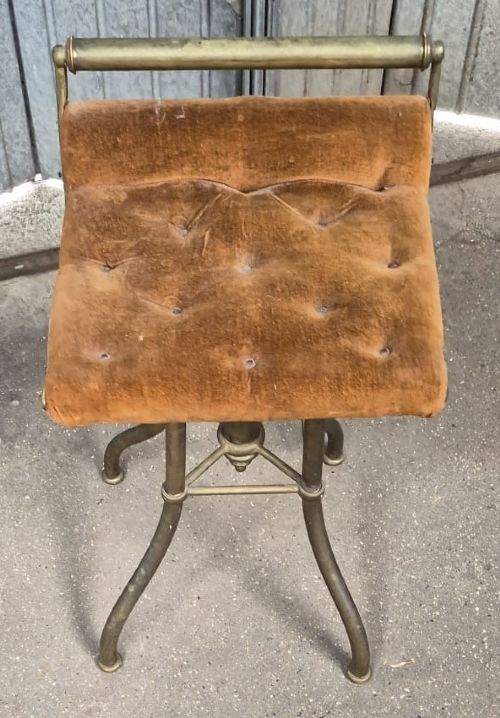
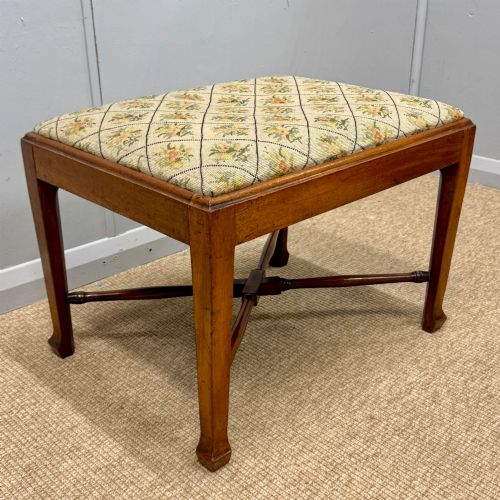
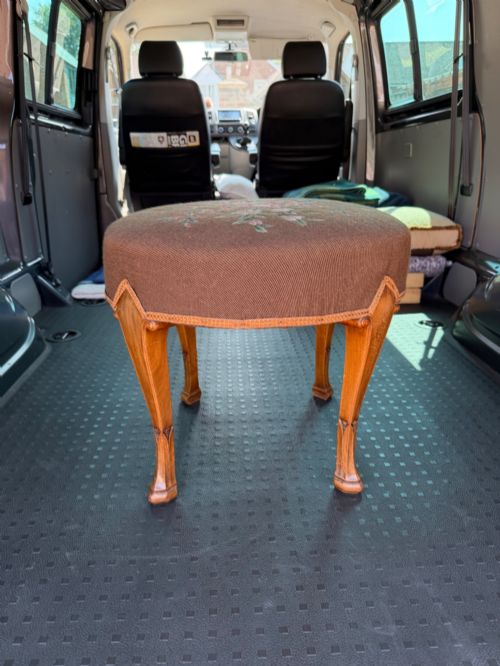
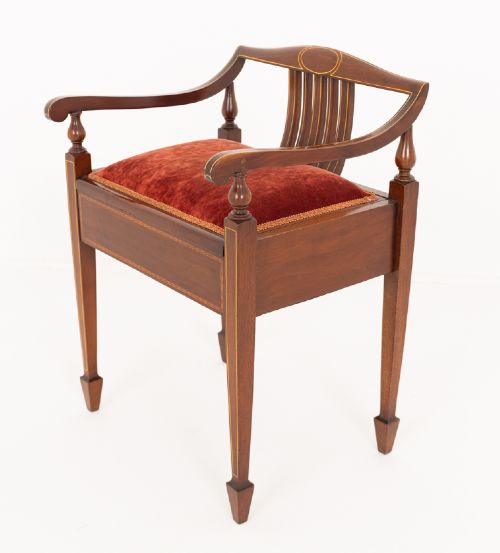
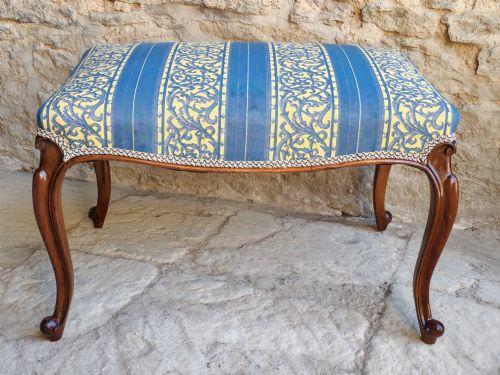
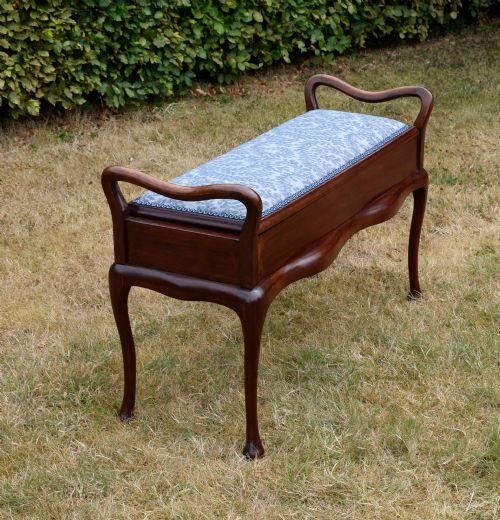
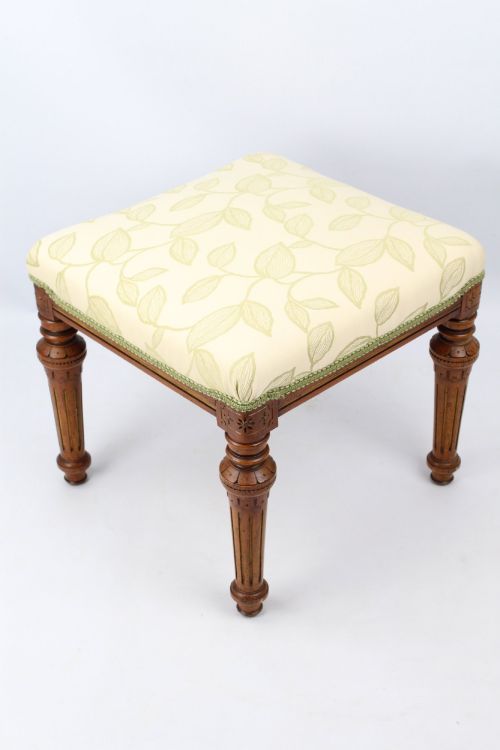
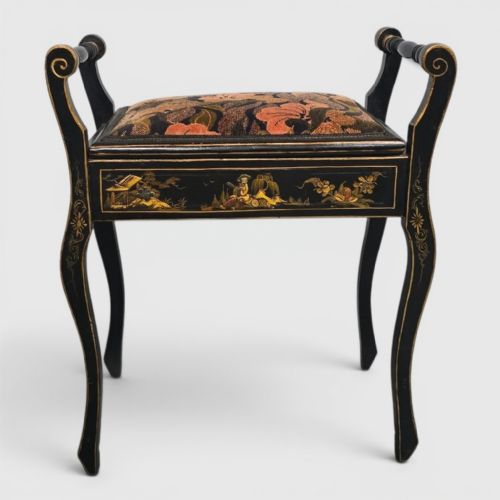
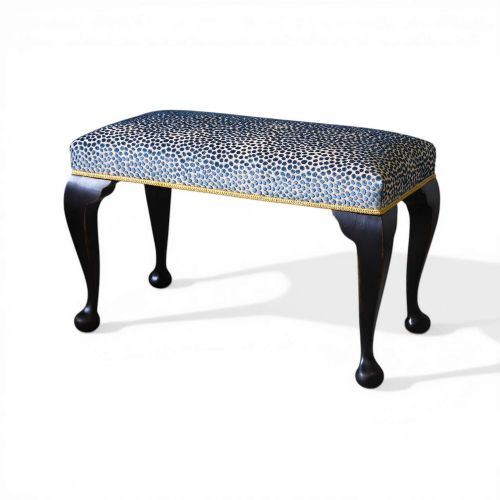
An upholstered piano stool serves the dual purpose of musical seating and period furnishing, appearing frequently in Victorian, Edwardian, and Art Deco variants across these listings. Buyers seek out these seats to complement vintage instruments or to utilise them as versatile dressing and window benches. The forms range from simple revolving pedestals and fixed-height frames to duet benches fitted with storage lids.
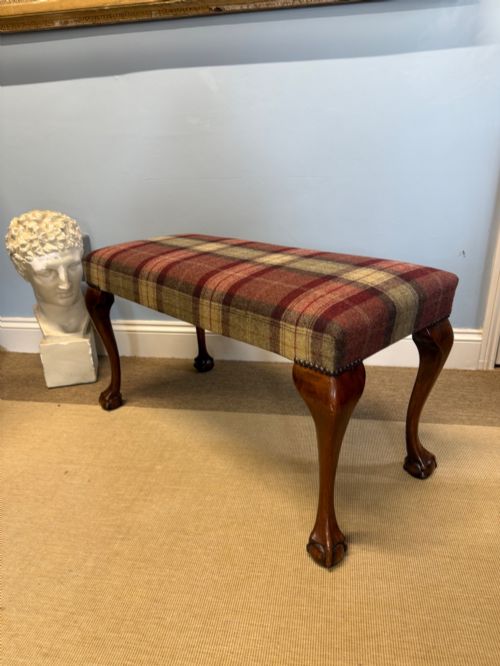
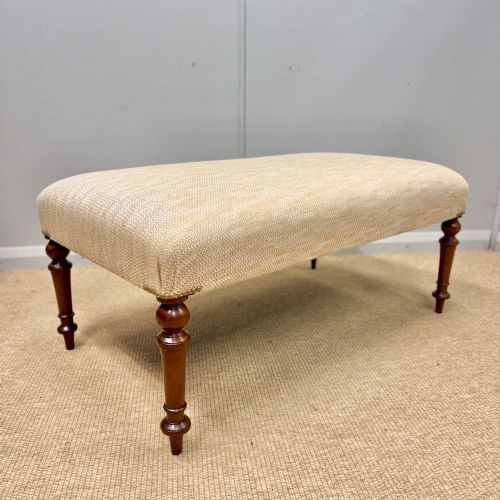
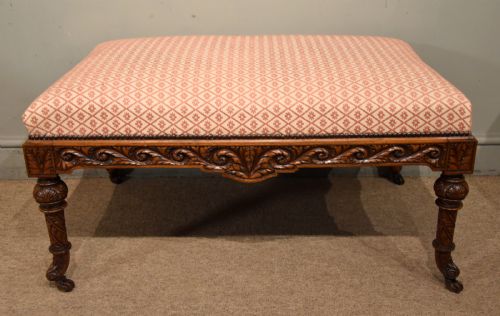
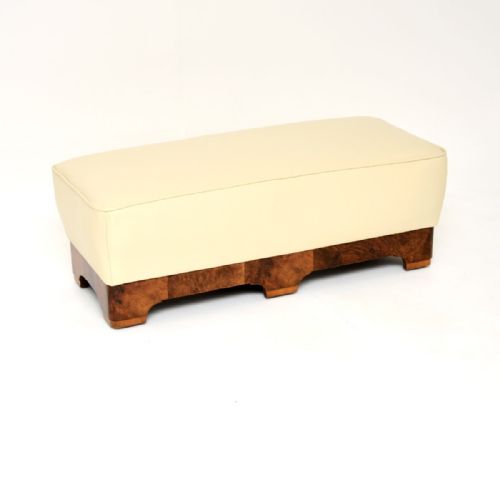
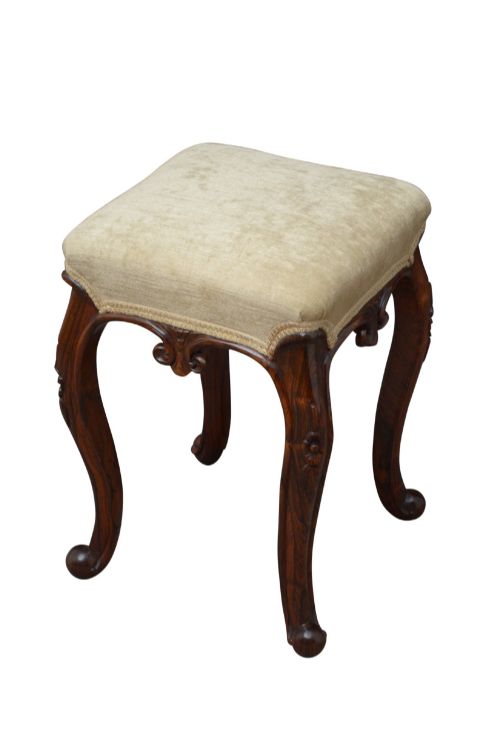
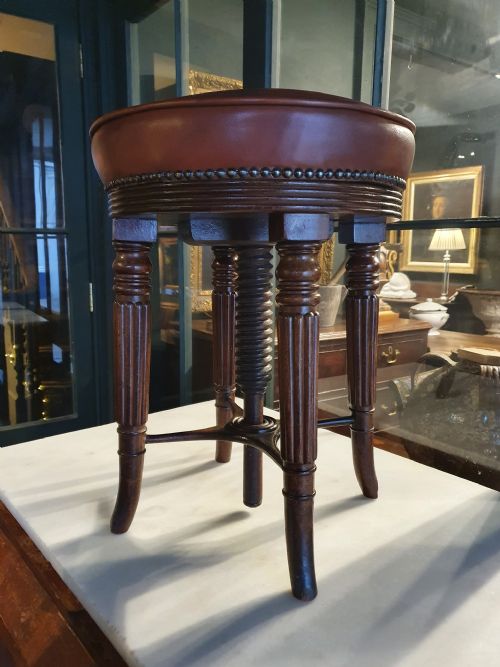
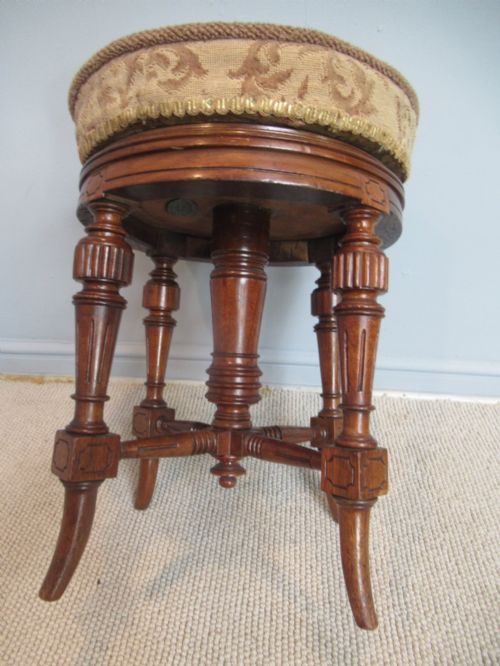
Victorian examples dominate the record, often featuring adjustable screw mechanisms, carved walnut or rosewood frames, and tripod or cabriole bases. Edwardian pieces tend to utilise mahogany with simpler turned legs, whilst later Art Deco specimens introduce burr walnut, leather, and integrated storage compartments. Single seats and longer duet formats both appear regularly among the records.
How They Were Made
Cabinetmakers utilised solid timbers such as mahogany, walnut, rosewood, and oak for the structural frames, frequently employing turning, carving, and marquetry techniques. Brass fixtures appear on frames, castors, and adjustable winding columns to facilitate movement and height alteration.
The seats themselves rely on textiles ranging from contemporary fabrics and leather to period tapestry, needlepoint, and velvet. Internal construction often incorporates wooden storage compartments or mechanical rise-and-fall screws.
Upholstered Piano Stool Retail Price Guide 2026
Typical asking prices for upholstered piano stool among the pieces listed under this phrase on Sellingantiques today, from the lower quarter to the upper quarter. They describe what is for sale here now, not the wider market.
The selection spans Victorian revolving pedestal seats, Edwardian inlaid benches, and Art Deco burr walnut designs equipped with storage.
What Varies In Quality
The standard of a piece rests primarily upon the choice of timber and the execution of the carving, with dense woods like rosewood and figured veneers such as burr walnut occupying the upper tier. Refined details like cabriole legs, brass-framed elements, and intricate marquetry distinguish finer workshops from standard production.
Mechanical integrity defines the valuation of adjustable models, where smooth-operating central screws and sturdy pedestal bases indicate superior manufacture. The preservation of original upholstery materials, including needlepoint and tapestry, also influences the character of the piece.
Charles Nosotti·Harry & Lou Epstein·Rushworth & Dreaper
The Upholstered Piano Stool Glossary
- Duet stool
- A wider bench designed to accommodate two players simultaneously at a piano. These often incorporate lift-up lids for sheet music storage.
- Rise and fall
- A mechanical system utilising a central screw to alter the seating height. This allows the player to adjust their position relative to the keyboard.
- Cabriole leg
- A furniture leg that curves outward and then tapers inward, finishing in a pad or claw foot. This design is common on Victorian and Georgian revival pieces.
- Canterbury
- A compartmentalised stand incorporated into furniture for holding sheet music or books. Some piano stools integrate this feature beside the seat.
- Marquetry
- Decorative veneer work arranged in geometric or pictorial patterns across wooden surfaces. It appears frequently on Edwardian and Victorian lids.
Upholstered Piano Stool: Frequently Asked Questions
How do adjustable piano stools work?
Adjustable models use a central wooden screw or metal threaded rod concealed within the pedestal column. Rotating the upholstered top raises or lowers the seating height.
This mechanism allows musicians to find a comfortable posture for playing. The screw is usually secured by a threaded nut fixed inside the frame.
Where were piano stools placed?
These seats sat directly in front of pianos and organs within domestic drawing rooms and music parlours. They provided stable seating during practice and performance.
Many designs proved versatile enough to function as dressing table stools or window seats. Their compact proportions suited various domestic corners.
How do I identify a Victorian stool?
Victorian examples typically feature dark timbers such as walnut, rosewood, or mahogany with carved ornamentation. Common structural traits include cabriole legs, brass castors, and central turning columns.
Upholstery often includes needlepoint, tapestry, or velvet. Many Victorian versions incorporate adjustable height mechanisms.
What is the difference between single and duet stools?
Single stools provide a compact seat for one person, often featuring a square or round revolving top. Duet stools are elongated benches built for two players.
Duet formats frequently include hinged lift-up lids concealing storage compartments for music sheets. Single variants more commonly rely on open pedestal bases.