



Edwardian Music Stool
An Edwardian music stool provides practical seating alongside domestic keyboard instruments while offering hidden storage for sheet music.
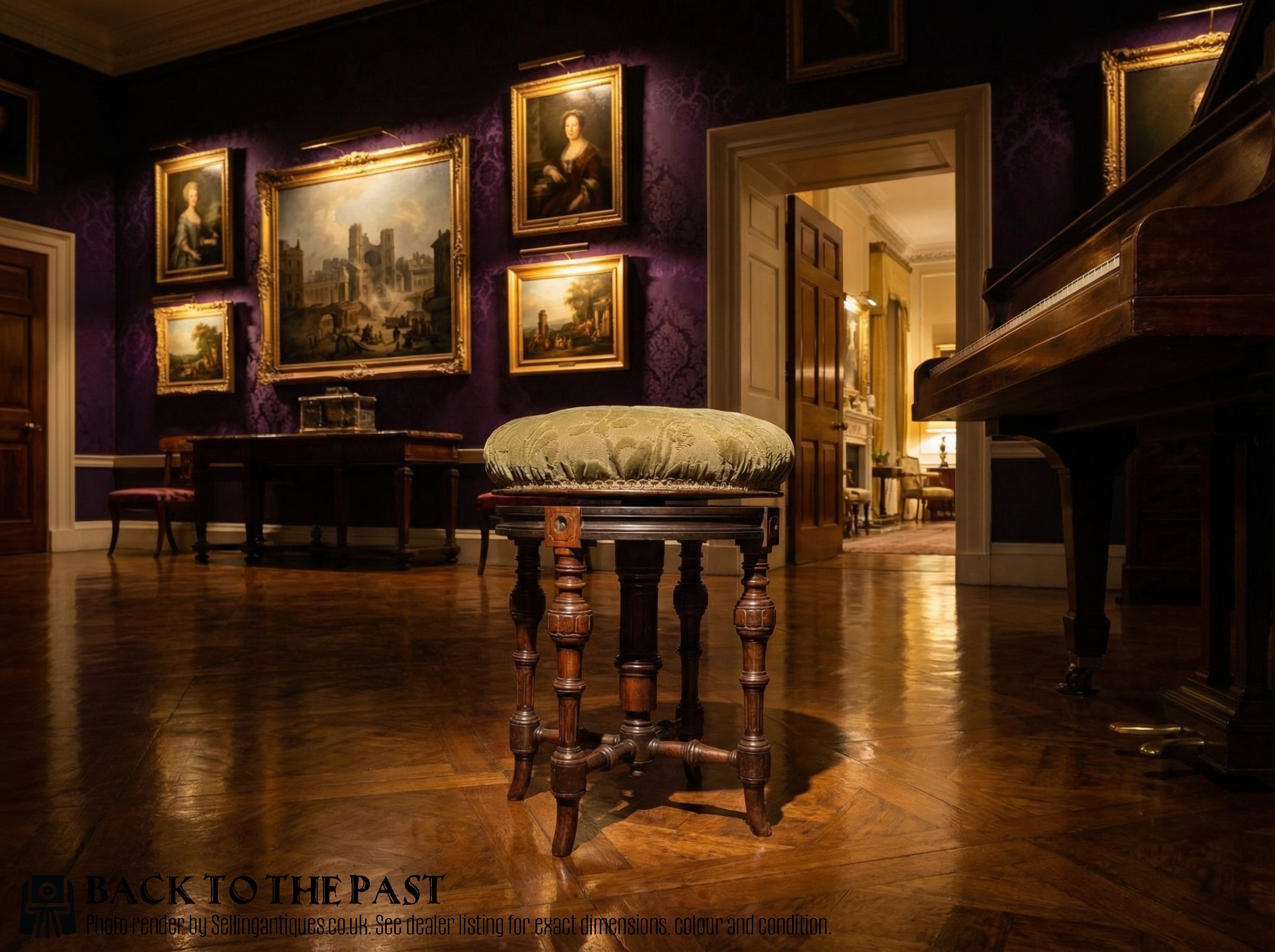
Edwardian music stool forms and origins
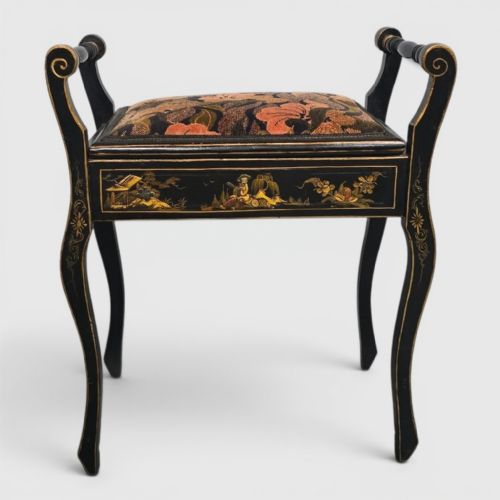
An Edwardian music stool serves as a seating option designed specifically for use at a piano or instrument. These pieces most commonly appear from the Edwardian era, though related examples emerge from Victorian and Georgian periods.
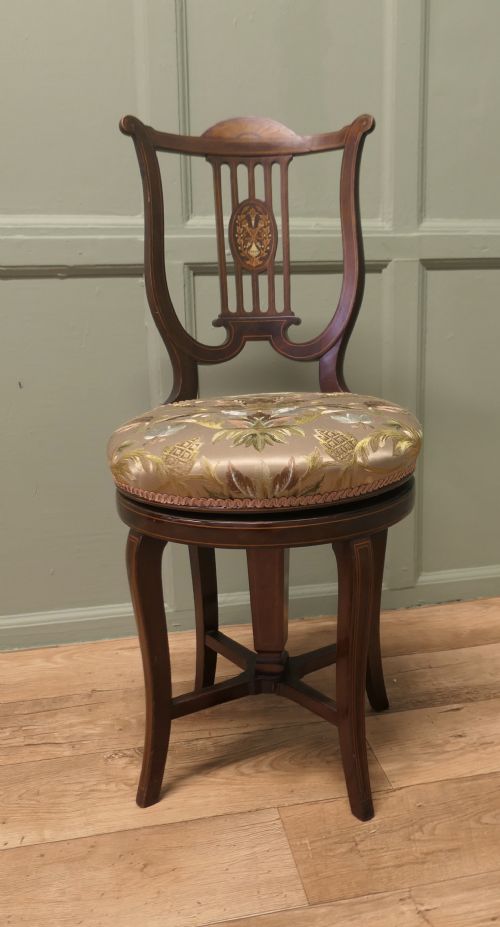
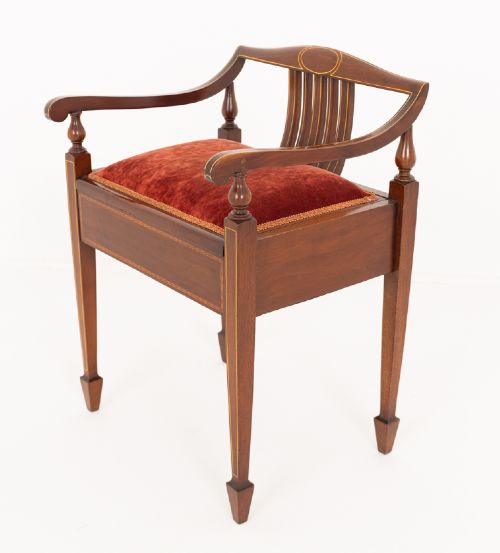
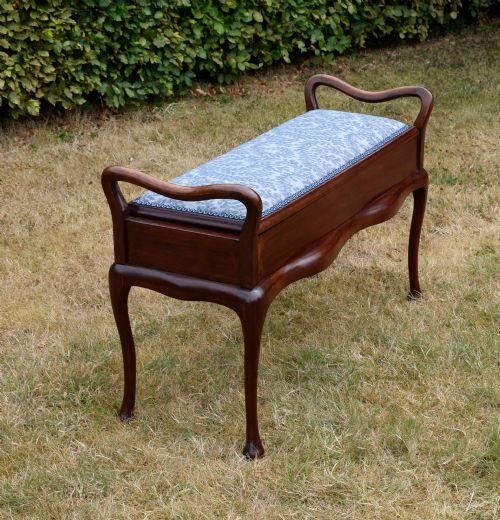
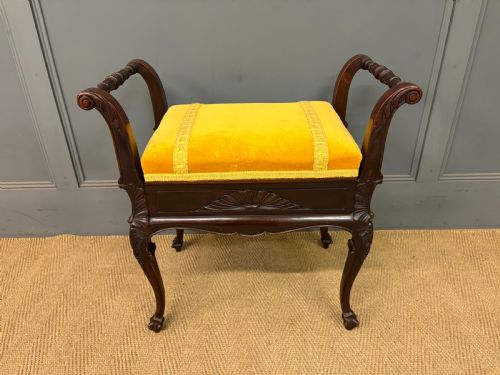
The objects take several distinct configurations including standard box seats with lifting lids, revolving mechanisms, and specialised cabinets with drawers. Makers also produced duet sizes, window seats, and ottomans suited for domestic music rooms.
Mahogany forms the primary wood across these listings, alongside occasional uses of satinwood, ebonised wood, rosewood, oak, and pine. Pieces frequently incorporate decorative inlay, marquetry, and strung details to elevate the surface appearance.
Materials and construction methods
Carpenters constructed the frames predominantly from solid mahogany, walnut, or oak, often employing satinwood and other timber veneers for visual contrast. Inlay work and marquetry panels appear on many surfaces, demonstrating detailed cabinetmaking skills.
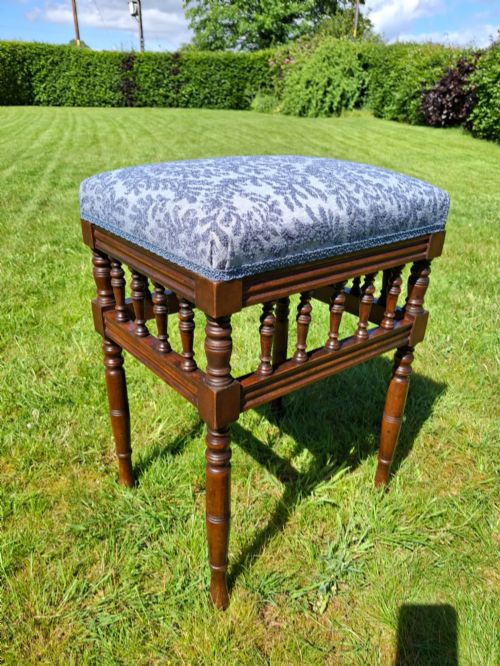
Upholstery materials include velvet, tapestry, needlepoint, and general upholstery fabric. These soft elements cover hinged lids, drop-in seats, and adjustable revolving tops supported by internal brass fittings and mechanical screws.
Retail Price Guide 2026
Typical UK retail prices for edwardian music stool, calculated from the Sellingantiques database of over a million retail prices indexed since 2003. This retail price guide relies exclusively on Sellingantiques data; no external sources or auction records are used, so the figures do not describe the wider market.
The documented periods span from the eighteenth century through Victorian and Edwardian eras up to nineteen-ten.
Distinctions in craftsmanship and materials
The refinement of the timber choice and the precision of the inlay work distinguish standard pieces from more ambitious examples. Workshops utilised contrasting woods, stringing, and detailed marquetry to elevate the visual standard of the furniture.
Mechanical elements such as revolving screw mechanisms and internal cabinet drawers show varying degrees of robust engineering. The choice of covering fabric, ranging from simple upholstery to worked tapestry and needlepoint, also marks the grade of the finished piece.
James Shoolbred
The Edwardian Music Stool Glossary
- Marquetry
- Form of decorative veneer arrangement where small pieces of various woods are fitted together to create pictorial designs on the surface. This technique appears on several inlaid music stool lids.
- Duet stool
- Wider seating variant designed to accommodate two players side by side at a piano. These examples often feature longer hinged storage boxes or extended upholstered tops.
- Revolving stool
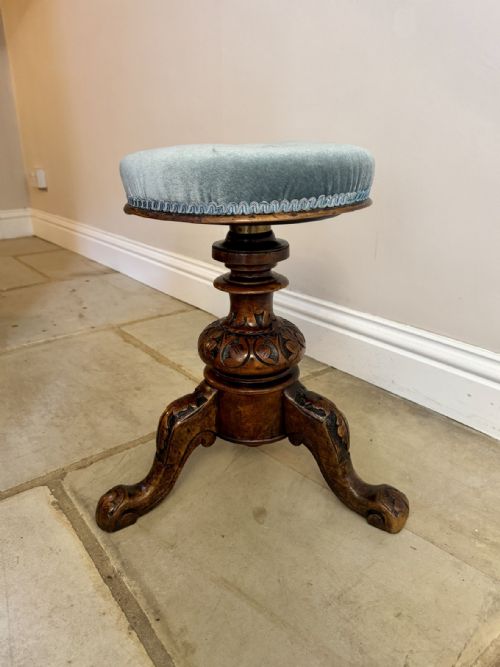
- Adjustable seating design utilising a central screw mechanism to raise or lower the seat height. The mechanism typically incorporates brass components to facilitate smooth rotation.
- Stringing
- Inlay technique involving thin lines of contrasting timber embedded into grooves in the primary wood surface. Cabinetmakers used stringing to outline panels and edges on mahogany bodies.
- Needlepoint
- Hand-stitched textile used traditionally for covering stool seats and upholstery panels. Surviving needlepoint work adds texture and colour to Edwardian music seats.
Frequently Asked Questions
What is an Edwardian music stool?
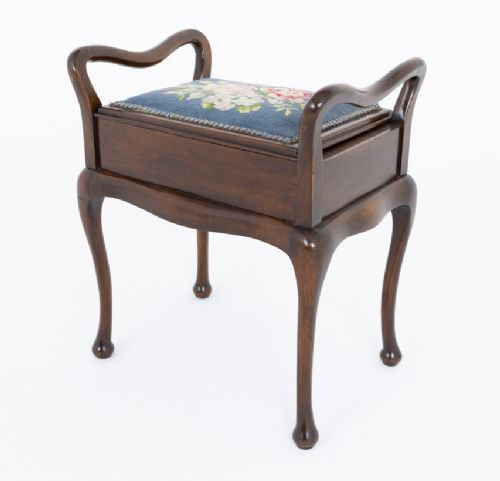
An Edwardian music stool is a specialist seat designed for keyboard players, often featuring a compartment beneath the lid or within drawers to hold sheet music.
These items date predominantly from the early twentieth century and match the domestic interiors of the period.
How do storage music stools work?
Storage music stools typically use a hinged lid that opens upward to reveal an interior compartment for organising scores and folios. Some variations incorporate side drawers or drop-down cabinets specifically sized for paper storage.
This built-in utility kept performance areas tidy while keeping rehearsal materials close at hand.
Were music stools made for two people?
Duet music stools were manufactured with wider proportions to seat two players simultaneously during piano practice. These longer variants frequently included box compartments or ottoman-style upholstered tops.
They occupied a similar footprint to window seats while retaining the functional storage of standard music cabinets.
How can I tell a revolving stool from a fixed one?
Revolving stools feature a central wooden or brass screw mechanism beneath the top that allows the seat to turn and adjust in height. Fixed variants maintain a static frame with either a stationary upholstered pad or a lid that lifts on hinges.
Examining the underside reveals whether the top connects to a rotating spindle or a rigid box structure.