



Edwardian Music Seat
An edwardian music seat brings practical charm to a room, offering adjustable height or hidden storage for scores while anchoring a piano setup.
Edwardian Music Seat
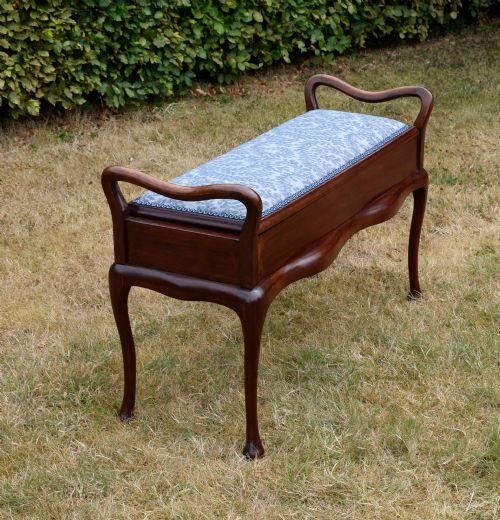
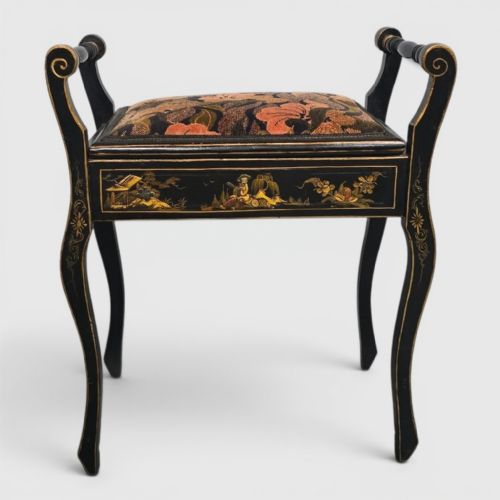
When you search for an edwardian music seat, you find practical seating designed specifically for musicians at the piano or harp. These pieces range from single swivel stools to longer duet benches built to hold sheet music.
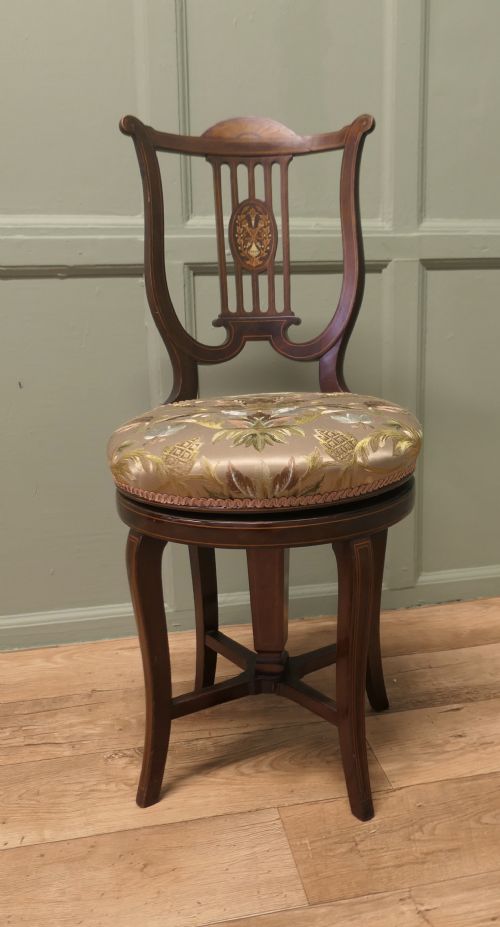
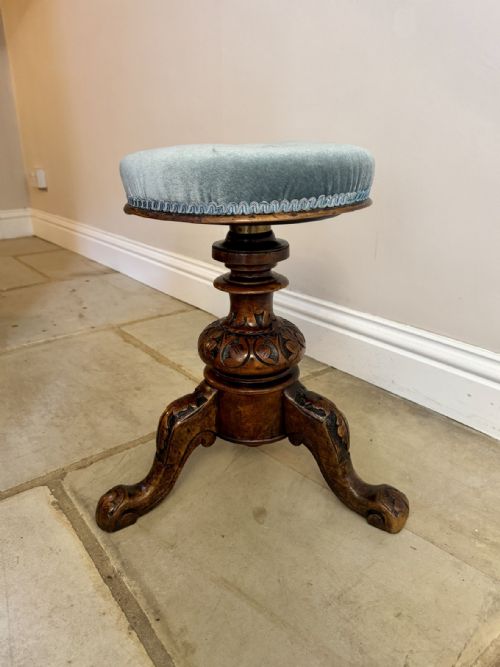
The version you meet most often on this page is an Edwardian mahogany piano stool, frequently featuring inlaid details and a revolving top. Alongside these, you encounter Victorian predecessors in walnut and rosewood, plus later oak examples.
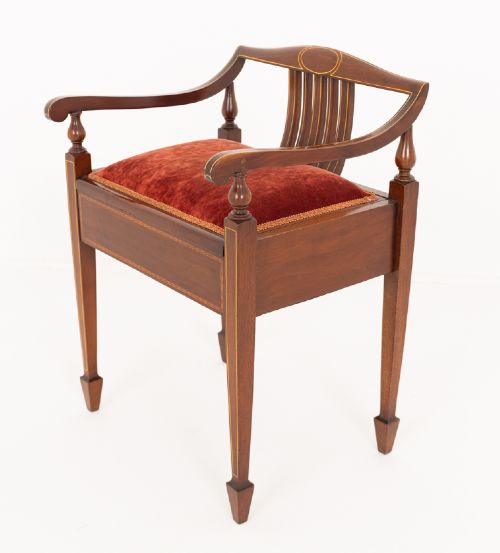
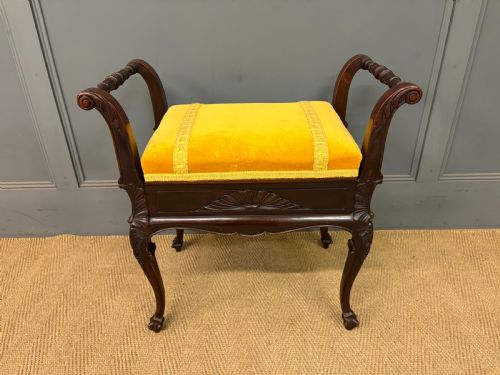
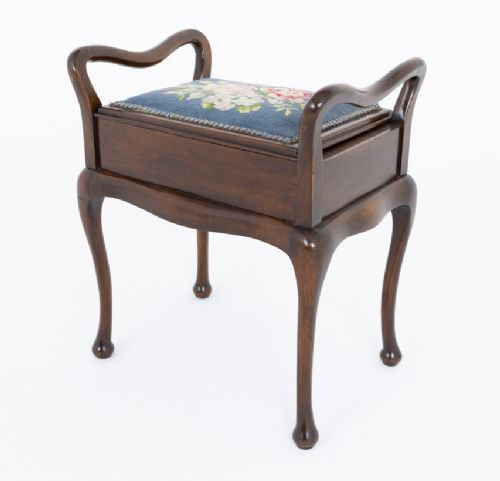
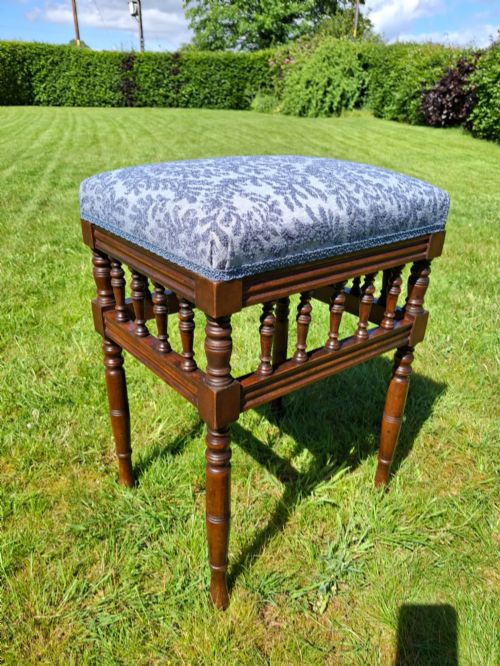
Forms vary from simple square frames to music chairs with lyre backs, revolving seats, and lift-up lids concealing storage compartments. They sit comfortably beside period instruments or function as standalone occasional seating.
How they were made
Cabinetmakers constructed these seats primarily in mahogany, walnut, and oak, often applying satinwood and boxwood inlay to enrich the polished surfaces. Edwardian examples frequently display neat stringing and classical motifs embedded directly into the timber.
Upholstery forms a vital component, utilising fabric, velvet, tan leather, and tapestry needlepoint secured over padded seats. Mechanical elements in brass and iron enable rise-and-fall adjustments or smooth revolving motion on swivel bases.
Materials recorded across the inventory combine solid hardwoods with brass mechanical fittings, silk velvet, leather, and traditional tapestry needlepoint.
What varies in quality
The refinement of the timber and the crispness of the inlay distinguish standard output from superior pieces. Subtle carving on walnut frames or delicate satinwood banding indicates greater workshop attention during construction.
The integrity of the mechanical action determines functional excellence, ensuring that revolving seats or height-adjustment screws operate smoothly without wobble. Original upholstery materials and well-preserved needlepoint seats add considerable desirability for collectors.
Jas Shoolbred·James Shoolbred
The Edwardian Music Seat Glossary
- Lyre back
- A chair back shaped like an ancient musical instrument with symmetrical curved frame pieces. This motif appears frequently on music chairs designed for harpists and pianists.
- Rise and fall
- A mechanism allowing the seat height to be adjusted by turning the top. It utilises a central threaded screw column concealed within the stool base.
- Duet stool
- An elongated piano bench built to accommodate two players simultaneously. These often include hinged lids opening to reveal internal music storage compartments.
- Satinwood inlay
- Contrasting blonde wood veneers inserted into darker timber surfaces to create geometric or floral patterns. This technique defines much of the Edwardian aesthetic.
- Swivel base
- A pivoting mechanism allowing the upper seat portion to rotate completely around. It provides flexibility for musicians reaching across instrument pedals.
Edwardian Music Seat: Frequently Asked Questions
What is an edwardian music seat?
An edwardian music seat is a specialised stool or chair designed for pianists and musicians, featuring stable wooden frames and comfortable upholstered tops.
Many examples include adjustable height mechanisms or internal storage compartments beneath the seat to hold sheet music.
How do I adjust the height?
Most adjustable piano stools operate via a central screw mechanism hidden beneath the upholstery. Turning the seat clockwise or anti-clockwise raises or lowers the sitting surface.
Some Victorian and Edwardian models utilise side levers or rise-and-fall knobs to alter the height for different players.
Where should I place it?
These seats suit piano rooms, living spaces, or studies where their compact proportions function effectively as occasional chairs. Their lift-up lids or storage boxes also make them practical near desks or dressing tables.
They pair naturally with period keyboard instruments, though modern interiors frequently utilise them purely for decorative seating.
How do I tell Edwardian from Victorian?
Edwardian music seats generally feature lighter timbers like mahogany, paired with delicate satinwood or boxwood inlay and Sheraton Revival styling. Victorian versions tend to employ heavier walnut or rosewood with darker finishes and deeper carved decoration.
Edwardian pieces also show cleaner lines and brighter upholstery treatments compared to the heavier fabrics typical of earlier decades.