
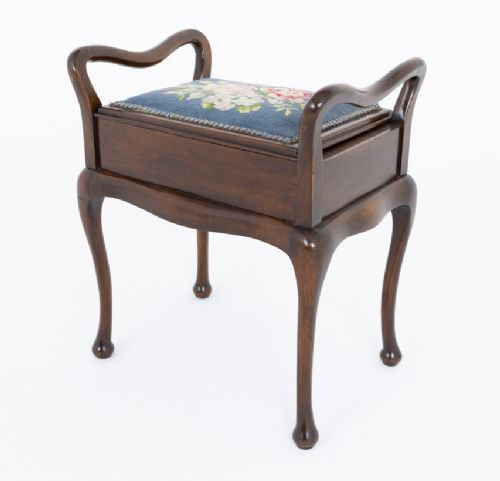
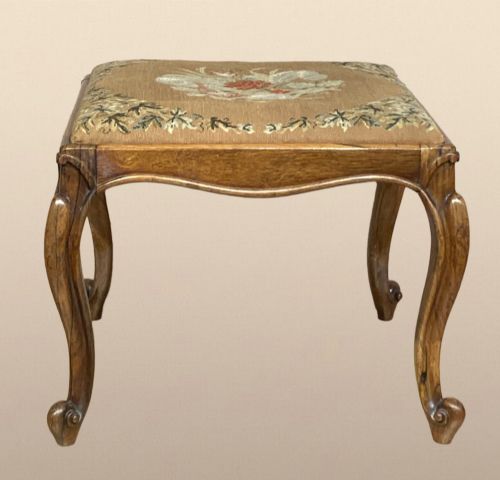


Tapestry Piano Stool
A tapestry piano stool provides an adjustable seat for the keyboard player while introducing rich textile pattern and warm timber into a room.
What these pieces are
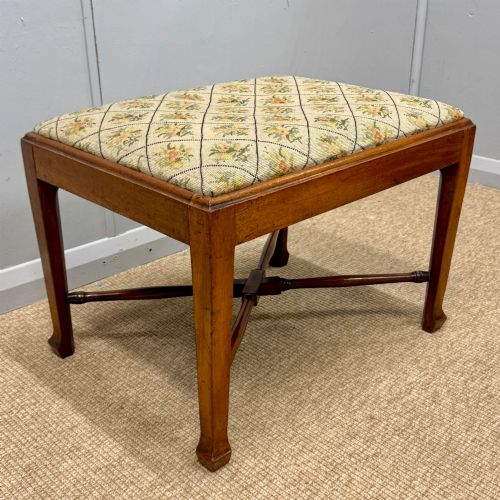
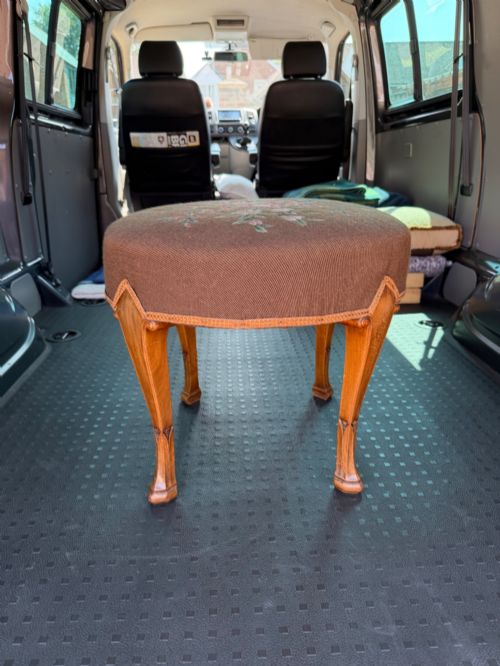
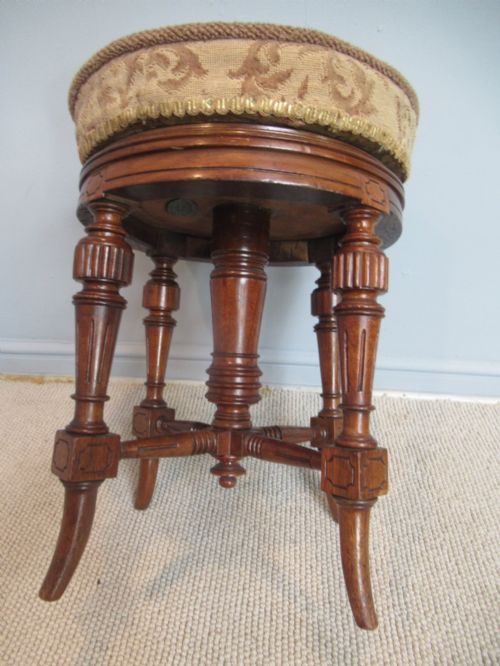
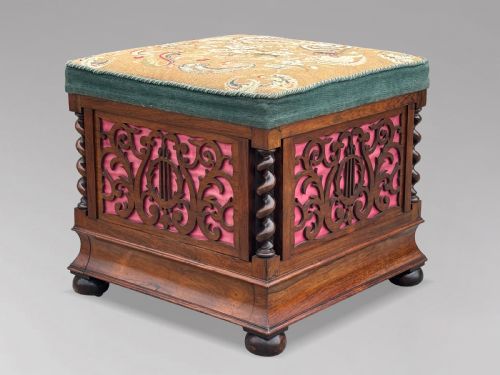
A tapestry piano stool is a seating piece designed for musicians, appearing primarily in Victorian and Edwardian forms across this inventory. The pieces range from the circular revolving stool of the mid-nineteenth century to later Edwardian box designs with hinged seats for music storage.
The materials span rich timbers including mahogany, walnut and rosewood paired with woven tapestry and textile upholstery. Many surviving examples date from the Victorian and Edwardian eras, incorporating adjustable height mechanisms or inlaid mahogany details.
How they were made
Joiners constructed the frames from dense hardwoods such as mahogany, walnut and rosewood, sometimes adding delicate stringing or inlay. Turning lathes shaped the central columns and legs, while brass fittings enabled the revolving and height-adjusting mechanisms found on earlier Victorian examples.
Upholsterers stretched durable tapestry and textile covers over padded seats, occasionally incorporating internal storage boxes beneath the hinged lids seen on Edwardian pieces.
Retail Price Guide 2026
Typical UK retail prices for tapestry piano stool, calculated from the Sellingantiques database of over a million retail prices indexed since 2003. This retail price guide relies exclusively on Sellingantiques data; no external sources or auction records are used, so the figures do not describe the wider market.
Musicians relied on these revolving seats to spin slightly closer to the keys during dramatic passages.
What varies in quality
Quality rests in the choice of timber and the precision of the turning and joinery rather than mere age. Denser grains of rosewood and walnut, alongside crisp mahogany inlay, distinguish the finer workshops from standard production.
The execution of the tapestry needlework and the smoothness of the mechanical revolving or height-adjusting hardware mark the upper tier of execution.
Jas Shoolbred
The Tapestry Piano Stool Glossary
- Revolving stool
- A seat featuring a threaded spindle mechanism allowing the top to turn and adjust in height.
- Tapestry
- A thick woven textile featuring pictorial or geometric designs used for durable upholstery.
- Stringing
- Fine inlaid lines of contrasting wood used to decorate mahogany and walnut cabinet work.
- Inlay
- Pieces of contrasting timber fitted flush into the solid wood surface to form decorative patterns.
Frequently Asked Questions
How do I adjust the height?
Many Victorian examples feature a central wooden or brass screw mechanism that raises the seat when turned.
Rotating the top clockwise or anticlockwise alters the seating position to suit the player.
Did all these stools have storage?
Storage compartments beneath the seat belong typically to Edwardian music stools rather than earlier Victorian revolving types.
Lift-up upholstered lids allowed players to keep sheet music tidy inside the wooden frame.
What woods were commonly used?
Makers relied on durable hardwoods such as mahogany, walnut and rosewood to support the weight of the mechanism.
These timbers accepted fine polishing and carved details well.
How do I care for the tapestry?
Keep the woven textile upholstery away from direct sunlight to prevent the coloured threads from fading.
Gentle surface cleaning with a soft brush helps remove dust without damaging the fibres.