

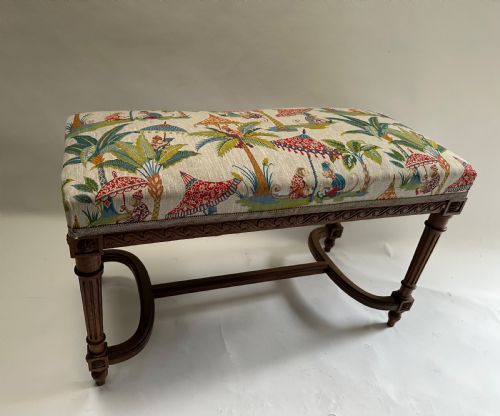
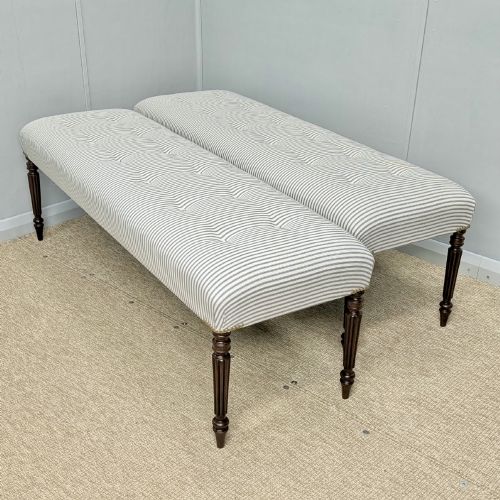
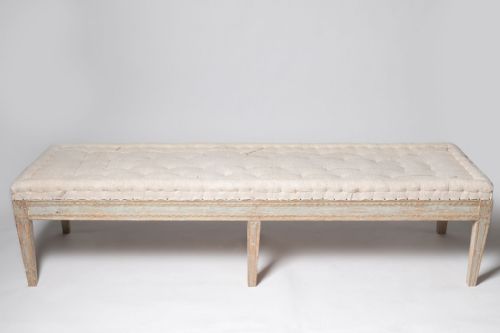
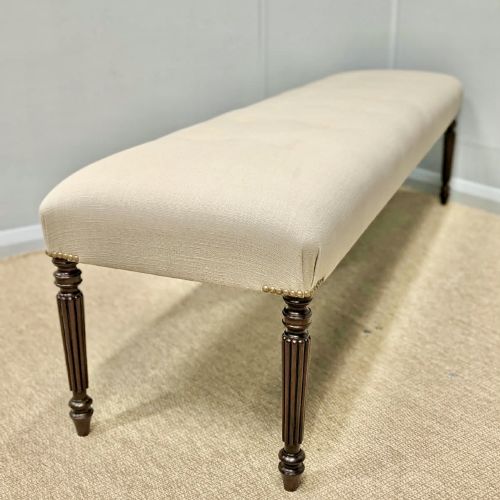
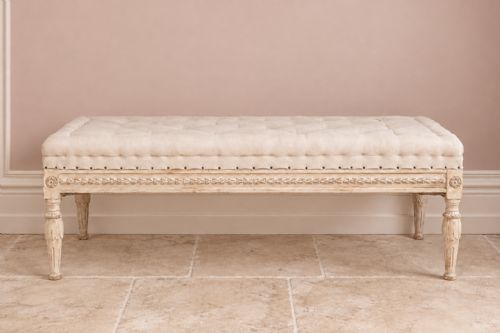

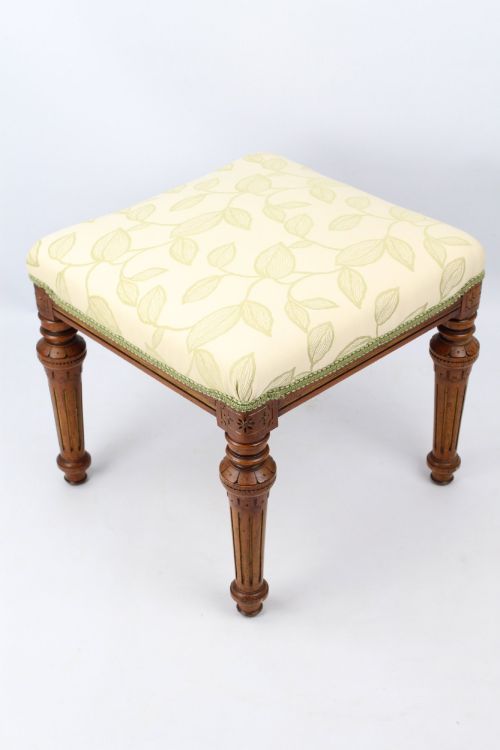
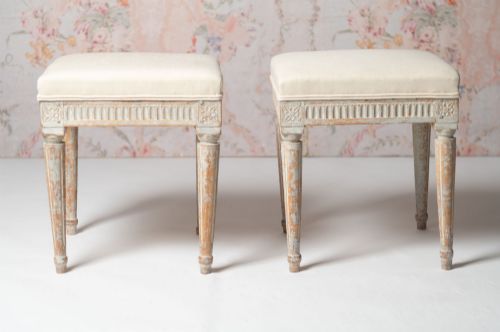
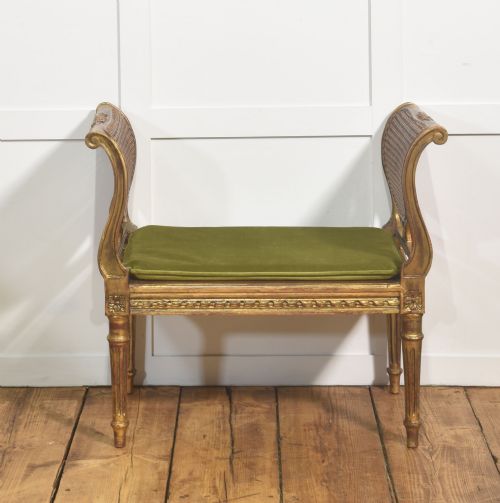
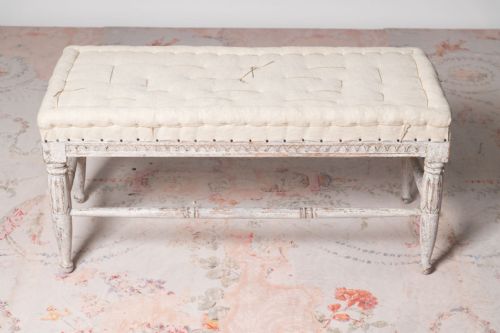
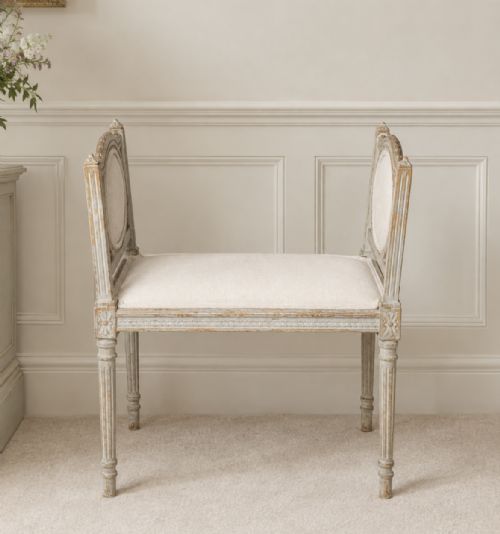


Fluted Leg Stool
These fluted leg stool examples combine classical proportion with practical seating, offering timeless elegance for period and modern interiors alike.
Fluted Leg Stool
A fluted leg stool is a low seating form defined by vertically channelled uprights, appearing across nineteenth-century and earlier periods. You will frequently encounter mahogany and walnut frames alongside painted Swedish and French interpretations.
Forms range from compact dressing table seats and long window benches to piano stools and centre ottomans. The selection spans distinct design vocabularies including Regency, Gustavian, and Victorian iterations.

Materials and construction
Frames rely on dense timbers such as mahogany, walnut, and beech, alongside carved giltwood and painted surfaces. Joinery relies on traditional hand-cut joints designed to withstand regular weight.
Upholstery materials include buttoned leather, woven cane, linen, and fabric, often secured with brass studs. Carved ornamentation and fluting are shaped directly into the solid wood frames by hand.
Fluted Leg Stool Retail Price Guide 2026
Typical asking prices for fluted leg stool among the pieces listed under this phrase on Sellingantiques today, from the lower quarter to the upper quarter. They describe what is for sale here now, not the wider market.
Listings span multiple decades from the Georgian era through the Edwardian period, incorporating mahogany, walnut, teak, and painted wood.
Judging the work
Quality rests upon the crispness of the hand-carved fluting and the integrity of the timber frame. Superior examples demonstrate refined proportions and tight, original joinery without structural modification.
The secondary materials, from the grade of the leather to the tightness of the cane work, dictate the overall standard. Maker attribution and period finish preservation elevate certain pieces above standard domestic utility.
Charles Nosotti·Jas Shoolbred·Gillows
The Fluted Leg Stool Glossary
- Fluting
- Vertical parallel grooves carved into the surface of a leg or column. This classical architectural detail draws the eye upward and adds visual lightness to heavy timber.
- Giltwood
- Timber coated with a thin layer of gold leaf or gesso powder. It provides a luminous surface finish common on formal French and neoclassical seating.
- Banquette
- A long upholstered bench or stool designed for seating multiple people. These pieces often feature decorative carved wooden frames and cane panels.
- Cane
- Woven rattan strips used to form breathable seat panels. This technique offers a flexible and lightweight alternative to solid wood or upholstered pads.
- Serpentine
- A furniture edge or front line that curves inward then outward in a continuous wave. This undulating contour requires precise woodworking skill.
Fluted Leg Stool: Frequently Asked Questions
Where should I place a fluted leg stool?
These versatile pieces work well at the foot of a bed, beneath a dressing table, or positioned near a window as a low seat.
Longer bench variants also function effectively as centre tables or casual seating in hallways and reception rooms.
How do I care for leather upholstery?
Keep leather clean using a dry cloth and condition it periodically with appropriate balms to prevent cracking over time.
Protect the surface from direct sunlight to maintain the natural colour and prevent the leather from drying out.
How do I identify a Regency period piece?
Regency items typically display classical architectural influences, featuring dark mahogany timbers and precise symmetrical turning or carving.
Look for restrained ornamentation and robust construction methods that reflect early nineteenth-century British design standards.
What is the difference between a stool and a window seat?
A standard stool provides a compact, backless surface intended for auxiliary seating or resting feet.
Window seats are generally elongated and often incorporate arms or low ends tailored for placement in architectural recesses.