



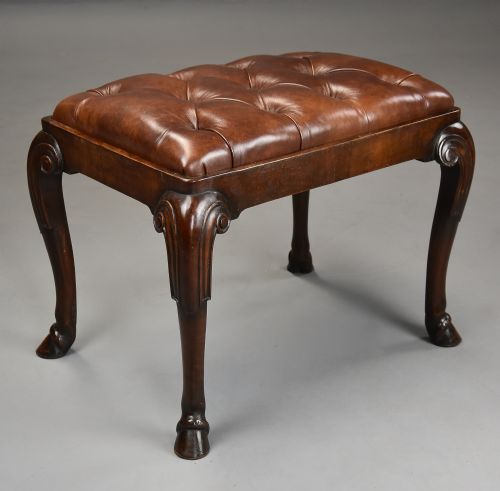
Antique Leather Ottoman
An antique leather ottoman offers practical seating and storage, uniting aged hide with period timber frames.

Antique Leather Ottoman
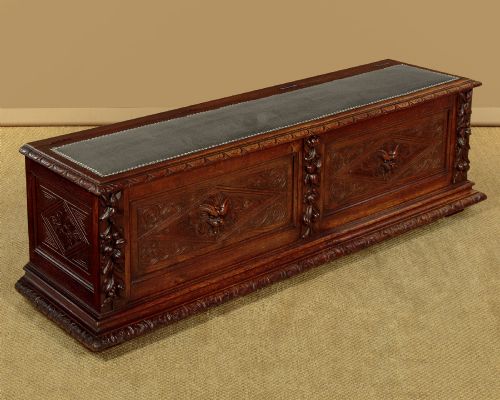
When you search for an antique leather ottoman, you encounter low footstools, long benches, and box seats designed for Victorian and Regency interiors. These pieces range from simple oak blanket boxes to grand mahogany frames upholstered in buttoned hide.
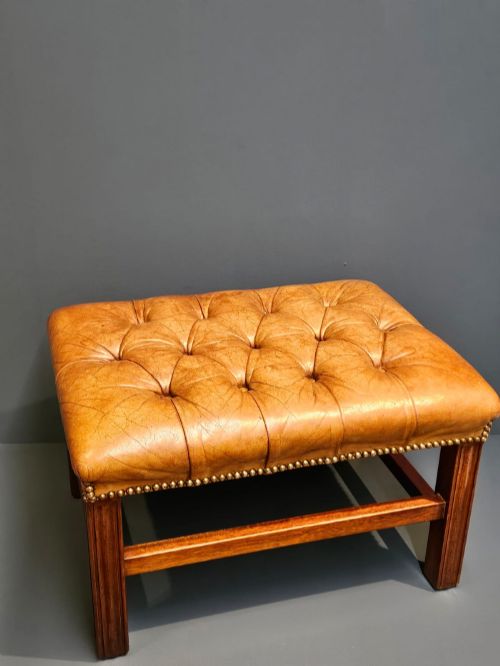
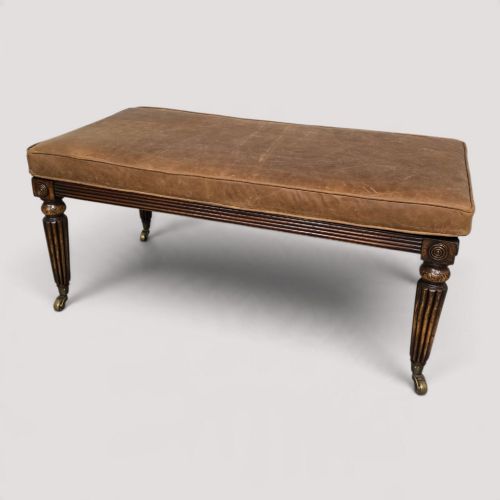
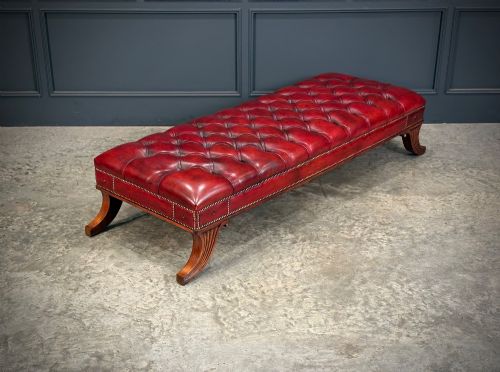
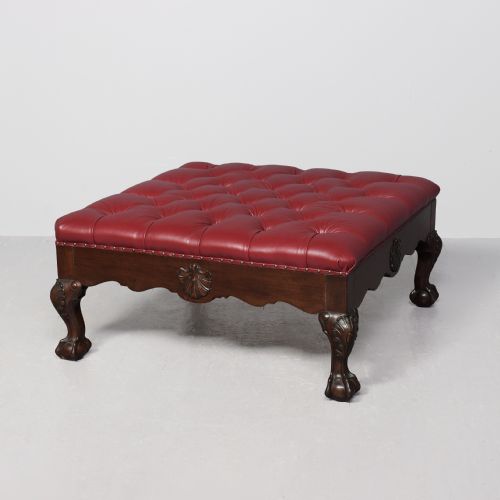
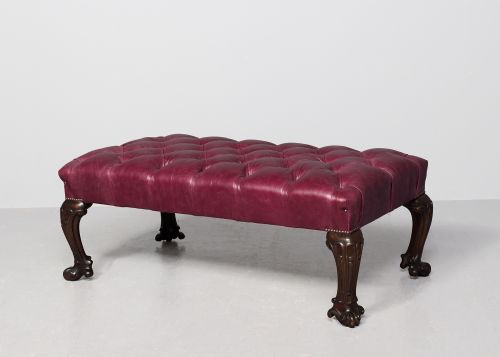
The Victorian era supplies deep-buttoned red or brown leather stools and box ottomans mounted on walnut or mahogany. Regency and George III examples often feature fluted legs, rosewood, or brass-studded details tailored for window seats.
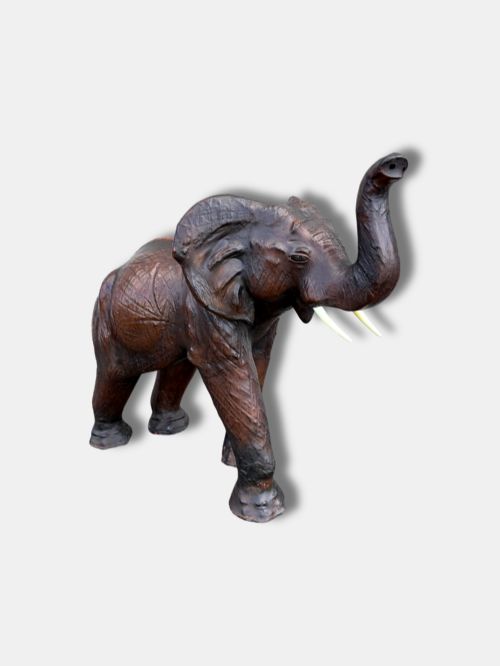
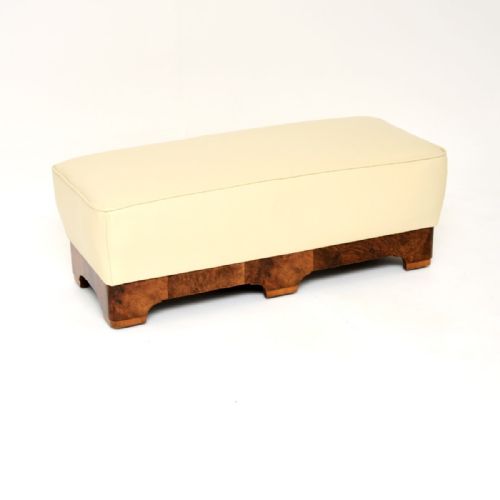
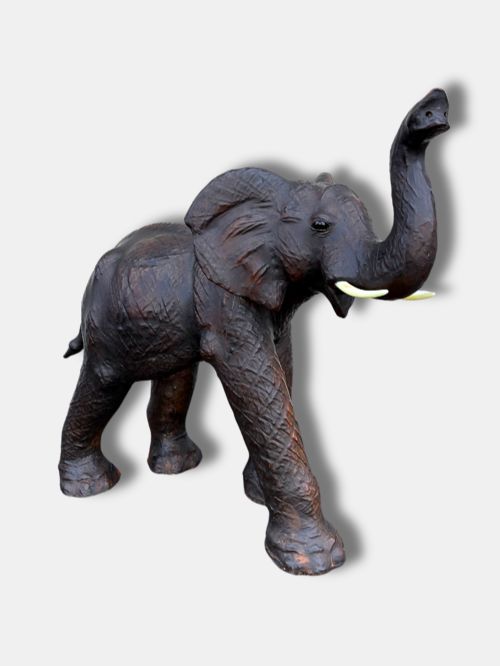
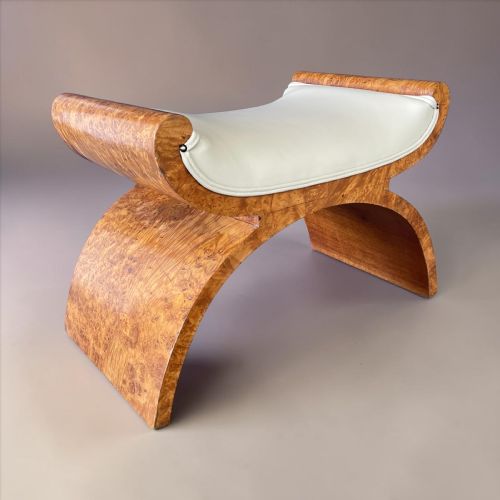
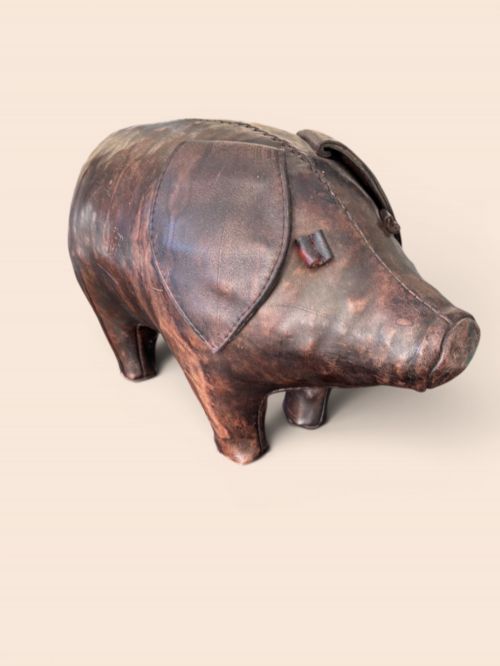
Edwardian and later 1920s workshops introduce lighter oak frameworks, Art Deco maple designs, and novelty animal shapes like leather dogs. These variations span domestic seating, library window benches, and dual-purpose storage boxes.
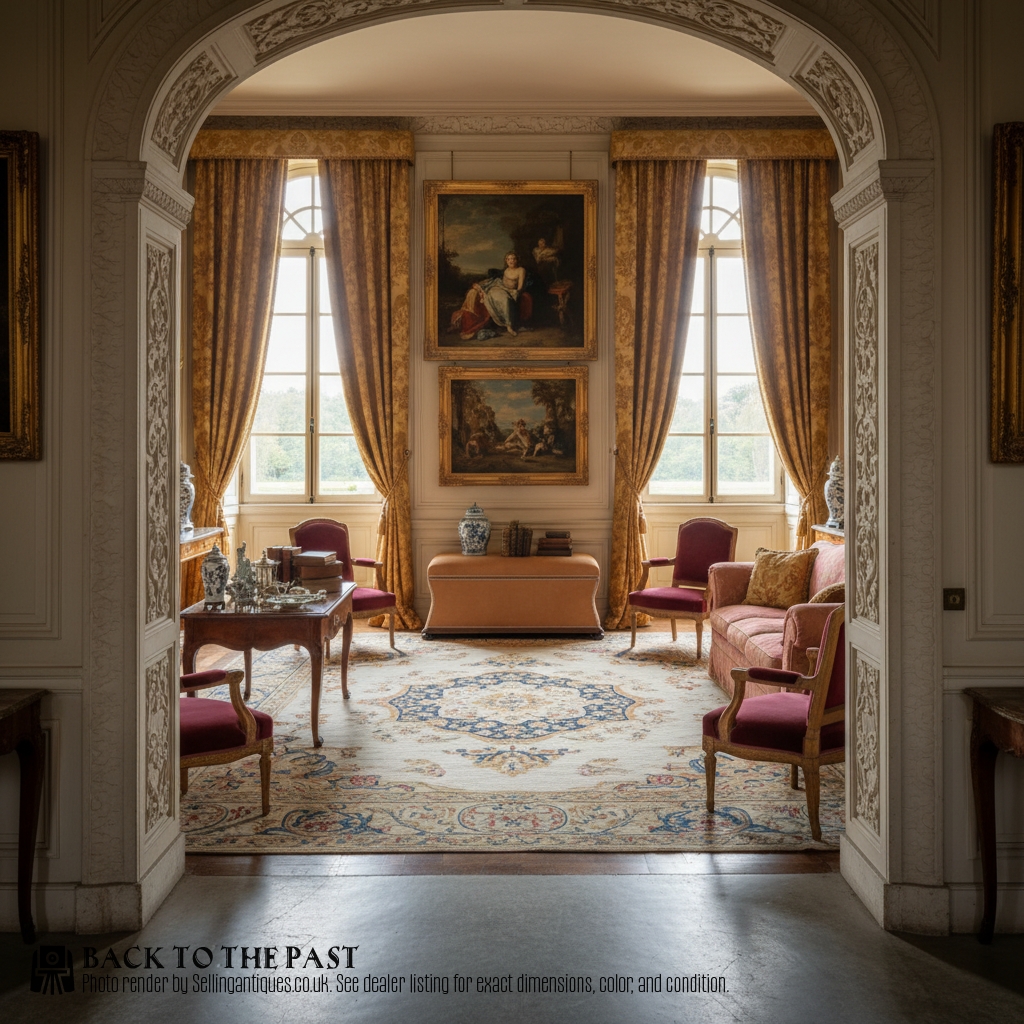
Materials and construction methods
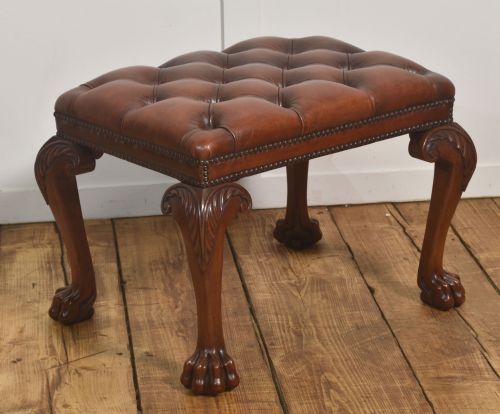
Makers built the structural frames using hardwoods such as mahogany, walnut, oak, and rosewood, often shaping cabriole legs, carved details, or box compartments. Timber choice dictated the weight and formality of the seating, from country house oak to polished rosewood.
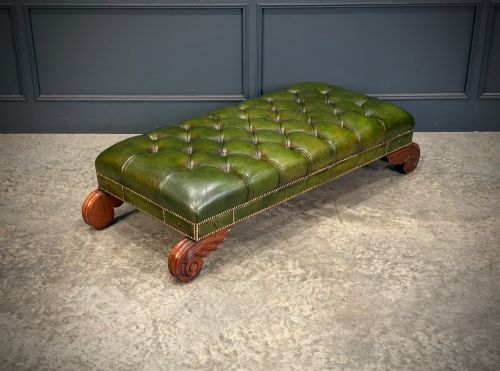
Upholsters applied natural leather over padding, securing the hide with individual brass studs and frequently employing deep buttoning to maintain tension. Some variants incorporated hinged lids to create internal storage space for blankets or accessories.
Antique Leather Ottoman Retail Price Guide 2026
Typical asking prices for leather ottoman among the pieces listed under this phrase on Sellingantiques today, from the lower quarter to the upper quarter. They describe what is for sale here now, not the wider market.
Period origins span the Regency, Victorian, Edwardian, and Art Deco eras, encompassing stools, box ottomans, and long benches.
Assessing quality and craftsmanship
The distinction between ordinary and exceptional pieces rests on the weight of the timber frame, the depth of the carving, and the richness of the leather. Finer examples display hand-dyed hides with subtle patination rather than flat modern replacements.
Joinery standards separate standard workshop production from finer cabinet work, evident in the stability of cabriole legs, the precision of brass studding, and the integrity of internal box mechanisms.
Harry and Lou Epstein·Omersa For Liberty·Simpson Kendall·James Shoolbred
The Antique Leather Ottoman Glossary
- Buttoning
- Upholstery technique using deep tufts secured by buttons to create a padded, diamond-patterned surface. This method kept internal stuffings evenly distributed across long benches and ottomans.
- Cabriole leg
- Furniture leg featuring a double curve, typically swelling outward at the knee and tapering inward to a foot. This profile appears frequently on walnut and mahogany Victorian frames.
- Box ottoman
- Seating furniture incorporating a hinged lid that opens to reveal an internal storage compartment. These dual-purpose pieces served as blanket boxes or window seats.
- Hide
- Animal skin prepared for upholstery by tanning. Antique examples utilise hand-dyed or naturally aged leather that develops a characteristic surface sheen over decades.
- Studding
- Decorative technique using individual brass nails to secure leather edges to wooden frames. The studs provide structural fastening alongside visual punctuation.
Antique Leather Ottoman: Frequently Asked Questions
What is an antique leather ottoman?
An antique leather ottoman is a period seating piece featuring a leather-upholstered top combined with a wooden frame made from timber such as mahogany, walnut, or oak. These items function as footstools, long window benches, or lidded storage boxes.
Originating across the Regency, Victorian, and Edwardian eras, they range from simple domestic stools to large country house centrepieces. Their defining characteristic is the combination of traditional woodwork with durable upholstered hide.
How were antique ottomans used?
Original uses varied according to the specific form and room setting, encompassing footrests, low seating before windows, and general parlor furniture. Box variants provided concealed storage for blankets and household textiles.
In larger houses, long benches accommodated multiple sitters in libraries or hallways. Smaller footstools served drawing rooms alongside armchairs and chaises longues.
How do I care for antique leather?
Maintenance involves protecting the aged hide from direct sunlight and extreme temperature fluctuations that cause drying and cracking. Gentle dusting and occasional specialist leather conditioning preserve the natural patination.
Harsh chemical cleaners should be avoided to prevent stripping the historic hand-dyed finishes. Maintaining stable indoor humidity keeps both the leather surface and the underlying wooden frame sound.
How do I identify a Victorian ottoman?
Victorian examples frequently display heavy mahogany or walnut frames, deep buttoned leather upholstery, and turned or cabriole legs. Many incorporate hinged lids for blanket storage within the base.
Proportions tend to be substantial, reflecting the heavier furniture styles of the mid to late nineteenth century. Details like hand-dyed red or brown leather and brass studding point directly to this period.