




Mahogany Leather Stool
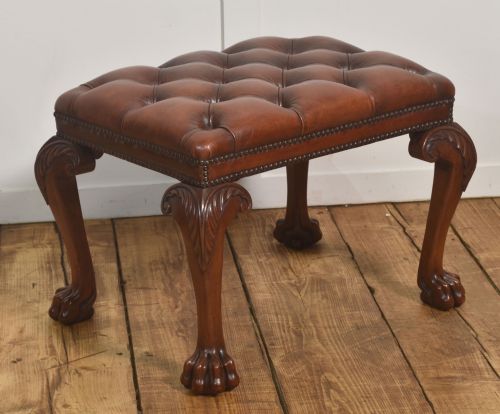
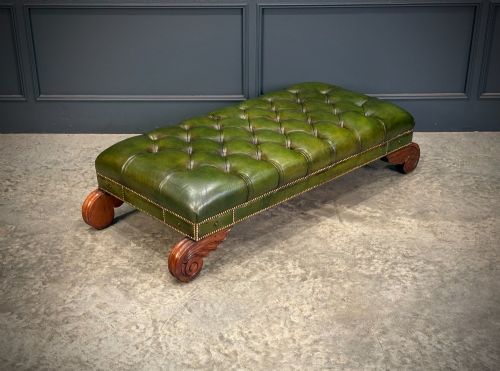
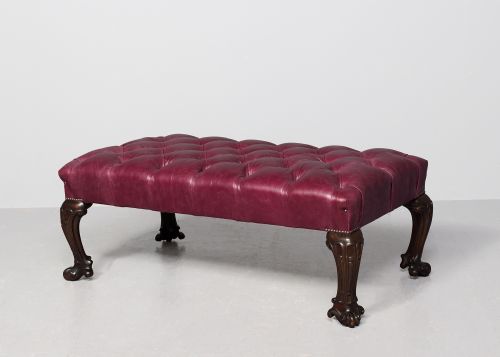
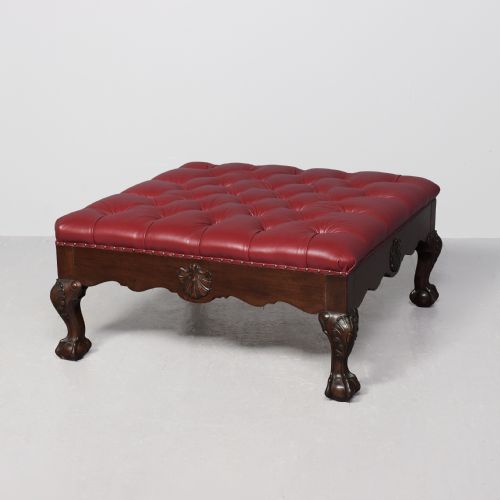
A mahogany leather stool brings tactile timber and hide together in forms that range from compact footrests to long benches.
Mahogany leather stool
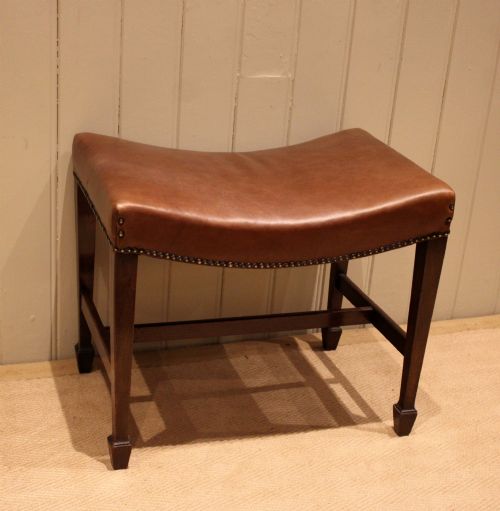
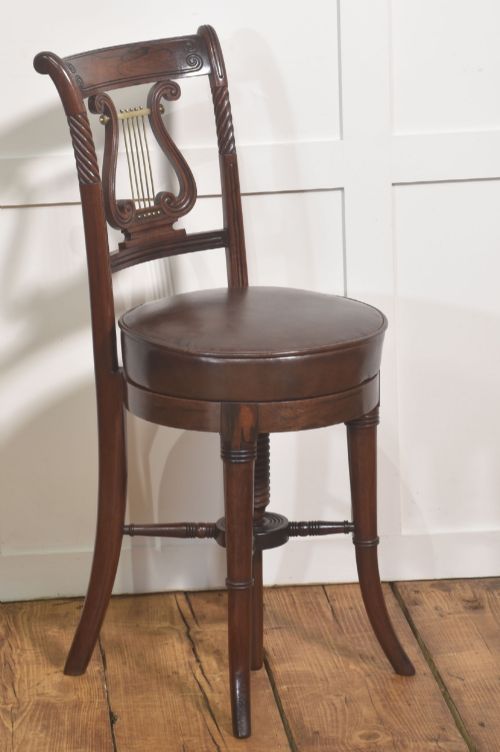
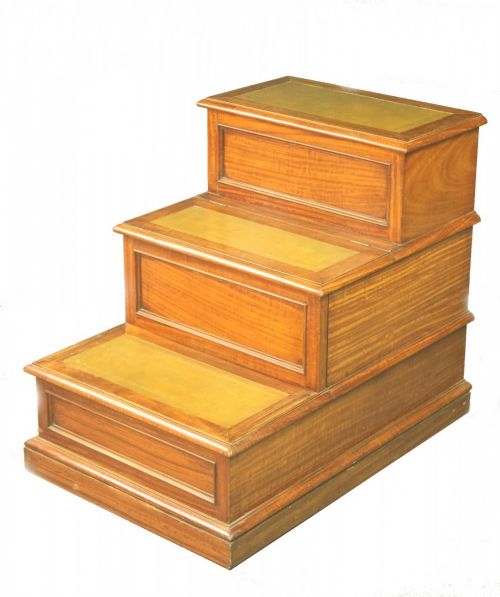
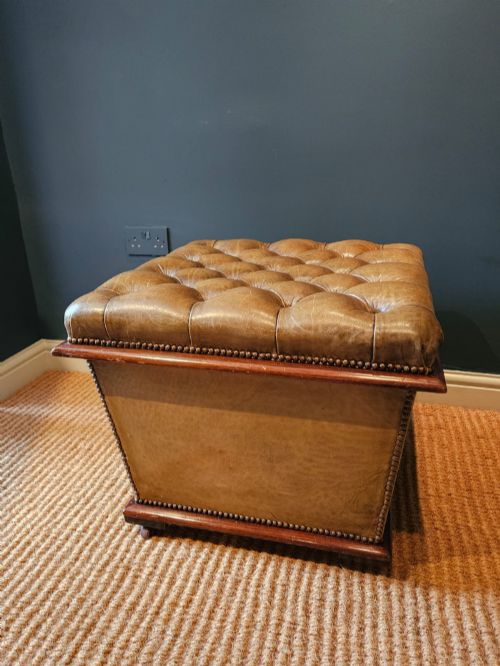
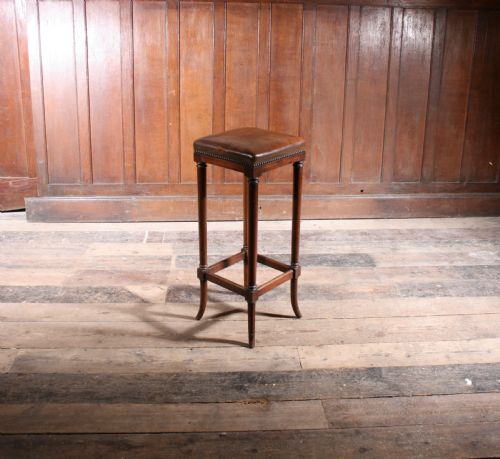
When you search for a mahogany leather stool, you encounter seating designed for multiple domestic uses, including footrests, piano seats, dressing table benches, and low ottomans. The examples seen across past and present listings span several distinct eras, notably the Georgian, Regency, William IV, and Victorian periods.
The most common formats on this page are square or rectangular footstools and low ottomans, often featuring upholstered tops in red, tan, or green leather. Makers from the eighteenth century onwards utilised these durable materials to create functional furniture that paired sturdy tropical hardwood with supple animal hide.
Materials and construction
The framework relies principally on solid mahogany, sometimes appearing as flame mahogany or combined with brass details. Craftsmen shaped the timber into cabriole, fluted, or sabre legs, supporting padded tops covered in leather.
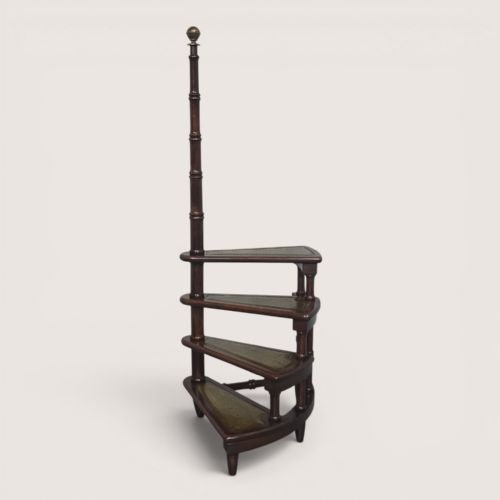
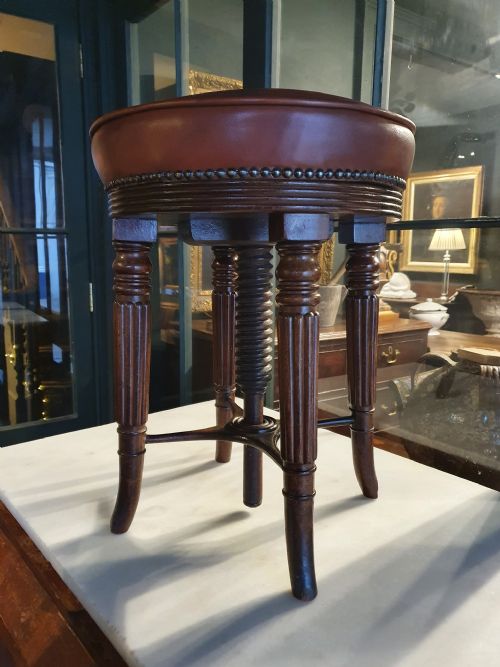
Upholstery methods included deep buttoning and plain leather surfaces fixed with brass tacks. Certain specialised forms incorporated mechanical elements for height adjustment or internal box storage.
Retail Price Guide 2026
Typical UK retail prices for mahogany leather stool, calculated from the Sellingantiques database of over a million retail prices indexed since 2003. This retail price guide relies exclusively on Sellingantiques data; no external sources or auction records are used, so the figures do not describe the wider market.
Some Victorian pieces double as hidden tidy boxes, proving that nineteenth-century clutter management was taken very seriously.
Assessing quality
Quality rests upon the crispness of the timber carving, such as elaborate Chippendale-style details or clean Regency lines, paired with the thickness and grain of the leather top. Superior examples demonstrate thoughtful proportions in the frame and solid joinery rather than purely decorative additions.
The integration of mechanical components, found in revolving music seats or metamorphic gout stools, also distinguishes finer pieces by showing precise engineering that maintains smooth movement over generations.
The Mahogany Leather Stool Glossary
- Cabriole leg
- A furniture leg that curves out and then tapers inward, mimicking an animal limb. This shape appears frequently on eighteenth and nineteenth-century seating.
- Metamorphic stool
- A piece of furniture designed to transform into another object, such as a gout stool with an adjustable incline. These items include hidden hinges or ratchets.
- Flame mahogany
- Timber cut from the fork of the mahogany tree to reveal a rippled, flame-like grain pattern. It was often selected for visible top surfaces.
- Ottoman
- A low, upholstered seat or bench without a back or arms, sometimes constructed with a hinged lid for internal storage. They frequently feature deep buttoned leather.
- Sabre leg
- A concave, outwardly curving leg of uniform or tapering section. This form is characteristic of Regency design.
Frequently Asked Questions
What were mahogany leather stools used for?
These pieces served varied domestic functions, acting as footrests, piano seats, dressing table benches, and low ottomans. Some specialised variants accommodated specific tasks like gout relief or music practice.
Their robust timber and wipe-clean leather surfaces suited heavy daily use in reception rooms, bedrooms, and parlours.
How do I identify a Regency mahogany stool?
Regency pieces often display classical restraint, featuring clean architectural lines, fluted legs, or sabre legs. The influence leans towards ancient Greek and Roman forms.
Timbers are typically rich dark mahogany, occasionally accented with brass mounts or simple linear turnings.
What is a metamorphic gout stool?
A metamorphic gout stool contains mechanical ratchets or hinges that allow the leather-topped surface to angle upward. This supported a foot or leg at a comfortable elevation.
Victorian makers produced several variations of these adjustable health-related furnishings.
How should I care for the leather?
Maintain the leather by keeping it away from direct heat sources and strong sunlight, which can dry and crack the hide. Regular dusting and occasional specialist conditioning will preserve the surface.
Avoid excessive moisture when cleaning the surrounding mahogany frame.