


Antique Foot Rest
When you search for an antique foot rest, you enter a world of Victorian fireside comfort, Regency mahogany frames, and tactile needlepoint textiles.
Antique Foot Rest
An antique foot rest serves as a low seat or support designed to elevate the feet during long hours of sitting by the hearth or in the drawing room. The selection spans compact carriage stools, adjustable gout stools for the alleviation of joint pain, and larger fender stools upholstered in original textiles.
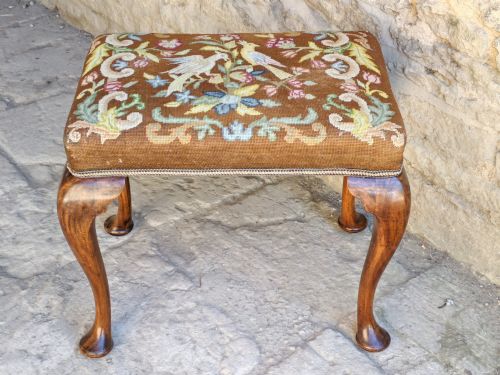
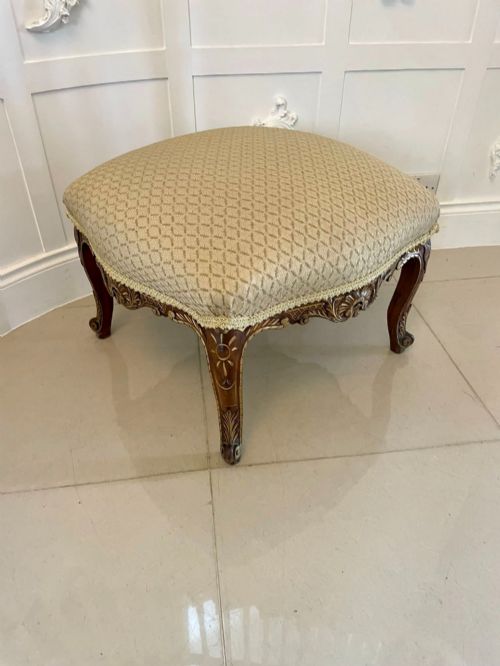
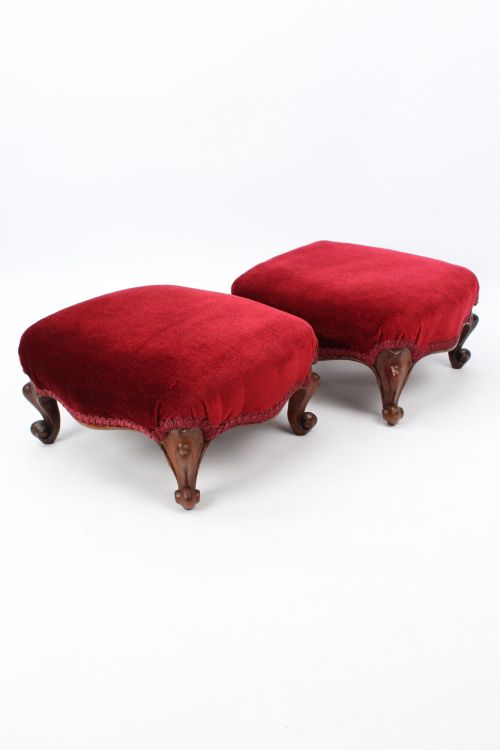
Most examples encountered here originate from the nineteenth century, reflecting Victorian and Regency domestic habits. Common forms range from simple mahogany or walnut frames with needlepoint and beadwork tops to more ornate carved giltwood and Rococo Revival designs.
Materials and construction
Makers utilised dense cabinet timbers such as mahogany, walnut, oak, and beech to build sturdy frames that could withstand daily pressure. These woods often received careful carving, turning, or ebonising to match the prevailing interior tastes of the Georgian, William IV, and Victorian periods.
Upholstery involved durable textiles including wool tapestry, needlepoint, beadwork, leather, and damask, frequently stuffed over webbing or padding. Brass elements, such as adjustable ratchets on gout stools or decorative feet, added mechanical utility and visual contrast.
Listings feature woods like mahogany and walnut paired with needlepoint, velvet, and brass.
Judging quality and craftsmanship
Superior quality manifests in the crispness of timber carving, the structural joinery of the frame, and the survival of period-correct upholstery materials like hand-stitched needlepoint or beadwork. Pieces retaining original mechanisms, such as adjustable footrests, demonstrate higher design ambition.
Finer examples display careful timber selection, such as figured walnut or rich mahogany, paired with balanced proportions. Lesser pieces may feature replacement upholstery or simpler secondary woods without the distinct hand-carved detailing found on better workshop productions.
Mathew Gregson·Harrods
The Antique Foot Rest Glossary
- Gout stool
- An adjustable foot rest designed to elevate and support the foot or leg of a person suffering from joint discomfort. These often feature mechanical ratchets to alter the angle.
- Needlepoint
- A type of canvas work embroidery utilised extensively for covering the top surfaces of nineteenth century stools. It provides a durable and decorative finish.
- Fender stool
- A long, low stool designed to sit neatly in front of a hearth fender. They protect the feet from cold stone floors near the fireplace.
- Regency
- A style period spanning the early nineteenth century characterised by classical motifs, scroll ends, and sabre legs. Furniture from this era often draws inspiration from ancient Greek and Roman designs.
- Beadwork
- A decorative textile technique incorporating small glass beads stitched onto canvas. This method creates textured, light-catching patterns popular on Victorian footstools.
Antique Foot Rest: Frequently Asked Questions
What is the difference between a gout stool and a standard footstool?
A standard footstool provides a simple, fixed platform for elevating feet during relaxation by the fireside. A gout stool incorporates an adjustable mechanism to change the angle of elevation for therapeutic support.
Historically, gout stools served those needing specific leg elevation for health reasons. Their movable wooden ratchets set them apart from conventional upholstered foot rests.
How do I identify a Regency foot rest?
Regency foot rests typically feature classical proportions, dark mahogany timbers, and characteristic supports like sabre legs or scroll tops. They reflect early nineteenth century design preferences.
Unlike later Victorian pieces which often embraced heavy carving or eclectic revivals, Regency examples lean toward clean architectural lines and restraint.
Are original needlepoint covers common?
Many nineteenth century foot rests retain their period needlepoint, wool tapestry, or beadwork covers, showing the domestic handiwork of the era. These textiles display distinct patination and wear consistent with age.
When needlepoint survives intact, it adds significant character to the piece. However, many frames received reupholstery over the decades to match changing interior decorations.
Where were these stools placed in a home?
These pieces found places beside drawing room armchairs, in front of hearths, or within carriages for travel comfort. Smaller carriage stools accommodated confined spaces easily.
Larger fender stools stretched horizontally along the fireplace surround. Dressing rooms also utilised low stools for seating while attending to attire.