
Low Upholstered Stool
These low upholstered stool designs combine comfortable seating with compact proportions, offering practical foot rests and dressing seats for period interiors.
Identifying a low upholstered stool
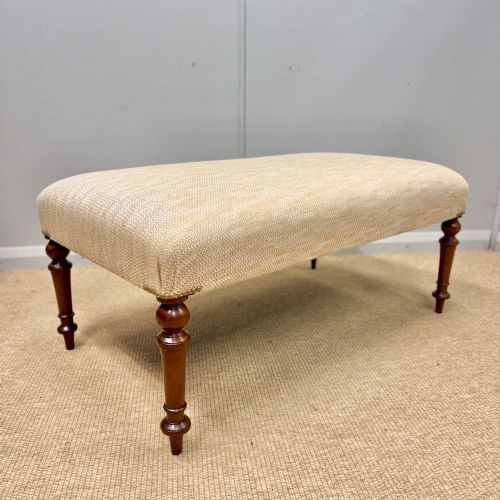
A low upholstered stool provides a compact seat or foot rest, often designed for use beside a dressing table or in front of an armchair. When you search for a low upholstered stool, you encounter pieces intended to sit low to the floor, serving functional roles in period rooms.
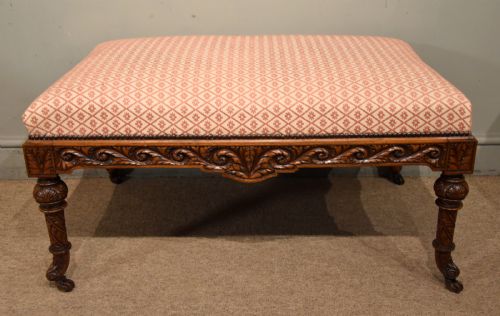
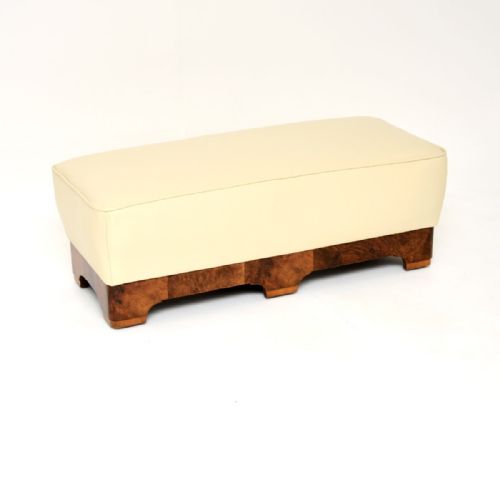
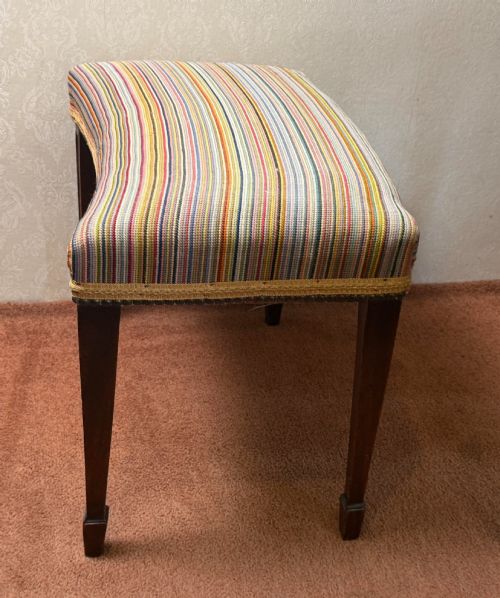
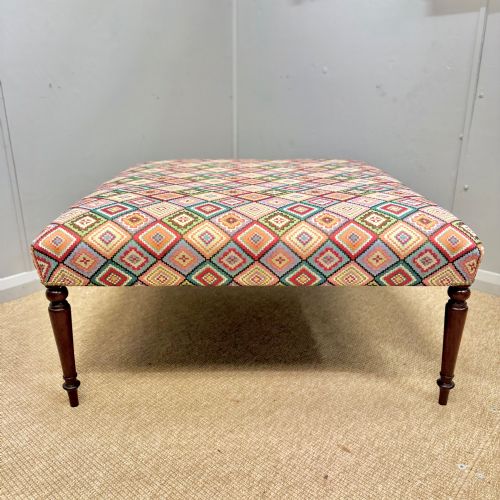
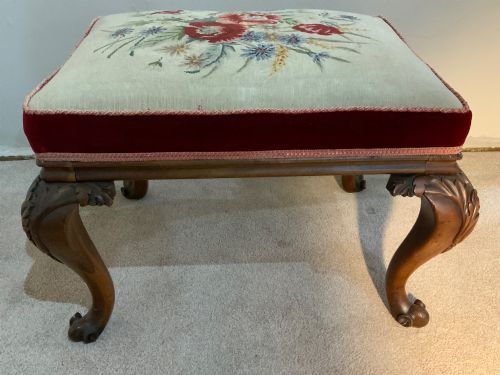
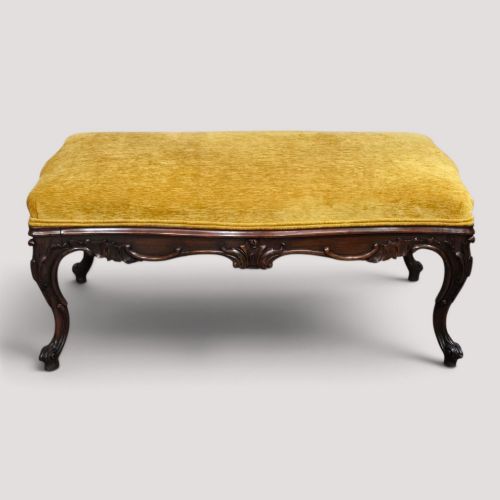
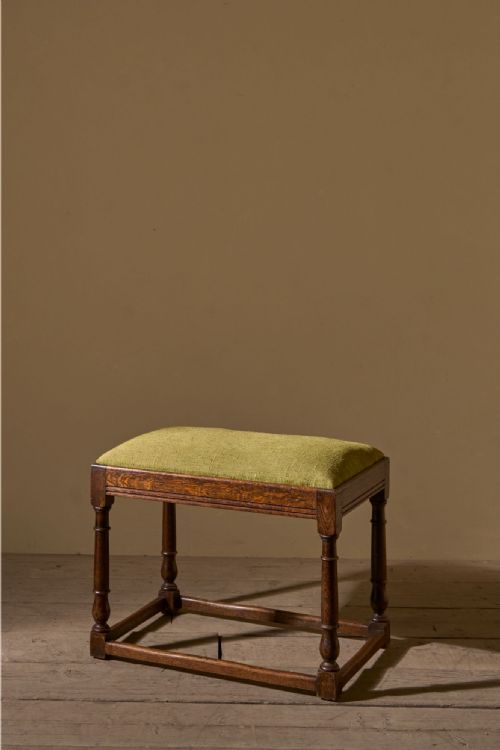
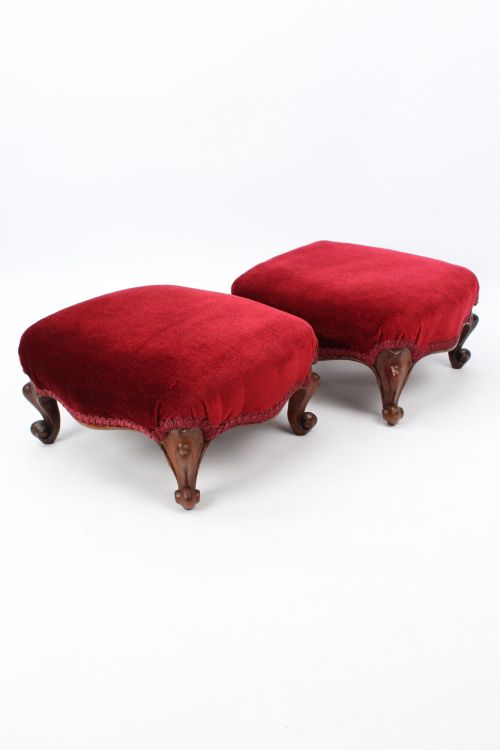
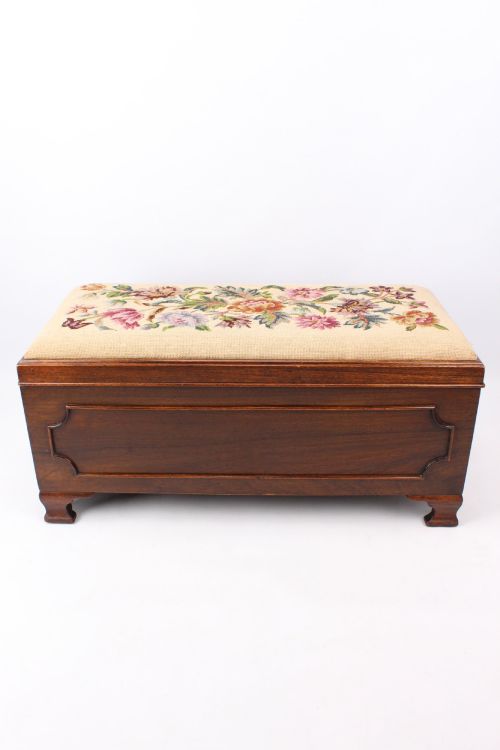
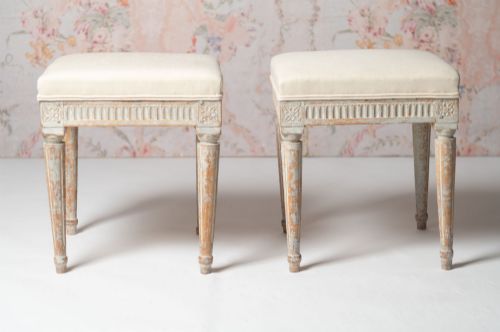
The selection includes dressing stools, footstools, and small benches spanning the nineteenth century through to nineteen thirty. Common forms feature square, rectangular, or concave shapes, occasionally incorporating storage or stretchers beneath the seat.
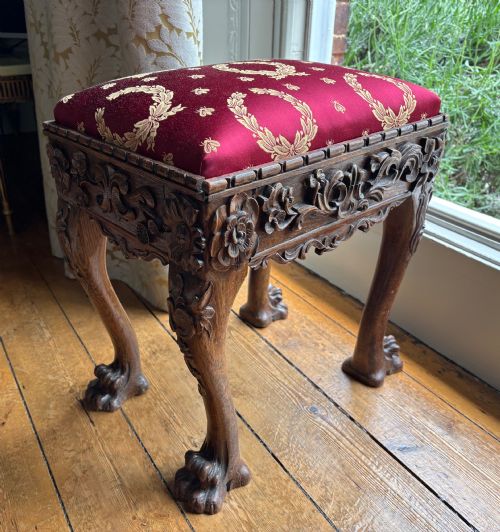
Victorian examples dominate the selection, alongside Georgian Revival pieces and Anglo-Indian hardwood variations. Woods such as mahogany, rosewood, walnut, and oak form the structural frames beneath varied textile coverings.
Construction and materials
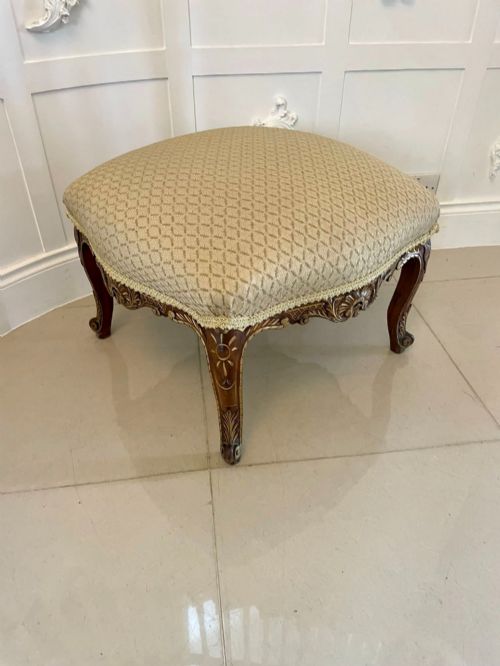
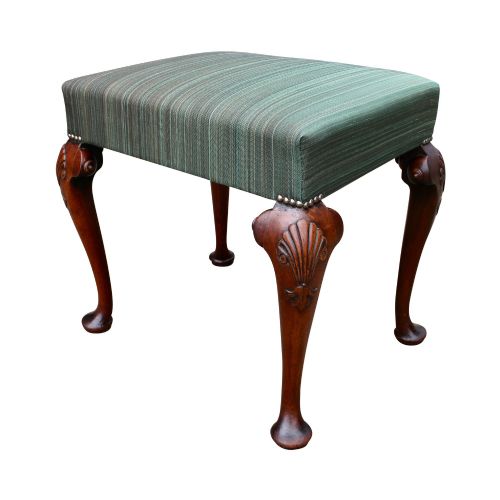
Frames rely on traditional timbers including mahogany, rosewood, walnut, and oak, shaped into cabriole or straight legs. Joinery methods secure the low wooden bases, supporting padded seats designed for regular use.
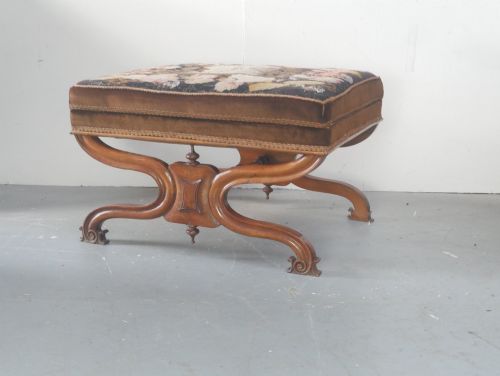
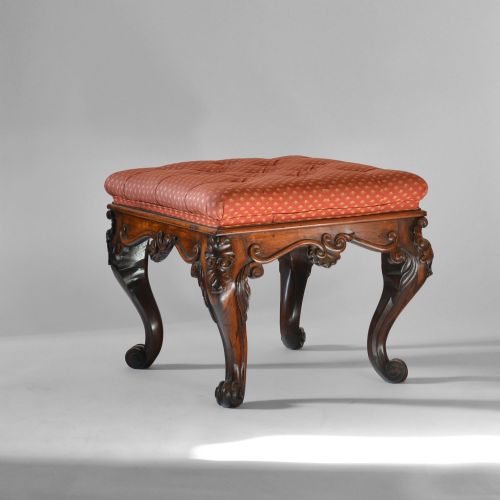
Upholstery materials range from historical tapestry and wool to velvet and contemporary fabric or tartan plaid. Buttoning techniques and decorative details like the fleur-de-lis often finish the padded top surfaces.
Retail Price Guide 2026
Typical UK retail prices for low upholstered stool, calculated from the Sellingantiques database of over a million retail prices indexed since 2003. This retail price guide relies exclusively on Sellingantiques data; no external sources or auction records are used, so the figures do not describe the wider market.
Several stools double as hidden treasure chests, concealing clutter inside nineteenth-century ottoman trunk boxes.
Judging quality in low upholstered stools
The distinction between standard and superior pieces rests on the choice of timber and the finesse of the frame carving. Dense hardwoods like rosewood and walnut, paired with refined leg profiles such as cabriole designs, elevate the visual weight of a piece.
Upholstery execution also defines the standard, distinguishing basic recovered items from pieces retaining or replicating traditional buttoning and period textile selections.
The Low Upholstered Stool Glossary
- Cabriole leg
- A furniture leg that curves outward at the knee and tapers inward at the ankle, ending in a pad or foot. This stylistic form appears frequently on Victorian seating.
- Cross stretcher
- A structural support system forming an X shape between the legs of a stool or table. It adds stability to the lower frame.
- Gout stool
- A specialised footstool featuring an adjustable incline designed to elevate and rest a foot affected by gout. These appear in nineteenth-century contexts.
- Ottoman box stool
- A low seat incorporating a hinged lid and internal storage space within the trunk body. This dual function provides practical utility.
- Tapestry
- A heavy textile featuring woven designs often utilised for historical upholstery. It offers a decorative, textured surface on period footstools.
Frequently Asked Questions
Where were low upholstered stools used in the home?
These stools served primarily as dressing table seats or as foot rests placed before armchairs and firesides. Their modest height made them versatile additions to nineteenth-century parlours and bedrooms.
In larger rooms, long benches and ottoman box stools also provided supplementary seating or discreet storage for household items.
How do I date a Victorian footstool?
Dating relies on identifying timber choices, frame styles, and upholstery techniques associated with the nineteenth century. Rosewood and walnut often signal earlier Victorian or mid-century cabinet-making.
Secondary indicators include foot shapes like cabriole legs or turned supports, alongside any surviving original underpinnings and textile remnants.
What is the difference between a footstool and a dressing stool?
Footstools are generally smaller and designed specifically to support feet while seated in a larger chair. They sit very close to the floor for maximum rest.
Dressing stools stand slightly taller to accommodate sitting upright before a dressing table mirror, often featuring decorative frames and supportive stretchers.
Are these stools suitable for modern interiors?
Their compact dimensions allow low upholstered stools to fit easily into contemporary living spaces as flexible accent pieces. They function well as impromptu seats or decorative foot rests.
Many pieces feature updated fabric coverings like tartan plaid, bridging historical frames with modern interior design schemes.