
Upholstered Footstool
An upholstered footstool brings low seating comfort to a room, pairing solid timber frames with tactile textile tops.
What an upholstered footstool is
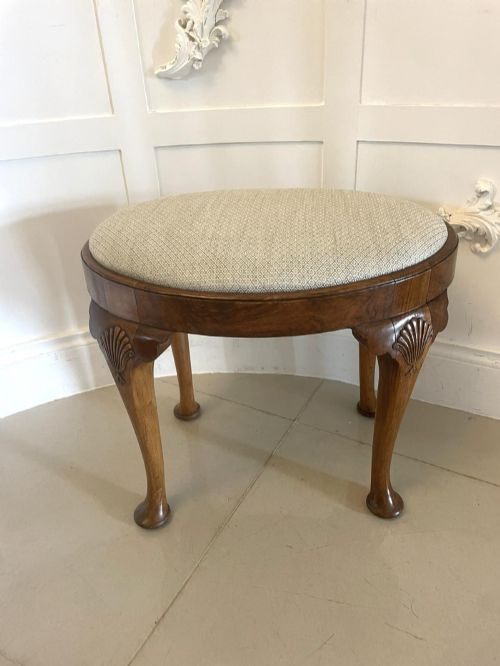
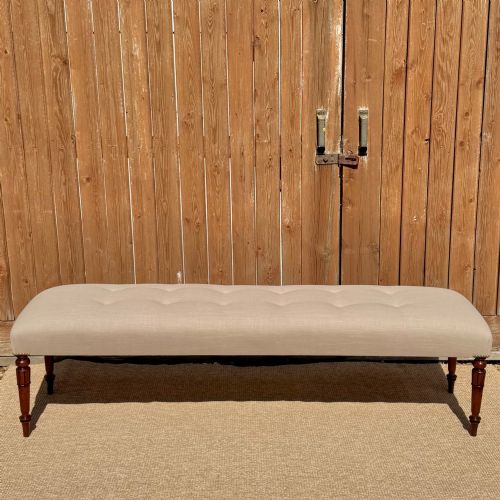
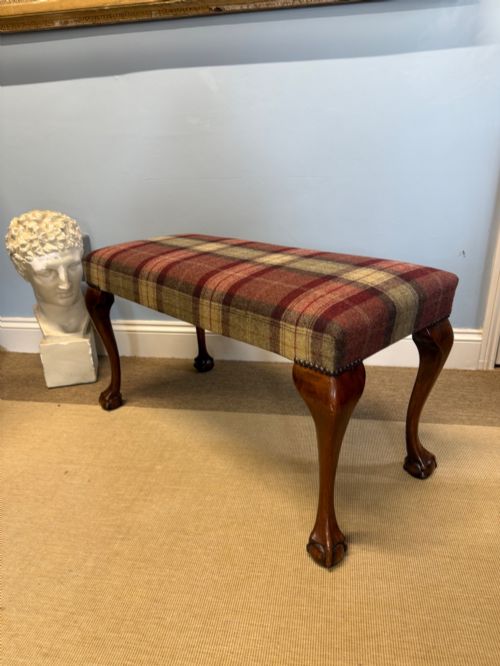
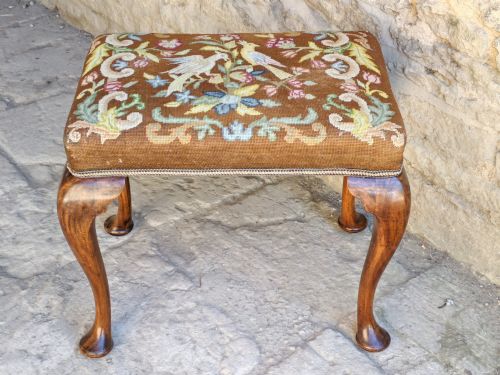
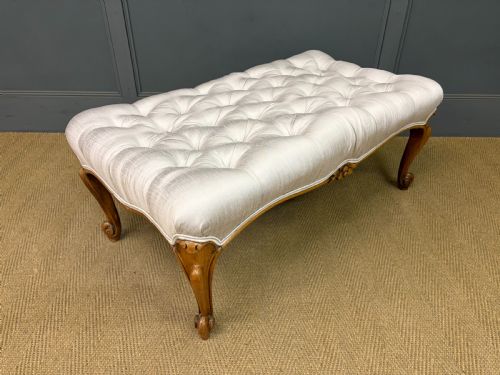
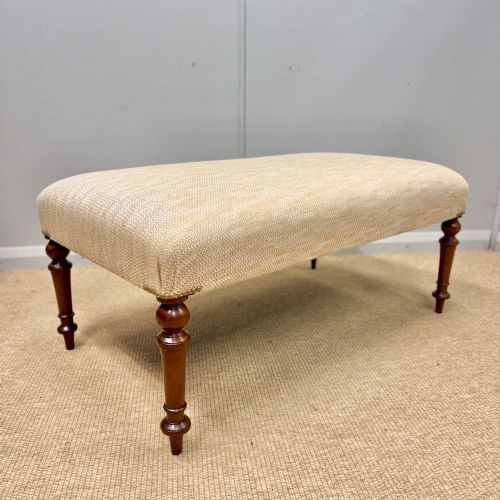
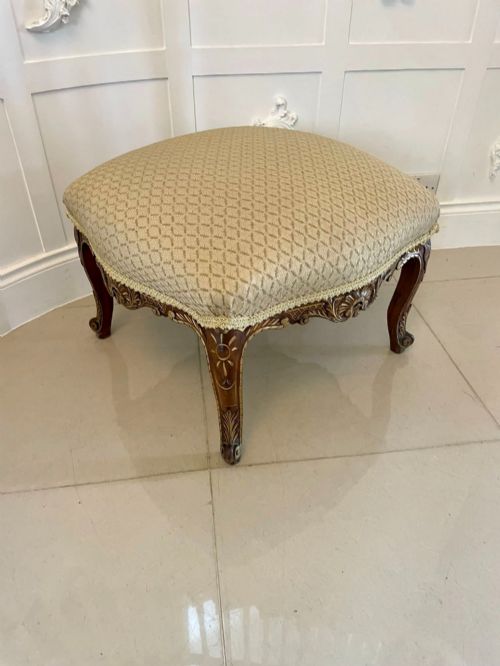
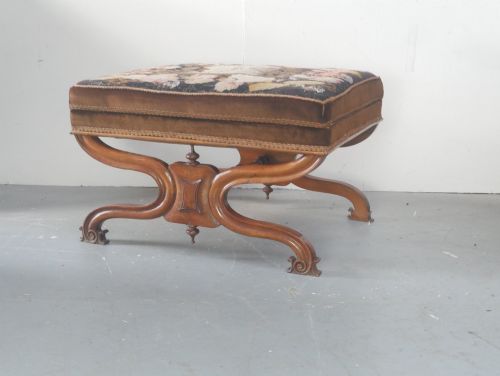
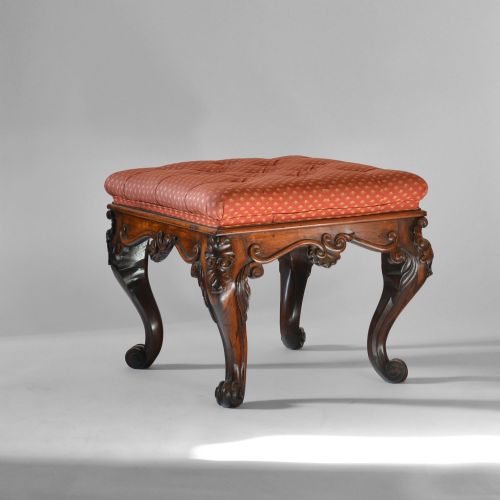
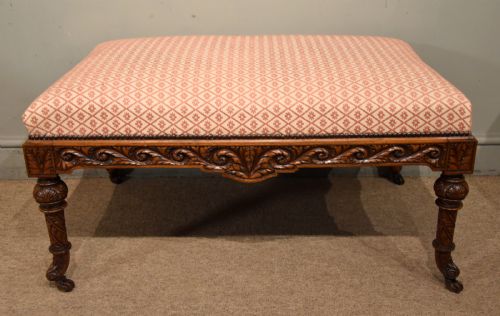
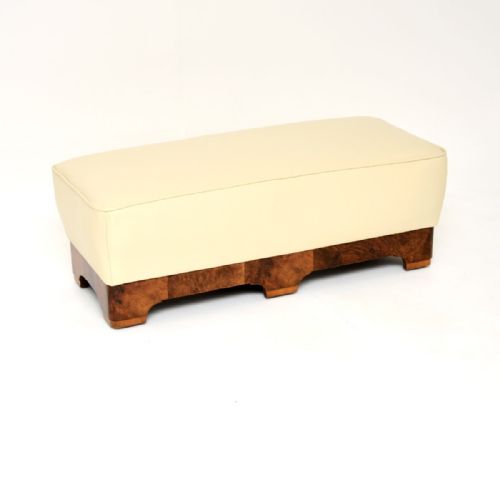
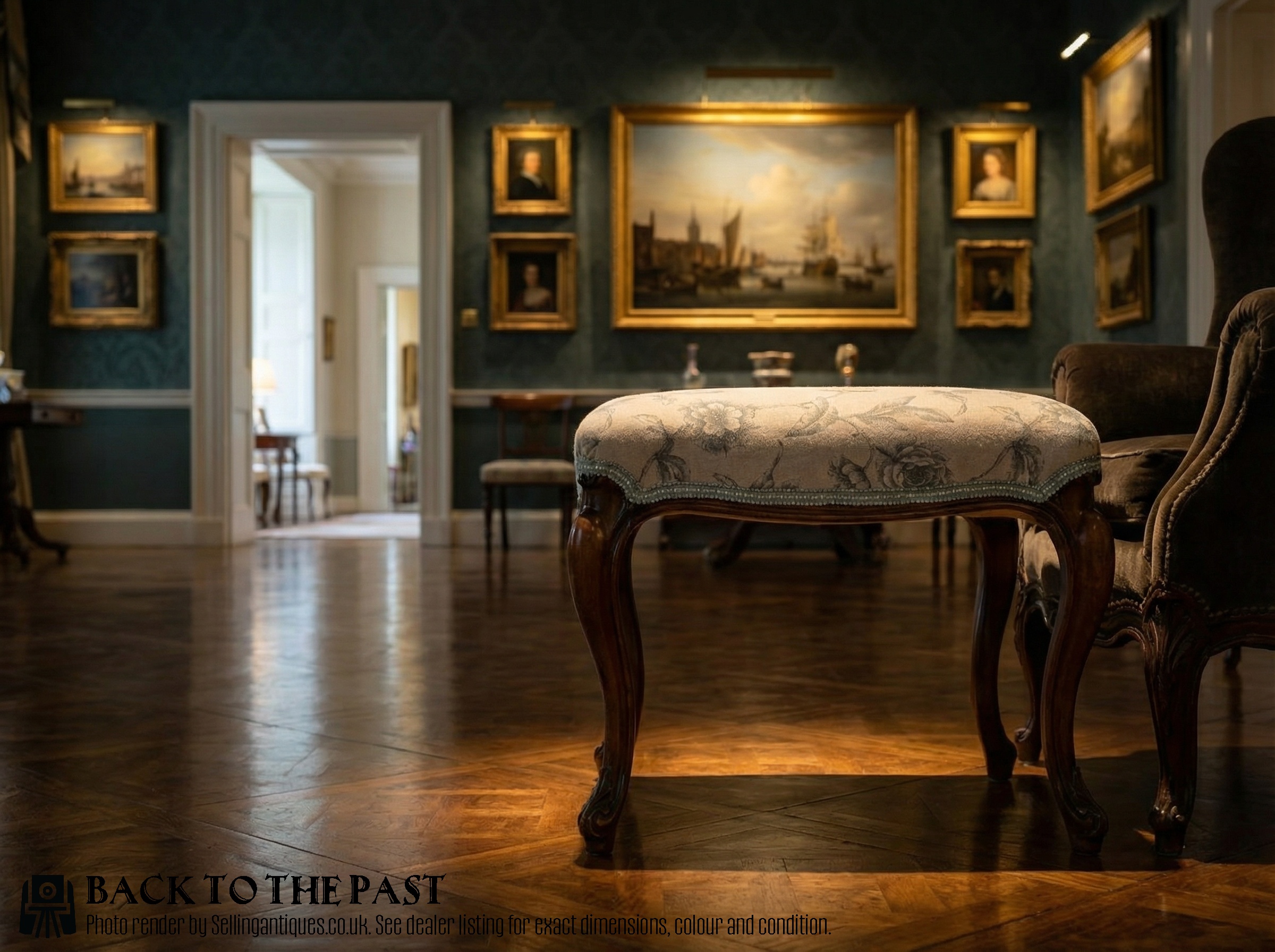
An upholstered footstool combines a wooden base with a soft padded top designed for resting feet or sitting near the hearth. Pieces matching this phrase span the nineteenth century, Regency era, and later interpretations styled after earlier centuries.
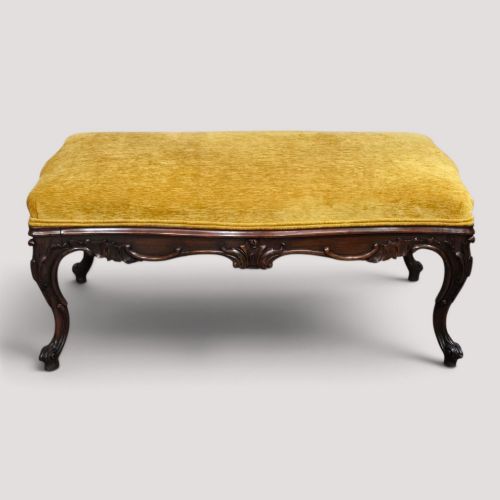
The timber frames appear primarily in mahogany, walnut, rosewood, and oak. Surviving examples range from compact dressing table stools to long fireside window seats and large square ottomans.
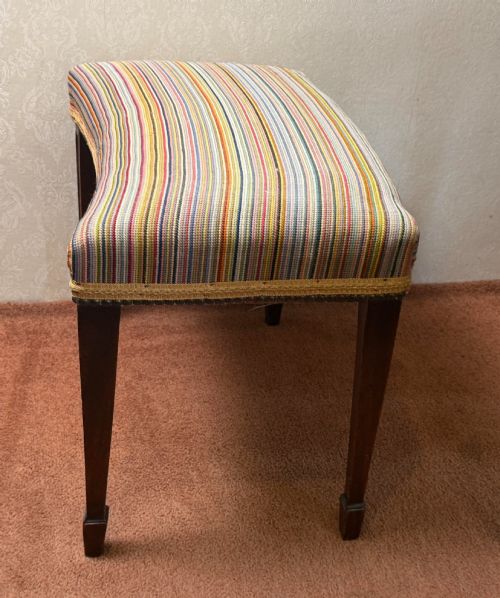
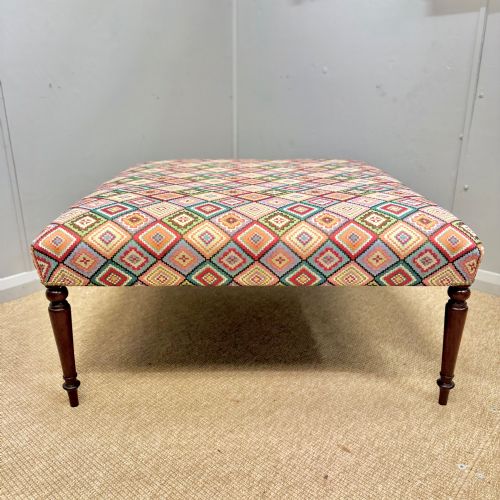
Many historical frames now wear fresh covers in velvet, wool, ticking stripe, and geometric patterns. These modern textiles refresh traditional forms while retaining the antique or period timber structures underneath.
How they were made
Cabinetmakers constructed the supportive frames using dense hardwoods like mahogany, walnut, rosewood, and oak. These frames feature turned, tapered, or barley twist legs, occasionally raised on brass castors.
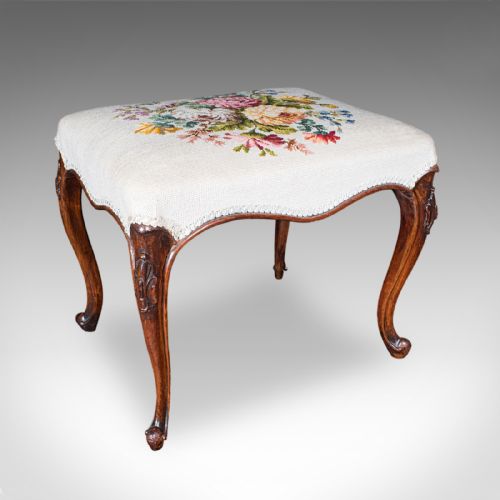
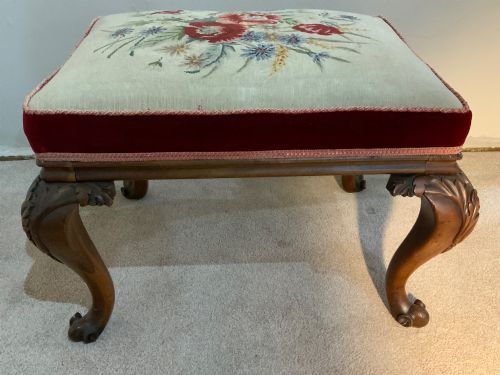
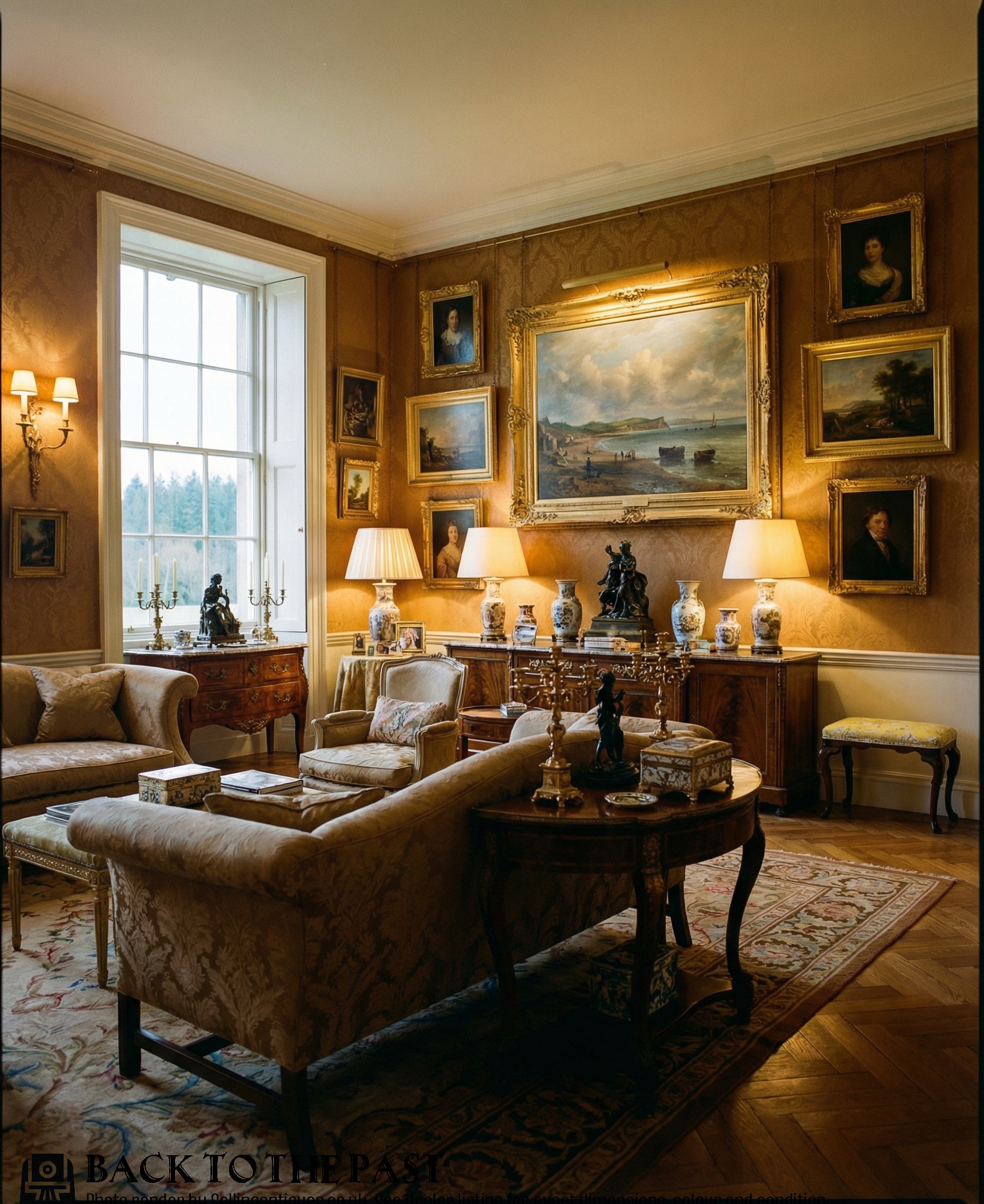
Traditional upholstery techniques layer padding over a secure base, finished with materials such as leather, tapestry, braid, velvet, and patterned textiles. Buttoning and decorative borders often secure the edges of the padded top.
Retail Price Guide 2026
Typical UK retail prices for upholstered footstool, calculated from the Sellingantiques database of over a million retail prices indexed since 2003. This retail price guide relies exclusively on Sellingantiques data; no external sources or auction records are used, so the figures do not describe the wider market.
Listings feature eighteenth century style, Regency, Victorian, and Arts and Crafts periods, constructed from mahogany, walnut, rosewood, and oak.
What varies in quality
The distinction between standard utility seating and finer examples rests in the timber selection and the execution of the frame carving. Richly figured rosewood or walnut and carefully turned legs indicate higher craftsmanship.
Proportion and scale also define the tier of a piece, from simple dressing table stools to large, substantial frames fitted with castors and detailed joinery.
The Upholstered Footstool Glossary
- Regency
- A style period spanning the early nineteenth century known for classical restraint and elegant, clean timber lines. Pieces from this era often feature distinctive turned legs.
- Rosewood
- A heavy, highly figured exotic timber prized for rich dark grain patterns. It appears frequently on finer nineteenth century pieces.
- Barley twist
- A type of turned wooden leg carved in a spiral rope pattern. This detail adds decorative movement to the frame.
- Castor
- A small wheel fitted to the base of furniture legs for ease of movement. Many larger footstools incorporate brass versions.
Frequently Asked Questions
How were these stools originally used?
These pieces served multiple domestic purposes, acting as foot rests near firesides, dressing table seats, or low resting places in withdrawing rooms.
Longer versions functioned as window seats, while sturdy square frames offered movable seating close to hearths.
What woods appear in these frames?
Makers relied on durable hardwoods suited to structural load and decorative carving. Mahogany and walnut dominate the surviving record.
Rosewood and oak also appear, providing deeper colouration and distinct grain textures across different nineteenth century pieces.
How do I identify a Regency footstool?
Regency examples typically display specific classical proportions, clean architectural lines, and characteristic turned or tapered supports.
Many incorporate fine timbers such as rosewood and sit on small castors designed for mobility.
Why do some stools have new upholstery?
Historical fabric degrades through centuries of use, requiring new textile applications to preserve the structural frame for modern settings.
Upholstery updates utilise varied materials like velvet, ticking, and tartan while keeping the antique timber intact.