
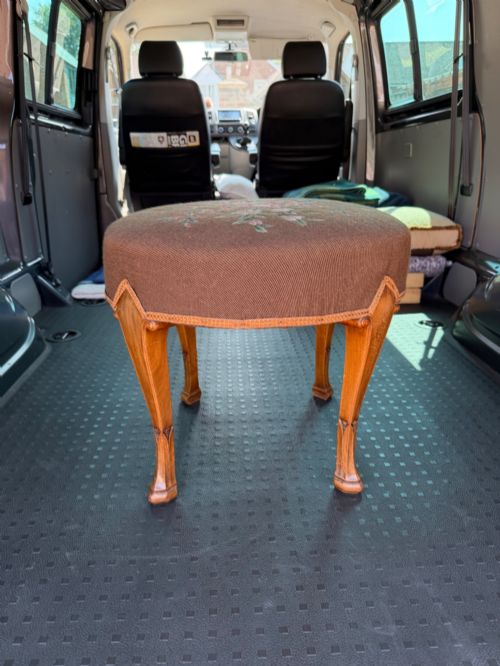
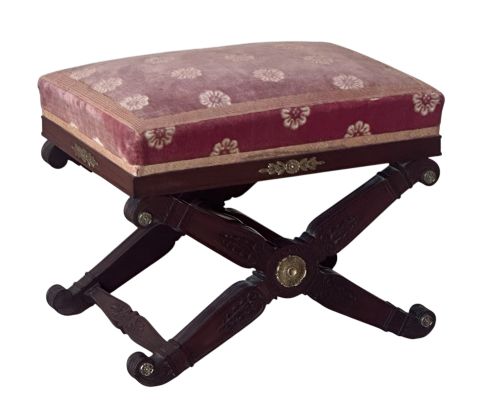
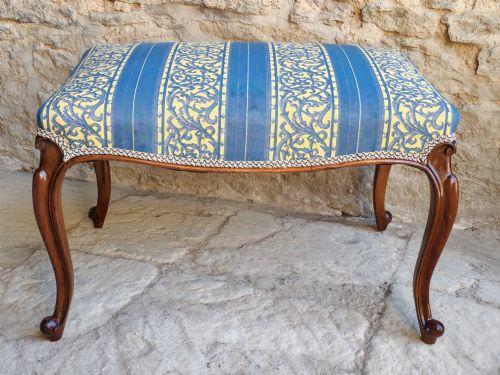
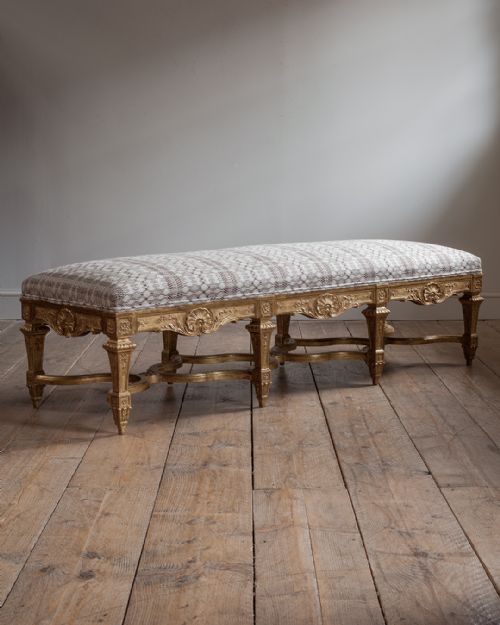

French Style Stool
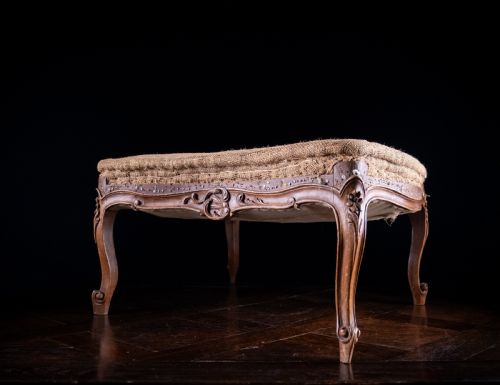
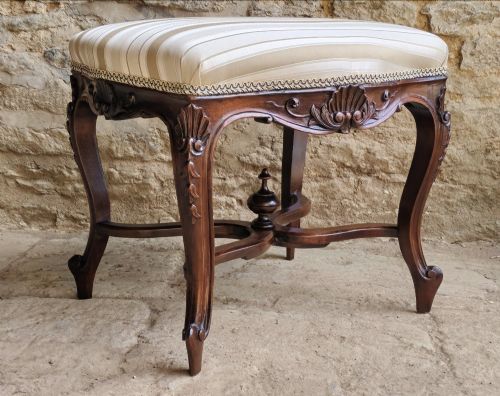
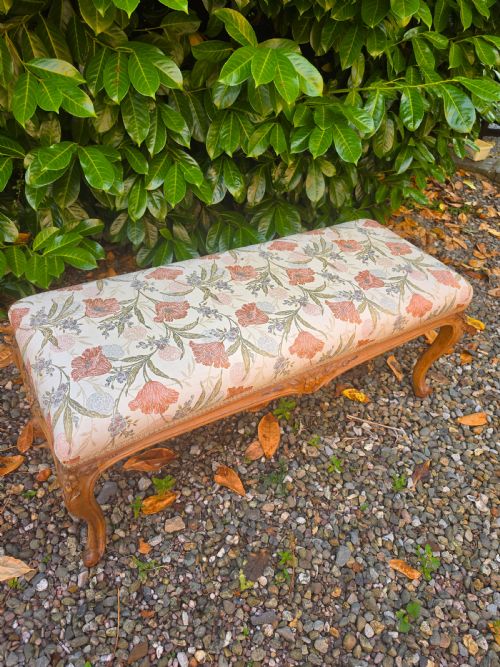
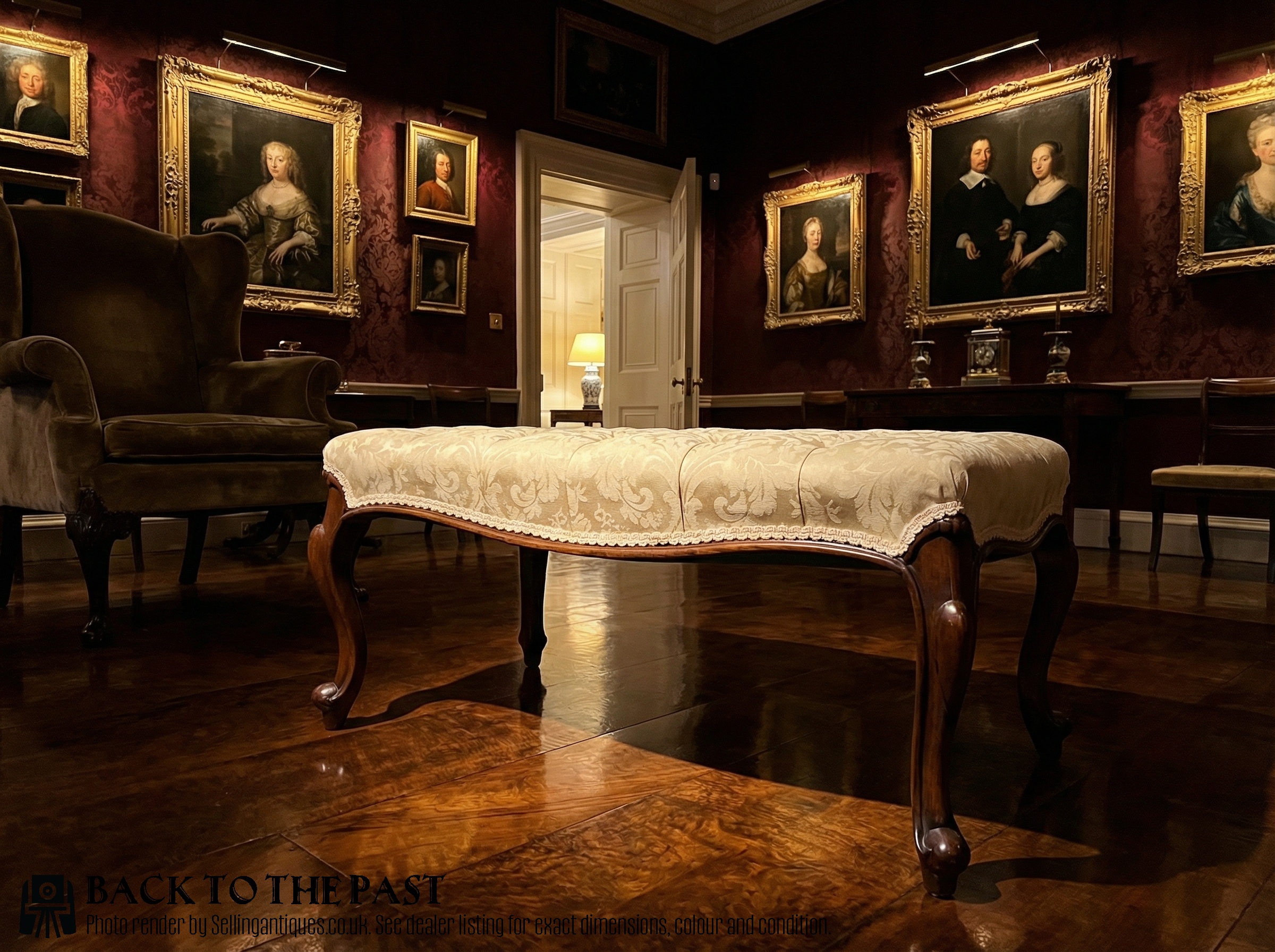
These french style stool examples bring continental elegance to interiors through carved wood and plush upholstery.
What a french style stool is
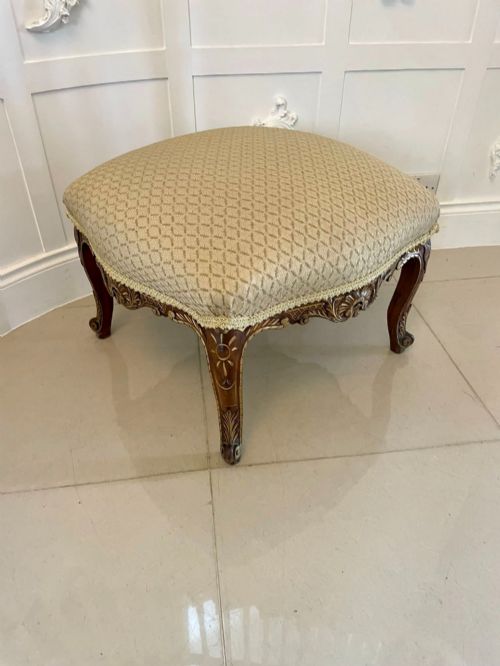
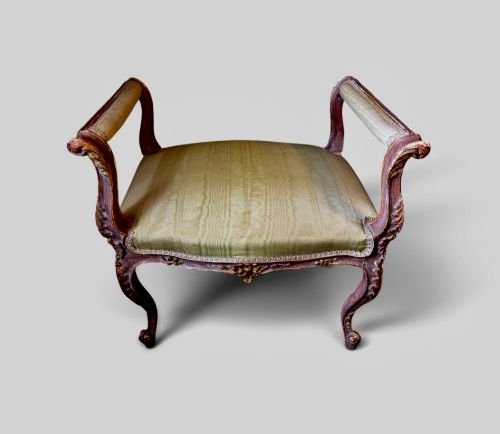
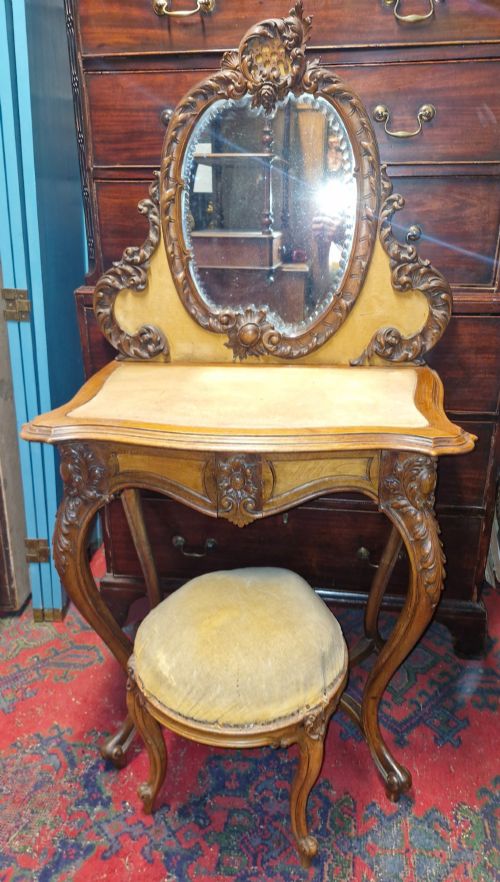
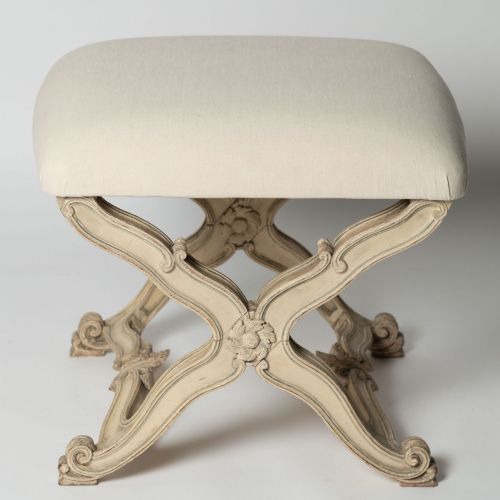
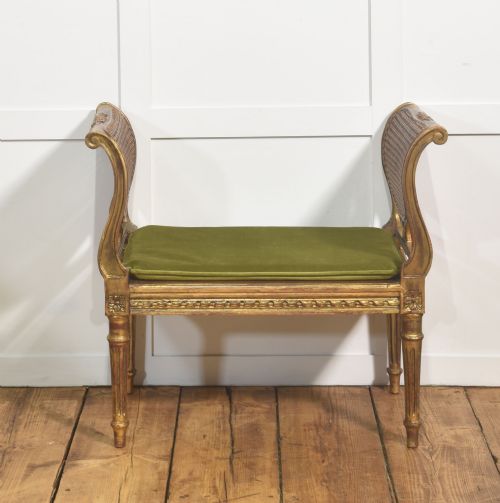
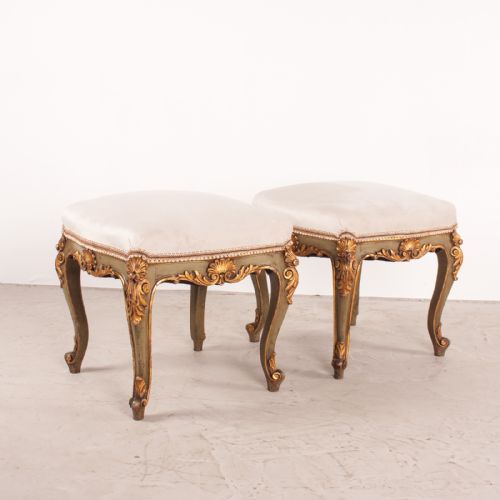
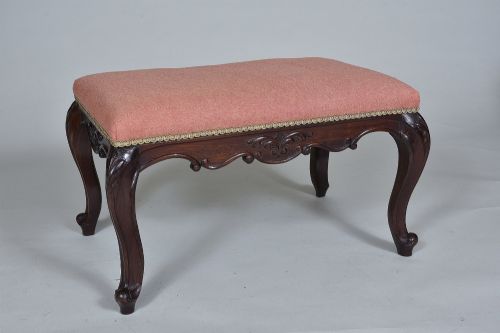
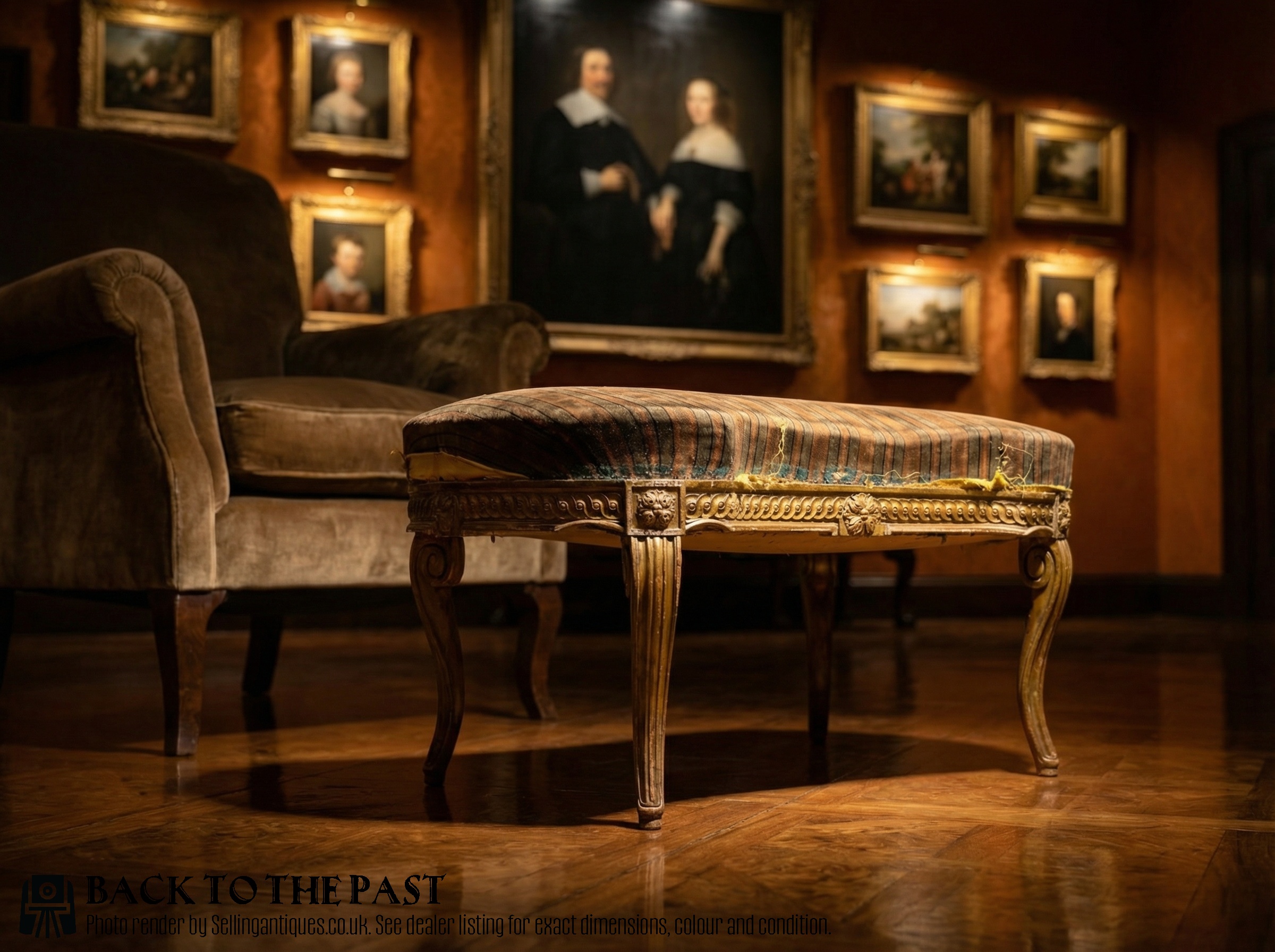
A french style stool takes many forms, including footstools, dressing stools, duet window seats, and large ottomans designed for domestic comfort.
Most pieces seen here date from the nineteenth century, drawing inspiration from earlier periods such as Louis XV, Louis XVI, and Rococo or Carolean revivals.
Makers adapted classic continental seating shapes into walnut, mahogany, beech, and giltwood frames, pairing them with original fabric, tapestry, cane, or modern upholstery.
Materials and construction methods
Frames rely on solid hardwoods like walnut, mahogany, and beech, alongside carved and gilded wood known as giltwood.
Joinery supports cabriole legs and shaped rails, while surface finishes include painted treatments, polished timber, and intricate wood carving.
Seating surfaces utilise textiles, tapestry, fabric, and woven cane, supported by traditional padding and upholstery methods.
Retail Price Guide 2026
Typical UK retail prices for french style stool, calculated from the Sellingantiques database of over a million retail prices indexed since 2003. This retail price guide relies exclusively on Sellingantiques data; no external sources or auction records are used, so the figures do not describe the wider market.
Periods represented span the nineteenth century, encompassing Victorian interpretations and revivals of Louis styles.
Distinctions in quality
Quality rests in the crispness of the wood carving, the choice of primary timber such as figured walnut or mahogany, and the structural integrity of the frame.
Superior examples display balanced proportions, refined cabriole legs, and retention of original decorative elements like gilding, paint, or period upholstery fabric.
The French Style Stool Glossary
- Cabriole leg
- A furniture leg that curves outward and then tapers inward, mimicking an animal's curving leg. This form is common on eighteenth-century revival seating.
- Giltwood
- Wood that has been treated with gold leaf or a gold-coloured finish. It provides a bright, decorative surface on formal nineteenth-century frames.
- Duchesse brisee
- A two- or three-part chaise longue consisting of an armchair and a matching stool or footstool. They combine to form an extended resting place.
- Tapestry
- A form of textile art woven on a loom, frequently used as heavy decorative upholstery on antique French seating.
Frequently Asked Questions
What periods do these stools date from?
The pieces span the nineteenth century, with specific examples appearing from around eighteen-sixty, eighteen-eighty, and eighteen-ninety, alongside later twentieth-century interpretations.
They draw heavily on seventeenth and eighteenth-century continental aesthetics, notably the reigns of Louis XIV, Louis XV, and Louis XVI.
How were these stools used historically?
Owners used smaller footstools for resting feet beside armchairs, while larger duet and window stools served dressing rooms and music rooms.
Duchesse brisee components provided extended lounging support in formal salons and private chambers.
How do I care for antique upholstery?
Preserving delicate textiles and original tapestries requires gentle vacuuming with a soft brush attachment and protection from direct sunlight.
Where frames feature giltwood or painted surfaces, avoid harsh chemical cleaners to protect the original finish.
Can these stools sit in modern rooms?
Their compact scale allows them to function easily as spare seating, dressing table seats, or decorative footrests in contemporary spaces.
They mix well with diverse interior schemes by introducing carved timber textures and soft fabric tones.