



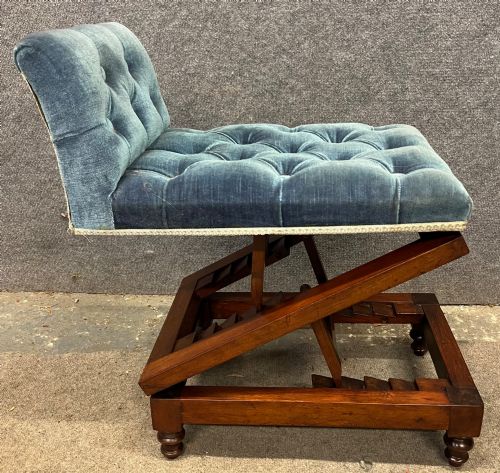
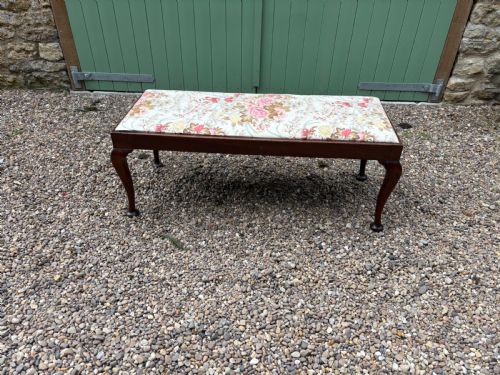
Mahogany Upholstered Stool
A mahogany upholstered stool brings solid timber frames and soft textile seats together, offering versatile seating spanning the eighteenth century to the Edwardian era.
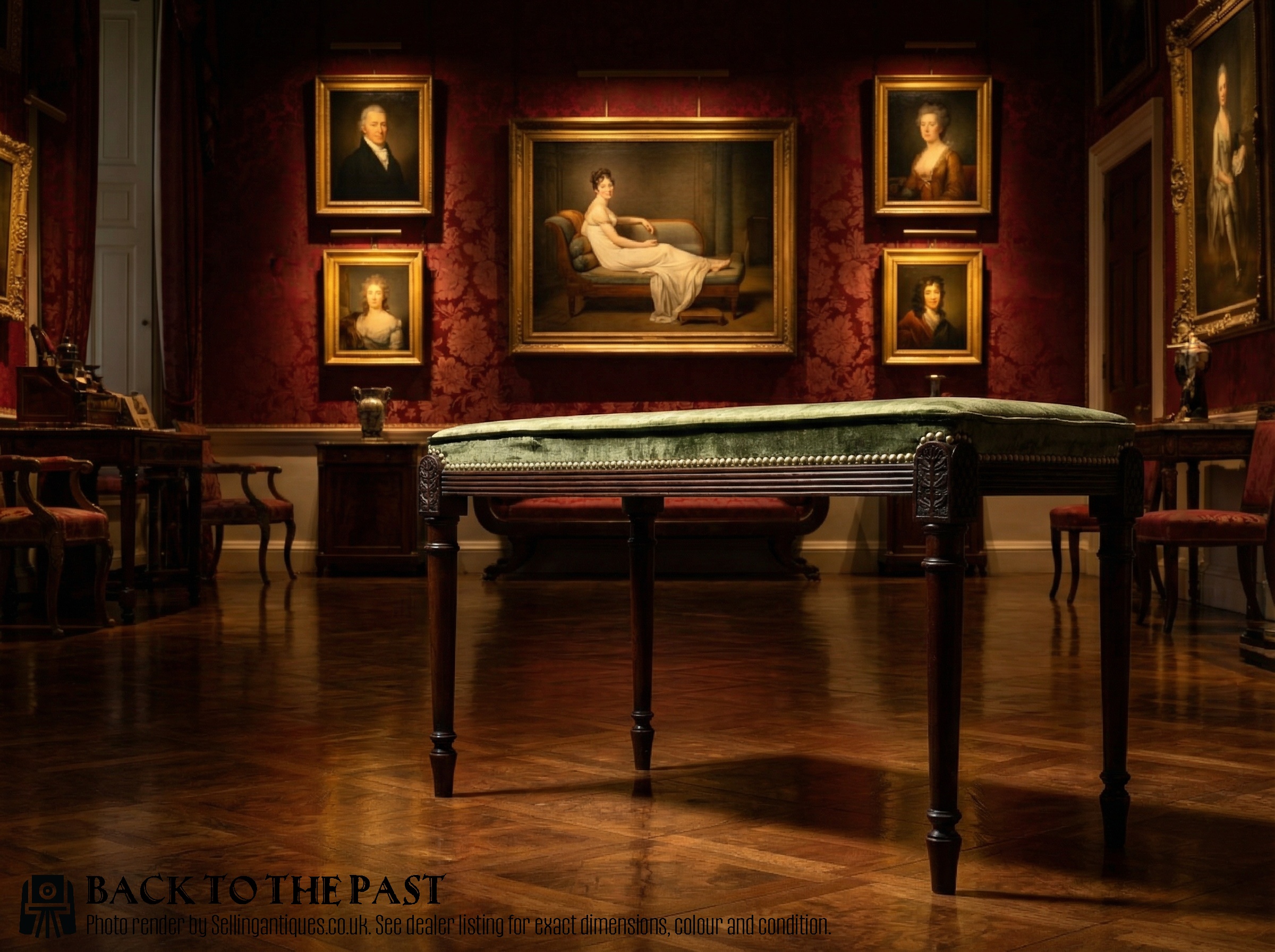
Mahogany Upholstered Stool
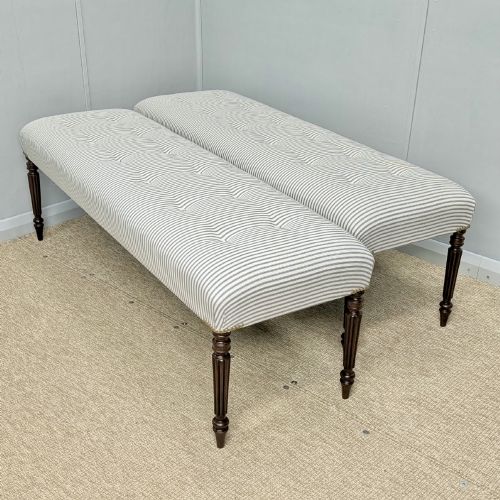
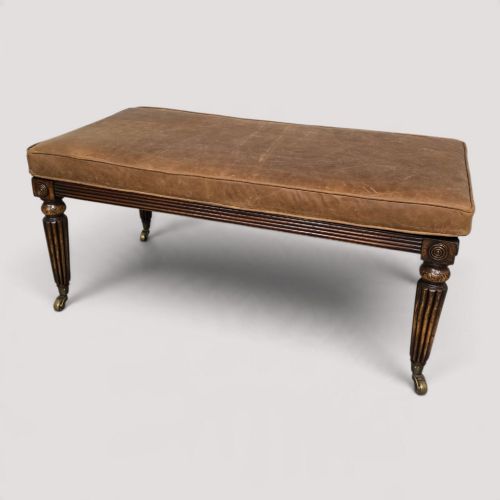
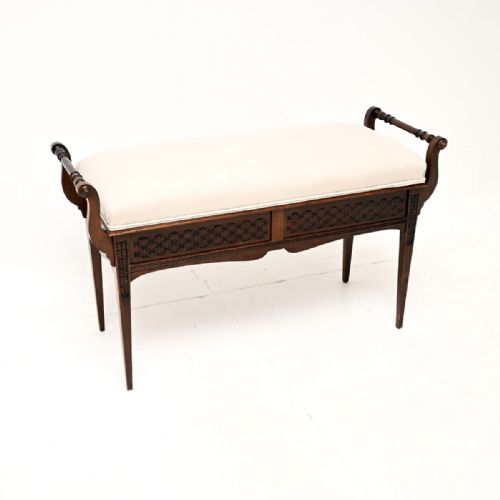
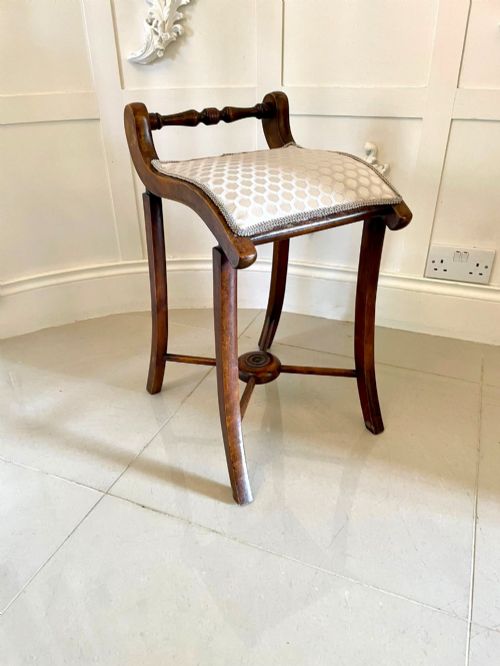
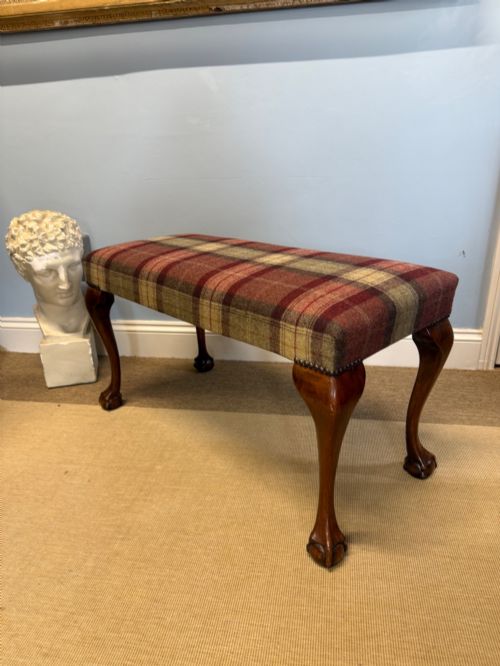
When searching for a mahogany upholstered stool, buyers encounter a wide variety of seating forms designed for specific domestic uses. The inventory spans compact footstools and dressing table seats to long benches, ottomans, and piano stools with adjustable mechanisms or internal storage.
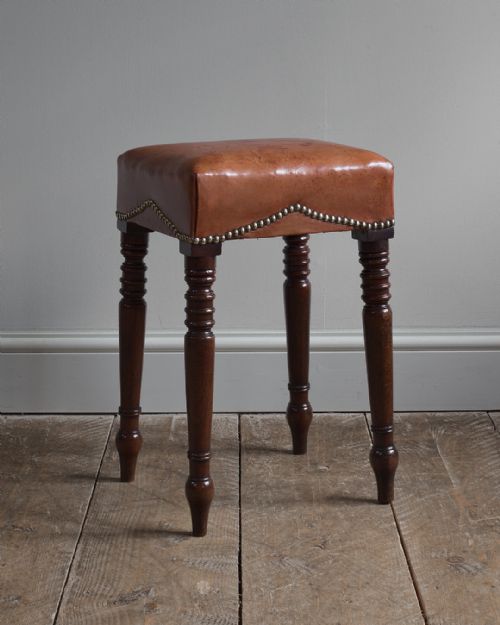
Most pieces date from the nineteenth and twentieth centuries, incorporating Regency, Victorian, and Edwardian design sensibilities alongside earlier Georgian and eighteenth-century origins. Common structural variations include square tapering legs, cross stretchers, and X-frame supports resting upon brass castors.
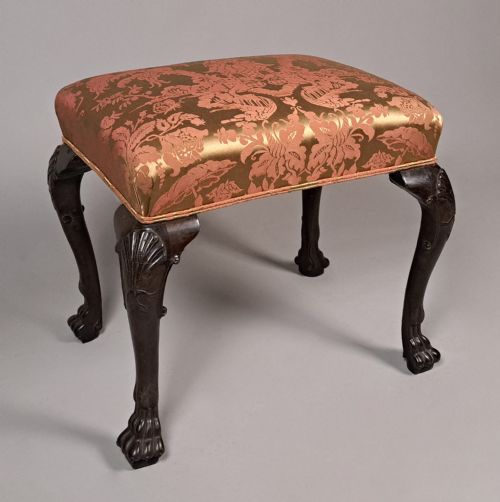
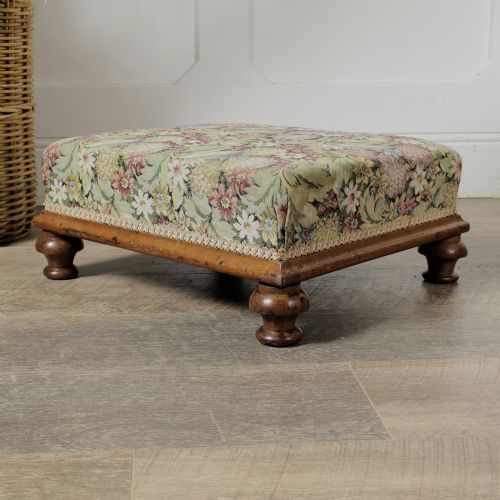
The selection ranges from simple low footstools to large centre stools and sewing box variants. These pieces frequently reflect revivalist aesthetics, including Chippendale, Sheraton, and Queen Anne styles.
Materials and construction
The framework of every mahogany upholstered stool relies on solid mahogany, valued for its durability and rich grain, occasionally shaped with carved details or supported by brass feet. Workshops built these frames using traditional joinery methods to withstand daily weight and movement.
Upper surfaces feature diverse textile coverings secured over padding, utilising leather, velvet, wool, tapestry, needlework, and crewel work. Many surviving pieces retain historic upholstery or showcase modern fabric updates like printed cottons and geometric patterns.
Mahogany Upholstered Stool Retail Price Guide 2026
Typical asking prices for mahogany upholstered stool among the pieces listed under this phrase on Sellingantiques today, from the lower quarter to the upper quarter. They describe what is for sale here now, not the wider market.
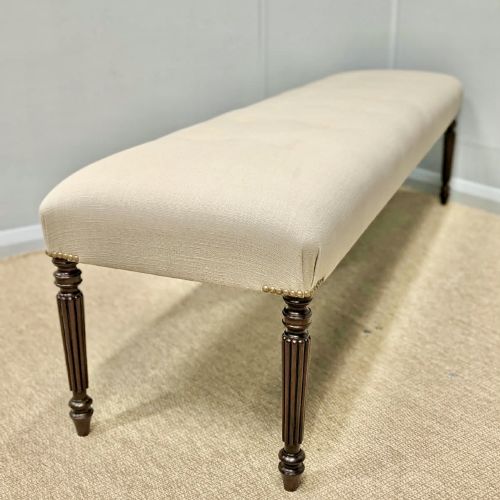
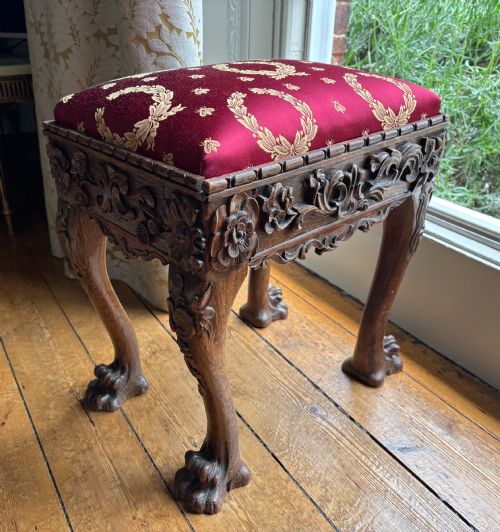
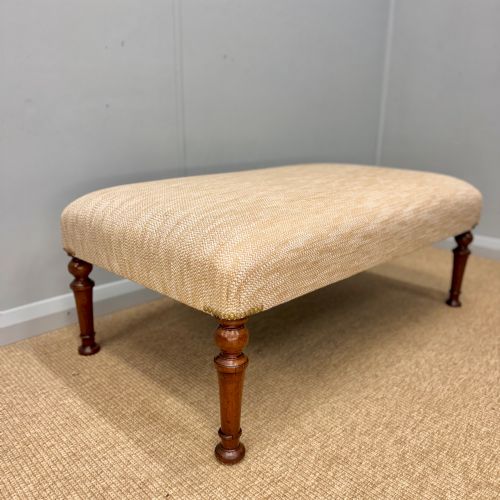
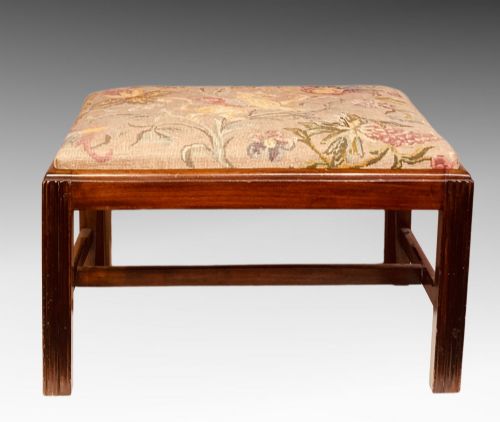
Listings feature mahogany frames paired with diverse textiles, ranging from antique needlepoint tapestry to modern geometric printed fabrics.
Assessing craftsmanship
Quality in a mahogany upholstered stool is determined by the crispness of the timber carving, the structural integrity of the frame joints, and the proportions of the legs. Superior examples display thoughtful joinery and substantial timber weight rather than superficial ornamentation.
The standard of the upholstery work and the choice of covering material further distinguish individual pieces. Refined items integrate needlepoint, patterned tapestry, or high-grade hide that complements the architectural lines of the mahogany base.
Howard and Sons·Rushworth and Dreaper
The Mahogany Upholstered Stool Glossary
- Ottoman
- A low upholstered seat or box stool without arms or a back, frequently incorporating internal storage beneath the hinged top.
- Cross stretcher
- Intersecting wooden stretchers placed between the legs of a stool to provide structural stability and visual balance.
- Needlework
- Hand-stitched textile decoration utilising yarn on canvas, often seen on historical footstool and piano stool seats.
- X-frame
- A structural furniture base formed by intersecting diagonal timbers resembling the letter X, typical of Regency and Empire styles.
- Castor
- A small wheel attached to the base of furniture legs to facilitate movement across flooring surfaces.
Mahogany Upholstered Stool: Frequently Asked Questions
What is a piano stool used for?
Piano stools provide seating designed specifically for musicians at keyboard instruments, often featuring adjustable height mechanisms or compartment space for sheet music.
Many examples date from the Victorian and Edwardian periods, combining functional utility with decorative mahogany woodwork.
How do I identify a Georgian footstool?
Georgian footstools typically feature eighteenth-century proportions, solid mahogany frames, and structural details like square tapering legs or carved cabriole supports.
Makers of this era favoured traditional joinery and restrained ornamentation compared to later nineteenth-century revival styles.
Are these stools suitable for daily use?
These mahogany frames are built from durable timber designed to withstand regular seating and movement in living spaces.
Modern buyers frequently place them as footrests, dressing table seats, or low benches in hallways and bedrooms.
What is an ottoman box stool?
An ottoman box stool combines a padded seating surface with a hollow compartment enclosed beneath a hinged lid.
Victorian workshops frequently produced these large concave or square forms upholstered in leather, velvet, or crewel work.