

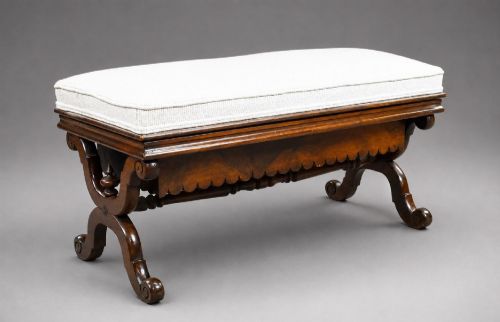
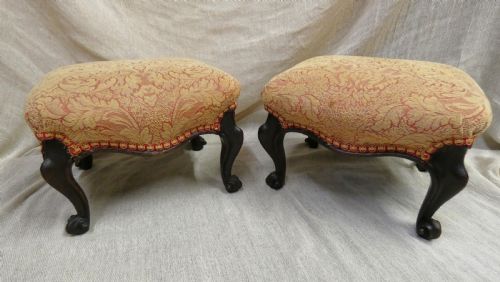
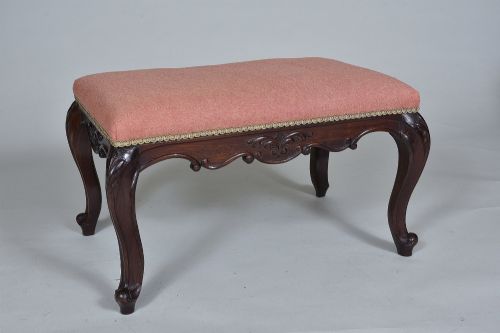
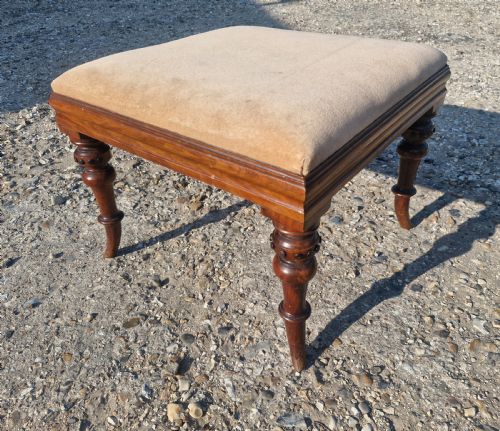
Carved Mahogany Footstool
These carved mahogany footstool examples offer solid period timber and traditional upholstery, bringing practical seating and historic character to any room.
Carved Mahogany Footstool
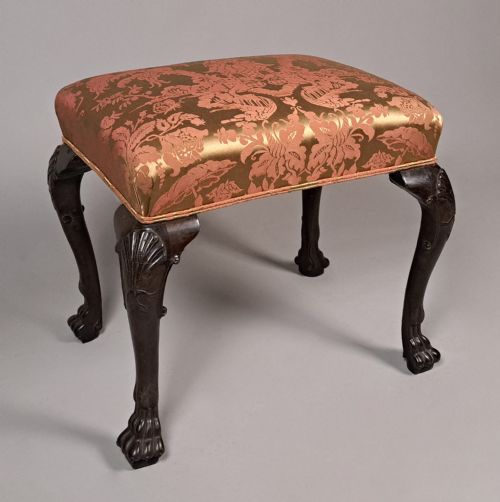
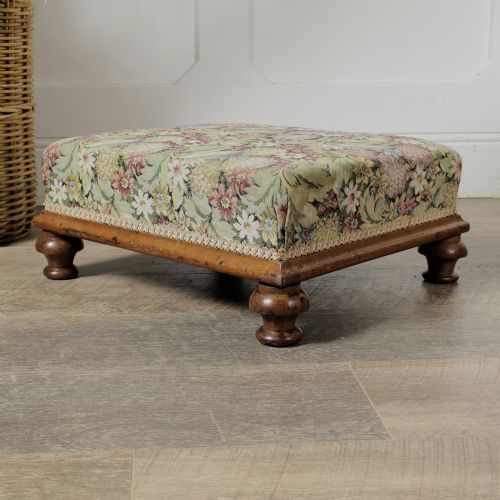
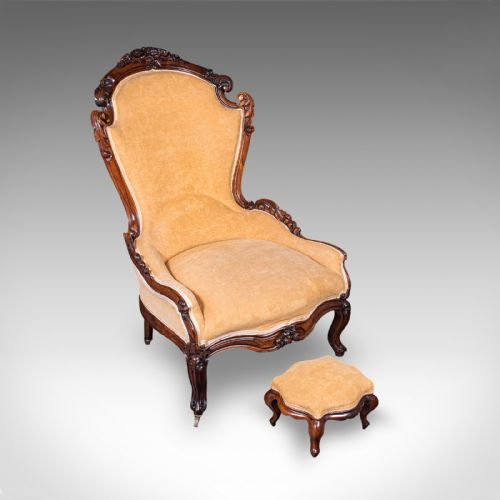
A carved mahogany footstool provides low seating or leg support, appearing across various periods including the 18th Century, Regency, and Victorian eras. These pieces function independently or complement dressing tables, armchairs, and window seats.
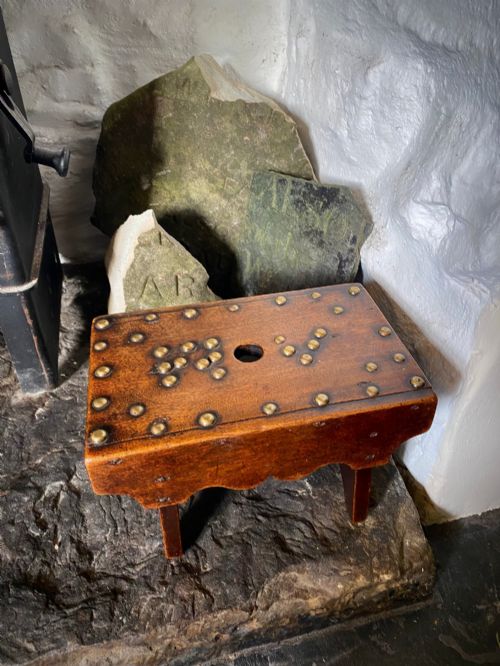
The selections here span simple vernacular forms to revival styles like Chippendale, Georgian, and Queen Anne. Most items use sturdy timber frames shaped with cabriole legs, cross stretchers, or X-frames.
Makers produced these stools for domestic comfort, ranging from small footstools to large ottomans, dressing table stools, and revolving piano stools. Buyers encounter everything from plain 19th Century models to elaborate 18th Century Irish designs.
How they were made
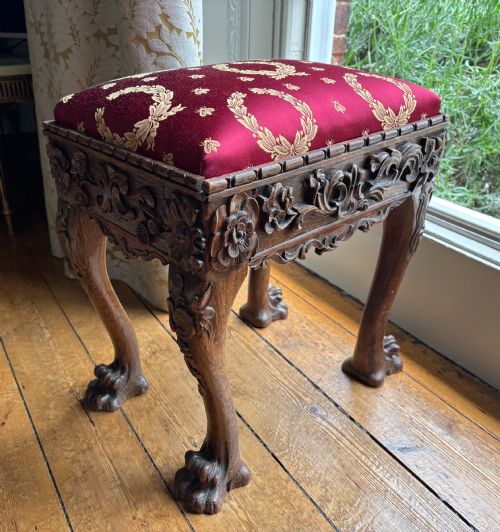
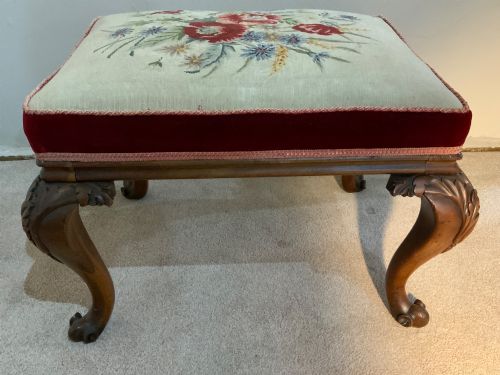
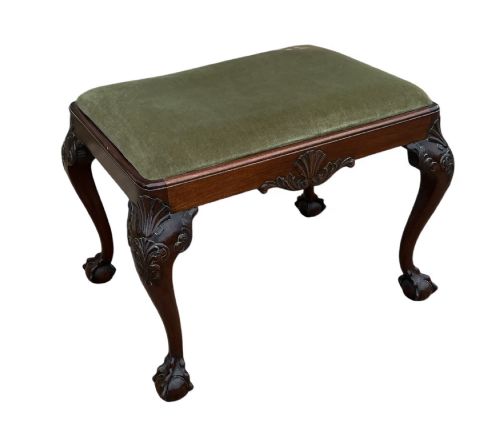
Craftsmen built the structural frames using solid mahogany, often shaping the timber with carved cabriole legs, scrolled brackets, or serpentine rails. Joinery relied on traditional mortise and tenon methods to handle daily weight and movement.
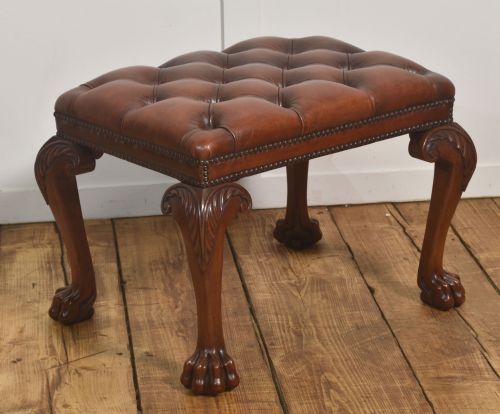
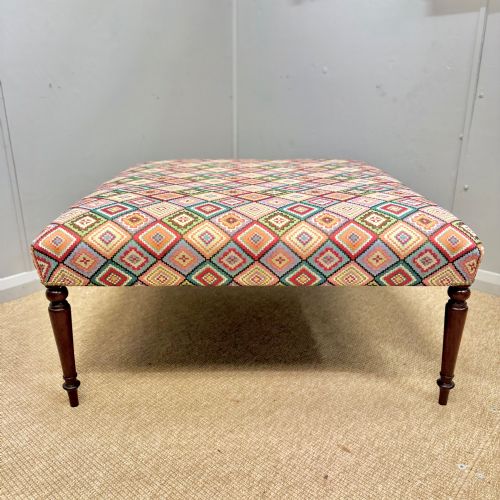
Upholstery completed the pieces, utilising materials such as leather, hide, velvet, tapestry, wool, and woven textiles. Brass details occasionally appeared on castors or decorative mounts, particularly on revolving piano stools and sewing box combinations.
Carved Mahogany Footstool Retail Price Guide 2026
Typical asking prices for carved mahogany footstool among the pieces listed under this phrase on Sellingantiques today, from the lower quarter to the upper quarter. They describe what is for sale here now, not the wider market.
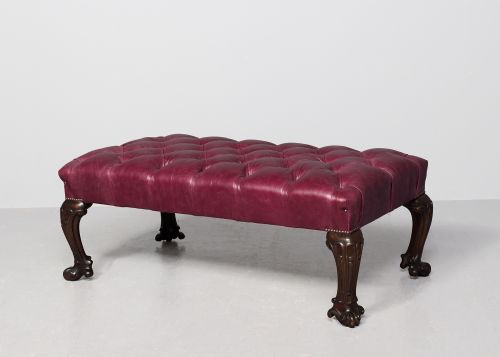
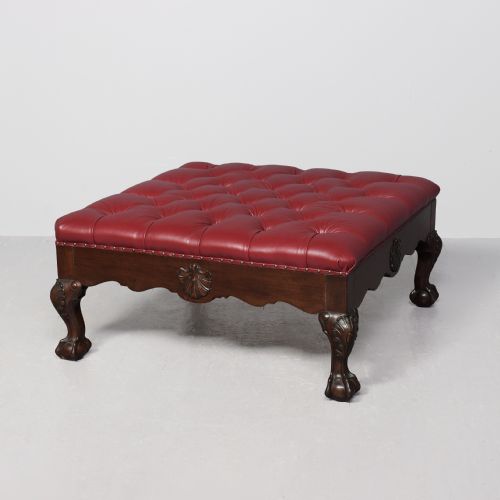
The inventory encompasses diverse forms including piano stools, sewing box combinations, X-frame seats, and large buttoned ottomans.
What varies in quality
The crispness of the wood carving dictates the aesthetic standard, separating sharp, hand-chiselled ornamentation from softer, later machine work. Timber selection matters equally, with dense, deeply figured grain commanding greater visual weight.
Proportion and structural drawing define the better examples, where legs and stretchers balance harmoniously rather than appearing clumsy. Original upholstery foundations and period covering materials also elevate the integrity of a survival.
The Carved Mahogany Footstool Glossary
- Cross stretcher
- A pair of intersecting wooden bars connecting the legs beneath a stool to provide structural stability. They often include a central finial or turning.
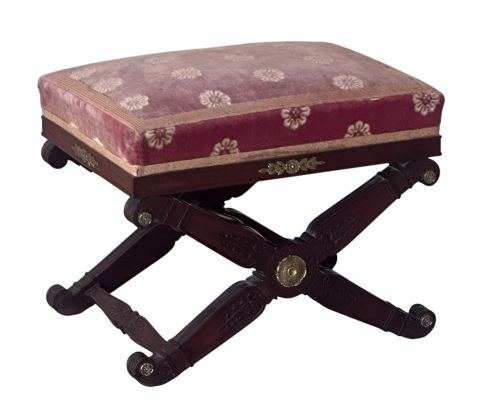
- X-frame
- A scissor-like supporting base formed by two crossed diagonal members, creating a curule seat shape. This ancient form appears in Regency and 19th Century designs.
- Serpentine
- A line or edge that curves outward in the middle and inward at the sides, creating a gentle wave. Makers applied this profile to the seat rails of mid 18th Century stools.
- Buttoned hide
- Leather upholstery secured with deep tufting held by buttons, creating a padded diamond pattern. This technique provides firm support on Victorian and revival footstools.
Carved Mahogany Footstool: Frequently Asked Questions
How do I date a mahogany footstool?
Dating relies on timber characteristics, leg styles, and construction methods. 18th Century pieces often feature hand-carved cabriole legs and serpentine rails, while Victorian examples display heavier turned supports or revival motifs.
Secondary woods inside the frame and the type of upholstery webbing offer further clues to the decade of manufacture. Comparing the joinery with dated examples in the listings helps confirm the period.
Were footstools matched to armchairs originally?
Most historic footstools were made as standalone items rather than as matching sets to armchairs. Upholstery fabrics often matched prevailing room schemes rather than specific seating furniture.
Matching pairs or armchair sets do appear from later revival periods like the early 20th Century, but single stools remain the traditional norm.
What is the difference between a dressing stool and a footstool?
Dressing stools stand taller to accommodate a person sitting at a dressing table or vanity. They frequently feature cabriole legs or revolving mechanisms, as seen in piano stools.
Footstools sit much lower to the ground, designed specifically for resting feet while seated in an armchair or by a fire.
How do I care for antique leather upholstery?
Antique leather requires gentle cleaning with a soft, dry cloth to remove dust and debris. Avoid harsh chemical cleaners or modern saddle soaps that strip natural historic finishes.
Maintaining stable room humidity prevents the hide and underlying wood frame from drying out or cracking over time.