


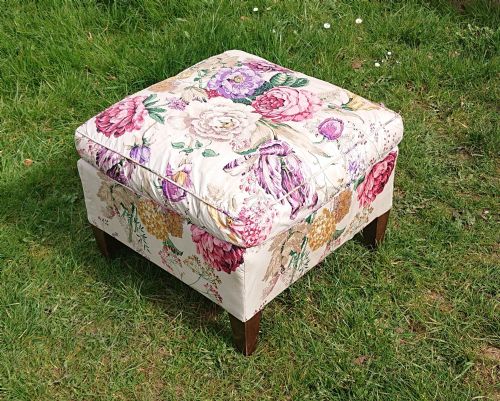


Pink Upholstered Footstool
These pink upholstered footstool selections bring authentic period comfort and character to a room.
Pink Upholstered Footstool
A pink upholstered footstool brings period charm to a room, drawing on Victorian and Edwardian forms. The pieces listed span eras such as the nineteenth century and the early twentieth century.
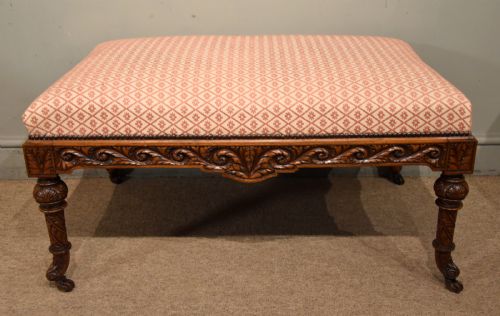
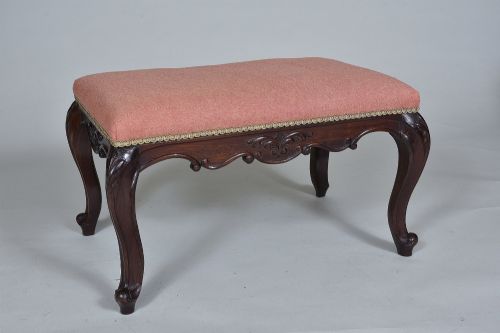
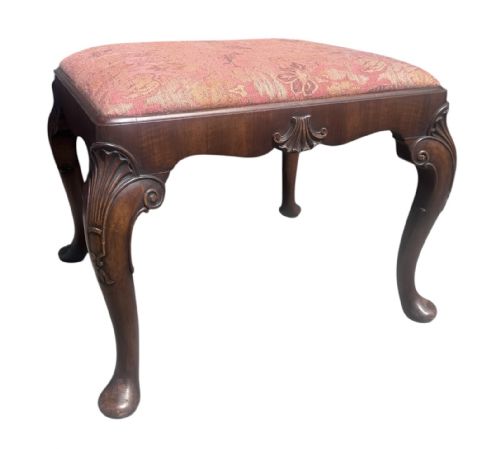
Forms include dressing stools, salon stools, and ottomans that feature traditional upholstery fabric, velvet, and needlepoint. They often sit on turned or cabriole legs made of woods like mahogany, rosewood, and walnut.
Buyers meet diverse stylistic influences here, ranging from English country and Georgian style to the Aesthetic Movement and French Provincial designs. These variations reflect the diverse domestic seating traditions of their periods.
Construction and materials
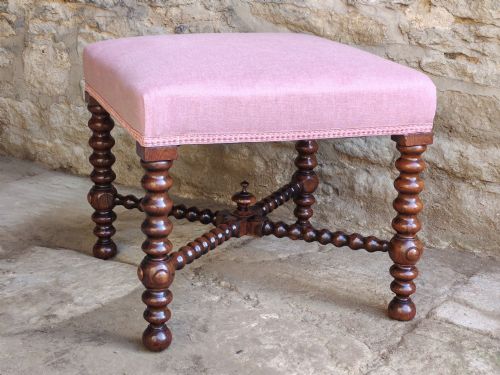
Frames rely on sturdy timbers such as mahogany, rosewood, walnut, and oak, shaped into cabriole legs, bobbin legs, or simpler turned supports. Some incorporate brass details to accent the wooden structure.
Upholstery techniques involve textiles, velvet, and fabric top layers, occasionally finished with needlepoint. Makers secured these coverings over cushion tops and padded seat foundations.
Listings feature woods including mahogany, rosewood, walnut, and oak alongside fabric, velvet, and brass elements.
Quality differences
Distinctions in quality often rest on the crispness of the woodwork carving and the selection of timber used for the frame. Dense hardwoods like rosewood and mahogany tend to display sharper joinery and more refined proportions.
The execution of the upholstery and the choice of surface textile dictate the visual finish of the piece. Finer examples maintain tighter joins in the frame and more substantial padding beneath the fabric.
The Pink Upholstered Footstool Glossary
- Cabriole leg
- A furniture leg that curves outward at the knee and tapers inward toward the foot. This classic shape appears frequently on period seating.
- Bobbin leg
- A turned wooden furniture leg resembling a string of bobbins or spools. It provides a distinct decorative silhouette on nineteenth-century frames.
- Needlepoint
- Hand-stitched canvas embroidery used traditionally for seat covers and upholstery panels. It adds texture and pattern to antique stools.
- Ottoman
- A low, upholstered seat or footstool without a back or arms. These pieces offer functional surface area in a room.
Pink Upholstered Footstool: Frequently Asked Questions
Where did people use these stools?
These stools served primarily in dressing rooms, parlours, and drawing rooms as seats for dressing or resting feet.
They moved easily around the home to provide extra seating near firesides or beside larger armchairs.
How do I identify a Victorian piece?
Victorian examples often feature dense timbers like rosewood or walnut paired with heavy turned or cabriole legs.
Upholstery styles from this era frequently include textured fabrics, velvet, or detailed needlepoint work.
Can I use these with modern furniture?
These traditional forms integrate well into contemporary spaces by adding textural contrast and historical character.
Their compact sizes allow them to function easily as casual seating or low rests in modern living areas.
What wood types are most common?
Mahogany, rosewood, and walnut appear frequently across these nineteenth-century and Edwardian listings.
Selected pieces also utilise oak and feature brass fittings or carved decorative elements.