
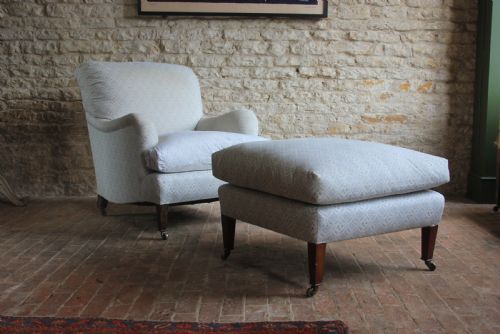


Edwardian Ottoman Seat
An edwardian ottoman seat brings versatile comfort and period character to a room, offering practical storage or seating rooted in early twentieth-century craftsmanship.
Edwardian Ottoman Seat
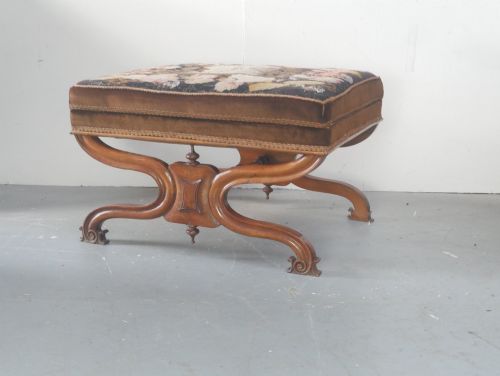
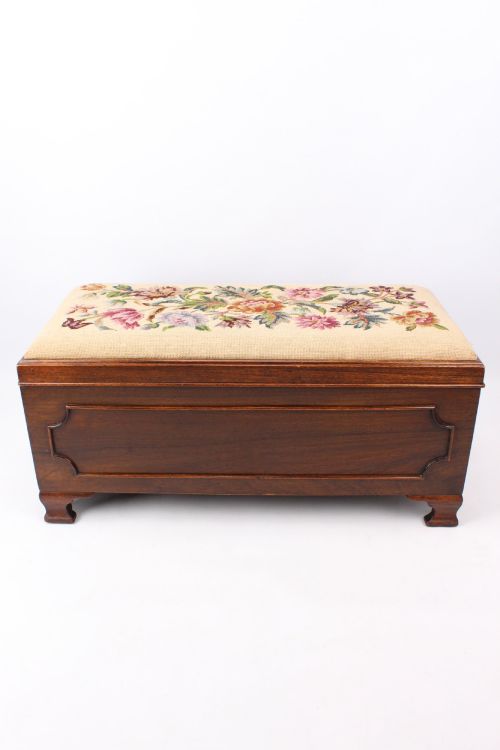
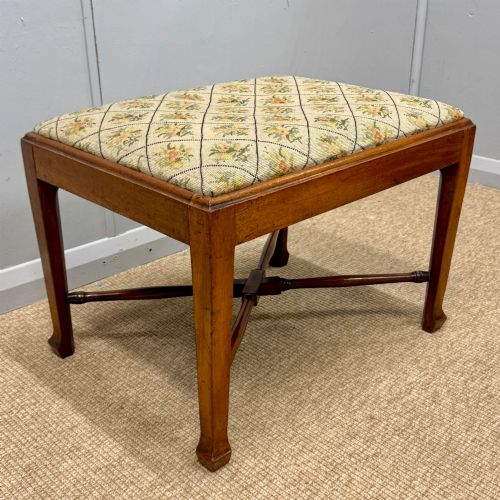
The edwardian ottoman seat category encompasses a variety of low upholstered forms designed for seating or resting feet, frequently appearing alongside related footstools, window seats, and piano stools in the inventory.
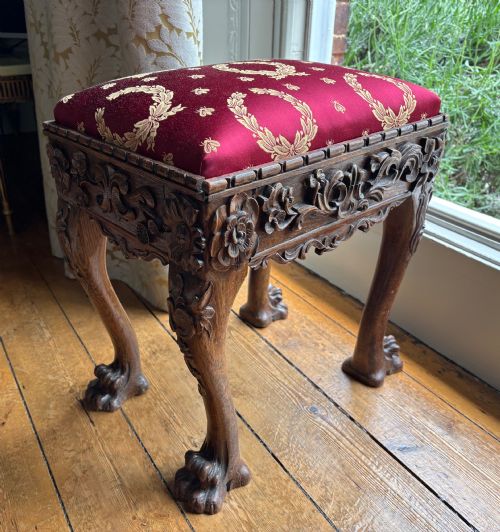
While the phrase directs attention to the Edwardian era, surviving examples span from the nineteenth century into the twentieth century, taking shapes from simple rectangular footstools to carved mahogany and oak frames.
Makers of the period produced both compact bedroom stools and substantial living room pieces, utilising mahogany, walnut, oak, and elm alongside diverse revival styles.
How they were made
Frameworks rely on solid hardwoods such as mahogany, walnut, oak, and elm, shaped through turning and carving to form legs and stretchers.
Upholstery incorporates traditional textiles, needlework, tapestry, and leather secured over padded foundations, occasionally complemented by brass detailing or lacquered finishes.
Listings feature mahogany, walnut, oak, and elm frames paired with leather, tapestry, needlework, and standard fabric upholstery.
What varies in quality
The integrity of the timber frame and the precision of carved details distinguish standard production from superior workshops.
The choice of covering material, ranging from simple fabric to fine leather or hand-worked needlework and tapestry, defines the visual distinction of each piece.
Howard and Sons·James Shoolbred
The Edwardian Ottoman Seat Glossary
- Cross stretcher
- An X-shaped timber brace connecting the legs of a stool to provide structural stability. This feature strengthens the lower frame while adding a decorative architectural element.
- Chinoiserie
- A decorative style reflecting European interpretations of Chinese artistic traditions. Applied to furniture, it often involves black lacquered finishes and gilt ornamentation.
- Cabriole leg
- A furniture leg that curves outward in a convex arc and tapers inward in a concave arc, terminating in a foot. This form draws upon eighteenth-century design revivals.
- Scottish Baronial
- A heavy, revivalist architectural and furniture style influenced by medieval Scottish castles. Pieces in this manner display robust proportions and dark timber.
Edwardian Ottoman Seat: Frequently Asked Questions
What is an edwardian ottoman seat used for?
These pieces function primarily as footstools, piano seats, or low resting places within a room. Many incorporate internal compartments for storing textiles or small household items.
Their compact scale allows them to sit easily beneath windows or beside armchairs without dominating the floor plan.
How do I date an edwardian ottoman seat?
Dating relies upon timber selection, upholstery technique, and stylistic markers found in the framework. Edwardian pieces often display lighter woods, simpler revival lines, or characteristic lacquered finishes.
Earlier nineteenth-century examples tend to show heavier proportions, darker walnut or mahogany frames, and distinct Victorian or revival carving.
Are these seats suitable for daily use?
Most solid wood frames and sturdy upholstered surfaces withstand regular sitting or resting of feet. Modern placement often involves pairing them with existing armchairs or placing them before a window.
Period textiles or leather may require careful maintenance or reupholstery depending on the intended level of wear.
What woods were used in these stools?
Mahogany and walnut appear frequently in formal parlour and salon pieces, offering smooth surfaces suitable for carving. Oak and elm serve in sturdier, vernacular furniture.
Secondary timbers or lacquered finishes also occur depending on the specific regional style and workshop tradition.