



Edwardian Mahogany Footstools
Edwardian mahogany footstools are solid wood supports for tired feet, combining practical comfort with refined period joinery.
Edwardian Mahogany Footstools
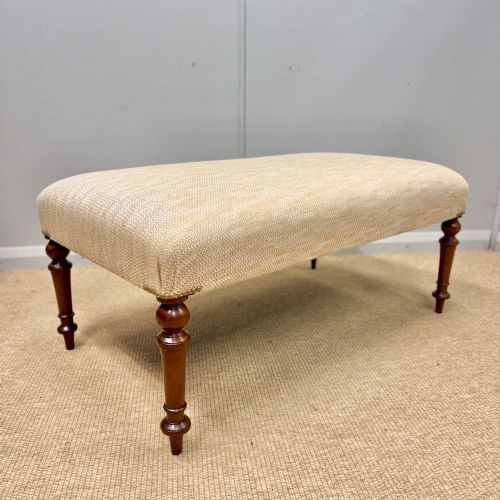
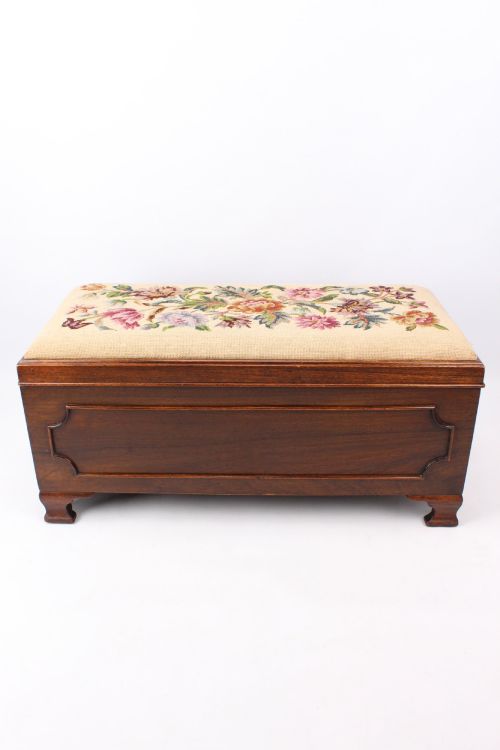
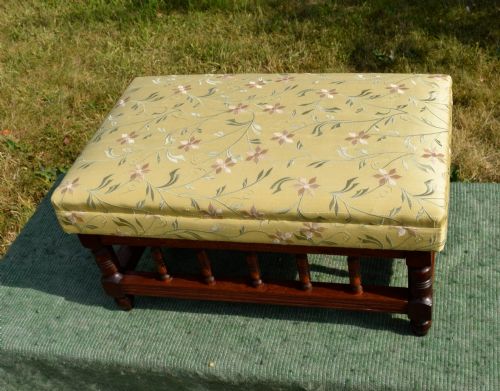
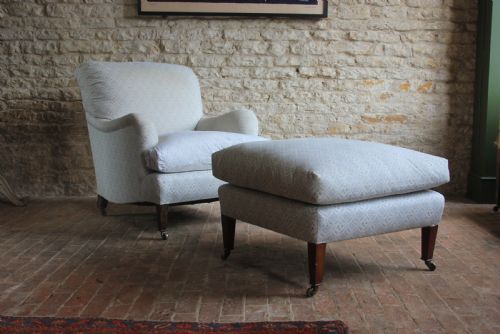
When you search for edwardian mahogany footstools, you encounter low timber frames designed for domestic repose, ranging from compact piano seats to long upholstered ottomans.
The pieces appearing here include dressing table stools, revolving piano seats, and metamorphic gout stools built primarily in the early twentieth century alongside adjacent Victorian and revival eras.
Makers utilised rich mahogany for visible wooden legs and stretchers, pairing the dense timber with various top coverings.
Materials and construction
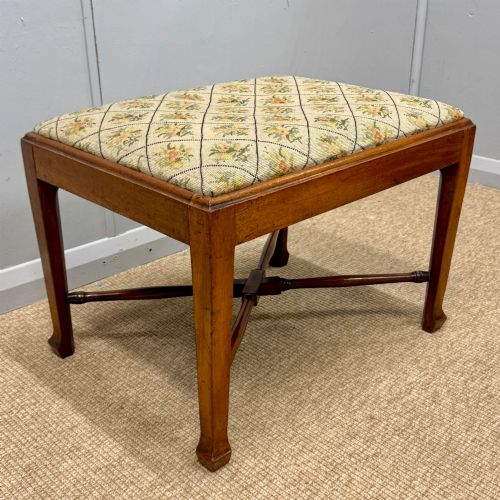
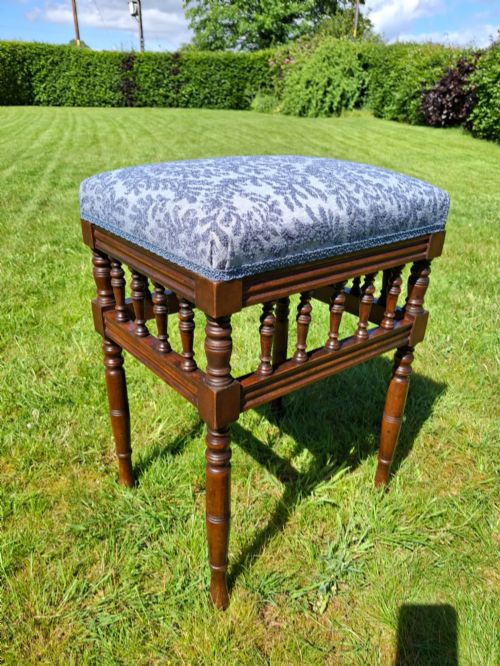
Craftsmen built the structural frames using solid mahogany, frequently shaping the timber into cabriole legs, cross stretchers, or inlaid rectangular bases.
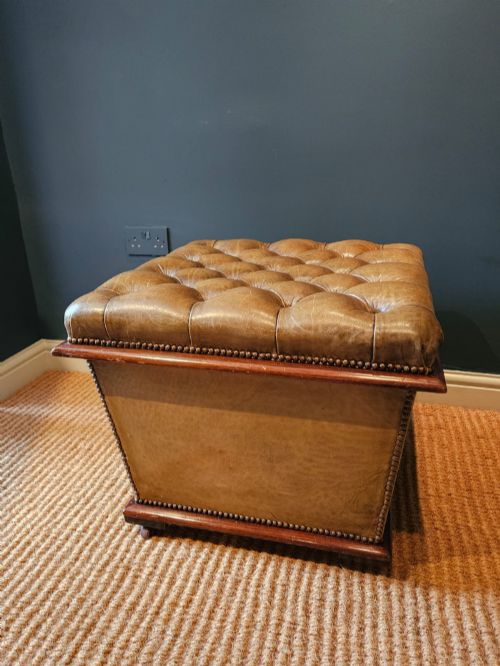
Upholstery materials applied to the tops include leather, velvet, tapestry, wool, needlework, and Liberty fabric, often secured with deep buttoning or simple textile borders.
Metal elements such as brass castors appear on larger ottoman designs to ease movement across domestic floor coverings.
Several stools hide adjustable mechanisms beneath their cushions, ready to soothe a Victorian foot at a moment's notice.
Assessing quality in construction
Superior examples demonstrate tighter joinery in the mahogany framework, ensuring stability under weight without relying on excessive glue or replacement screws.
The refinement of the carving, such as crisp cabriole shaping or neat inlay work, separates standard utility seating from finer parlor furnishings.
Original upholstery materials and intact mechanical components, like revolving screw mechanisms on piano stools or adjustable gout rests, elevate the integrity of the piece.
Howard and Sons·Jas Shoolbred·James Shoolbred
The Edwardian Mahogany Footstools Glossary
- Mahogany
- A durable tropical hardwood with a reddish-brown tone used extensively for furniture frames. It takes a smooth polish and resists warping over decades of domestic use.
- Cabriole leg
- A furniture leg that curves outward at the knee and tapers inward toward the foot, inspired by animal limbs. This form appears frequently on finer period seating.
- Gout stool
- An adjustable resting platform designed to elevate a foot afflicted by joint pain. Some examples include mechanical tilting actions.
- Ottoman
- A low, upholstered seat or footstool without a back or arms. Larger versions provide substantial surface area for resting feet or sitting.
- Cross stretcher
- Wooden bars connecting the lower legs of a stool to increase structural rigidity. They prevent the legs from spreading under heavy downward pressure.
Edwardian Mahogany Footstools: Frequently Asked Questions
What is a metamorphic gout stool?
A metamorphic gout stool is an adjustable wooden footrest designed to elevate the leg at a comfortable angle for resting or medical relief.
These pieces often feature mechanical hinges that allow the top platform to tilt upward to varying degrees while maintaining a stable mahogany base.
How do I care for mahogany frames?
Mahogany frames require minimal maintenance beyond dusting with a soft, dry cloth and occasional application of traditional furniture wax to nourish the timber.
Keep these stools away from direct heat sources and strong sunlight to prevent the wood from drying out or fading over time.
Are these stools suitable for daily seating?
Most of these stools were built for domestic use, including dressing tables and piano playing, making them sturdy enough for everyday sitting.
However, check the condition of the internal webbing and upholstery support if you plan to use them heavily in a modern living space.
How do I distinguish Edwardian from Victorian stools?
Edwardian pieces often feature lighter frames, subtle inlay work, and neoclassical influences compared to the heavier, deeply buttoned Victorian designs.
Examining the construction methods, timber colour, and upholstery style helps clarify the likely manufacturing period.