
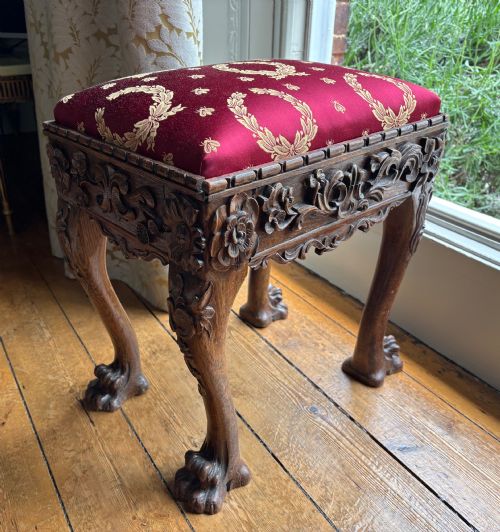
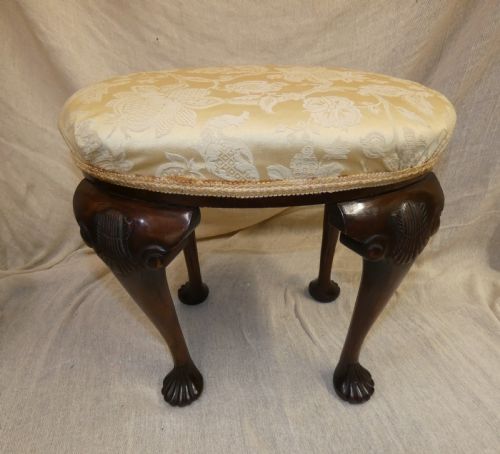
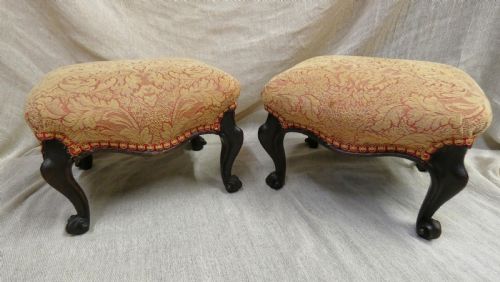
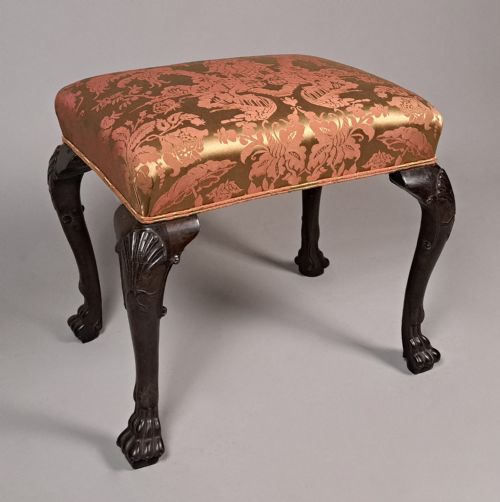

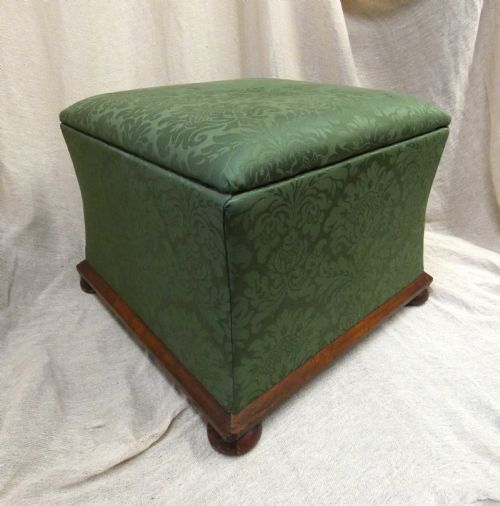


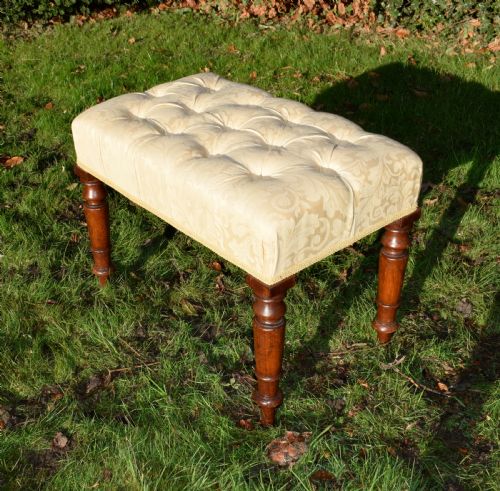


Damask Upholstered Footstool
These damask upholstered footstool pieces combine period timber frames with patterned fabric seats, offering practical low seating for historic and traditional interiors.
Damask Upholstered Footstool
A damask upholstered footstool appears in various historical forms, from 18th century walnut and mahogany frames to Victorian mahogany and 19th century giltwood designs. Buyers searching for a damask upholstered footstool encounter objects spanning the Georgian, Regency and Victorian periods, along with later revival styles such as Chippendale Revival and Louis XVI style.
The timber frames supporting these seats take shapes including square, circular, long and X-frame configurations, functioning variously as footstools, dressing stools, piano stools and ottomans. Mahogany and walnut dominate the structural timbers, while teak and rosewood appear in Anglo-Indian examples.
Victorian pieces and later 19th century interpretations form the most common encounters on this page, often featuring carved details or buttoned upholstery alongside the characteristic damask fabric.
Materials and construction methods
Makers constructed these frames primarily using solid hardwoods such as mahogany and walnut, alongside giltwood, oak, teak, rosewood and painted finishes. Joinery methods matched the period of production, supporting seats upholstered in damask fabric.
Some Victorian footstools hide sturdy mahogany frames beneath layers of buttoned upholstery, keeping their solid timber secrets entirely out of sight.
Quality factors in period stools
The refinement of the timber carving and the architectural drawing of the frame separate standard pieces from superior examples. Well drawn proportions in the cabriole, turned or tapered legs indicate higher workshop skill.
The integrity of the hardwood frame, whether mahogany, walnut or giltwood, combined with the selection and execution of the damask upholstery, determines the overall standing of the piece.
The Damask Upholstered Footstool Glossary
- Damask
- A reversible figured fabric with patterns woven into the ground, frequently utilised for historic upholstery. It provides the characteristic texture seen on these footstools.
- Cabriole leg
- A furniture leg that curves out and then in, resembling an animal's leg in shape. This form appears frequently on 18th century and revival stools.
- Giltwood
- Timber that has been coated with gold leaf or a gold-coloured finish. This material characterises ornate French style and Baroque stools.
- X-frame
- A structural base formed by intersecting diagonal members supporting the seat. This form appears in Neoclassical and period stools.
- Ottoman
- A low upholstered seat or footstool without a back or arms. These pieces offer extended surface areas for seating or resting feet.
Damask Upholstered Footstool: Frequently Asked Questions
What is a damask upholstered footstool used for?
These pieces function primarily as low seats or rests for the feet, complementing armchairs and dressing tables in traditional rooms.
Historically, they provided flexible seating and foot support within formal drawing rooms and private boudoirs.
How do I identify a Victorian footstool?
Victorian examples frequently utilise solid mahogany frames, sometimes featuring buttoned upholstery and robust turned or carved legs.
They reflect the heavy, substantial furniture tastes of the 19th century, differing from lighter 18th century proportions.
What woods were used for these stools?
Maker workshops predominantly selected mahogany and walnut for structural stability and fine carving capabilities.
Other materials include giltwood, oak, rosewood and teak, particularly in Anglo-Indian and continental European pieces.
Are these stools suitable for daily use?
The solid hardwood frames provide sturdy construction suitable for placement in contemporary or historic living spaces.
Care should be taken to protect the damask fabric upholstery from excessive wear and direct sunlight.