


Regency Upholstered Stool
These pieces of regency upholstered stool design bring architectural gravity and comfort together, offering a compact way to introduce period character into a room.
Regency Upholstered Stool
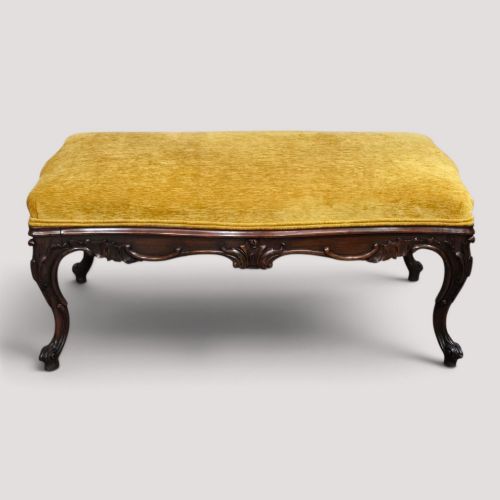
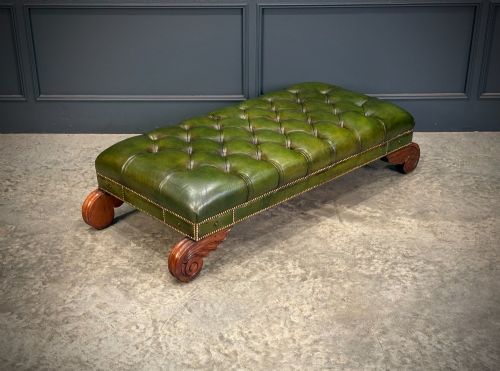
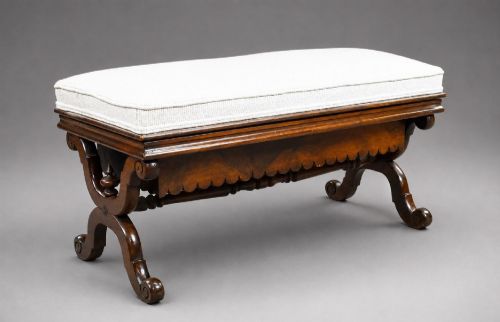
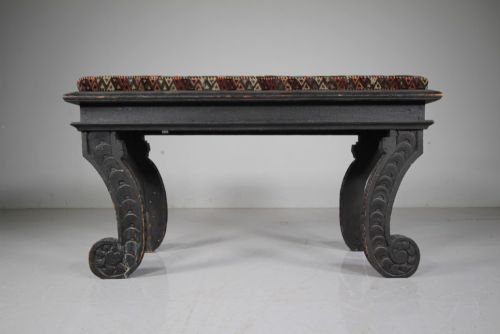
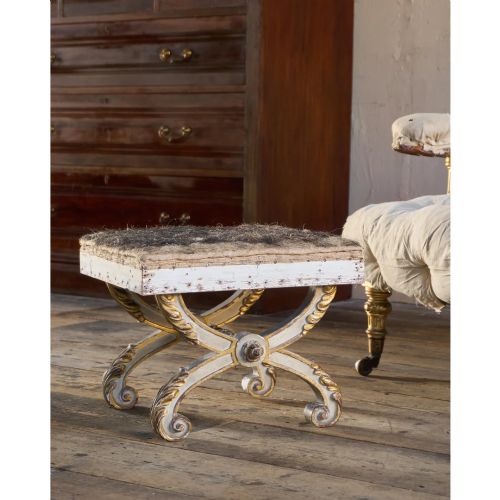
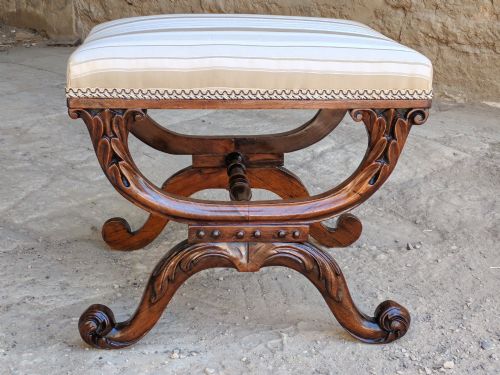
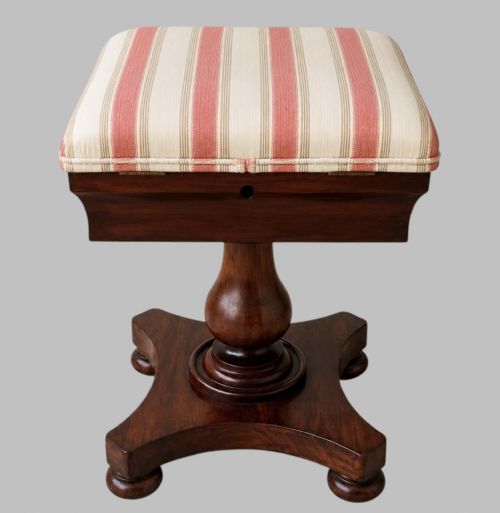
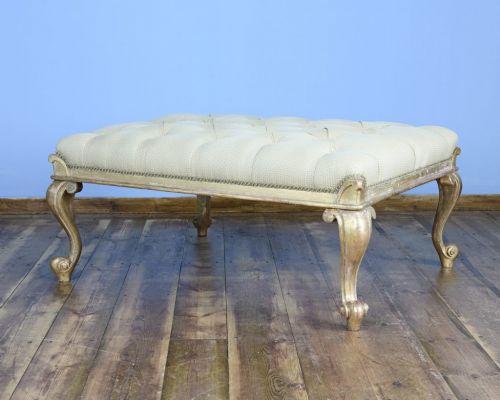
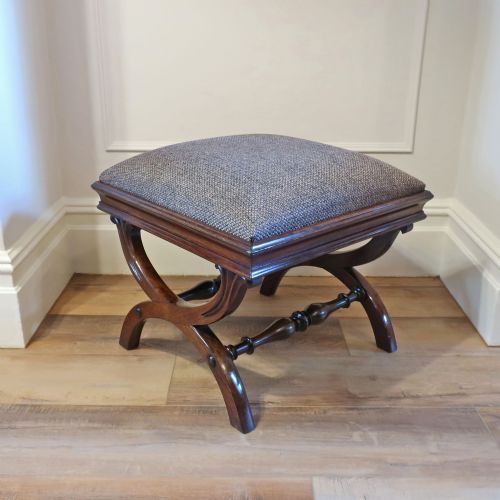
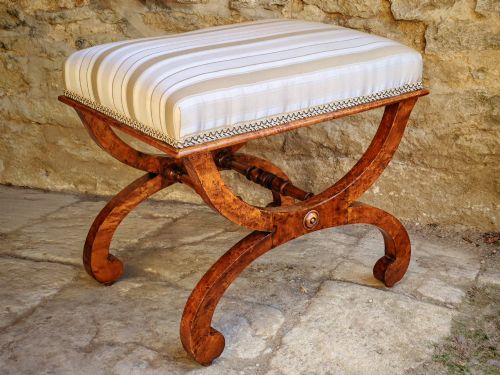
A regency upholstered stool is typically encountered as a footstool, piano stool, window seat, or small ottoman originating from the early nineteenth century. The evidence shows forms ranging from low X-frame curule stools to grand scale parcel gilt designs and box ottomans.
Makers and manufacturers during the Regency, Georgian, and William IV periods produced these seating forms in mahogany, rosewood, and painted pine. Pieces often feature brass inlay, lions paw feet, or scrolling forms designed for domestic comfort and music rooms.
How they were made
Timber frames were primarily constructed from dense hardwoods like mahogany and rosewood, sometimes finished with brass stringing or gilded details. Wood surfaces were turned, carved, or fluted to create the architectural silhouettes characteristic of the period.
Upholstery techniques combined traditional webbing and stuffing with leather, velvet, ticking, or woven textiles, often secured with buttoning or decorative trim. Structural elements such as X-frames and cabriole legs relied on solid joinery to support heavy daily use.
Regency Upholstered Stool Retail Price Guide 2026
Typical asking prices for regency upholstered stool among the pieces listed under this phrase on Sellingantiques today, from the lower quarter to the upper quarter. They describe what is for sale here now, not the wider market.
Some nineteenth-century music enthusiasts required revolving seats simply to chase the best light near the parlour window.
What varies in quality
The refinement of the timber carving and the sophistication of secondary materials distinguish finer examples from simpler workshops. Evidence of brass inlay, gilt accents, or sculptural elements like lions paw feet indicates higher workshop ambition.
Proportion and structural integrity define the architectural success of a piece. Well-balanced frames maintain their lines under the weight of upholstery, while lesser examples may display heavier, uninspired turnings or clumsier joinery.
Miles and Edwards
The Regency Upholstered Stool Glossary
- Regency
- An English design period spanning roughly from 1811 to 1820, though the style embraces the broader early nineteenth century. It draws heavily on classical Greek, Roman, and Egyptian motifs.
- X-Frame
- A cross-legged structural form derived from classical curule seats. This configuration provides inherent stability and a dramatic silhouette.
- Gout stool
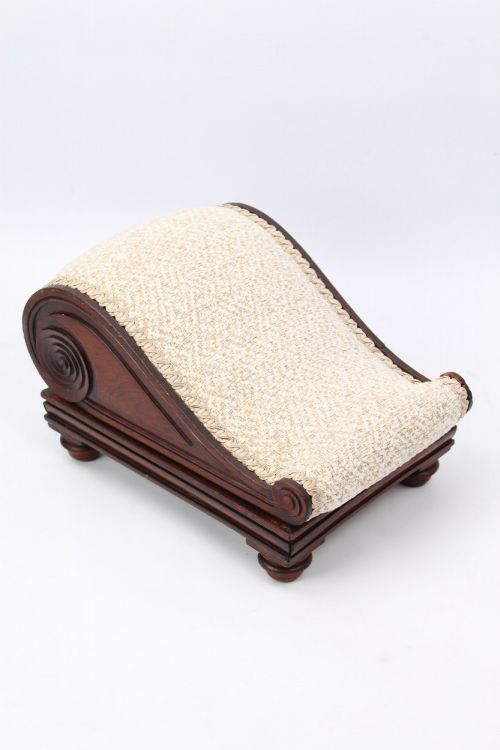
- A specialised inclined footrest designed to elevate and support legs affected by gout. They frequently incorporate adjustable mechanisms or scrolling forms.
- Ottoman
- A low, upholstered seat without arms or a back, introduced to European interiors during the nineteenth century. They often doubled as storage boxes or large centre stools.
Regency Upholstered Stool: Frequently Asked Questions
How do I use a regency upholstered stool today?
These pieces function well as flexible seating in living rooms, elegant footrests beside armchairs, or compact dressing table seats. Their modest scale allows them to be tucked under tables or moved easily between rooms.
Positioning a window seat within a bay provides a traditional resting place while highlighting the timber frame. Pairing an ottoman with a larger sofa adds functional surface area without overcrowding the floor plan.
Are piano stools height adjustable?
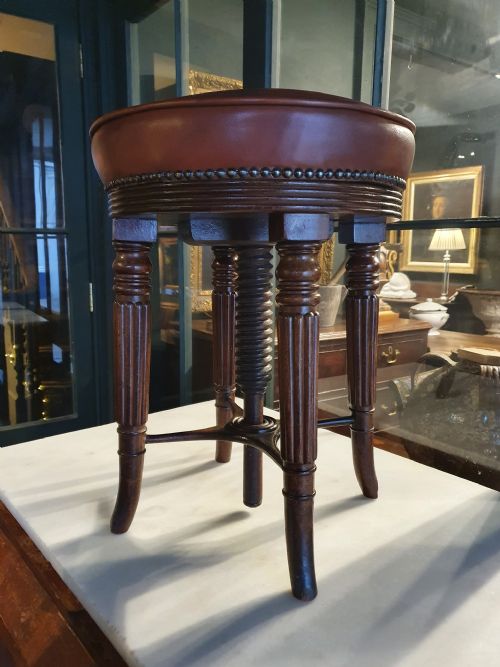
Many nineteenth-century piano and music stools feature mechanical height adjustment via a central screw mechanism. This allowed musicians to set their preferred seating level.
Turning the upholstered top raises or lowers the seat relative to the keyboard. Checking the smooth operation of this internal screw reveals the quality of the original engineering.
What is an X-frame stool?
An X-frame stool utilises intersecting diagonal legs that form an X shape when viewed from the side. This ancient architectural form was revived during the Regency period for formal rooms.
Makers often embellished these frames with brass mounts or carved foliate details. The crossing timbers distribute weight efficiently while creating a striking profile.
How can I tell a Regency piece from a Victorian one?
Regency pieces generally display restrained classical lines, crisp brass inlay, and geometric rosewood or mahogany grains. The influence remains tied to ancient Roman and Greek archaeology.
Early Victorian alternatives tend to introduce heavier proportions, bolder carving, and more exuberant curves associated with revival styles. Examining the turning style and timber selection clarifies this transition.