

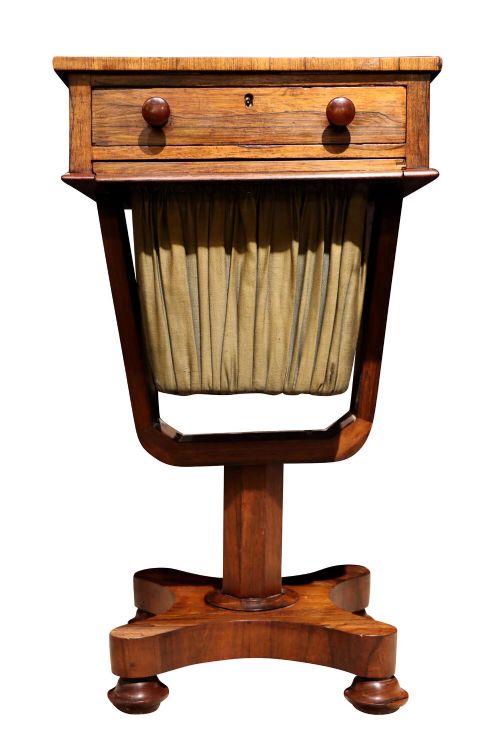
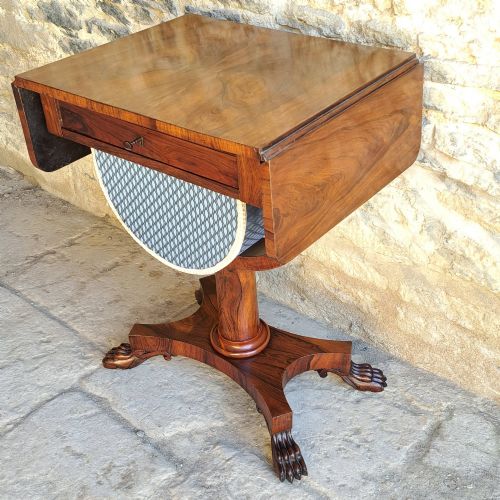


Regency Rosewood Workbox
A regency rosewood workbox brings polished timber and clever internal fittings together for practical use.

Regency Rosewood Workbox
A regency rosewood workbox serves as a compact chest for needlework, threads and small personal valuables. These items appear in both portable tabletop formats and larger freestanding pedestal or drop leaf tables.
The selection on this page spans pieces from the Regency and nineteenth century, encompassing Georgian, William IV and early Victorian overlap. Forms range from simple silk lined caskets to versatile sewing and games tables.
Makers of the period designed these objects for domestic utility in reception rooms and boudoirs. Their dark timber surfaces and fitted compartments reflect the polished interior style of the era.
Materials and construction methods
Rosewood forms the primary carcass of these pieces, valued for its deep grain and rich colour. Workshops utilised solid timber and veneers over secondary woods to build both portable boxes and substantial pedestal tables.
Brass inlay and mother-of-pearl embellishments frequently accent the exterior surfaces. Interior compartments often feature delicate silk linings, velvet pads and fitted boxwood lidded sections for organised storage.
Regency Rosewood Workbox Retail Price Guide 2026
Typical asking prices for regency rosewood workbox among the pieces listed under this phrase on Sellingantiques today, from the lower quarter to the upper quarter. They describe what is for sale here now, not the wider market.
Distinguishing finer examples
Quality rests in the precision of the brass inlay and the preservation of the delicate interior silk or velvet fittings. Superior specimens retain their original fitted trays, compartments and working locks with matching keys.
The choice of rosewood grain and the crispness of the boxwood stringing separate standard production from high end cabinet work. Structural integrity in the drop leaf actions and pedestal joints also dictates the tier of a piece.
The Regency Rosewood Workbox Glossary
- Workbox
- A portable box or table designed to hold sewing implements, threads and needlework tools. These containers usually feature internal trays and compartmentalised storage.
- Pedestal table
- A freestanding table supported by a central pillar resting on a platform base or feet. This form allows seated users easy access to the work compartments above.
- Drop leaf
- A hinged table leaf that folds down to save space or lifts up to extend the surface area. Such mechanisms often accompany sewing tables for flexible use.
- Stringing
- A narrow inlay of contrasting timber, such as boxwood, used to outline panels and geometric borders on furniture surfaces. This decorative technique highlights the natural grain of the rosewood.
Regency Rosewood Workbox: Frequently Asked Questions
What is a regency rosewood workbox?
A regency rosewood workbox is a small chest or fitted table created to hold sewing materials and precious trinkets. They combine dark timber construction with interior compartments designed for needlework organisation.
Cabinet makers of the period produced both tabletop versions and larger pedestal formats for domestic use. Their refined exteriors suited the formal parlours and private chambers of the nineteenth century.
How were these workboxes used originally?
These pieces served as functional workstations for ladies undertaking needlework, embroidery and letter writing. The fitted interior trays kept spools, pins and thimbles secure during daily domestic tasks.
Freestanding versions also doubled as occasional lamp tables or small games surfaces. Their dual functionality made them central pieces of furniture in reception rooms.
How do I care for rosewood furniture?
Rosewood requires stable humidity and protection from direct sunlight to prevent the timber from drying or fading. Regular dusting with a soft, dry cloth preserves the polished surface without building up residue.
Avoid placing damp items or heavy heat sources directly on the polished wood or delicate brass inlay. Gentle treatment ensures the original finish and internal silk linings survive in good order.
How can I tell a Regency piece from a Victorian one?
Regency pieces often display restrained classical proportions, precise brass stringing and geometric brass inlay. Their design draws inspiration from Greek and Roman archetypes popular in the early nineteenth century.
Victorian adaptations tend toward heavier pedestal turns and more ornate carving. Examining the secondary woods and construction joints helps clarify the specific period of manufacture.