





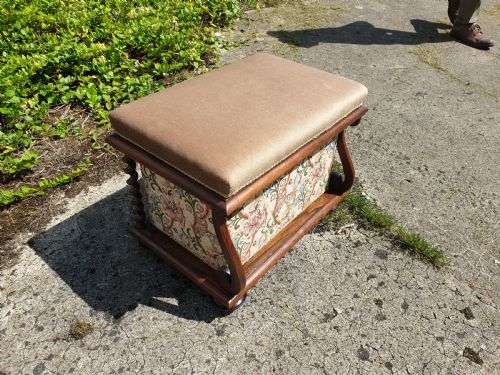


Padded Storage Footstool
A padded storage footstool combines a seat with a hidden compartment, offering a practical piece for traditional interiors.

Padded Storage Footstool
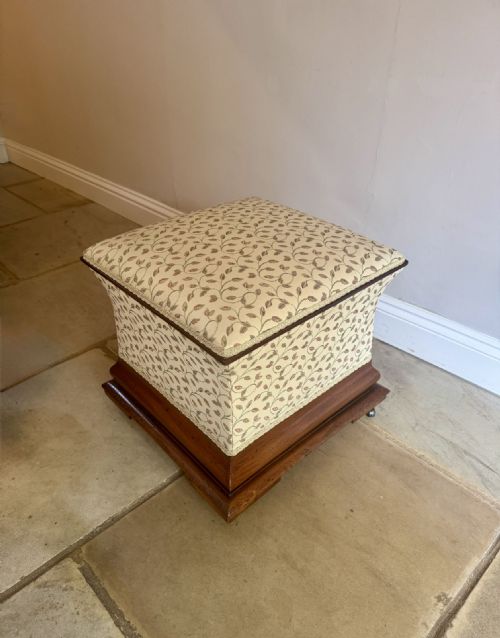
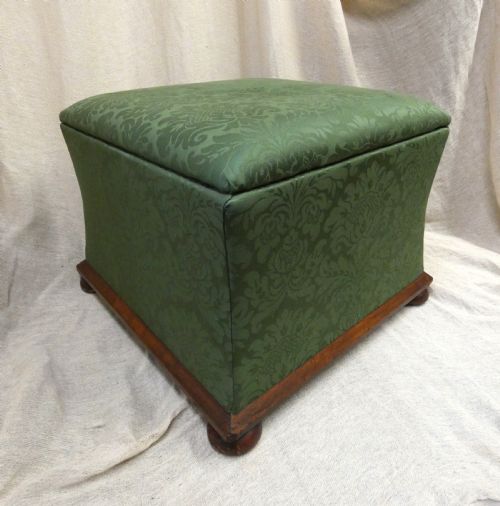
When you search for a padded storage footstool, you encounter a variety of antique seating forms that incorporate internal space beneath a hinged or lift-off lid. The listings here primarily comprise Victorian and Regency pieces, alongside early twentieth-century examples.
These items frequently appear as ottomans, piano stools, and blanket boxes. They serve both to rest feet and to conceal household items within the core structure of the furniture.
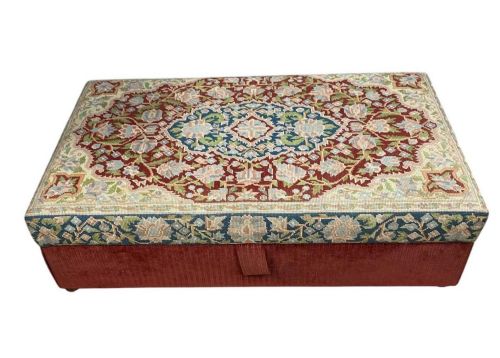
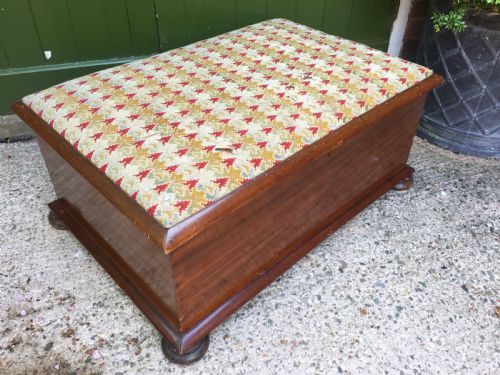
The most common forms on this page include mahogany, rosewood, and walnut frames featuring upholstered tops in leather, velvet, fabric, or needlepoint. Many retain traditional design elements such as deep buttoning and lions paw feet.
What varies in quality
The choice of primary timber sets the structural standard, with rich grain patterns in rosewood and mahogany marking out finer examples over standard hardwoods. Frame construction and the stability of the box joinery determine longevity.
Upholstery finish dictates visual appeal, where hand-dyed leather, intricate needlework, and precise deep buttoning reflect skilled artisan execution. The integrity of the original hinges and internal linings also separates standard utility items from superior pieces.
Padded Storage Footstool Retail Price Guide 2026
Typical asking prices for padded storage footstool among the pieces listed under this phrase on Sellingantiques today, from the lower quarter to the upper quarter. They describe what is for sale here now, not the wider market.
The listings span the Regency, Victorian, and Edwardian periods, utilising mahogany, rosewood, walnut, fabric, leather, velvet, and brass.
The Padded Storage Footstool Glossary
- Ottoman
- A low, upholstered seat or footstool without a back or arms, often featuring a hinged lid for interior storage. They date across the Regency and Victorian periods.
- Mahogany
- A durable, reddish-brown hardwood utilised extensively in nineteenth-century cabinet making. It provides a stable frame for polished storage furniture.
- Needlepoint
- A type of counted thread embroidery stitched onto canvas, frequently applied to the top surface of footstools. Gros-point is a coarser variation seen on period pieces.
- Deep buttoning
- An upholstery method where stitches pull the fabric tight into recessed buttons, creating a padded diamond pattern. This technique adds texture to Victorian seats.
- Regency
- An English design style spanning the early nineteenth century, characterised by classical motifs and dark timbers. Pieces from this era often display refined proportions.
Padded Storage Footstool: Frequently Asked Questions
What is a padded storage footstool?
A padded storage footstool is a piece of antique seating featuring a soft upper surface combined with a hollow interior. The top lifts or hinges open to reveal a compartment for household items.
Such items bridge the gap between decorative furniture and functional storage. They appear across various nineteenth and early twentieth-century styles.
How were these stools used historically?
These pieces served multiple functions in period interiors, acting as footrests, window seats, and piano stools. The internal compartments held blankets, needlework, or sheet music.
Their dual purpose made them versatile additions to drawing rooms and parlours. They provided accessible storage without cluttering the visible floor space.
How do I care for antique leather upholstery?
Antique leather requires gentle cleaning to preserve the natural finish and prevent drying out. Avoid harsh chemical cleaners and keep the material away from direct heat sources.
Regular dusting with a dry cloth maintains the surface. Professional leather feeds can help sustain older hides.
How can I tell a Regency footstool from a Victorian one?
Regency footstools typically display classical restraint, clean lines, and dark woods like rosewood or mahogany. They often incorporate decorative elements such as carved feet or recessed handles.
Victorian examples tend towards heavier proportions, elaborate wood turnings, and deep-buttoned upholstery. Gothic revival and later nineteenth-century pieces introduce more textured fabrics and varied wood tones.