


Vintage Low Pouffes
Vintage low pouffes are low-slung upholstered seating pieces that bring character and textural warmth to a traditional interior.
Vintage Low Pouffes
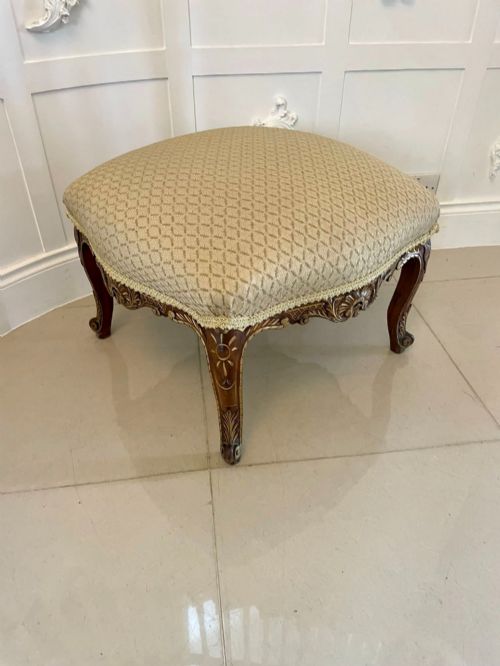
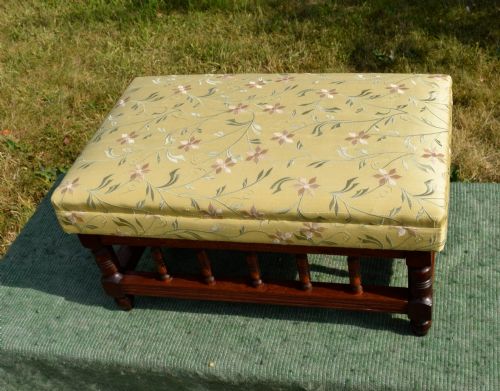
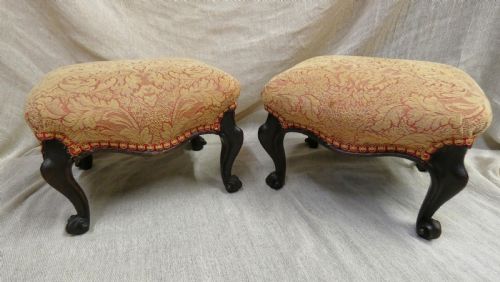
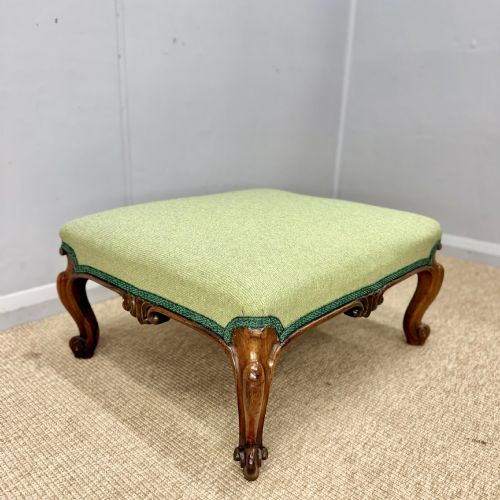
When you search for vintage low pouffes, you are looking at nineteenth-century and early twentieth-century footstools, ottomans, and low seats designed for domestic comfort. These pieces take various forms, from small square footstools to large oval and centre stools intended for drawing rooms and parlours.
The selections available range from sturdy Victorian mahogany and rosewood frames to carved oak pieces and French nineteenth-century designs. You will also encounter stylistic revivals such as Jacobean and Queen Anne, alongside occasional pieces displaying Art Nouveau or Anglo Indian carved detail.
Most examples function primarily as footstools or low occasional seats, often newly upholstered to suit modern interiors while retaining their antique wooden frames. Their compact proportions make them versatile additions to sitting rooms and dressing areas.
How they were made
Makers constructed the supportive frames of these low seats using dense hardwoods such as mahogany, rosewood, walnut, and oak, often incorporating turned or cabriole legs. Structural timber forms the robust base upon which padding and upholstery are secured.
Decoration on the wooden elements relies on hand carving, gilding, and brass fittings rather than applied composition ornaments. Frames exhibit traditional joinery techniques appropriate to their nineteenth and early twentieth-century origins.
Listings feature timbers including mahogany, rosewood, oak, and walnut, alongside fabrics and calico.
What varies in quality
The distinction between standard domestic stools and finer examples lies in the depth of timber carving and the sophistication of the frame silhouette. Pieces with shaped cabriole legs, gilt enrichment, or dense rosewood show a higher level of craftsmanship.
The integrity of the underlying wooden structure and the quality of the timber selection govern the longevity of each piece. Superior examples maintain firm joints and well-defined decorative details that survive heavy domestic use.
Whytock and Reid
The Vintage Low Pouffes Glossary
- Cabriole leg
- A furniture leg that curves out and then tapers inward, common on eighteenth-century and revival seating forms. This design mimics animal legs and provides stable support without heavy stretchers.
- Centre stool
- A large freestanding stool designed to sit in the middle of a room rather than against a wall. These pieces often feature substantial upholstery and decorative carving.
- Ottoman
- A low upholstered seat or footstool, typically lacking arms and a back. The form evolved to serve as both a seat and a rest for the feet.
- Calico
- A plain-woven cotton fabric frequently used as an underlying tight upholstery layer on antique seats. It provides a stable base before top covers are applied.
- Gilt
- A thin layer of gold leaf or gilt finish applied to wood or plaster surfaces. This technique adds decorative brightness to nineteenth-century frames.
Vintage Low Pouffes: Frequently Asked Questions
How were low pouffes used?
These pieces served primarily as footstools for resting feet while seated in armchairs or by the fireplace in nineteenth-century homes. They also provided extra low seating when hosting guests in crowded parlours.
Larger versions functioned as centre stools or ottomans in the middle of drawing rooms, holding books or serving as casual seats.
Where should I place a low pouffe?
Place a low pouffe in front of a sofa or armchair where its height allows for comfortable foot support. They also sit well at the foot of a bed or beside a fireplace.
Because many examples feature decorative carved mahogany or rosewood frames, they look best where the woodwork remains partially visible.
How do I identify a Victorian stool?
Victorian stools typically feature dense timbers like rosewood or mahogany, alongside characteristic upholstery methods of the period. Look for turned wooden legs or carved walnut frames reflecting mid to late nineteenth-century tastes.
Revival styles from this era often borrow heavily from earlier centuries, incorporating Queen Anne or Jacobean decorative motifs.
Are these stools sturdy enough for daily use?
The hardwood frames of nineteenth and early twentieth-century stools are built to last and easily handle daily sitting or foot resting. Traditional joinery ensures the structural skeleton remains robust over generations.
Modern buyers often update the top upholstery fabric while leaving the original wooden frame intact for everyday practicality.