

Antique Mahogany Ottoman
An antique mahogany ottoman combines timber warmth with practical seating, offering hidden storage or low support across Georgian, Regency, and Victorian periods.
Antique Mahogany Ottoman
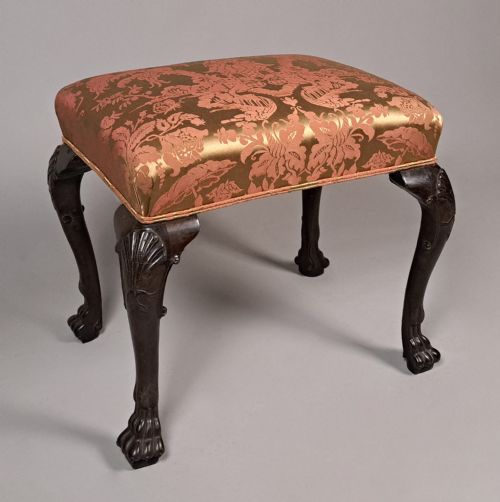
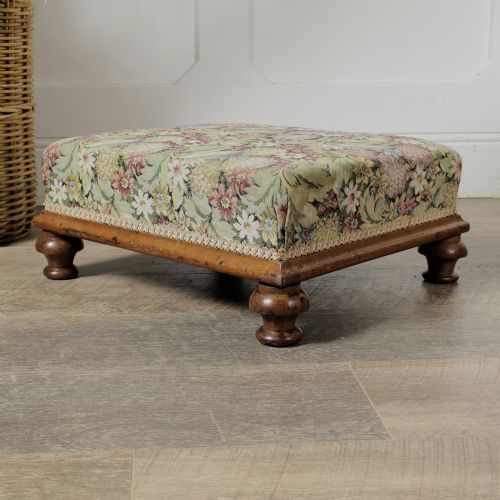
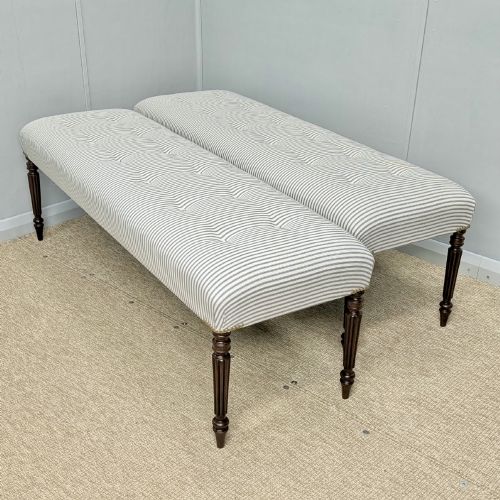
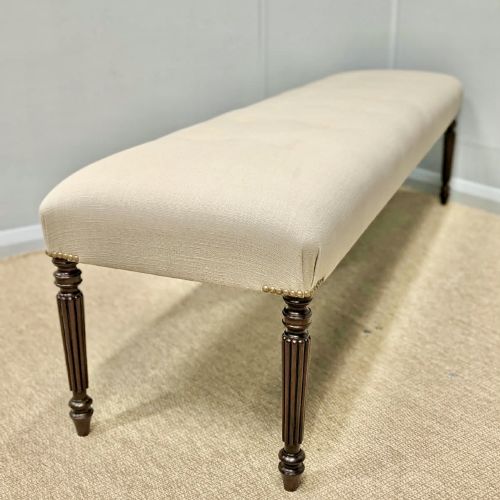
The term antique mahogany ottoman covers a range of low seating forms, including box storage chests, upholstered stools, and window seats recorded across Georgian, Regency, and Victorian periods. Buyers search for these pieces to introduce functional storage or traditional foot support into drawing rooms and libraries.
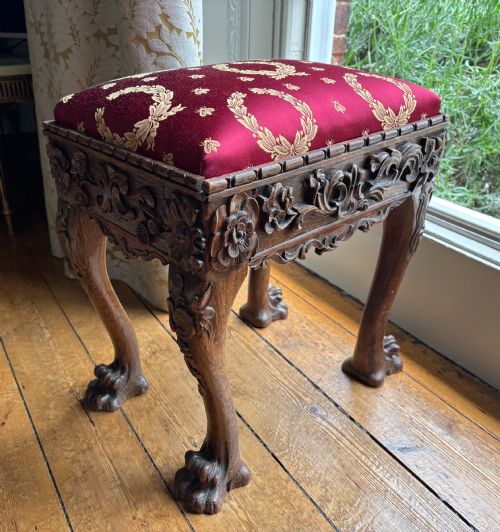
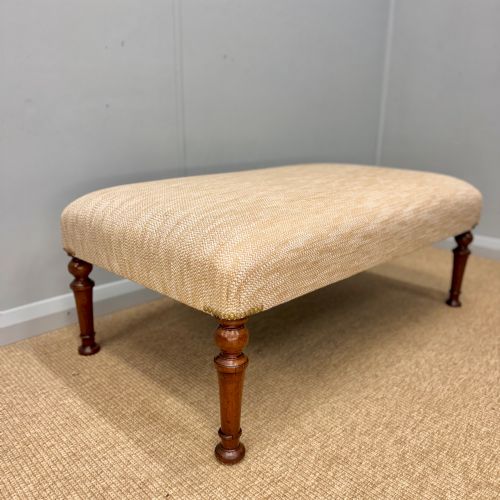
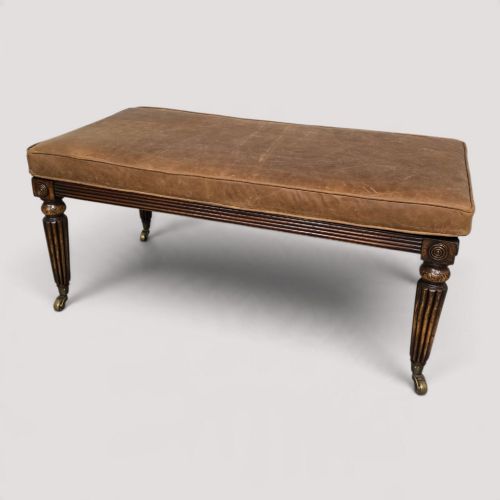
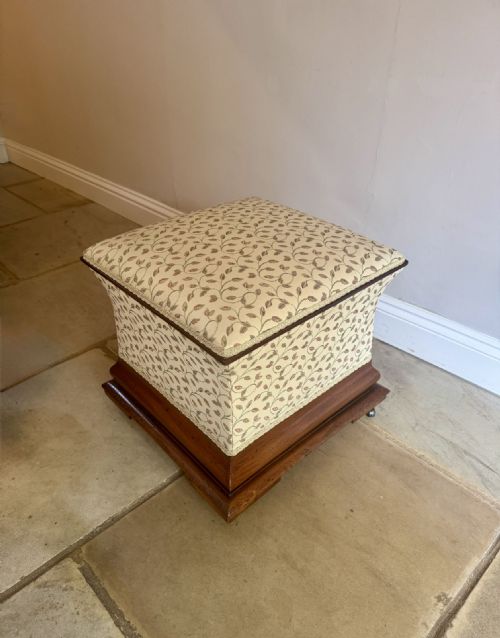
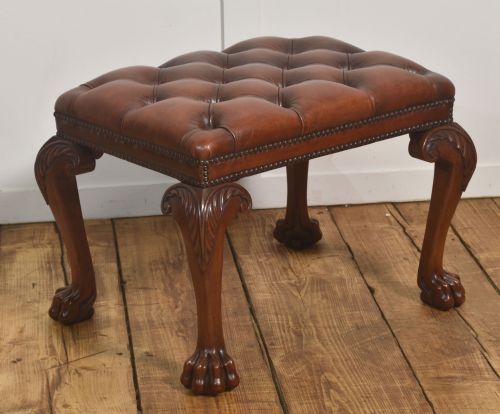
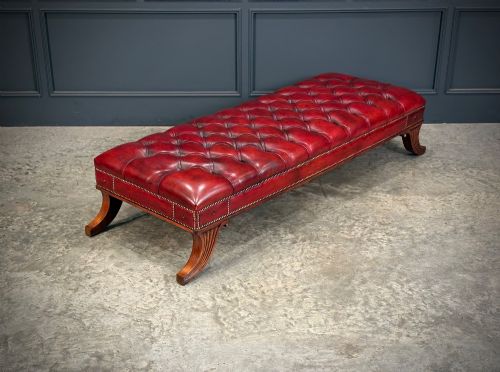
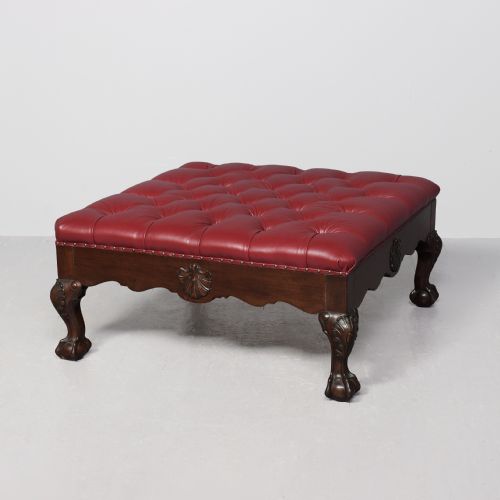
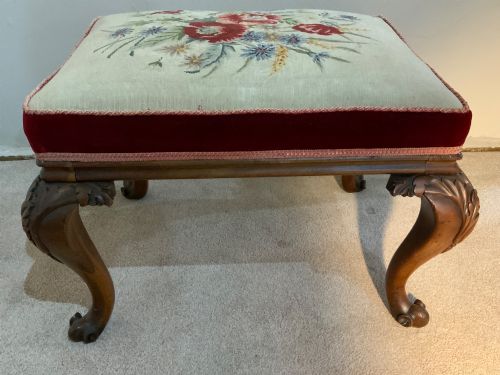
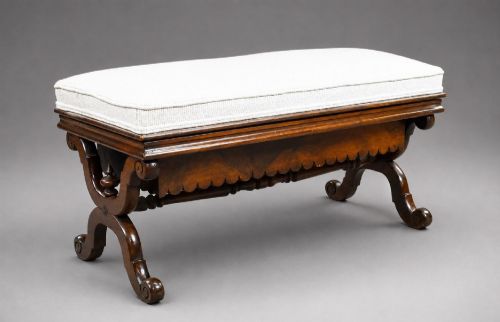
Most examples found in this collection date from the 19th century, often taking the form of concave storage boxes or oblong footstools supported on brass castors and cabriole legs. These forms bridge the gap between ornamental furniture and everyday utility, utilising dense tropical timber frames.
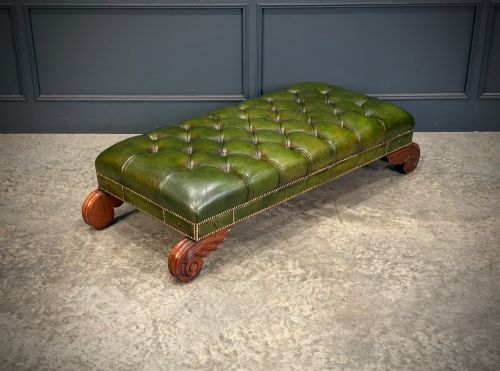
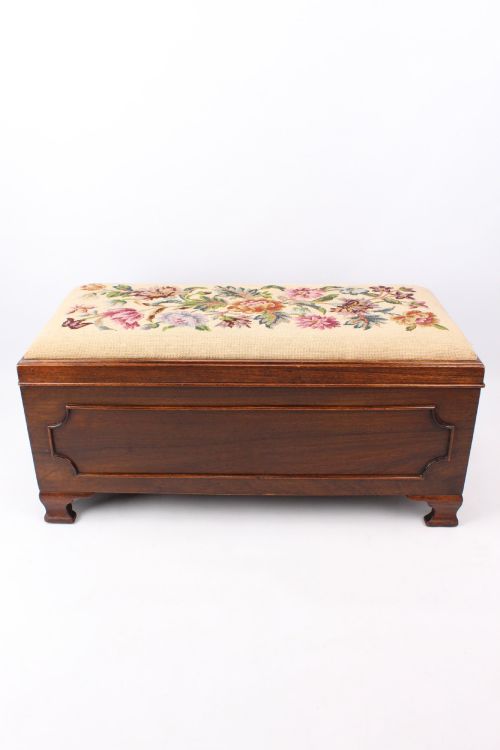
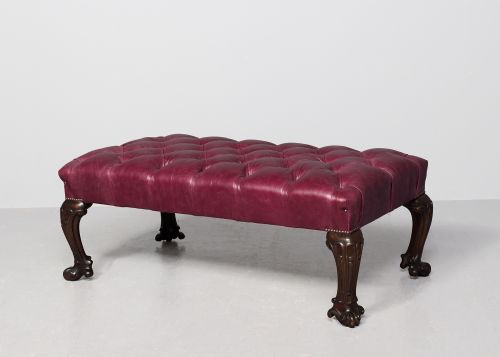
Makers designed these items to serve dual purposes, such as sewing box stools, metamorphic gout stools, and large country house storage ottomans. The variety spans simple upholstered footstools to elaborate buttoned leather duet music seats.

Materials and construction methods
Craftsmen built the structural frames using solid mahogany, selecting the dense timber for its durability and deep reddish-brown grain. Carpenters frequently incorporated brass castors, hinges, and studs to facilitate movement and secure the upholstered borders.
Upholstery techniques varied from plain textile coverings to intricate needlework, crewel work, tapestry, and buttoned leather. Wool, velvet, and fabric layers were pinned or corded over padded interiors to provide firm yet comfortable support.
Antique Mahogany Ottoman Retail Price Guide 2026
Typical asking prices for mahogany ottoman among the pieces listed under this phrase on Sellingantiques today, from the lower quarter to the upper quarter. They describe what is for sale here now, not the wider market.
Certain Victorian models offered discreet storage for gentlemanly gout remedies, keeping foot care entirely out of sight.
Markers of distinction and build
Quality rests in the timber selection, joinery execution, and the integrity of the original frame carcass. Pieces featuring hand-carved details, cross stretchers, or robust internal storage boxes demonstrate superior cabinet-making over standard production items.
The preservation of original leather, crewel work, or needlework upholstery elevates a piece, particularly when combined with secondary elements like functioning brass hinges and castors. Proportion and balance between the mahogany frame and the upholstered top dictate the visual harmony of the finished seat.
Howard and Sons·Hallett and Sons
The Antique Mahogany Ottoman Glossary
- Mahogany
- A durable tropical hardwood known for its rich red-brown hue and stability in furniture construction.
- Ottoman
- A low upholstered seat or bench, frequently incorporating an internal chest or storage trunk.
- Cabriole leg
- A furniture leg that curves outward and then tapers inward, popular in 18th and 19th-century designs.
- Castor
- A small wheel fixed to the base of furniture legs to allow easy rolling across carpets and floors.
- Crewel work
- Traditional embroidery executed with wool yarn on a plain-woven fabric ground.
Antique Mahogany Ottoman: Frequently Asked Questions
How do I use an antique ottoman today?
These pieces serve well as living room footrests, end-of-bed storage chests, or compact window seats. Their internal compartments provide discreet space for blankets and books.
Position them before sofas or in dressing areas where their timber frames and upholstered tops complement existing period furniture.
Did all period ottomans include storage?
Many examples designed as box stools or trunks featured hinged lids concealing deep compartments for textiles or sewing equipment. Other forms remained strictly open stools without internal cavities.
Checking the base construction reveals whether a piece functioned primarily as a static seat or a dual-purpose chest.
How do I identify Regency pieces?
Regency items often display classical restraint, incorporating scroll tops, x-frames, or sabre legs inspired by ancient Greek and Roman models. Mahogany surfaces might feature subtle brass inlay or carved classical motifs.
Proportions tend to be architectural and clean, distinguishing them from later heavily carved Victorian designs.
Are upholstered sections usually original?
Much of the textile and leather covering on these items has been renewed over time due to natural wear. Finding untouched 19th-century needlework or crewel work remains uncommon.
Many examples feature recent professional re-upholstery while retaining their authentic antique timber frames and internal padding.