

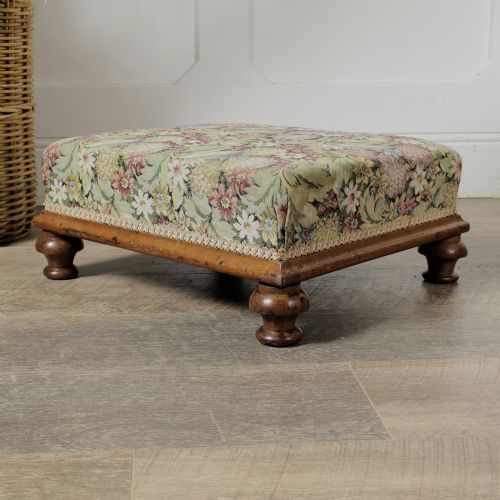
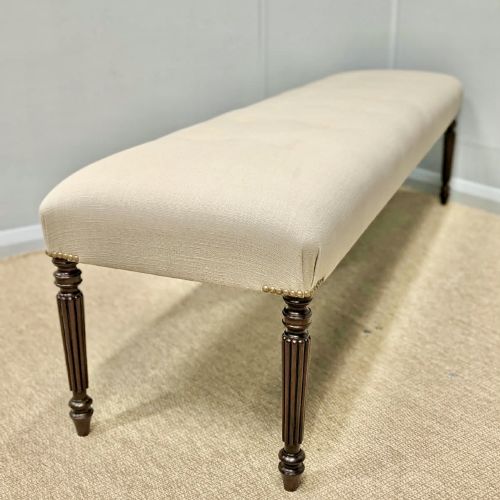
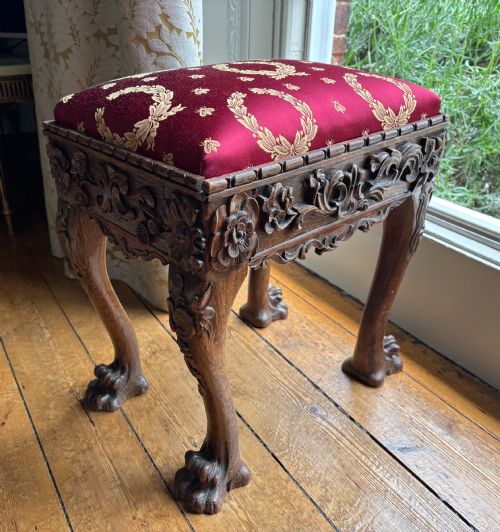
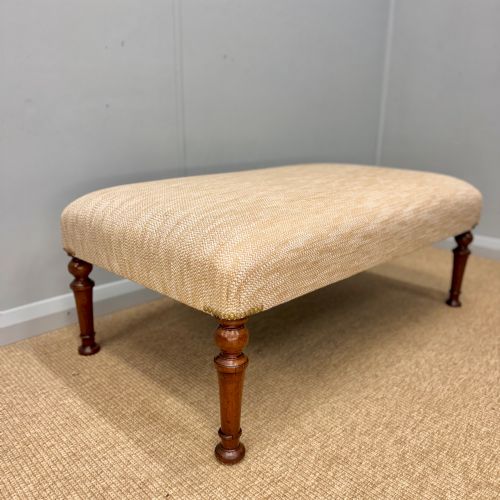

Victorian Mahogany Footstool
When you search for a victorian mahogany footstool, you are looking at solid timber frames paired with period textiles designed to rest tired feet by the hearth.

Victorian Mahogany Footstool
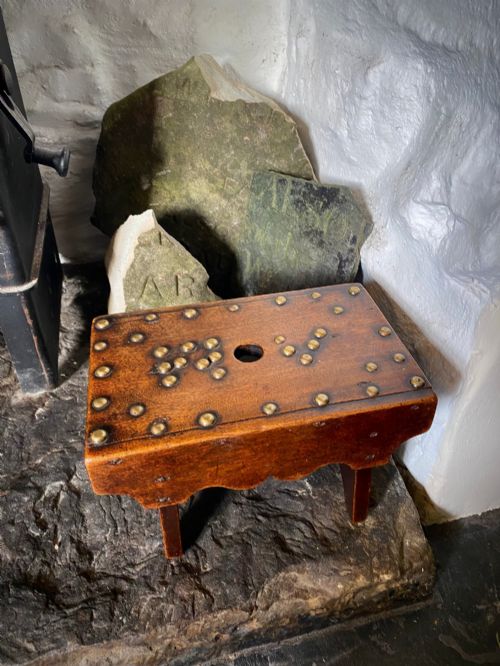
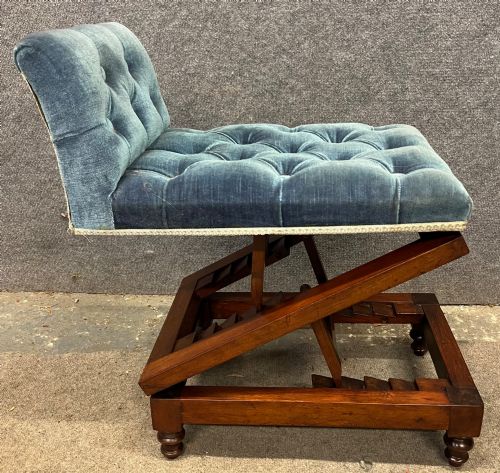
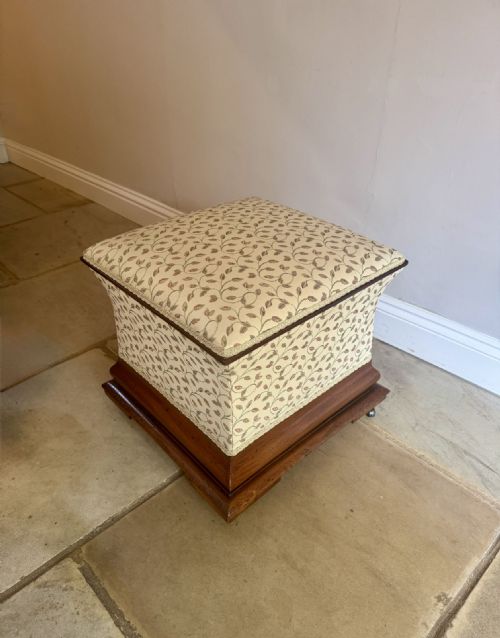
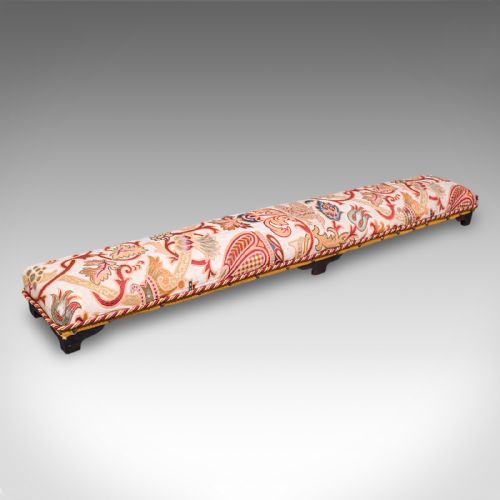
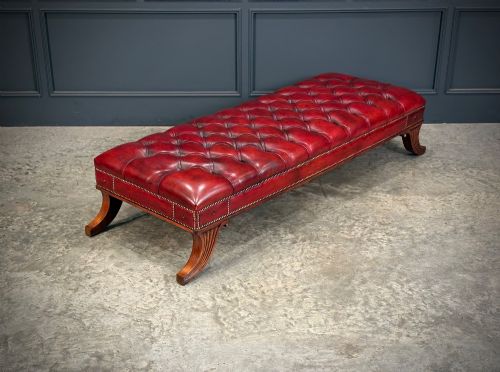
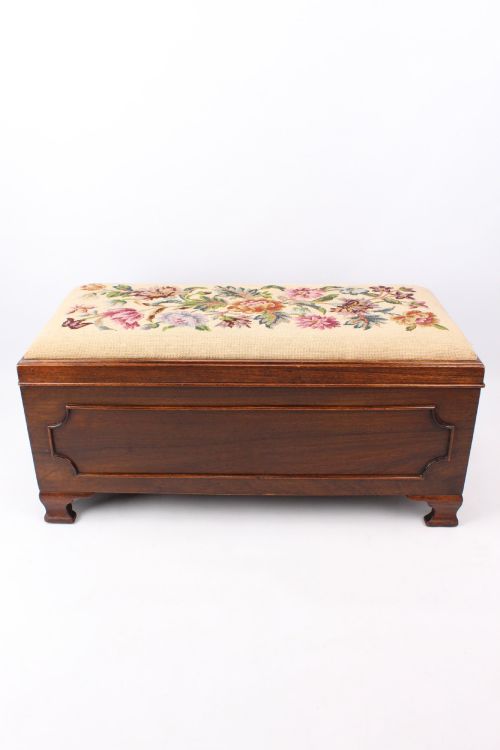
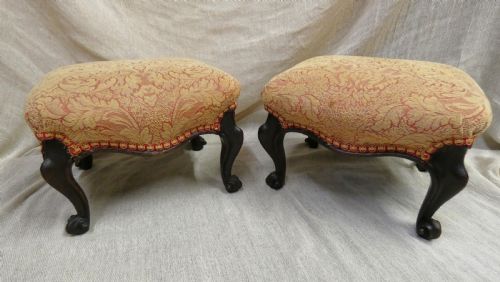
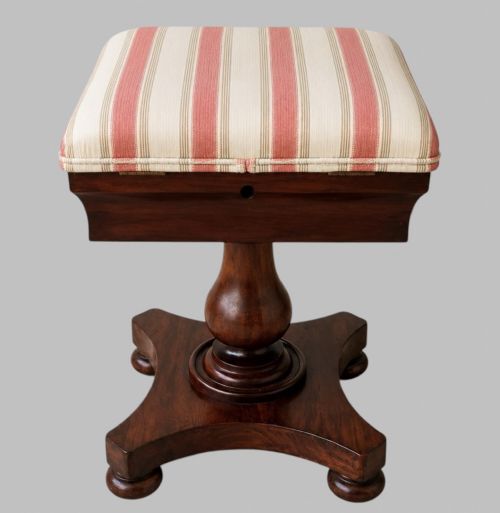
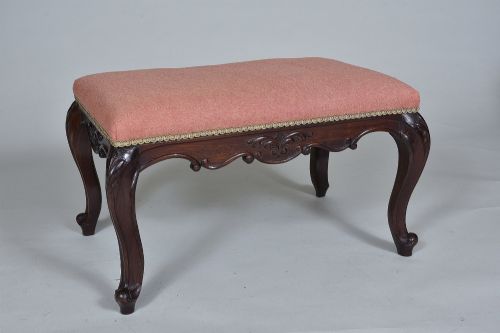
A victorian mahogany footstool encompasses various low forms, including simple upholstered blocks, revolving piano seats, storage ottomans, and gout stools.
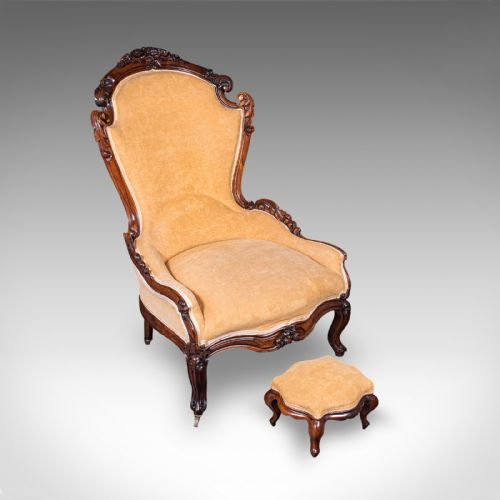
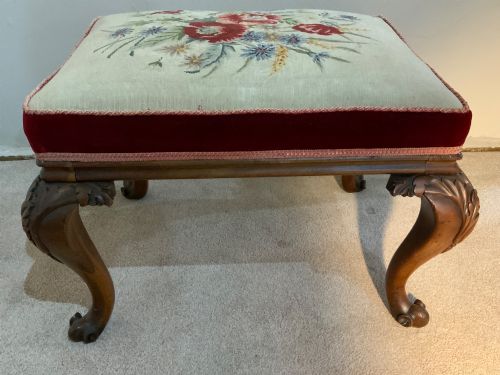
The timber framework typically utilises dense mahogany, shaped into cabriole legs, x-frames, or circular plinths supporting padded tops.
Pieces frequently date across the nineteenth century, ranging from early William IV examples to late Victorian and Edwardian variations.
Materials and construction
Carpenters constructed the primary frames from solid mahogany, occasionally incorporating brass castors, hinges, or inlaid details.
Upholstered elements relied on traditional textiles such as wool, tapestry, needlework, velvet, leather, and cane to finish the seating surface.
Victorian Mahogany Footstool Retail Price Guide 2026
Typical asking prices for victorian mahogany footstool among the pieces listed under this phrase on Sellingantiques today, from the lower quarter to the upper quarter. They describe what is for sale here now, not the wider market.
Current listings feature mahogany, brass, velvet, leather, and tapestry across nineteenth-century styles.
Assessing craftsmanship
Quality rests in the precision of the timber joinery, the carving depth on cabriole legs, and the retention of original upholstery materials.
Superior examples demonstrate thoughtful proportions and sturdy internal frames that endure heavy daily use over generations.
Howard & Sons·Liberty & Co·Hallett & Sons·Thonet
The Victorian Mahogany Footstool Glossary
- Cabriole leg
- A furniture leg that curves outward and then tapers inward, common on mid-nineteenth-century seating.
- Gout stool
- An adjustable footrest designed to elevate limbs affected by circulation issues or joint pain.
- Ottoman
- A low upholstered seat or footstool lacking a back or arms, sometimes featuring internal storage.
- Needlework
- Hand-stitched textile decoration utilised on the top surface of period footstools.
Victorian Mahogany Footstool: Frequently Asked Questions
How do I identify a genuine nineteenth-century frame?
Examine the timber underneath to check for hand-cut joints and consistent wood ageing. Genuine period pieces show appropriate wear patterns on the mahogany structure.
Look closely at the fasteners and secondary woods used inside the construction. These details help confirm the era of manufacture.
Were these stools used exclusively for feet?
Many examples served multiple purposes, functioning as piano seats, dressing table stools, or fireside companions. Some variations included internal compartments for sewing equipment.
Their sturdy build allowed them to transition easily between different rooms in a Victorian household.
Can I replace the original textile covering?
Upholstery often undergoes replacement when the underlying fabric frays or wears thin over time. Many surviving pieces feature fresh or recently renewed textile surfaces.
Retaining older needlework or leather remains desirable for collectors valuing original presentation.
What is an x-frame construction?
An x-frame design uses intersecting wooden stretchers to form a supportive cross shape beneath the seat. This configuration appears frequently on mid-century stools.
It provides reliable structural stability while maintaining a compact visual profile.