


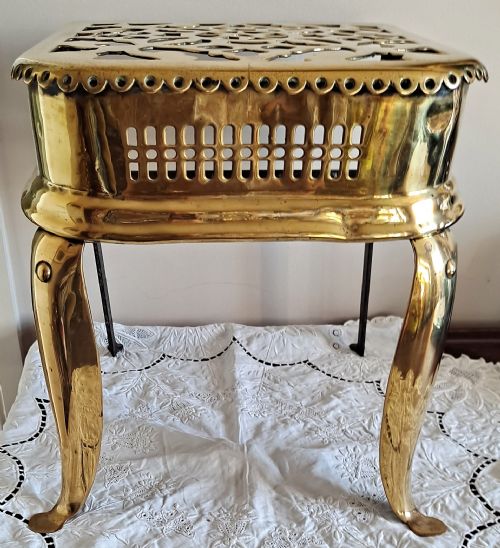

Antique Fireside Stool
An antique fireside stool brings low, supportive comfort to a hearth, combining sturdy timber frames with traditional textile upholstery.
Identifying an antique fireside stool
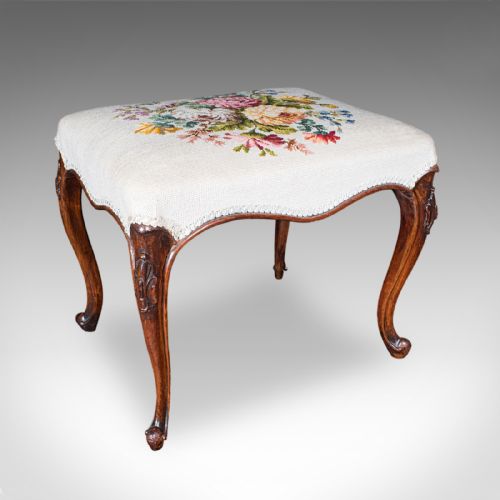
An antique fireside stool is a low seating form designed specifically for warmth and comfort near a hearth, appearing across Georgian and Victorian periods. Buyers encounter various timber frames, including mahogany, walnut, oak, and hardwood, often paired with textile surfaces.
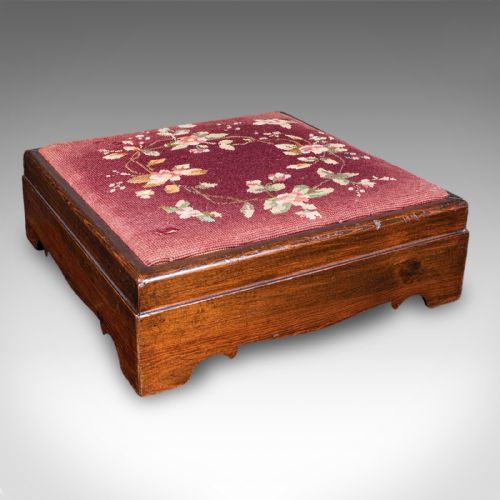
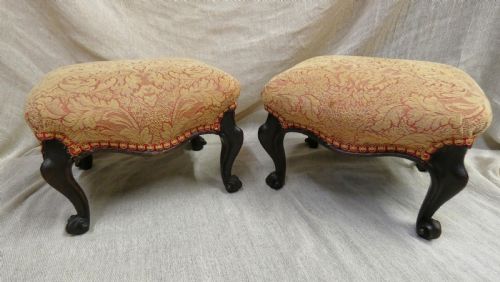
The selection ranges from compact footstools and kneeling rests to longer carriage stools and duet forms. Victorian examples dominate the available pieces, frequently showcasing carved frames and dedicated needlepoint or wool tweed upholstery.

Materials and construction
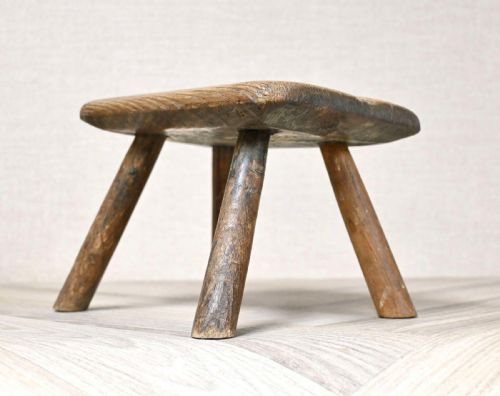
Joinery relies on solid hardwoods such as mahogany, walnut, and oak, shaped into serpentine, carved, or simpler turned frames. These timbers provide the structural rigidity necessary for daily support close to open heat.
Upholstery methods utilise traditional textiles including wool tweed, velvet, and needlepoint, secured over firm padding. Metal accents like gilt brass occasionally appear on specific Victorian iterations.
Retail Price Guide 2026
Typical UK retail prices for fireside stool, calculated from the Sellingantiques database of over a million retail prices indexed since 2003. This retail price guide relies exclusively on Sellingantiques data; no external sources or auction records are used, so the figures do not describe the wider market.
Footstools doubled as kneeling rests for Victorian churchgoers who brought their devotion straight to the sitting room hearth.
Distinguishing quality
Superior examples display crisp, deep timber carving on the frame and robust joinery that remains firm under weight. The choice of secondary woods and the precision of the turning set finer pieces apart from utilitarian versions.
Upholstery execution dictates much of the visual appeal, where densely worked needlepoint or high-grade wool tweed exhibits careful alignment with the proportions of the wooden base.
The Antique Fireside Stool Glossary
- Footstool
- A low stool designed to support the feet when sitting in a chair, frequently used near a fireplace.
- Needlepoint
- A type of canvas work embroidery using yarn, commonly found on Victorian fireside stool upholstery.
- Carriage stool
- A low stool form historically associated with travel or coaching, sharing similar proportions with fireside rests.
- Gout stool
- An adjustable kneeling or footrest designed to elevate a foot or leg for comfort.
Frequently Asked Questions
How were fireside stools used?
These low seats provided a comfortable footrest close to the warmth of the fireplace or served as extra seating for kneeling and music recitals.
Their compact height made them easy to tuck away near a hearth until needed.
What woods are most common?
Mahogany and walnut appear frequently in both Georgian and Victorian pieces, offering rich grain patterns and sturdy support.
Oak and general hardwood frames also occur across various nineteenth-century examples.
How do I spot a Victorian piece?
Victorian examples often feature darker hardwoods like walnut or mahogany alongside heavy needlepoint, wool tweed, or velvet upholstery.
Carved wooden frames and specific Victorian proportions help separate them from earlier Georgian iterations.
Are these stools suitable for daily use?
Solid timber construction and traditional upholstery methods make these sturdy enough for regular seating or resting feet.
Placing them away from direct, intense heat sources protects the antique wood and textile covers.