
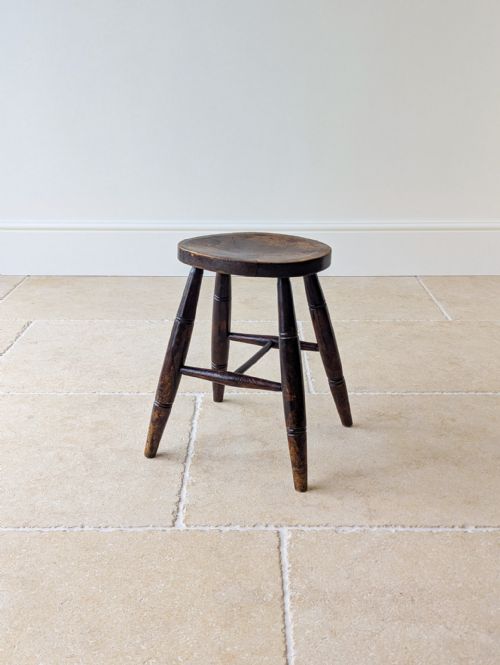
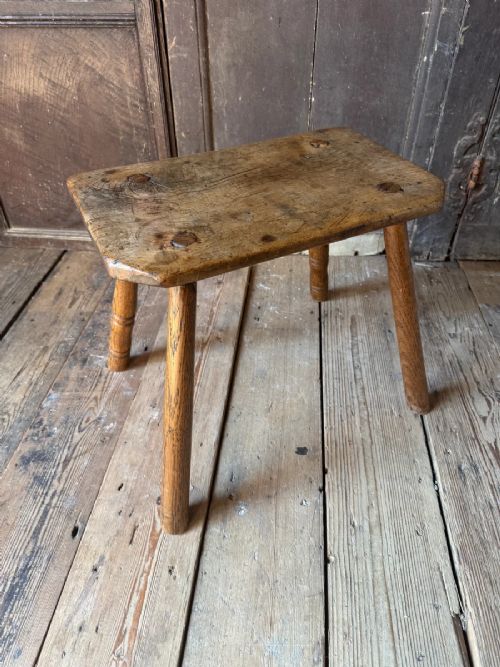
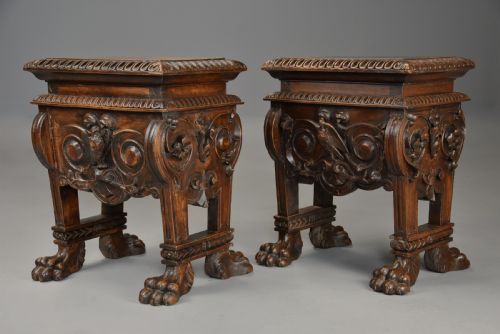
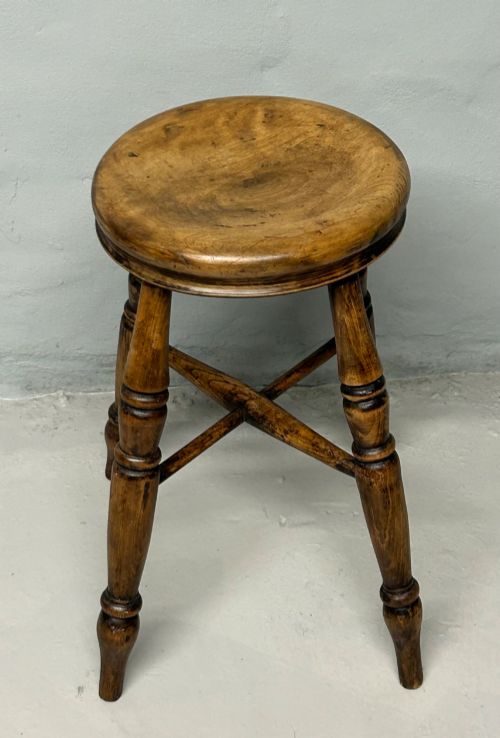
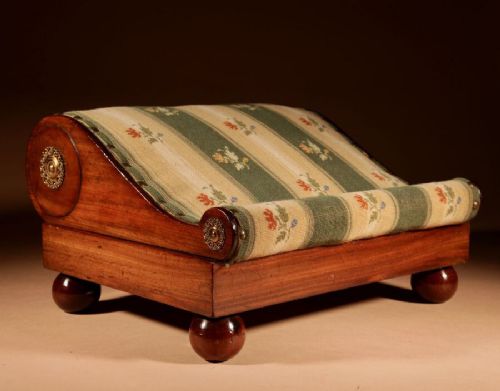
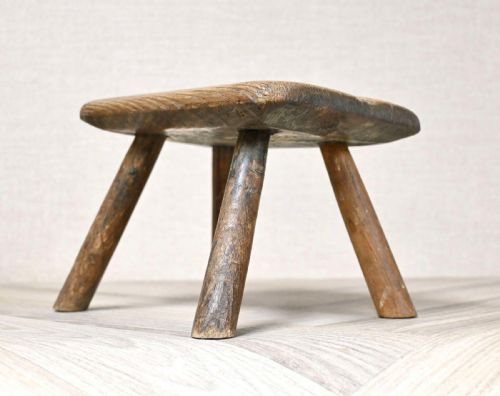
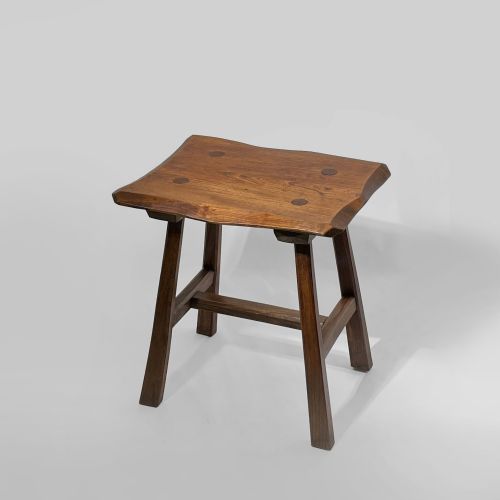
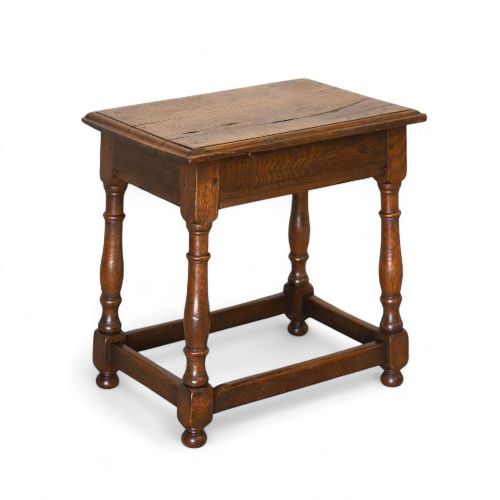
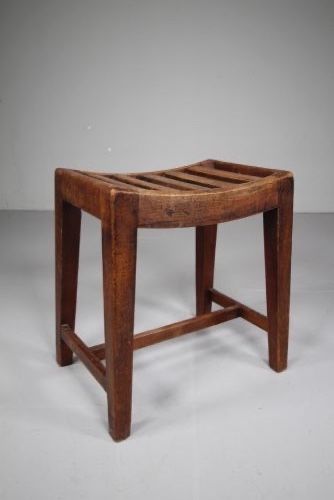
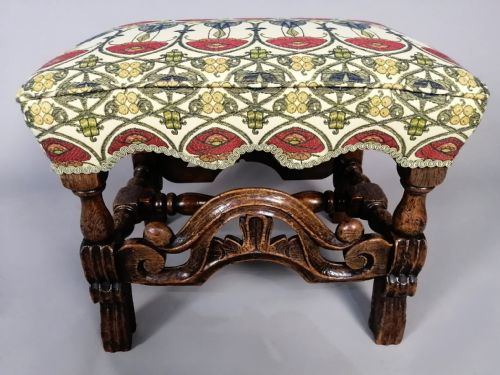
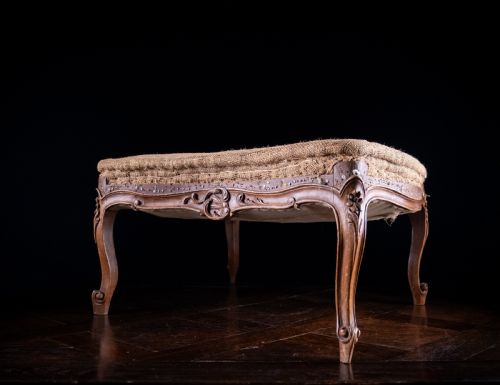
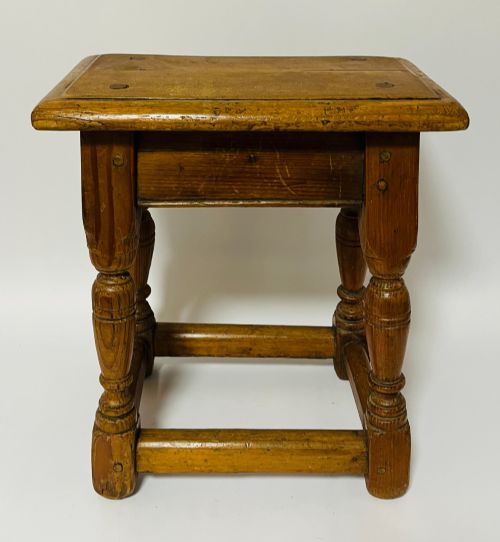
Brown Wooden Footstool
These brown wooden footstools bring solid timber and practical comfort to firesides, offering sturdy places to rest tired feet.
Identifying your brown wooden footstool
A brown wooden footstool provides a low platform for resting feet, appearing in various utilitarian and domestic forms across the centuries. Buyers searching for a brown wooden footstool encounter functional items shaped by their era of production, from simple country pieces to more refined parlour designs.
Surviving examples span from the eighteenth century through to the early twentieth century, capturing distinct shifts in domestic utility. The selection includes Georgian carriage pieces, Victorian country stools, and later turned wood variations utilised near firesides.
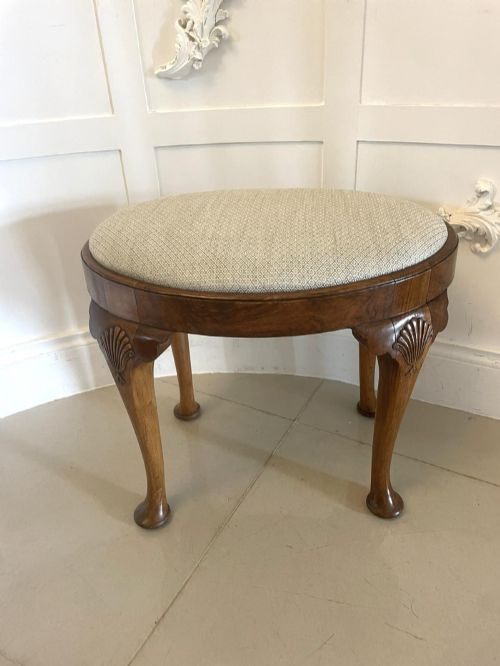
Forms range from simple turned beech frames with woven cane seats to robust pitch pine platforms and wool tweed upholstered rests. Each piece reflects the everyday material culture of British homes, prioritising durability and functional design over ornate decoration.
Materials and construction
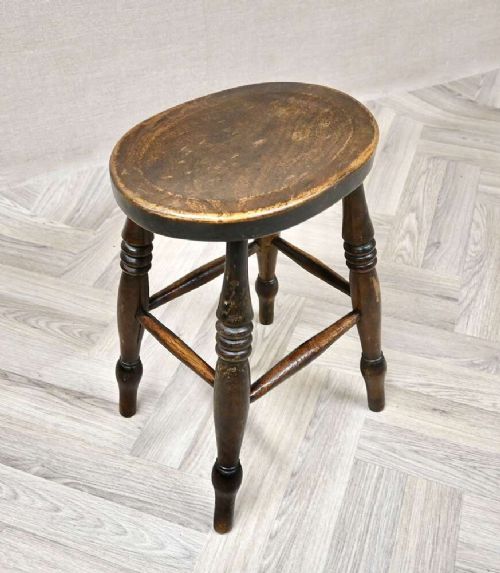
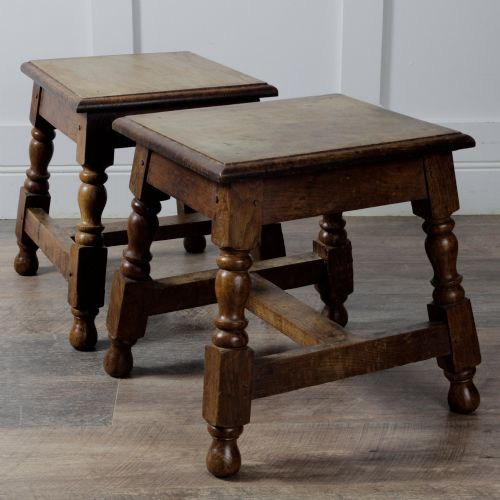
Maker construction relies heavily on native hardwoods, beech, and pitch pine selected for strength and density. Lathe work appears frequently, with turned wood components providing both structural integrity and simple decorative profiling to legs and stretchers.
Upholstery methods incorporate traditional textiles such as wool tweed, paired with natural support materials like woven cane. Simple joinery techniques secure the frames, ensuring the furniture withstands regular weight and daily domestic pressure.
Retail Price Guide 2026
Typical UK retail prices for brown wooden footstool, calculated from the Sellingantiques database of over a million retail prices indexed since 2003. This retail price guide relies exclusively on Sellingantiques data; no external sources or auction records are used, so the figures do not describe the wider market.
Some nineteenth-century travellers insisted on taking their personal footstools into carriages, ensuring their boots stayed clear of muddy floorboards.
Assessing craftsmanship and integrity
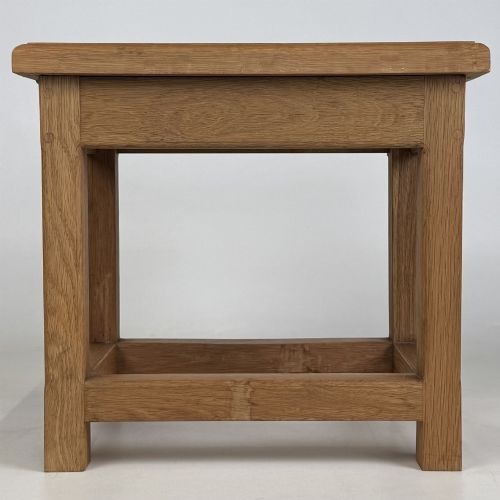
Quality rests in the selection of timber and the precision of the turning work, where crisp profiles distinguish better workshops. Heavier timbers like pitch pine and dense hardwoods indicate a sturdier build intended for heavy daily use.
The integration of materials such as cane seating or tweed upholstery separates basic utility pieces from more considered domestic furnishings. Original surfaces and honest patina carry greater weight than later interventions or over-restored timber.
The Brown Wooden Footstool Glossary
- Pitch pine
- A resinous softwood known for its durability and prominent grain patterns, frequently utilised in nineteenth-century utility furniture.
- Turned wood
- Timber shaped on a lathe to create cylindrical, spindle, or bulbous components for legs and supports.
- Cane
- Woven rattan or plant material utilised to create flexible, breathable seating surfaces on light frames.
- Carriage stool
- A compact, portable footrest originally designed for use inside horse-drawn vehicles or narrow domestic spaces.
Frequently Asked Questions
How do I date a wooden footstool?
Dating relies on examining the timber species, tool marks left during shaping, and the style of the turned components. Construction methods often align with the manufacturing techniques typical of specific decades.
Changes in upholstery materials and framing also provide strong indicators of age, helping separate eighteenth-century examples from later nineteenth-century productions.
Were these stools used in carriages?
Certain compact forms served travellers inside horse-drawn carriages to provide stability and comfort on long journeys. Their low profile and sturdy wooden frames made them suitable for movement and restricted spaces.
Over time, many of these portable designs transitioned into domestic fireside use once carriage travel evolved.
What is pitch pine?
Pitch pine is a dense, heavy softwood featuring a distinct, resinous grain that resists wear and moisture. It became popular for utilitarian furniture during the nineteenth century due to its strength.
Items constructed from this material tend to feel particularly heavy and robust compared to standard hardwood equivalents.
How should I clean a cane seat?
Cane requires gentle maintenance using a soft brush to remove dust from the woven interstices. Occasional damp wiping helps maintain the moisture levels of the plant material and prevents brittleness.
Avoiding harsh chemical cleaners ensures the natural fibres retain their strength and flexibility over decades of use.